Trafficking Words

My second post today is an article from The Guardian written by Haleh Anvari. It is about a rather special piece of immersive theatre that takes place in the back of a taxi, in the Iranian capital Tehran. Just fantastic!

Immersive drama set in a Tehran taxi

Iranian cabs afford passengers a degree of anonymity, paving the way for uninhibited conversations and a new play

That Tehran is beleaguered by appalling traffic and toxic air is no secret. The use of that traffic as backdrop to a play in a moving taxi, especially during some of the most polluted weeks of the year, is testament to the resilient creativity of the city’s young artistic community and their readiness to push boundaries not just in terms of art but physical wellbeing.

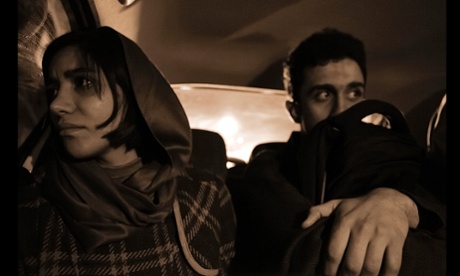
"Unpermitted Whispers", a play by Azadeh Ganjeh.

“Unpermitted Whispers”, a play by Azadeh Ganjeh.

Unpermitted Whispers is a 35-minute play that takes place in one of Tehran’s “Rahi” taxis, which traverse the city along fixed, often straight-line, routes. Rahis pick up passengers at major intersections and drop them off anywhere along their set route, making for a convenient method of getting around town and one cheaper than the minicabs available in every neighbourhood of the capital.

In contrast to the minicabs, which provide door-to-door service, the Rahi system affords passengers much more anonymity, allowing for candid and uninhibited conversation. Tehranis frequently share stories that they have overheard in these communal cabs; for many, they serve as an extension of the private sphere in which Iranians feel safe to talk about issues of the day. Unpermitted Whispers takes advantage of this unlikely superimposition of public and private to tell the story of three passengers, all women, who are picked up by a male driver at different points along his route.

To see the play, we were instructed to assemble at a busy downtown coffee shop around the corner from the University of Tehran. The modern café, run by a troop of young, funky Tehranis, is an essential part of the production. It acts as the foyer to the moving theatre.

A short wait and a couple of lattes later, we were asked by a young woman to follow her outside to the nearest intersection. We waited on the street corner just as we normally would to catch a Rahi. A nondescript older model grey Peugot stopped at our feet and the usher beckoned us to get in. Before the taxi pulled away a young woman threw herself in beside us, and the play began.

There are four shows nightly, necessitating arduous organizational exertions. For one thing, the sessions can hardly be expected to start exactly on time, since the stage is at the mercy of Tehran’s nightmarish traffic. The taxi’s dramatic maneuvers are an additional cause for concern. Twice during the performance we attended, the driver swerved violently to the side of busy Taleghani Street to facilitate the unfolding drama.

As Tehranis we are very familiar with the communal cab, both its discomforts and its possibilities: the forced intimacy that results from sitting beside total strangers, the unwanted physical contact, the vexingly loud conversations on mobiles, as well as the impromptu debates and spontaneous venting about contentious social and political topics.

The play’s first scene was performed entirely on the telephone, as we eavesdropped on a conversation of a kind with which many Iranian women are familiar: a young bride wants to go to the theatre with her university friends but needs an alibi as her traditional family and jealous husband will not approve.

The second scene involved another young woman, who had lost her brother and fiancé after they were called up for national service. It was confusing and a tad overdramatic – especially when she leapt out of the car while it was still in motion.

The third featured a chador-clad woman from the shore of the Caspian Sea – her perfect Gilan dialect would have benefitted from subtitling – in search of her abusive husband, hospitalized somewhere in the city. We were taken to three hospitals and watched as she disappeared into each to “make enquiries.”

By this point, we had willingly suspended our disbelief and were interacting naturally with her plight, more like actual Rahi passengers than spectators. I and the other woman in our little group told her she should not endure being beaten, while the male passenger resorted to an Iranian adage:“You enter your husband’s household in a white dress and you leave only in another white garment – a shroud.” This provoked a heated conversation which was missed by the actress, then evidently hanging around the A&E room of the last hospital for the sake of verisimilitude.

The play was produced by Urban Arts House, an innovative new collective of young professional artists from different disciplines who are devoted to the urban culture of Tehran. They produce and encourage the making of experimental art in and about the capital, aiming to engage the public with the arts amid the city’s everyday spaces.

The show’s creator, Azadeh Ganjeh, is a scholar of Shakespeare who specializes in environmental art. Her three female characters were ostensibly inspired by major Shakespearean figures: Othello’s Desdemona, Hamlet’s Ophelia and The Taming of the Shrew’s Katharina. I felt that the play would have made better use of its setting had she introduced some male characters from Tehran’s own bustling streets and rounded out the stories with some of the more comical moments we encounter daily negotiating life in the city.

The Rahi drivers are as vociferous as the cabbies in any metropolis and often hold court, directing the conversations within their vehicles. In Unpermitted Whispers the only male character, the driver, was no more than that, a sidekick to the drama of the three women, each trying to overcome her difficult circumstances. At best he served as a symbol for the modern Iranian man, willing to help but unable to effect any real change.

It was a little disappointing, thus, to find that the stories addressed the strains and challenges of just one half of the population. The innovative use of the urban environment, on the other hand, was effective. Our voluntary participation in the drama within this one Rahi amplified the sense of Tehran as a living stage with ongoing dramas in every unseen corner.

We were dropped off some blocks away from the coffee shop where we had started our journey by the apologetic driver, who declared that he would continue to help the lady from out of town find her husband.

Trying to find the way back to our car, we asked directions from a young couple strolling down a quiet tree-lined street. As the man stopped to assist, his female companion ignored us and continued to walk on. There were tears quietly running down her face. Was this a real lover’s tiff or were they both part of the play? For a moment, it wasn’t easy to be sure.
Grand Designs #2

When I started Reading Room it was based solely here, on WordPress. Slowly it spread to have a presence on Facebook and Twitter, which became a source of material. Recently I added Tumblr in an attempt to reach my students in another way, but unwittingly I tapped into another fascinating source.  There are some great Tumblrs that curate theatre designs by the hundreds and I’m going to share a few today – for inspiration more than anything else.

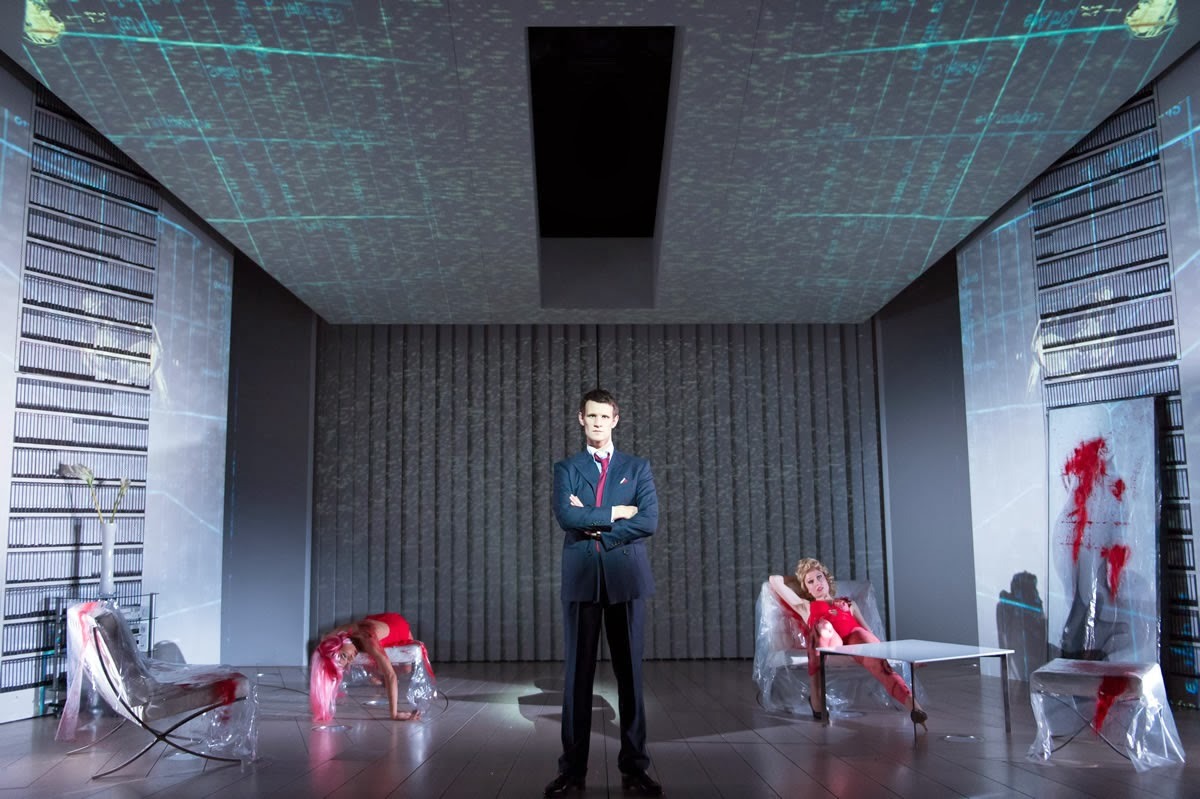
OLYMPUS DIGITAL CAMERAOne Tumblr I follow is yeahtheatresetsandprops who posts regularly and has a great and varied selection of set designs from Europe and the US. The above design is by Troy Hourie for The Classical Theatre of Harlem’s production of Peter Weiss’ play, Marat/Sade. The one below is from the brand new American PsychoThe Musical which has just opened at The Donmar in London, starring Matt Smith – he of Dr Who fame (with rave reviews, I should add). The design is by Es Devlin and has garnered equally great plaudits as Smith has for his performance in the show.

tumblr_mxrld3nrC81qlpqbyo3_1280Another I follow is Everything Scenic who posts some lovely designs and videos too. One beautiful design that struck me is this one, for Sunday in the Park with George, by David Farley.

.

Another is for a rather wet version of Metamorphosis (Ovid, rather than Kafka), designed by Daniel Ostling at the Arena Stage in Washington DC.

.

Everything Scenic also posts some unedited video, straight from the stage manager, like this one that shows the stage machinery used in Billy Elliot, the musical. 


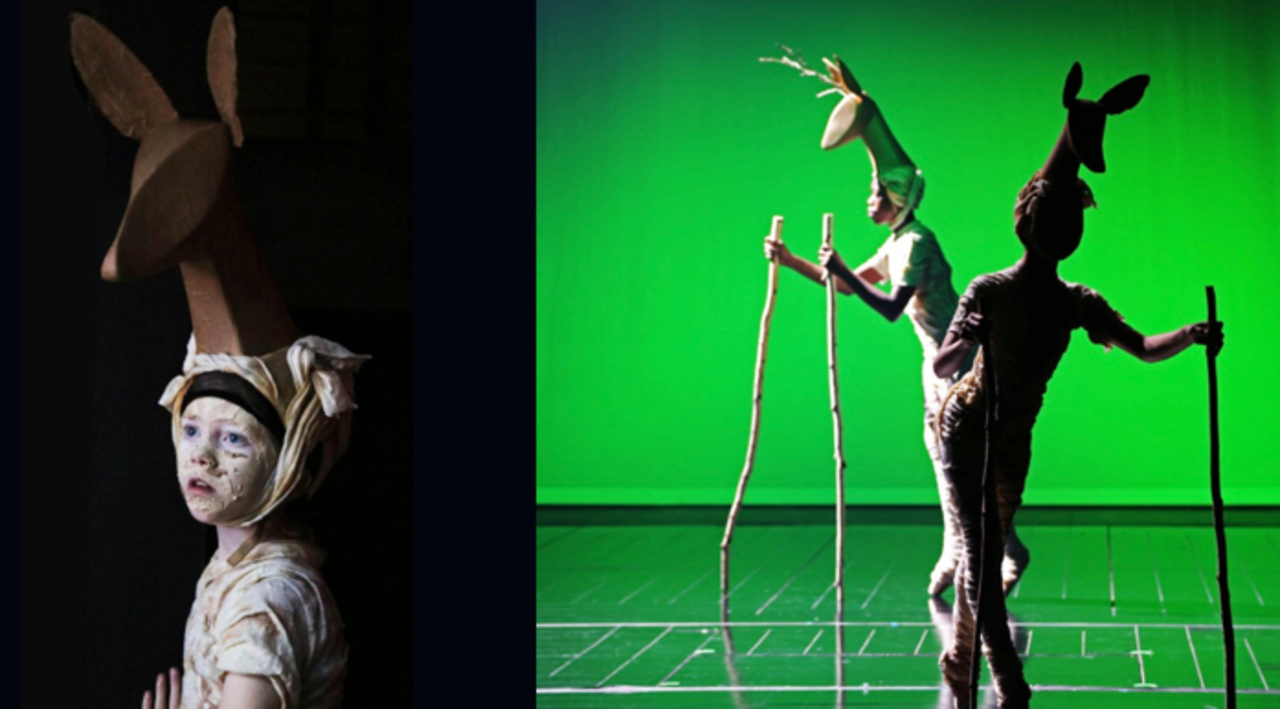
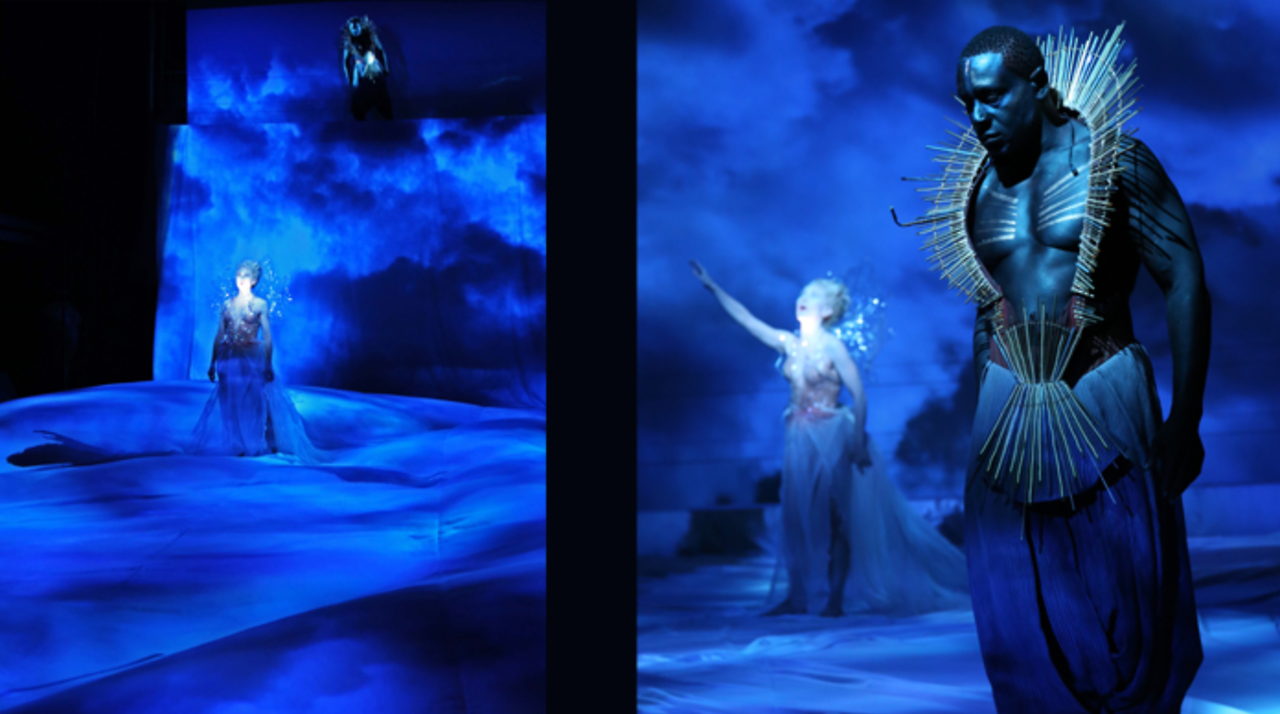
Another Tumblr I follow is the bizarrely named Glut and Decadencewho also posts some great photo sets of scenic design. These are for a production of  A Midsummer Night’s Dream, for Theatre For A New Audience (New York) directed by Julie Taymor (of Lion King fame) and designed by Es Devlin:

tumblr_mwdopiKaDu1s2pri8o1_1280

tumblr_mwdopiKaDu1s2pri8o4_1280

tumblr_mwdopiKaDu1s2pri8o6_1280

Having Some Self-Respect!

In July I wrote a post, Body Talk, which dealt with how theatre has been used around the world by the global movement to end violence against women and girls. It’s focus was Eve Ensler’s play, The Vagina Monologues, and  a play touring in China, Our Vaginas, Ourselves. A week or so ago, The Atlantic published an article by Gabrielle Jaffee which takes the debate back to China:

Performing The Vagina Monologues in China

The ongoing controversy of the iconic play reflects feminism’s struggle to establish a toehold in a still conservative society.

“When I first heard about The Vagina Monologues, I was shocked. I thought, how could someone give a play a name like that?” says Xiao Hang. That was five years ago, when Xiao Hang was, by her own admission, “mainstream and quite conservative.” But after volunteering for an NGO in her sophomore year at college, she began to see society through a different lens. She no longer thinks, as she once did, that “it isn’t elegant to talk about your vagina in public.” In fact, she thinks it’s vital to.

Today Xiao Hang is one of the organizers behind Bcome, the Beijing-based feminist group which has put on around a dozen performances of The Monologues this year to mark the ten-year anniversary of its first showing in China. Performed in over 150 countries worldwide in some 50 different languages, Eve Ensler’s play was first shown in the Mainland at Guangzhou’s Sun Yatsen University in 2003.

In their offices just outside Beijing’s third ring road, Xiao Hang and Bcome’s other volunteers are preparing leaflets to send out for the International Day for the Elimination of Violence against Women. The leaflets have titles such as “20 Misconceptions about Sexual Violence,” “The ABCs of Feminism,” and “Resist Verbal Abuse.”

“We’ve already done lots of online and print promotions as well as panel discussions. The Vagina Monologues is new, fresh and attention-grabbing,” says Ai Ke, another organizer. “It’s not just a play, it’s a tool for spreading feminism, a method for public education.”

To prepare the script, the organizers translated from the English version, took parts from past Mandarin versions, and created original scenes through a series of workshops they ran last year. At the beginning of each workshop, they voted on which topic they wanted to discuss (“We’re very democratic,” laughs Xiao Hang), noted down their own experiences, and gave key words to the scriptwriters. “We wanted to localize the play as much as possible, so we added issues such as the obsession and anxiety over virginity,” explains Ai Ke.

With their script complete, Bcome’s committee organized shows at Beijing’s LGBT center, at culture cafes, and at an art space where they performed to an audience of 400. They also put on the play for a community of migrant sex workers (“This helped us better understand them and write a scene about their lives”) and organized college campus productions—including a now notorious rendition by female students at Beijing Foreign Studies University (BFSU).

The BFSU students caused an internet storm earlier this month when, in an effort to promote their version of the Monologues, they posted pictures of themselves holding up messages from their vaginas to the popular social network RenRen. Written in English, Chinese and Korean, the messages ranged from “My vagina says: I want freedom” and “My vagina says: I want respect” to “My vagina says: You need to be invited to get in.” The images were soon reposted on Sina Weibo and picked up by local media outlets, who focused on the girl’s “confessions.”  A video of the images received over 2 million views on Sina.

dfe14f23b

The wave of online misogyny that followed was nasty. Commenters focused on the women’s looks (“Seeing their faces, I’ve lost all interests in their vaginas” said one @Taoist_Mua), others expressed shock that students at one of the country’s top universities could have written such things (“How could BFSU admit such vulgar girls?” @冬天的亭子) or simply resorted to pure name-calling (“These ignorant grandstanding tarts” @保护地球绿色家园). One user, @shendeon, even exclaimed, “If my daughter did this, I’d slap her across the face.”

***

These reactions only seemed to validate the need for performances of The Vagina Monologues in China. The critics “have this image that female university students must be pure,” says Xiao Hang. “They were terrified because women in China never talk about sex in public.”

Bcome received mostly positive feedback for their other performances of The Vagina Monologues, which included a traditional xiangsheng (comic dialogue) about different kinds of moaning when reaching a climax and an interactive section where audience members were invited to share their stories. “Some people laughed, some people were so moved that they cried,” says Ai Ke. Several people came up to her afterwards and thanked her for the “growing experience” they had, or for convincing them that they were not “odd” for thinking about such things.

However, Ai Ke admits that the people who came to watch the play were probably already open-minded. In China, this isn’t surprising: There’s a difference between intellectual elites performing in the safe environment of the student union or culture cafes and the opinions of the public at large, which the BFSU students were exposed to online.

Chinese government repression plays a key role, too. While the last decade has seen The Vagina Monologues performed many times at universities across the country, a professional production in Shanghai was banned in 2004 after hundreds of tickets had been sold and a 2009 production was forced to call the show “The V Monologues” instead of the full name. Bcome found that “as soon as the word vagina was mentioned,” official theaters and even some small independent outfits such as Beijing’s Peng Hao and Mu Ma theaters refused them.

The Monologues’s checkered history in China reflects the inconsistent approach towards sex and sexuality in the country. While the government continues to crack down on pornography and vulgarity, reform and opening of the last few decades has coincided with more liberal attitudes towards sex. Indeed, in China, sexuality is on view everywhere: Even state-run news outlets like Xinhua and the People’s Daily use soft porn slide-shows to bump up click rates.

But just because there’s more flesh on view than during the puritan past, that doesn’t necessarily women’s sexual rights have improved. Using the “v-word” is still a taboo in China. “China is still a male dominated world,” says Ai Ke. “The sexual freedom gained in the last few years has been for men. The pleasure that women can get from sex is so seldom talked about.”

And it’s not just the female right to enjoy sex that has become an important feminist issue in China: There’s also the right to protect their bodies. Around a quarter of China’s female population suffers from domestic abuse, according to the All-China Women’s Federation, but there is no law specifically targeting the crime.

Women are beginning to speak out. Last year, after the official Sina Weibo account of the Shanghai Subway Line 2 posted a photo of a passenger in a revealing dress with the caption “dressed like that, it’s no wonder you get harassed. There are many perverts on the subway, can’t catch them all. Girl, have some self-respect!” many net users were outraged. For their part, Bcome organized flash mob readings of the Monologues scene “My Short Skirt” on the Beijing subway. [click the image below for video the performance].

Untitled_Fotor

“Most people just looked awkward, tried to not to look us in the eyes and instead fiddled with their phones,” admits Xiao Hang. Perhaps asking people to face sexual issues directly remains too much to ask for in China.

More reassuring, though, is what happened after each of their performances. When the women approached passengers with a petition to support legislating against domestic violence, they collected over 10,000 signatures in 15 hours. That, at least, is something to celebrate.

Just Epic

A quick post today, just to share a few collected video resources about Bertolt Brecht and his theatre.

The first set is from a BBC documentary made 25 years ago, but still a useful source of all things Brechtian. Sadly the whole documentary is no longer available. The final fourth clip is from the same documentary, but from a different source and shows Helene Weigel (Brecht’s second wife and acclaimed actresses of the period) explaining Epic theatre.

.

.

.

.

The second set come from the National Theatre in the UK and were filmed when they were mounting a production of Brecht’s Mother Courage:

.

.

.

The next is an interesting and eclectic small film called The Brecht Document which details Brecht’s and is composed of what its writer/director Warren Leming calls “fragments” from a two-year stay in Berlin,Germany which he made in 1986/87. The final couple of minutes are from The Jewish Wife (Fear and Misery of the Third Reich), one of Brecht’s most haunting texts.

.

This one is Eric Bentley, the eminent critic, playwright and translator on the life of – and his work with – the legendary Brecht.

.

And finally, and perhaps most extraordinarily, a recording of Brecht’s testimony to, and questioning by, the House Com­mit­tee on Un-​Ame­ri­can Ac­tivi­tes (The McCarthy witch hunts), hours before he returned to Germany.

.

Mandela, Apartheid And The Theatre Of The Fight

Nelson-Mandela-dead

The death of Nelson Mandela two days ago has, quite rightly, brought about a slew of obituaries, articles and opinion pieces from around the world. One particularly caught my attention, written by Emily Mann for the LA Times. It talks about the great man’s unwitting, yet powerful effect on theatre. I’m posting it today simply as a tribute, but is worthy of a read and I whole heartedly suggest that the plays Mann talks about are worth a read too.

I especially recommend Athol Fugard’s The Island and Sizwe Bansi Is Dead (which was also written by Fugard in collaboration with Winston Ntshona and John Kani). The former is set in an unnamed prison, clearly based on South Africa’s notorious Robben Island, where Nelson Mandela was held for twenty-seven years. It focuses on two cellmates, one whose successful appeal means that his release draws near and one who must remain in prison for many years to come. The latter is a beautiful elegy about the loss of identity and how oppression can make desperate people do desperate things. The play’s protagonist, Sizwe Banzi, is forced to steal the identity papers, and thus the identity, of a dead man in order to get work in apartheid era South Africa.

Nelson Mandela dies: His legacy to the arts

Many people know that Nelson Mandela’s life inspired novels, poems, plays and films, but few people know how powerful his effect on the theater was and how powerful the theater’s effect was on him.

The theater served as a mirror to Mandela, each side influencing and reflecting the other, placing them both in time.

At the height of the apartheid era, the Market Theater in Johannesburg and the Space Theatre in Cape Town, both defiantly nonracial venues in a racially divided country, produced shattering plays about black life under the apartheid regime.

nelson_mandela

These plays premiered in South Africa in the 1970s and ’80s and then flooded onto the world stages. The plays triggered global outrage at the South African government and support for the struggle for freedom Mandela represented.

Athol Fugard’s “The Island” and “Sizwe Bansi Is Dead” (co-created with actors Winston Ntshona and John Kani) and “Master Harold and the Boys”; Percy Mtwa, Barney Simon and Mbongeni Ngema’s “Woza Albert”; and Ngema’s “Sarafina” along with many other plays of staggering power sparked a conflagration of local and international protest and helped Mandela bring down the apartheid government.

As Fugard once said to me and others, “I sometimes have to subscribe to the old cliché that the pen is mightier than the sword. It certainly was true in this case.”

Mandela’s arts legacy reaches beyond the apartheid era. He continued to inspire theater makers around the world to write those plays that would expose social injustice.

One of my plays, “Greensboro, a Requiem,” is about the Ku Klux Klan massacre of a multiracial group of anti-Klan demonstrators in Greensboro, N.C., in 1978. It brought national attention to the event and to the shocking acquittals of the Klan by an all-white jury.

In its wake, the play inspired the mayor and the city of Greensboro to convene America’s first Truth and Reconciliation Commission, modeled on Mandela and the Rev. Desmond Tutu’s commission in South Africa.

The citizens of Greensboro, as in South Africa, chose to face painful truths about their past so they could enter a future together with a mutually agreed-upon history and a new understanding of each other’s lives. This, too, is Mandela’s legacy. A play can inspire social change.

During Mandela’s long life on the world stage, his influence has been multifaceted and his reach long. His profound contribution to the arts, both the work influenced by him and for him, made not only world but theater history, and his legacy continues to inspire those who work in the theater for social justice.

1990. Nelson Mandela as he is freed from prison after 27 years

1990. Nelson Mandela as he is freed from prison after 27 years


He’s Behind You

Something quite strange happens to British theatre at this time of the year. Up and down the country they get taken over by men dressed as women, women dressed as boys, people in animal costumes (quite often a horse or a cow), custard pies and all playing to packed houses. From the land that gave Shakespeare to the world and is still exporting the finest theatre around the globe, what is all this about?

40-panto-fl

royal-panto-princess-margaret-and-princess-elizabeth-1-1386158362-view-1

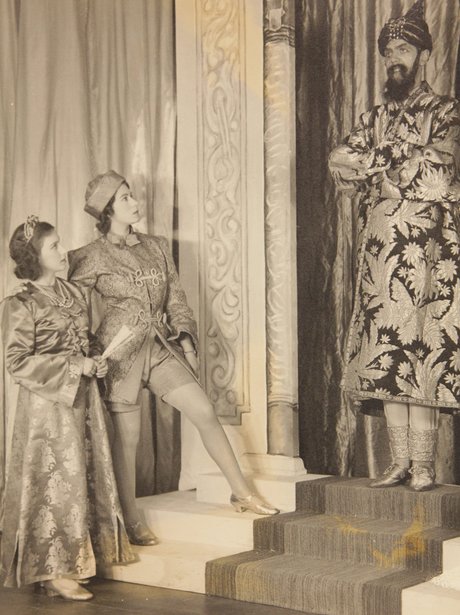
Princess Elizabeth as the ‘Principal Boy’ in pantomime

Well, its Pantomime, a peculiarly British theatre form that is a good few centuries old and is very much part of the cultural landscape – theatre for everyone.  Only this week, photographs emerged of the current queen appearing as the ‘principal boy’ in pantomimes, taken between 1942 and 1944. As a child I fondly remember been taken to the theatre every Christmas, on a family outing, siblings, parents, aunts and uncles, grand-parents and cousins, to see the local pantomime. With an older, more jaundiced eye, I have tended to frown at the tradition, as not being ‘real’ theatre, but it remains unarguably popular. Last year, the largest producer of the seasonal offering had in excess of 30 shows going on across the country, with a take of £25 million. So what exactly is it, in terms of form and what is its history? According to Professor Jane Moody, from the University of York, in her article It’s Behind You – A look into the history of pantomime

The story of pantomime is a tale of dragons and serpents. It features men dressed as women, and women masquerading as young men. Pantomime presents a tale of good and evil, where hope triumphs over adversity after danger and virtual despair. It has its roots in ancient Greece, and via Italy and France, insinuates itself into Britain. Pantomime’s unique fusion of eccentricity, ambiguity and absurdity has much to tell us about [British] national identity.

christmas-pantomime-1890-wiki

According to writer and caricaturist Max Beerbohm, pantomime is the only art form ever invented in England. It’s a splendid witticism, albeit untrue. Pantomime has become quintessentially British: as British as Earl Grey tea or a good Indian curry.

Pantomime’s history is a story of border crossings, as plots and performers slip across national, linguistic and cultural boundaries.

Panto season

By complete coincidence, given my post last week, pantomime has its roots in Commedia dell’arte, which spread across Europe in the 16th Century, from Italy to France, and by the middle of the 17th century began to be popular in England. Soon after, the Commedia characters started to appear in english plays and on english stages. The history of Pantomime is well documented, and one of the best and accessible is from the Victoria and Albert Museum which covers the tradition in good detail:

  1. Early Pantomime – The transformation from Commedia to Pantomime
  2. Pantomime Acts – Which explains all about the Pantomime Dame, The Principal Boy and the animal impersonations.
  3. The Origin of Popular Pantomime Stories
  4. Victorian Pantomime – The development of the form and the introduction of ‘stars’ into the lead roles.

Accompanying the lecture below by Professor Jane Moody, which looks at the history of pantomime – part lecture and part performance – there is also the article mentioned above, It’s Behind You, which deals in another historical aspects.

.

If you want a sound-bite (slightly patronising) outline, watch this one:

.

But it will come as no surprise, that despite its continuing popularity, the tradition is changing and some claim, beyond recognition. Has the Christmas pantomime had its day? written by Gillian Orr in The Independent and Curtain falls on traditional panto – oh yes it does! written Jasper Copping in The Telegraph both discuss what has changed and why. But despite this, the audiences still roll in. My own nephews, who have to be torn away from their computers, tablets, phones usually kicking and screaming, still love to go to the ‘Panto’ and are duly taken by my sister, with grandparents in tow.

panto_2751309b


The current copy of Timeout London lists a total of 24, yes 24, Pantomimes happening across the city alone this year – and these are just the professional ones. Thousands of amateur groups get in on the act too – a nationwide outbreak of cross-dressing, if you will.

Having said that Pantomime is peculiarly british, they do take place elsewhere in the english speaking world, usually where the British used to rule – Canada and Australia being good examples. Even in Hong Kong, we have a traditional Pantomime performed every year by the The Hong Kong Players. I have to say though, I do find this a colonial hangover, an anachronism, and for me, somewhat embarrassing.

Playing The Fool

I realised this week that I sometimes miss the blatantly obvious when I am writing this blog. Once a week I set aside time to explore the things from Twitter that I have mined during the previous 7 days as well as trawl through the tried and trusted sites, blogs and people who feed Theatre Room. Also, I am often prompted by questions from my students and debates and discussions that happen in the classroom and studio as well as discussions with theatre teaching colleagues.

At the moment, all of my senior students are involved with research projects of one kind or another and I have quietly being doing some background research of my own to support them. And so it was that I came to the realisation above. One of my students, Grace, is exploring Commedia dell’Arte for her Independent  Project and although I know have referred in passing to the tradition, I don’t think I have devoted a post to it. So here it is.

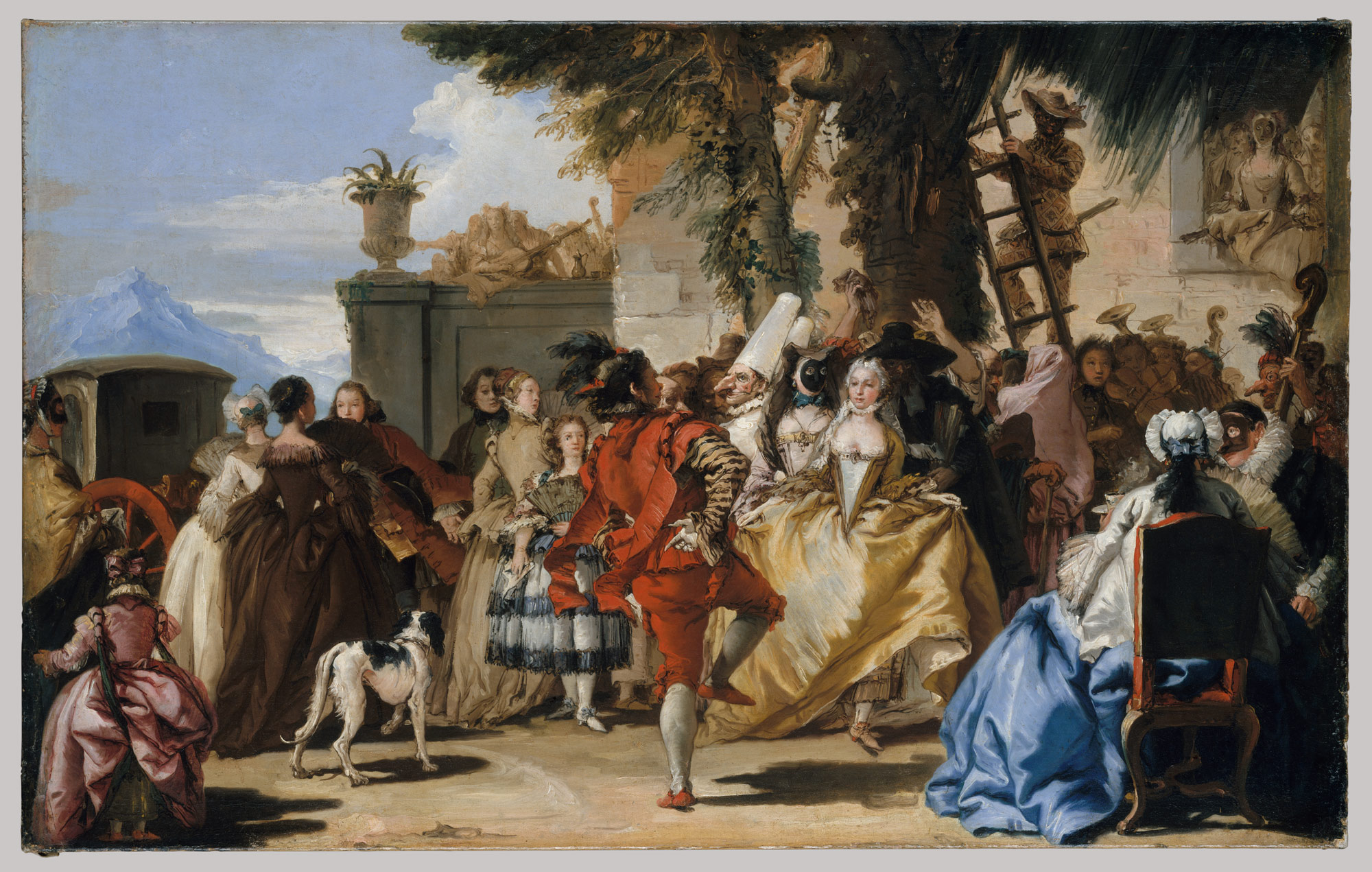
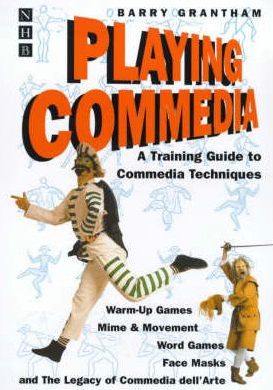
hb_1980.67There are lots of bits and bobs on the internet about Commedia, some more useful than others, but a general Google search will throw all these up. One of the best on-line histories comes from theatredatabase.com and can be found here. However, the best sources of information still remain (much to my surprise and occasionally to my students’ chagrin) printed texts. The best list of these can be found here, complied by Jonathon Becker on his website theatre-masks.com. Of all of these, there are two that stand out. 254682Firstly there is Commedia Dell’Arte: An Actor’s Handbook by John Rudlin which is a bit of a bible, in my opinion. One review on Amazon says It is not an esoteric bible of secret facts which will allow anyone to become a commedia performer.It is an actor’s manual and, if you cannot find adequate live teaching of the form, it is one of the best books you can find to start with. I couldn’t agree more!  The other one I always recommend to students is Playing Commedia by Barry Grantham. It has a section on different types of warm-ups and games specific to 9781854594662_Fotorskills and/or characters and there is another section with a history of each character which is invaluable. There are lots others available, some more practical, some more academic, but these two are my favourites. In fact the number of books still in print says much about the tradition itself – it is alive and flourishing. One company that specialises is Faction of Foolsbased at Gallaudet University in Washington DC.

Commedia is classed by UNESCO as a piece of Intangible World Cultural Heritage and as such there is even a World Commedia dell’Arte Day, 25th February every year. A look at the report produced for the 2013 day shows just how wide-spread (5 continents) Commedia practitioners are.

I want to share a series of videos produced by the National Theatre in the UK, which are a great little resource.

.

.

.

.

.

The workshops in the video are led by Didi Hopkins from Commediaworks, a UK based organisation that aims to keep the [Commedia] flame alive and burning bright. To this extent, they worked with Richard Bean, the writer of the internationally successful modern reworking of Carlo Goldoni’s classic The Servant of Two Masters, in the form of One Man, Two Governors.  You can read Goldoni’s original text here, courtesy of Project Gutenberg. Goldoni is often accused of ‘killing’ Commedia, by writing it down – committing an oral, improvised art, to the page. Hopkins and her partner in Commediaworks, Ninian Kinnier-Wilson, wrote the programme/play bill notes for One Man, Two Governors where they challenged the notion of Goldoni as ‘murderer’.

Did Goldoni Murder Commedia?

When Goldoni wrote The Servant of Two Masters, some say he killed Commedia dell’Arte. Was it alive? What was it? And why was a playwright accused of its murder?

Commedia dell’Arte, or Comedy of the Guild, was the first professional theatre in Europe, appearing in the 1550s in Northern Europe. Actors were paid a fair wage. A round of applause on your exit line meant you often got extra money… and on stage, for the first time, there were women. Before Commedia, Literary Societies, populated with academics, often performed amateur theatre, and there were professional entertainers – jongleurs – but there was no professional theatre. Commedia dell’Arte seems to have been a marriage between the academics and the jongleurs, between ideas and skills, between mind and body, and between high and low class. It was originally known as ‘Commedia all’Improviso’, the players taking the roles of different types found in society, from lowly servants to middle class professionals and lofty aristocrats. These types were clearly defined and contrasted to help the actors with their improvisation: high masters with low servants, lost lovers with knowing maids, cunning servants with stupid masters. As there was no written play, the actors worked from a scenario or running-order pinned up behind the stage, detailing entrances and exits of the players and the main points to be conveyed in the scene.

101203ArlecchinoTraditional themes involved riches and poverty, power and servitude, barrenness and fertility, wisdom and folly, and, of course, life and death – powerful reasons to drive characters through their stories.
There was no central hero in the Commedia dell’Arte, rather each character had a storyline with a beginning, middle and end to their plight, and all these stories were woven together to end, usually with a marriage, in the final scene. As well as socially, the characters were also divided by whether or not they were masked. The masked characters are cyclical and end the story back in their rightful places; the unmasked are linear and go on a journey from one state to finish in another. Both sets of characters have lessons to learn on the way about life, love, justice and society – all topics that would concern their audience.

tablemasks

Commedia actors studied hard for their parts, and learned quantities of text. The unmasked lovers learned love poems and duets; the professionals were familiar with business ideas of the day, the latest interests of the academic societies, and could speak Latin, Greek and Hebrew like their equivalents in the audience. The braggart Captain had speeches of valour and ridiculous long Spanish names. The players of the servants had to practise tumbling and set piece gags, or ‘lazzi’. All this had to be retained and inserted into scenes when appropriate and at the drop of a hat.

Commedia all’Improviso was a literate and visual theatre, speaking the ideas of the Renaissance literary society and using the vulgar visuals of the illiterate lower classes, combining the two to speak to the whole audience. Sound commercial sense! It also meant that the players of the Commedia all’Improviso were truly skilled. Trained to a very high level in their chosen roles, they were more than just actors, they were artisans of the theatre: the Commedia dell’Arte.

commedia-dell-arte-Y-2-3A

So why was Goldoni accused of killing Commedia dell’Arte?

Others, including Molière and Marivaux, had made text plays in the style of Commedia dell’Arte. But by the 1740s the Commedia was old. At its birth two hundred years before, it had sprung to life fully formed and travelled the courts and countryside of Europe, speaking secrets and introducing theatre to many of the countries it visited. It had a purpose. By Goldoni’s time it had forgotten that purpose and was wrapped not in the sharp ideas of the Renaissance but in the fluffy gauze of the Rococo of Watteau and the fairytales of Gozzi. It was not a murder, it was a mercy killing. Commedia was resurrected and brought back to life two centuries later by the Piccolo Teatro of Milan when, in 1947, Giorgio Strehler, Jacques Lecoq and mask-maker Amleto Sartori picked up Goldoni’s script and pieced together, through information and research, a new template for understanding the form, the characters and the rhythms of Commedia dell’Arte. It is a tradition that has influenced theatre, actors and playwrights and its strong imprint can be seen in Restoration comedy, melodrama, music hall, vaudeville, circus, pantomime and in the Zanni of Chaplin, the Marx Brothers, Laurel and Hardy, Mr Bean, and beyond. The work goes on.

8113413776_4e7bab0440_o

Goldoni the playwright is innocent of the murder of Commedia dell’Arte. By writing down what he witnessed in his rich and theatrical Venetian landscape, he helped to preserve it and keep the flame alive. He tried to bring together two traditions of European theatre – the playwrights’ theatre, and Commedia – the actors’ theatre. Viva la Commedia!

If you would like to know more about One Man, Two Govenors, you can download the education pack that accompanies the show here.

Something About Judy

This week I have been watching my Theatre Arts students give a variety of presentations on theatre traditions originating from their own cultures. Teaching in an international school means that these are always wonderfully varied. What struck me this time however, were the number of students who had identified puppet theatre forms. This got me thinking again about the resurgence of puppetry. I then read this article, by Beccy Smith, in Exeunt. In it she ponders the attraction to a modern audience. Smith, as well as being a dramaturg and writer, runs a company called Touched Theatre who are performing a piece called Blue at the Suspense Festival in London.

What is it about puppets that so captures the contemporary imagination? In recent years life-size horses have stormed the West End, a decidedly larger-than-life elephant has paraded down the Mall and beautifully crafted figures of myriad shapes and sizes have entertained audiences in touring theatres up and down the country. Of course, as an art-form puppetry is not new: forms like Greek Karagoz and Indonesian Wayang Kulik can be traced back to ancient times and even our ‘own’ Mr Punch boasts a fairly impressive lineage from as far back as the writing of Pepys diaries and probably beyond. But a growing interest in puppetry has made itself felt of late and there’s a distinct sense that this oldest of theatrical languages is returning en vogue…..What puppetry draws together in these disparate strands is an emphasis on visual storytelling, on expressing meaning through action and image that I think speaks particularly vividly to contemporary audiences versed in media imagery and embodied theatrical languages.

BlueMarionette-600x527

I started to get especially interested in the connections between puppetry and other performance languages when making a show called Headcase, in 2011 which was collaboration between a dancer and a puppeteer. The show set out to portray the emotional experiences of teenagers experiencing mental heath difficulties which were themselves difficult to articulate by their sufferers but which we found, by working with the young people over a period of time, could be effectively expressed through movement and gesture. We discovered that dancers have an intuitive understanding of puppetry because of the formal qualities they share in portraying feeling and idea through movement and rhythm (we also learned a lot about the age-old connections of puppetry and therapy, but that’s another article).

Puppetry has the exceptional ability to combine within itself the abstract with the specific. Puppet figures, embodied as bug-eyed capering monsters or delicately floating wraiths, present character with engaging immediacy. Puppets can talk – sometimes you can’t shut them up – they can do text from Shakespeare to Beckett though they are decidedly not literate because so much of the meaning they convey is expressed through their material form – how they look, how they move, what they are made of. For puppets subtext is in the body. The pretensions of a hero are punctured by his being made out of sponge; a romantic heroine’s mortality is embedded in the fragile paper of which she’s formed. Puppetry is able to borrow the most powerful elements of a range of art forms – the rich metaphors of of the visual arts, the dynamic expressiveness of dance, the detailed articulacy of poetry. They’re a wonderful theatre mongrel for a post post modern audience versed in Brecht and Lecoq.

And what is most powerful of course is puppetry’s status as shared fantasy. The wiling suspension of disbelief is in-built to this form and central to its magic, its emotional resonance. In making Blue, the new interactive mystery we ail be opening at SUSPENSE, we wanted to test out how close to the audience we could bring our puppets and still invite them to take an imaginative leap. Blue explores working with audiences moving though different spaces on the hunt to discover what has happened to a missing young woman …… and this amplifies the storytelling power of the placement and disclosure of puppets and objects. Whilst our array of suspects characters speak much but reveal little, the memory, metaphor and magic that power the story’s real action express themselves through the puppetry and video that haunt their spaces.

You might argue that the appeal of puppetry to today’s audiences is as a way to step out of some of the grimmer realities of our current realities, to reach for the fantasy and playfulness of childhood, but my feeling is that the artistic riches of the art form empower it as a vehicle through which to plumb the depths and articulate the heights of human experience – a range that’s much in evidence in the lovingly crafted programme at this year’s SUSPENSE.

Breathing Life

Peter Glanville

Peter Glanville

My first post today is a follow-up to an earlier one, On A Wing And A Prayer, about a puppet production of Macbeth and puppetry for adults. Theatre Voice has just interviewed Macbeth’s director Peter Glanville who talks about the show, puppetry in general and its popularity and you can listen to the interview here:

Director Peter Glanville talks puppets and puppetry

It is a worth while listen, as he talks about Bunraku as a puppetry form and why there is a trend for creating puppet theatre for adults. You are left in no doubt that puppetry is a thriving world theatre form that is increasingly being embraced by theatre critics and audiences alike. Long may this continue.


In the interview, reference is made to the Suspense Festival, which Glanville started a few years ago, which focuses on puppetry that is specifically made for adult audiences. This year’s festival is about to open, featuring work from companies from a number of countries, much of which has toured internationally. Check who is performing here and just what a diverse range of puppetry style are being showcased.

A Poke In The Eye

I have just come across the work of a theatre company called Spymonkey. Founded in 1997, it is a pan-european outfit with performers from Spain, Germany and England and, according to the Boston Herald, they produce a

dark, edgy physical comedy rooted ‘somewhere between Monty Python, the Marx Brothers and Samuel Beckett.

Untitled_FotorThey are clearly an international success as their tour schedule shows.  Their current piece is called Oedipussy, an irreverent take on the Sophocles classic, Oedipus Rex. Now this just happens to be one of my favourite Greek plays – I am, in fact, a great fan of ancient Greek theatre – and it normally features in my teaching of exam years at some point. I love telling the narrative to my students and waiting for the wails of disbelief/disgust to start, once things begin to unravel for Oedipus and they, my students, realise what is going to happen next.  Playing with Greek Chorus is a great way into teaching/learning about ensemble technique. If you don’t know the play, or much about Greek theatre in general, there is an exhaustive work-pack here, from the National Theatre of Great Britain.

Ralph Fiennes as Oedipus 2008

Ralph Fiennes as Oedipus 2008

For me, the great thing about Greek Tragedy is the epic nature of the tales and sheer breadth of humanity’s (and the Gods’) frailties laid bare. But I have always thought they were just a stone’s throw away from being riotously funny too, and it would seem that this is what Spymonkey has done with their version. Indeed, one critic commented that there is a brilliant moment at the end of Spymonkey’s spoof, an evening which proves that in every tragedy there is a comedy trying to get out. Another commented that some people will never “get” Spymonkey: their loss. This is not just inventive comedy but an affirmation of all human weakness…

.

Take a look at this taster for the piece. I should warn you though that sight of grown men wearing nappies/diapers is a tad disturbing.

.

Finally I have been looking for a reason to post this photograph, trawled from Twitter. It amused me immensely:

Photo 146_Fotor