Practical Explorations

Well, I’m now on vacation. I have spent the last week packing up my department. When we return in August we are moving into brand spanking new facilitates, state of the art teaching and performance studios, and we are all very excited. So many possibilities. Amongst all this I watched a truly inspired performance of Artaud’s Spurt of Blood by our Theatre Arts students, more of which I will share in another post. What a week!

But enough of all that.  What I want to share today is another blog Chasing The Trickster. It is written by Ashley Scott-Layton, who is an English writer-director and it charts his travels across Europe to discover more about European theatre practice (and how it differs to that of his homeland). In his own words, the blog will track my forays into the rehearsal rooms of Europe, where I hope to learn more about the exciting theatre cultures of each country.

basal

It is a fascinating read and you can drop in and out as you wish.

By the way, the name of his blog comes from European folklore where The Trickster is a shape shifting rogue known for disobeying normal rules and conventional behaviour.

Puppets For Peace

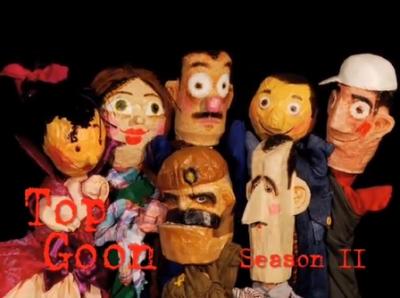
In another much more serious article, also from The Observer, David Betty writes about a group of puppeteers from Syria who are taking their work on tour in an attempt to bring about a peaceful end to the awful atrocities that are taking place there. If you click on the first image below, you can watch a short documentary made by Betty and Mona Mahmood, about the making of Top Goon: Diaries of a Little Dictator

Syrian satirists take puppet show into war-torn towns to mock Assad regime

Masasit Mati launched the online show Top Goon in 2011 to lampoon Assad. Now they’re taking it to the streets

For a group of anonymous Syrian artists who have mocked Bashar al-Assad and criticised the armed resistance, it is a bold move. Masasit Mati, creators of the YouTube finger-puppet show Top Goon: Diaries of a Little Dictator, have begun to perform the satirical series live inside the war-torn country in an attempt to bolster peaceful protest and spur the revolutionary art movement.

top_goon

The series, which will be shown in London next month as part of the Shubbak festival of Arab culture, caricatures Assad through the puppet Beeshu, the brutal, childish son of a dictator with a beaky nose and saucer-shaped ears. He is protected by his sinister and unquestioning henchman, The Goon, while ordinary Syrians are portrayed as brave and idealistic.

Speaking via Skype from Lebanon, the show’s director, Jameel, said they decided to use puppets to protect the identities of the 10 artists involved and because their small size “was a good way of lampooning the regime that presents itself as godlike”.

The episodes were filmed in Beirut, with the puppets and props smuggled out by the artists. “We disguised the puppets, especially the one of Beeshu,” said Jameel. “We gave him a moustache and extra hair. Otherwise, everyone would have recognised him.”

The first series, launched in autumn 2011, attracted more than 200,000 views on YouTube and was broadcast on the Dubai-based Syrian opposition channel Orient TV. But escalating violence and power blackouts shrank the domestic audience for the second and third series. So in January the group surreptitiously travelled into the rebel-held town of Manbij in the northern region of Aleppo to perform live in an arts festival organised by local activists. The town had enjoyed relative calm for a month, with no attacks or kidnappings, but on the day they arrived it was bombed by Assad’s forces, leaving 12 dead and dozens more wounded.

“We were very shocked and the organisers of the festival thought it should be delayed,” said Jameel. “We felt we couldn’t wait another week, but we didn’t want to gather people indoors in case there was another air strike. So we performed some of the episodes in the street during a protest [about the bombings].”

Syrian Art - VideoTop Goon draws on Assad’s speeches and biased state TV coverage of the uprising to highlight and subvert the regime’s propaganda.

In the episode Prostitute Media, a protester is forced to confess to being a violent criminal on an official news programme, saying: “I held an olive branch in my hand … I mean I was holding an RPG [rocket-propelled grenade], a nuclear bomb, pistols, rifles I got from al-Qaida.”

The series has also been critical of the armed resistance. In the episode Monster, Beeshu tortures a protester and taunts him to take his revenge. The prisoner attacks and strangles the dictator, who then gloats: “I told you, you’re a monster, just like me.”

.

Jameel said the live performance was “also about testing out the boundaries of the new regime in the liberated areas”. He added: “It’s one of the regions suffering now from the temptations of the Islamists and sectarianism. We were apprehensive about how they would react to one actress – hearing the voice of a lady who was making fun of a famous singer with this kind of sexy voice. But we felt very welcomed and respected.”

The group is preparing for live performances in Aleppo and the northern regions, which it hopes will support local artists. Arts committees and newspapers have been set up in rebel areas, but some have been shut down by hardline elements of the Free Syrian Army.

“There’s a whole civil society that’s being ignored by activists and the estern and Arab media, ” said Jameel. “We’re trying to come up with a concept of street theatre where we’ll go to an area, put on a show, then teach the people how to make puppets and put on shows. What keeps people alive is bringing them hope.”

If you want to read more you can here in The Washington Post, or here in Global Post and there is a fantastic documentary here: Little Dictator – Witness – Al Jazeera English.

Singing Sweetly?

The crazy nature of the end of the academic year has kept me away from here for a couple of weeks; so much to do and so little time to do it in. I’ve got a backlog of things to post and will get going once term is over. However, I thought I would share this article with you that was published in The Independent a few days ago. It is written by playwright and dramaturge, James Graham and talks about his adaptation of Tennessee Williams’ play Sweet Bird of Youth.

Sweet Bird of Youth: A journey in search of Tennessee

Sweet Bird of Youth was torment for its author to write, and in adapting it James Graham had to confront his own fears of ageing

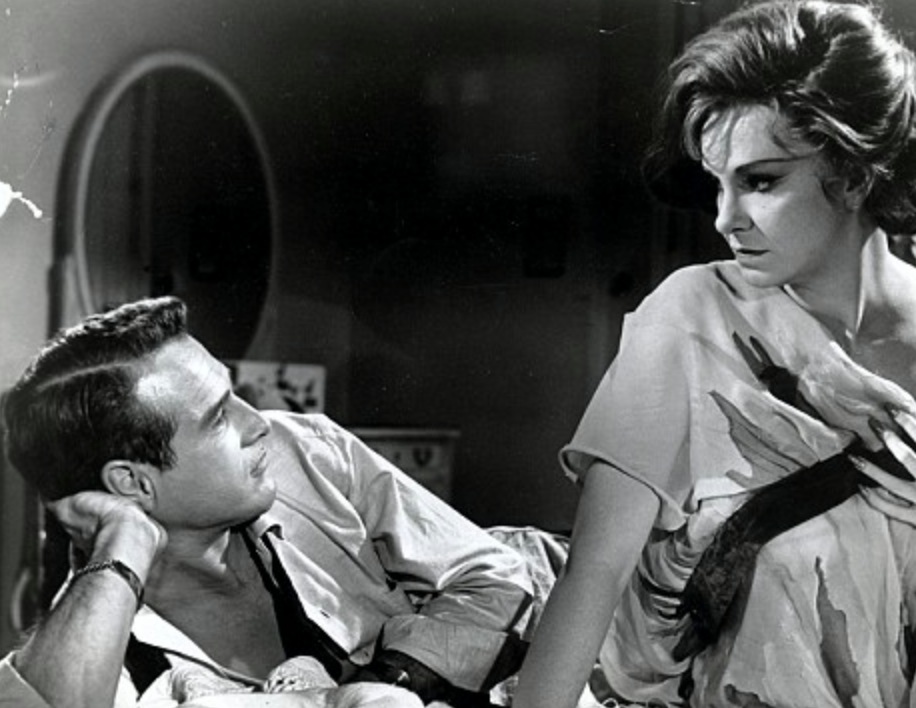
Untitled 3_Fotor

My confession is that I’d never read, seen or barely heard of Sweet Bird of Youth before the director Marianne Elliott introduced me to it. Possibly you haven’t either. For many it’s the blind spot in an otherwise familiar catalogue by that genius American playwright. It has something of a reputation for being… well, a “bit of a problem”. It’s a gruelling challenge to produce, certainly. But having been on this journey for the Old Vic’s new production of the play, I firmly believe it’s a valuable one. And, as a playwright used to writing original work (my latest This House just ended its run at the National Theatre), the notion of dramaturging someone else’s play – whereby an existing text is analysed and edited – was unknown territory for me.

This is without doubt Tennessee’s most personal piece. His life’s turmoils are blazoned throughout it – the loneliness, regrets, the self-loathing and self-doubt. It is a day in the life of Chance Wayne, who used to be “the best-looking boy in town”, returning to St Cloud at the age of 29 – not old, but not young-young any more – to get the girl. But there is violence in the air, accompanying the prodigal son’s return…

What I hadn’t expected was not just how the themes of this neglected masterpiece would grow to haunt me as a young(ish) man, but how much my journey in search of Tennessee, and the discovery of how much this one tortured him – really, truly, tortured him – would affect me as a playwright.

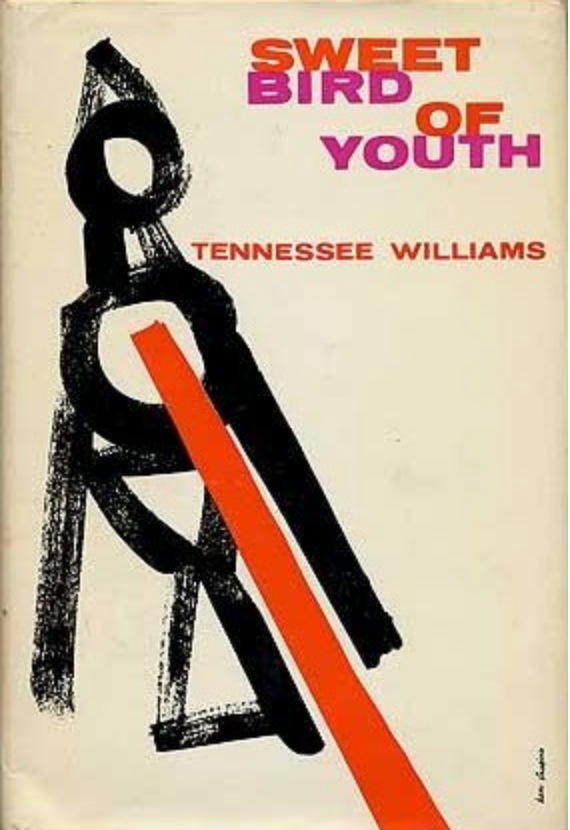
Untitled_Fotor

So why does Sweet Bird of Youth need someone to dramaturg it? First, I hope it goes without saying how presumptuous and unworthy I felt and still feel, fiddling and faffing at the altar of a master and one of my heroes. The reason we felt justified in our quest is because Tennessee himself confessed that this play eluded him. He spent nearly two decades writing and rewriting, long after productions had opened and closed, long after film adaptations and printed texts appeared. There are an eye-watering numbers of performable versions. In some of them characters survive, in others, they don’t. Endings are sometimes hopeful, in others gruesomely tragic. Most theatres will pick one version and do that one. Not good enough said Marianne and the producers at the Old Vic. So we set off on an adventure to pull together all the strongest elements of all the drafts of all the versions in order to create the very thing that Tennessee failed to find himself – the perfect version of Sweet Bird of Youth. If such a thing is possible…

And to avoid any hubris, it obviously isn’t. Art is too subjective a thing for there to be a “best” or “perfect” type of anything. All I could hope to do was compile the version that made most sense to me. And to do that, I had to work out what Tennessee’s obsessions and motivations were when writing it and refusing to let go. And to find that out, I had to go to Texas. This is the world of Williams – all Southern Belles and raw masculinity; hot nights and tequila and piano music in the dusty streets.

My first thought as I pulled up a chair in the reading room of the Harry Ransom Center in Austin was an odd sort of sadness at the realisation that I and my contemporary playwrights hardly write anything down any more, physically on paper. Any future collection of my own humble dramatic efforts will be assembled entirely on a USB stick. Where’s the romance in that?

Thank God Tennessee was writing in a different age, where his typed manuscripts still bore the coffee stains and the yellowing of cigarette smoke. Where his actual, real-life handwriting adorned the pages (I got far too excited by this).

It’s funny how, when playwright meets playwright, the first thing we often want to talk about is not the themes of our work, or style or form or all that arty stuff. It’s what font we type in. Do we double space? Final Draft or Microsoft Word? Get up early or stay up late? The process. Well here was a window into Tennessee’s. He wrote Sweet Bird hopping from hotel to hotel along the gulf coast – very much the world of the play. I know this because he typed his draft on the hotels’ own stationery, with their logos inscribed upon them. Names like “The St Charles, New Orleans” or “The Robert Clay, Miami”. It made it possible to track his progress through the States and through the play. As though he were chasing it back to his own troubled past in the South. Or running from something in his present, perhaps.

P1010479_FotorIt was seeing comparatively mundane aspects of playwriting that excited me – like watching him search for character names (which always feels overly important – I’m sure my contemporaries will agree). He got more confident and romantic. Valerie becomes the much more quixotic Heavenly. Phil Beam becomes the more screen idol-sounding Chance Wayne. As Kim Cattrall, who plays the Princess, also known as Alexandra Del Lago, in our show, observed in rehearsal to me: once our hero was given that name, his tragic fate was sealed.

Names are important.

Punctuation is also important. It was a thrill to work out Tennessee’s code – how his ellipsis (…) would differ in meaning to a dash (–) in ways that are different from my own. These are a writer’s tools (I’ve recently discovered the joy of the semicolon in expressing the intended rhythms of my sentences). In building my own draft, it felt like slipping on someone else’s tool belt. It wasn’t mine, but it fitted.

And so what are the results? Well, I encourage you to come and see. My commitment from the beginning, in uniting the different narrative strands, was to return the play to Chance Wayne. Possibly this is because his dilemmas resonate so strongly with my own. He is 29 years old, and so was I when I began, obsessing irrationally about age in that hinterland between youth and middle age. He is beginning to panic about the choices he has made, which render him unsettled when friends back home have grown roots. He is a self-destructive character, standing in the way of his own happiness in relationships and life due to his insecurities and flaws. He is paralysed by the unstoppable passage of time, and his inability to reconcile past bad behaviour. Ditto, ditto, and so on. And it’s this raw pain that I have tried to bring to the fore, amid all the poetry and romance that is standard Tennessee. Everything that hurts about the human condition is here. Tennessee once described this writing period as the toughest of his life. He looked himself straight in the mirror and asked hard, ugly questions about what he saw. I think it only right we don’t shy away from that here.

That’s not to say it isn’t funny. Because life is funny, even when it hurts. That’s not to say there isn’t humanity, and hope. There is hope simply in the writing of, and telling of, and in our case retelling of, these stories. Because in getting together in theatres and looking at who we are and what we do, there must always be hope that we can save ourselves.

But does Chance save himself? Well, that would be to give away our ending…

Silent Listening

Following on from my post about mime a few days ago, I have found audio interviews with the some of the performers I mentioned, courtesy of Exeunt Magazine.

Firstly from UK-based theatre company Stan’s Cafe (pronounced ‘caff’) on their latest production The Cardinals, ‘a chaotic and jubilant romp through key Bible stories, the Crusades, and with a final gesture towards Israel/Palestine’s current turbulence’. Graeme Rose, Gerard Bell and Craig Stephens, and director James Yarker, discuss the show with host Dorothy Max Prior:

And secondly, Phil Soltanoff discusses the revival of his piece Plan B, a collaboration with Aurélien Bory’s  Compagne 111 (of Sans Objet in my previous post), celebrating its tenth anniversary as part of the London International Mime Festival. With Dick McCaw, he explores issues surrounding circus, authorship, visual dramaturgy and geometry onstage:

And finally one I didn’t mention, but would like to share is, Letter’s End, by theatre clown Wolfe Bowart of whom it is said
.
combines the pensive humour of French physical theatre with the slapstick of Charlie Chaplin, [and] with the aid of an array of marvellously inventive props and surprises
.
02_Wolfe_Bowart_in_Letters_End_-_Photographer_David_Wyatt_1
In this discussion, hosted by Dick McCaw, Bowart discusses trade secrets, the nature of the clown, and his 99-year-old grandmother-in-law’s take on his work:
.
.

Hands Up

Roll with me today……there is a bit of a preamble before I get to the heart of my post. One of the many joys of teaching in an international school is that you are not tied to any one national curriculum, which means you can create a programme of study that you know is right for your students. We are currently reviewing the curriculum for our younger students, which is always fun and generates a lot of discussion. We have just decided to include mime mimeagain and it got me thinking about the the form. In the past we used examples from Charlie Chaplin and amongst others, Mr Bean. Thankfully we have moved on from that after we realised the real purpose of teaching mime was to get our students to consider and understand, more generally, the power the actor has to create belief for the audience by simply using their bodies.

What fascinates me is when I first mention mime, students default to this (right) as their understanding!

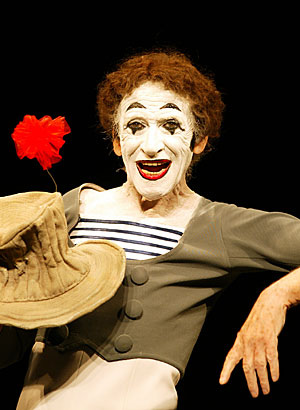
Now whilst these basic skills are part of mime, they are just that and there is so much more. Yes of course there are a many famous mimes, Marcel Marceau (below) being one of the best known, painted white and doing their thing. But there is so much more to mime and I think this is what should be thinking about as we write our new curriculum.

1431271523_11eb419e08So I got researching and this is my post today – mime in the 21st Century.

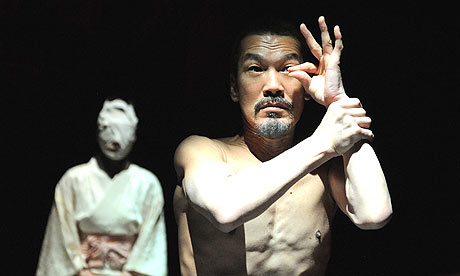
There are mime festivals all over the world, for instance, in South Korea, and Poland. Similarly there are mime companies all of the world, E Movement Theater in Japan and Mime India to name but two. Now the reason I say this because mime is often viewed as a western theatrical tradition, but that couldn’t be further from the truth. Consider Kathakali, Indian epics told with facial expressions, hand signals and body motions, and Noh with its use of mask work and highly physical performance style. In fact the latter was said to have influenced two of the greatest western mime practitioners, Jacques Copeau and Jacques Lecoq. Even Butoh is considered by some to have its place in a (much) wider definition of mime, although I am not convinced myself.

One of the oldest and most famous mime festivals is the London International Mime Festival that began in 1977 and if you take a trawl through their recent programmes you can see that the definition of mime is far wider than we tend to think. Here are a few examples:

Yeung Fai’s Hand Stories from China

.

Stan’s Cafe’s The Cardinals from the UK (and old friends of mine)

.

and Hiroaki Umeda from Japan with two works, Haptic and Holistic Strata

.

.

I’ve had the good fortune to see a couple of peices in the last year or so that I would absolutely consider to be from the genre:

LEO by Circle of 11

.

and Aurélien Bory’s Sans Objet

.

While I was researching this post I came across a couple of quotes from Nobuko and Terry Press that stuck a chord with me:

Mime is largely a misunderstood art form that needs a chance to redeem itself. This can only be accomplished …….by presenting Mime and Mimes that represent the Art of Mime and not the Tricks of Mime.

and

The first time I saw the “Robot” I was very impressed myself but when there is a Robot on every corner the impact soon wears off.

I couldn’t agree more. Every time I see one of those street mimes, painted silver, I have an urge to run up and punch them!

There is a world of talented performers out there and most of them are not painted white or silver and they are most definitely not making walls!

Shadowlands

A great little article today about the history of shadow theatre, courtesy of Suite 101 and Cheryn Tan. I’ve added some images and video, and at the bottom of the page are some more comprehensive (and excellent) links.

The History of Shadow Theatre

Shadow plays depict fantastic stories of folklore and mythology, but their stories of origin are equally fascinating as they are vastly differing.

The differences of origins may be attributed – or may contribute – to the fact that the styles and cultural significance of these shadow plays differ from one country to the next. For instance, Chinese shadow plays usually depict history and the aristocracy; Indian plays are of religious significance inspired by epics like Mahabharata and Ramayana; whereas Turkish plays are comedic satires with witty banter.

China – Death of a Beloved

Most experts believe that the art of shadow playing originated from China during the Han Dynasty (206BC to 220AD). As the story goes, the Emperor Wu Han had many concubines, but one whom he loved most. When she died, he was so devastated that he lost interest in life, and neglected all his responsibilities. His councillors tried all they could to revive their ruler, but nothing could abate his sorrow.

201172265936719

Finally, one of the greatest artists of the court created a puppet in the likeness of the emperor’s beloved using donkey leather and painted cloths. He lit a silk screen from behind, and with the movable joints of the puppet he imitated her graceful movements, even speaking with the intonations of her voice. Having his beloved seemingly brought back to life, the emperor was thus comforted and returned to his duties, much to everyone’s relief.

An alternative, though somewhat less romantic, explanation of how shadow theatre originated in China was because ladies were not allowed to watch live theatre performances, hence the most successful shows were staged as shadow plays in female quarters instead.

India – Dancing Gods

The art of shadow puppetry gained prominence in India in the sixteenth century, especially during the reign of King Kona Bhuda Reddy. These puppets are the largest in the shadow performance world; and the plays usually take place outside the temple of Shiva, the patron god of puppets.

According to folklore, in the days when dolls were just crude blocks, there was a toymaker who made dolls with separate jointed limbs. One day, his shop was visited by Lord Shiva and his wife, the Goddess Parvati. Upon catching sight of the dolls, Parvati was so entranced that she asked Shiva to let their spirits enter the dolls so they could dance. After she was tired out, they withdrew their spiritual selves and left. The toymaker, who had been watching the entire scene, was inspired to make the dolls dance again. He strung their limbs together and thus gave life to string puppets.

Turkey – Comedic Satire

Shadow theatre also features in Turkish performance arts, with most performances centred around the main character Karaghiozis. Karaghiozis is usually depicted as an ugly little man with a large nose, humpback and enormous black eyes. The legend behind this Middle Eastern incarnation of shadow plays tells of Karaghiozis and Hazvidad as they were at the construction site of a mosque. Instead of working, they were constantly quarrelling – but their verbal sparring was so amusing that their fellow workers would stop to listen to them, to the point that the completion of the mosque was in jeopardy.

picture

The Sultan that had commissioned the mosque was so livid that he had them executed. Later he regretted his rashness, and summoned his viziers to create puppets in their likeness, to perform their humorous squabbles as entertainment for the masses.

Besides China, India and Turkey, shadow plays are still highly popular in more than 20 countries around the world, including Indonesia, Malaysia and France. Their styles and cultural significance may differ, but one thing they invariably share is that they provide hours of entertainment for the audience.


A much more comprehensive source on all kinds of Indian puppetry can be found here. A great resource.

One for Turkish shadow puppetry can be found here.  Again, a great resource.

And a super one here on Chinese shadow puppetry


Theatre Apps

Something a little different today.  I’ve been looking at what’s available in the iPad app store for theatre people (free and paid for), and there is a surprising mix so I thought I’d share a few of them with you.  First my favourite in terms of design:

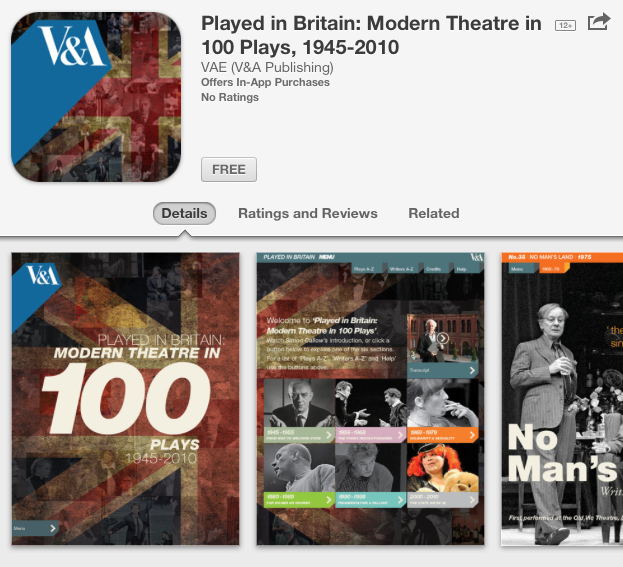
Evernote Camera Roll 20130519 141459Played in Britain: Modern Theatre in 100 plays, 1945-2010

This is a beautiful interactive book that looks at plays that have been performed in the UK from 1945 to 2010. It isn’t just about British plays either – any thing that was performed during that period.  Reviews, interviews, production photographs and so on. Suffice to say I bought it.

.

Basically just an ebook, but beautifully illustrated, on the history of Chinese theatre.

Chinese Theater for iPad

Evernote Camera Roll 20130519 141443.

.

.

.

.

.

.

For you techies out there are a number of magazines you can get for free:

Lighting and Sound America

Evernote Camera Roll 20130519 141457.

.

.

.

.

.

.

Make-up Artist Magazine

Evernote Camera Roll 20130519 141446.

.

.

.

.

.

.

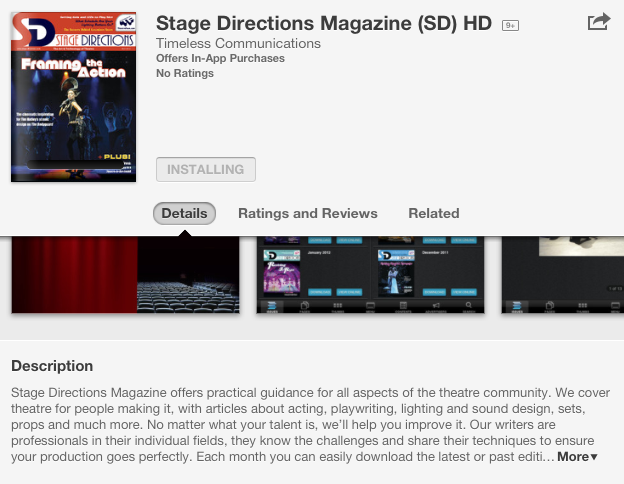
For all things techie Stage Directions Magazine

Evernote Camera Roll 20130519 141454.

.

.

.

.

.

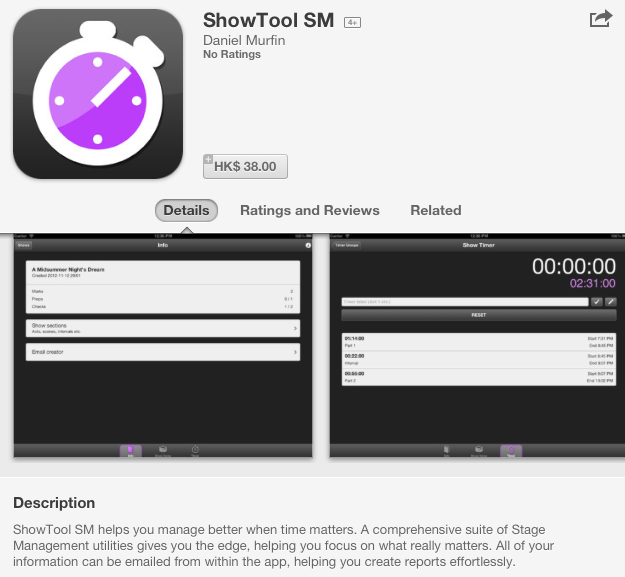
Now this is a super organisational app for stage managers, ShowTool SM

Evernote Camera Roll 20130519 141452.

.

.

.

.

.

.

An app to write plays with called, not surprisingly, Playwriter

Evernote Camera Roll 20130519 141440.

.

.

.

.

.

.

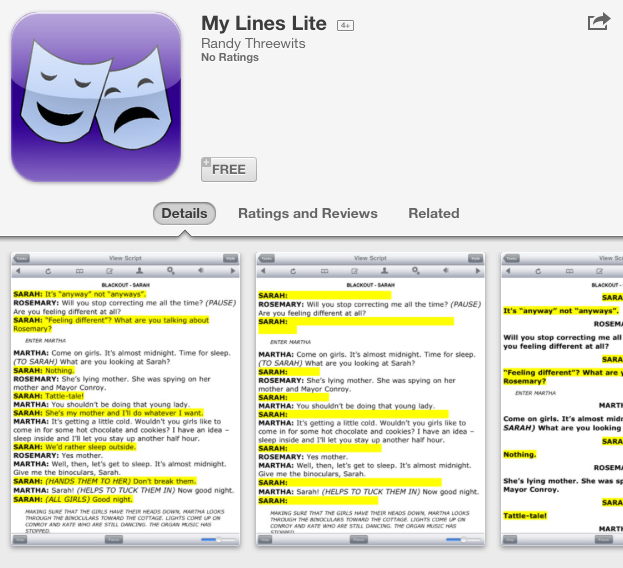
Now there are a few line-learning apps out there. This is one of the free ones, My Lines Lite

Evernote Camera Roll 20130519 141450.

.

.

.

.

.

.

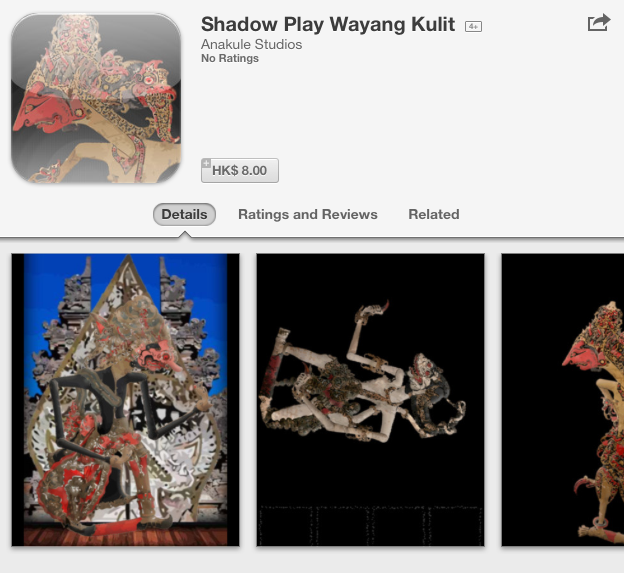
And finally a series of free little apps that bring various forms of Asian puppet theatre to the iPad, Shadow Play Wayang Kulit

Evernote Camera Roll 20130519 141445.

.

.

.

.

.

.

Human Rites

As I have mentioned recently, I have been doing a lot of thinking about the place of ritual in society and therefore in theatre. Being an educator, your life is dominated by ritual of sorts – the cyclical passing of the school year, graduation ceremonies and so 1340009907_59031on. As I write this, outside my windows, down in the bay, are the sounds of a Dragon Boat festival which celebrates the death of Qu Yuan, with the accompanying rhythmic drumming and traditional Chinese instruments. Again, ritual!

A week or so ago, I watched a TV documentary from the BBC entitled Feasts in which a writer, Stefan Gates, makes a journey across India to discover how feasts and celebration divide – and bring together – a turbulent nation that can be riven by religious tension and extremes of wealth. In it, he visits a society Hindu wedding in Rajasthan, which is outrageous in its extravagance, expense and show of wealth. Gates then travels to Kerala and experiences the Onam Festival, a Hindu celebration that brings this massive state of millions of people together, Hindu and Christian, rich and poor alike. Ritual.

I’m a regular visitor to India. I love the country , it’s people and all that it embodies, but I have never really explored why I have that affinity. Gates’ documentary made me come to a realisation – it is the ritual that exists in every aspect of the country’s life, and at every level, whether you are millionaire businessman in Bombay (my Indian friends tell me off when I use Mumbai), or a Dalit in Punjab. The difference between where ritual ends, performance begins and indeed, when it then turns in celebration, is all very blurred. Daily life feels like theatre in India. I’ve witnessed weddings in a tiny Maharashtran village, Uksan, that last for Holi, The Festival of Colors, Indiadays and combine ritual, performance and celebration in a cacophony of sound and colour. I think most people are familiar with the Hindu Festival of Holi – loud brash and immensely vibrant. And the fireworks! Indians seem to manage to squeeze fireworks into every event.

Gates’ programme itself is of course making a wider social comment about the immense kathakali2disparity between wealth and poverty in India. But he finds himself taken aback because in Kerala, The Onam Festival crosses all cultural boundaries, including religious ones. This is not a suprise, Kerala was on the old spice route and is a real mixture of east and west. Onam lasts ten days and includes many traditional dance and theatre forms including Kathakali and Puli Kali (Tiger Dance). The latter is pure popular theatre and Gates himself described it as intoxicating and an extraordinary experience. Again, Ritual.

So back to Artaud. Artaudian theatre is, by its very nature, a ritualistic theatre. It is intended to be full of passion and emotion in order to provoke an emotional reaction from the audience. It is intended to be void of rationality in order to probe at the mental status quo of the audience. The idea of the theatre is to appeal to the five senses and rarely anything else.

In an excellent post on Suite 101, David Porter talks about ritual as a key ingredient in performance.

Physical Theatre: Ritual is Key Ingredient in Performance-Making

Life’s rhythms revolve round rituals: daily tasks, birthdays, weddings and funerals. In creating meaning on stage, performers harness the power of rites.

Almost everything people do regularly has a ritualistic feel. Getting dressed every morning, preparing/sharing food, anniversaries, courtships, conducting business and great occasions of state – are rituals, patterns of regular human behaviour. Often, social convention rites/rituals dictate further ritual: for example, shaking hands on greeting, waving goodbye. Devisers of performance must reflect that in their creating. Then they have to experiment with it.

In psychiatry an action performed obsessively can be interpreted as evidence of compulsive disorder. It is often revealed in manic dance. A ritualistic dance or going through the regular motions of a life with all its tasks, may be called a rite. However, physical theatre practitioners use dance as but one element in the creative and experimenting process.

There is religious ritual as well as secular, a set of ceremonial actions like public worship, hallowed by time. Public performance and spectacle from the ancient Greeks

PentheusMediumto Medieval Mystery plays have drawn on religious imagery and symbolism to tell stories with messages. Performance is the enactment or creation of a version of myth, belief or historical event. It may be political, personal, social but it reflects human life through dance, drama, music or a mix of all three, performing arts.

Ritual in Performance Arenas

In ancient times, the sacrifices and appeasement of various deities informed crowd behaviour which became rites which became absorbed into theatrical convention……..Nowadays, sporting events like boxing, wrestling, football, cricket, rugby, baseball are played out in often circular spaces, a large audience around, perhaps increased by television viewers, and although it’s sport, it’s also entertaining spectacle that stirs strong emotions. The same applies to bull-fighting,…….. Son et Lumiere events, some street theatre activities and circus, whether people like the genre or not. When the floodlights go on, the event is heightened into pure theatre.

Evernote Camera Roll 20130517 150236[1]The New Zealand national rugby union team ritualistically precede games with the ka mata haka, a traditional Maori dance. This combines ancient warrior practice with psychological advantage for the participants by noh4demoralising opponents through a dance performance.In Japanese Noh theatre, slow, deliberate, ritualistic, symbolic movement characterises theatrical tale-telling, unchanged for centuries.
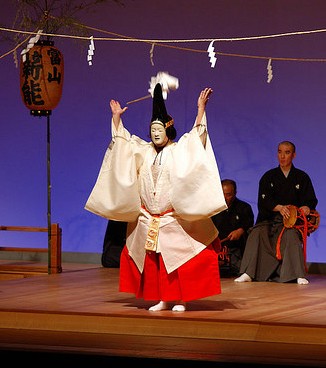
The theory that theatre originated in ritual was accepted by such practitioners as Jerzy Grotowsky (Polish), Peter Brook (English, but mainly resident in France), Arian Mnouchkine (French), Eugenio Barba (Italian) and Richard Schechner (American), all of whom have contributed ritual elements into theatre performance to restore its lifeblood at different times. Schechner has said that while performance is an inclusive term, theatre is one node on a continuum that reaches from the ritualisations of animals through life’s everyday rites to performances of great magnitude.

Artaud and Theatre of Cruelty

Attending traditional theatre has rituals of its own: tickets, ordering drinks, programmes, lights down, usually polite attention to the performance. Listening to a concert is similar, plus the convention of no-clapping between movements. Bertold Brecht broke traditions with his making strange (verfremsdungseffeckt), forcing audiences to know they’re watching performance by actors demonstrating a viewpoint.

Physical theatre tends to break old traditions. Antonin Artaud, (1896-1948) led with theories about assaulting the senses of the audience. His Theatre of Cruelty, total theatre ideas were heavily influenced by surrealism, oriental theatre, Balinese theatre, masks, magic and myth, colour, balicultureMS_428x269_to_468x312rhythm, sound, ritual, ceremony, spectacle, psychoanalysis, the drugs he took and the mental illnesses he suffered from.
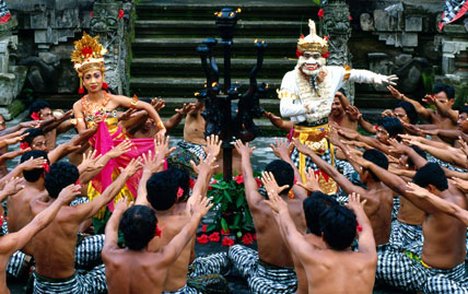
He explored the cruelty of existence rather than mere bloodshed or torture, the works he devised attacked spectators’ subconscious to release deep-rooted fears that they normal suppress and made them face their inner reality. The technique is both derided and imitated today. Anything in-yer-face, from the dark psychosis is broadly Artaud, and useful in physical theatre creation. To be ‘Artaudian’ means to risk everything in an experimental performance, acknowledging ritual or not. His name now signifies the theatre of scream, despair and inner torment.

One group who are exponents of physical theatre, risking through experimentation, challenging the traditional stage/performer/audience settings, are London-based Complicite. Founded in 1983, this is a constantly evolving Complicites-Shun-kin-002ensemble of performers and creators. Artistic Director, Simon McBurney, says that there is no Complicite method, but collaboration is essential. They constantly incorporate new stimuli, new integrations of music, text, image, visual art and action to create what he calls disruptive theatre.

Experiments arising from ritual produce fruit in the devising process. Most people are unaware they‘re partaking in minor daily rituals, but are deeply conscious of the great rites of life. Physical theatre, draws on that great force to create and experiment and so adds to the richness of that life they are celebrating, examining, exploring and fulfilling.

If you are feeling adventurous, there is a great chapter here titled RITUAL IN THEATRE (Ritual concepts in Artaud and Grotowski), which is taken from a PhD dissertation written by H. Sadasivan Pilla, which is really interesting. The dissertation itself, The Uses and Functions of Rituals in Malaylam – their relevance to the ritual concepts in the theatre of Artaud and Grotowski, focuses on the performance traditions of Kerala (where Mayayalam is the spoken language).

So that kind of brings me to a neat end, full circle, if you wish.

The Master of the Postmodern

Having posted about Not I yesterday, I went on a bit of a search to remind myself which other Beckett plays are out there and I am going to share my favourites today.

Beckett4-2006-photo-©-Ponch-Hawkes

Top of the heap is Endgame which I think is my favourite of Beckett’s work. I last saw this at The Eleventh Hour’s beautiful little theatre in Fitzroy, Melbourne with a group of students and it was done so well. The characters are marvellous – Hamm (above left), Clov (above right), Nagg and Nell. Take the time to watch this great production starring Michael (Dumbledore) Gambon as Hamm

.

You can’t of course present a series of his plays without showing the most famous one, Waiting for Godot

.

.

Another of my favourites is Krapp’s last tape starring none other than Harold Pinter.

.

.

I really like Play too

.

.

And then there’s Breath

.

.

And finally, Come and Go, which varies between 121 and 127 words in length, depending on the translation – and where his ultra specific staging notes are significantly longer than the actual play!

.

A veritable Beckettian feast!

.A veritable

Notice that the stiffest tree is most easily cracked, while the bamboo survives by bending with the wind

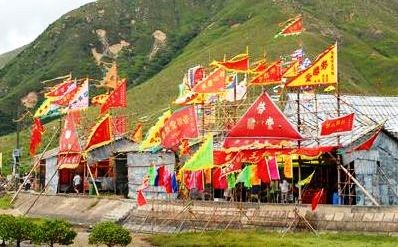
So said Bruce Lee, apparently. The reason for me quoting the Hong Kong legend is that it is bamboo theatre time in his home city. Throughout the year in town centres, village squares, on football pitches and car parks across Hong Kong these beautiful temporary bamboo structures spring up and disappear.

shek oThey house Cantonese opera performances at festival celebrations throughout the year. They are works of art in themselves. For those of you have not visited Hong Kong bamboo is the king of construction. We might have a harbour skyline from the future, but the scaffolding that allows the futuristic skyscrapers to be built is bamboo, not steel, even in 2013. There is good reason for this, it’s not just tradition. Hong Kong suffers from typhoons (or hurricanes if you are from the Americas) so if a big one comes in, a flying tower of bamboo does far less damage than one of steel.

So, our temporary theatres are built entirely by hand, using bamboo, usually by fewer than ten workers, and they are held together with nothing but plastic ties. The biggest theatres can hold up to 6,000 people. This also means they can be built in the most unlikely places. The one above is the car park of a seaside village, Shek O. The ones below are on a rocky sea outcrop on the Po Toi Island.

Picture1Sadly though, in the last couple of years, I’ve noticed that these beautiful buildings are being replaced by steel-frame stages, rather than bamboo, because, apparently, they are easier to assemble and require less-skilled workers. Such a shame! However, and even more sadly, the decline of the bamboo theatres matches the decline in the popularity Cantonese Opera itself. My students tell me that it is viewed as something for our grandparents.

There is a really interesting article here from the Urbanphoto blog with an interview with bamboo master Ying Che, who married into a family of bamboo masters going back three generations. I’ve Tweeted it too.

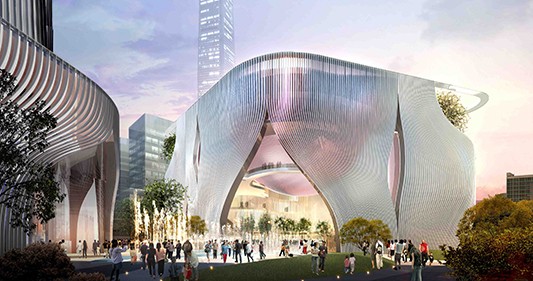
Hau wong - Tai OThere is a great irony in all of this though. In an attempt by the Hong Kong government to compete with Singapore as THE asian arts hub, we have under development a project known as the The West Kowloon Cultural District (WKCD). Located on waterfront reclaimed land, the district will feature a new museum of visual culture, numerous theatres, concert halls and other performance venues. It has been dogged by a series of problems, but is now finally making progress. I celebrate it – it’s a wonderful and expansive project. One of the first buildings to have its designs approved is the Xiqu Centre. According to the WKCD’s website;

The Xiqu Centre will symbolise the importance of Xiqu [Chinese/Cantonese Opera] and its rich heritage for our city. It was conceived to support and promote Xiqu as a contemporary art form making it accessible to new audiences, and keeping this remarkable piece of our heritage alive for future generations.

This is what it will look like:

west-kowloon-bamboo-theater-12So how did we celebrate the finalizing of the design for Xiqu Centre?

We built this:

west-kowloon-bamboo-theater-0In fact Ying Che and her family built it. If you click on the image below, you can see some images:

west-kowloon-bamboo-theater-2You can get a better flavour of the theatre in this video:

And why am writing about all this? Well I think Hong Kong seems to have managed to marry modernity and tradition in a way that other Chinese cities haven’t. I hope that by promoting Cantonese Opera and its heritage through the yet to be built Xiqu Centre will keep our bamboo theatres alive too. I’d hate to see them disappear and be replaced by their steel contemporaries. I hope the WKCD people see the beauty in building a bamboo theatre every now and again on their spanking new site. I think I might start a campaign……anyone join me?