Paper Cuts

There is a history of shadow theatre right across the globe, stretching back centuries, as I have talked about here before. However, recently it has reached a mass audience in a new incarnation through the work of companies like Pilobolus – although I have to say, for me, once you get over the initial ‘wow’ factor it all becomes a little samey – having said that Pilobolus do some excellent other work too (see my previous post).

What I want to share today is the truely amazing work of Davy and Kirstin McGuire. Take a look:

.

Modern technology has just pushed the shadow play into a brand new era.

.

Icebook is their most famous piece to date and you can read about it’s making by clicking the image below:
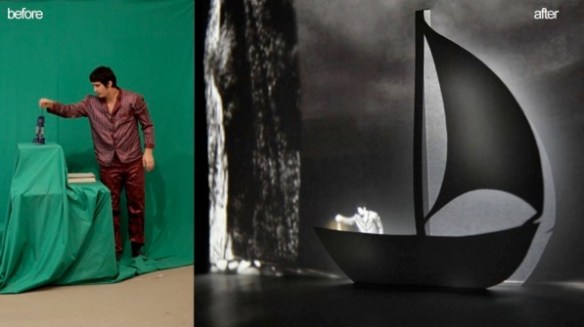
boatbeforeafter-670x376They are about to open a new show called The Paper Architect which introduces live actors to the mix.  Here is an interesting article/interview written by Lyn Gardner in The Guardian this week:

Pulp fiction: bringing pop-up paper theatre to life

Magical and exquisitely crafted, Kristin and Davy McGuire’s miniature model universe is full of visual wonders

The 'Paper Architect' theatrical project by Davy and Kristin McGuire

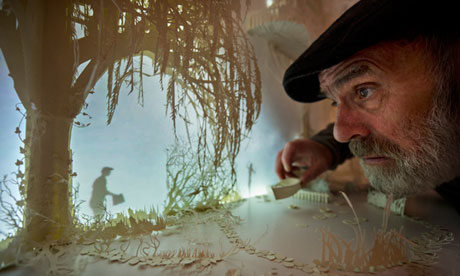
Davy McGuire grew up as an only child. He lived in his imagination, warding off loneliness by building tiny houses for tiny imaginary people. Several decades on, he is still at it – but now he makes them with his wife, Kristin. Together, the McGuires construct worlds made entirely out of paper, which are then given life with the aid of projections, optical illusions and the intervention of actors.

“We never set out to work with paper,” says Kristin. “It just grew out of curiosity. We weren’t model-makers. I didn’t even know how to cut paper. We’ve just had to acquire the skills as we’ve gone along.”

The McGuires…..are just two of a modest but intriguing wave of artists exploring the creative possibilities of paper. They include Paper Cinema, who create exquisite DIY films from cornflake-packet cutouts and an overhead projector, and the visual artist Yuken Teruya, whose take on paper carrier bags can currently be seen in an exhibition called – what else? – Paper at London’s Saatchi Gallery.

Actor John Cording of the 'Paper Architect' theatrical project by Davy and Kristin McGuire

Walk into the McGuires’ studio in Bristol, where they work in the company of their dog – called Cat, but of course – and you enter a world that feels like a last outpost of a 19th-century realm of illusion and magic. Illuminated paper butterflies dance in jam jars, a row of intricately detailed Edwardian houses complete with iron railings and washing lines recall a doll’s house, and a rural scene featuring pools and weeping trees sits waiting to come alive. All of it is made, by hand, entirely from paper. An exquisite birdcage smaller than my little finger represents hours of painstaking work for the couple, who met at college in the Netherlands, where Kristin, who trained as a dancer, cast Dartington College graduate Davy in one of her pieces.

“I kept asking her: now we have developed a professional relationship, can we have a private one too?” he smiles.

Both were interested in exploring the boundaries of performance (Kristin is a former national rhythmic gymnast), but neither imagined their lives would become so intricately bound up with wood pulp. One day in 2009, Kristin shone a light behind a pop-up book, and they began speculating whether it would be possible to turn a book into a theatre show. Even the Maguires aren’t entirely sure quite how they should describe what they do, which embraces installation, dioramas, music videos, animation and performance.

“Maybe you wouldn’t describe a lot of what we do as theatre, but it’s always got strong theatrical elements,” says Kristin. Their first pop-up theatre venture, The Icebook, was certainly different – a delicate fairytale that mixed paper and animation to such cunning effect that the experience was like falling headfirst into a pop-up story from childhood. The whole thing was so fragile, it felt like a dream.

The McGuires saw The Icebook as a miniature calling card, and were surprised when it became an international hit. “We thought of it as a try-out for a bigger show,” says Davy, “but people enjoyed its intimacy.” Kristin agrees: “When you start playing with scale, it makes people look in a new way. Their focus is different. They start seeing the detail and all the small moments in the story. In a digital world, there is something appealing about something which is hand-crafted. With CGI, you can just conjure up something so quickly and easily, but when it’s made by hand you can see beauty in the tiny imperfections.”

Davy nods. “People always ask how it’s done, but we don’t want to tell them. It’s not just for commercial reasons, but because we want to keep the element of magic and surprise.”

The 'Paper Architect' theatrical project by Davy and Kristin McGuire

Nonetheless, despite the success of The Icebook, last Christmas the McGuires expanded their scale to create a stage version of Diana Wynne Jones’s children’s novel Howl’s Moving Castle at Southwark Playhouse. Undaunted by the worldwide success of Hayao Miyazaki’s 2004 animated film version, the McGuires set out to create their own take on the story of a young milliner called Sophie who must try to escape the curse put on her by a witch.

“It was a good experience, but a stressful one,” recalls Kristin of the show, which combined pre-recorded narration by Stephen Fry, live actors and a pop-up castle upon which was projected hundreds of images. The castle was acclaimed as a thing of visual wonder, but juggling all the different aspects of the production was a steep learning curve, and one that the McGuires were not keen to repeat too quickly.

As a result, The Paper Architect, supported by £37,000 from the prestigious Oxford Samuel Beckett Theatre Trust award, which aims to support theatremakers working in unusual and innovative ways, combines live action with animation. Once again it employs a tiny scale, this time to tell the story of a lonely elderly man who is about to be evicted from his studio, and who is wondering how life might have turned out differently – a melancholic piece that, the McGuires hope, combines reality and imagination in powerful ways.

“Perhaps that man could have been me,” says Davy, “if the lonely child had grown into a lonely old man. I know that character.” For all sorts of reasons, we should be glad he didn’t.

Burying Brecht?

I recently came across a great way of sharing audio streams,  soundcloud.com. A lot of theatres and practitioners are using it as a way of sharing panel discussions. I have set up a sister site to this one so I can add to the diversity of what I post here. I won’t always duplicate posts or what I subscribe to on soundcloud so check it out occasionally to see what I have re-posted. You can find Theatre Room Asia on soundcloud here.

I am going to share a great one today, which is a panel discussion of German and English theatre practitioners on the relevance of Bertolt Brecht and Brechtian theatre in the modern theatrical landscape.

brecht

To coincide with our production of A Life of Galileo, and in collaboration with the Goethe Institute in London, the Royal Shakespeare Company (RSC) hosted a ‘Brecht Meeting’ of British and German theatre makers in March 2013.
Chaired by Mark Ravenhill (RSC playwright in residence and writer of our new English version of A Life of Galileo), we explored the relevance (if any) that Brecht has for us as contemporary theatre makers.

Has Brecht now become a familiar ‘classic’, who can be produced in the same way that we might play Shakespeare or Schiller?

Does he still present challenges that allow us to ask important questions in the making of new theatre?

Should we bury his work and move on as though he never happened?

.

And if would like to, you hear an interview with the director of A Life of Galileo, Roxana Silbert, with journalist Paul Allen.

.

Practical Explorations

Well, I’m now on vacation. I have spent the last week packing up my department. When we return in August we are moving into brand spanking new facilitates, state of the art teaching and performance studios, and we are all very excited. So many possibilities. Amongst all this I watched a truly inspired performance of Artaud’s Spurt of Blood by our Theatre Arts students, more of which I will share in another post. What a week!

But enough of all that.  What I want to share today is another blog Chasing The Trickster. It is written by Ashley Scott-Layton, who is an English writer-director and it charts his travels across Europe to discover more about European theatre practice (and how it differs to that of his homeland). In his own words, the blog will track my forays into the rehearsal rooms of Europe, where I hope to learn more about the exciting theatre cultures of each country.

basal

It is a fascinating read and you can drop in and out as you wish.

By the way, the name of his blog comes from European folklore where The Trickster is a shape shifting rogue known for disobeying normal rules and conventional behaviour.

Puppets For Peace

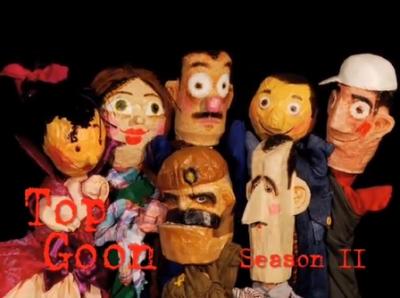
In another much more serious article, also from The Observer, David Betty writes about a group of puppeteers from Syria who are taking their work on tour in an attempt to bring about a peaceful end to the awful atrocities that are taking place there. If you click on the first image below, you can watch a short documentary made by Betty and Mona Mahmood, about the making of Top Goon: Diaries of a Little Dictator

Syrian satirists take puppet show into war-torn towns to mock Assad regime

Masasit Mati launched the online show Top Goon in 2011 to lampoon Assad. Now they’re taking it to the streets

For a group of anonymous Syrian artists who have mocked Bashar al-Assad and criticised the armed resistance, it is a bold move. Masasit Mati, creators of the YouTube finger-puppet show Top Goon: Diaries of a Little Dictator, have begun to perform the satirical series live inside the war-torn country in an attempt to bolster peaceful protest and spur the revolutionary art movement.

top_goon

The series, which will be shown in London next month as part of the Shubbak festival of Arab culture, caricatures Assad through the puppet Beeshu, the brutal, childish son of a dictator with a beaky nose and saucer-shaped ears. He is protected by his sinister and unquestioning henchman, The Goon, while ordinary Syrians are portrayed as brave and idealistic.

Speaking via Skype from Lebanon, the show’s director, Jameel, said they decided to use puppets to protect the identities of the 10 artists involved and because their small size “was a good way of lampooning the regime that presents itself as godlike”.

The episodes were filmed in Beirut, with the puppets and props smuggled out by the artists. “We disguised the puppets, especially the one of Beeshu,” said Jameel. “We gave him a moustache and extra hair. Otherwise, everyone would have recognised him.”

The first series, launched in autumn 2011, attracted more than 200,000 views on YouTube and was broadcast on the Dubai-based Syrian opposition channel Orient TV. But escalating violence and power blackouts shrank the domestic audience for the second and third series. So in January the group surreptitiously travelled into the rebel-held town of Manbij in the northern region of Aleppo to perform live in an arts festival organised by local activists. The town had enjoyed relative calm for a month, with no attacks or kidnappings, but on the day they arrived it was bombed by Assad’s forces, leaving 12 dead and dozens more wounded.

“We were very shocked and the organisers of the festival thought it should be delayed,” said Jameel. “We felt we couldn’t wait another week, but we didn’t want to gather people indoors in case there was another air strike. So we performed some of the episodes in the street during a protest [about the bombings].”

Syrian Art - VideoTop Goon draws on Assad’s speeches and biased state TV coverage of the uprising to highlight and subvert the regime’s propaganda.
In the episode Prostitute Media, a protester is forced to confess to being a violent criminal on an official news programme, saying: “I held an olive branch in my hand … I mean I was holding an RPG [rocket-propelled grenade], a nuclear bomb, pistols, rifles I got from al-Qaida.”

The series has also been critical of the armed resistance. In the episode Monster, Beeshu tortures a protester and taunts him to take his revenge. The prisoner attacks and strangles the dictator, who then gloats: “I told you, you’re a monster, just like me.”

.

Jameel said the live performance was “also about testing out the boundaries of the new regime in the liberated areas”. He added: “It’s one of the regions suffering now from the temptations of the Islamists and sectarianism. We were apprehensive about how they would react to one actress – hearing the voice of a lady who was making fun of a famous singer with this kind of sexy voice. But we felt very welcomed and respected.”

The group is preparing for live performances in Aleppo and the northern regions, which it hopes will support local artists. Arts committees and newspapers have been set up in rebel areas, but some have been shut down by hardline elements of the Free Syrian Army.

“There’s a whole civil society that’s being ignored by activists and the estern and Arab media, ” said Jameel. “We’re trying to come up with a concept of street theatre where we’ll go to an area, put on a show, then teach the people how to make puppets and put on shows. What keeps people alive is bringing them hope.”

If you want to read more you can here in The Washington Post, or here in Global Post and there is a fantastic documentary here: Little Dictator – Witness – Al Jazeera English.

Speak Up!

A couple of posts from me today. Firstly this article published in The Observer today. Written by Dayla Alberge, it is a bit of a tirade from two leading figures in the theatre world who consider that language is being mangled on stage in bid to imitate American film stars – and audiences are being let down.

mumbling

Imogen Stubbs hits out at mumbling actors

Too many actors mumble their way through their lines, neither enunciating nor projecting words clearly enough for audiences to understand them, according to leading figures in theatre.

Edward Kemp, artistic director of the Royal Academy of Dramatic Art (Rada) and actress Imogen Stubbs are infuriated by the mutterers, who they believe let down playwrights and audiences. Kemp said that some directors and producers encouraged mumbling, believing that “laidback mumbling is more truthful”.

Stubbs, who has appeared in scores of stage roles, including the part of Sally Bowles in Cabaret and Desdemona in Othello as well as film and television dramas, added that muttering – with its lack of variety and tonal interest – was perhaps a misguided attempt to imitate American film stars. “It was so drummed into us at drama school that ‘it’s unforgivable not to be clear and heard’,” she said.

The problem is so serious that Kemp fears “plays of language” – including works by Shakespeare, Wilde, Coward and Pinter – could eventually become so opaque that audiences will stay away. Already, he said, “we are on a knife-edge with Restoration comedy … It’s hard to find people who can teach and direct it”

Kemp and Stubbs regularly encounter stage mumblers. Kemp said: “There’s usually someone [about whom] you think, ‘sorry, what?'” Stubbs appeared in one production where she even found herself having to lip-read a mumbling co-star.

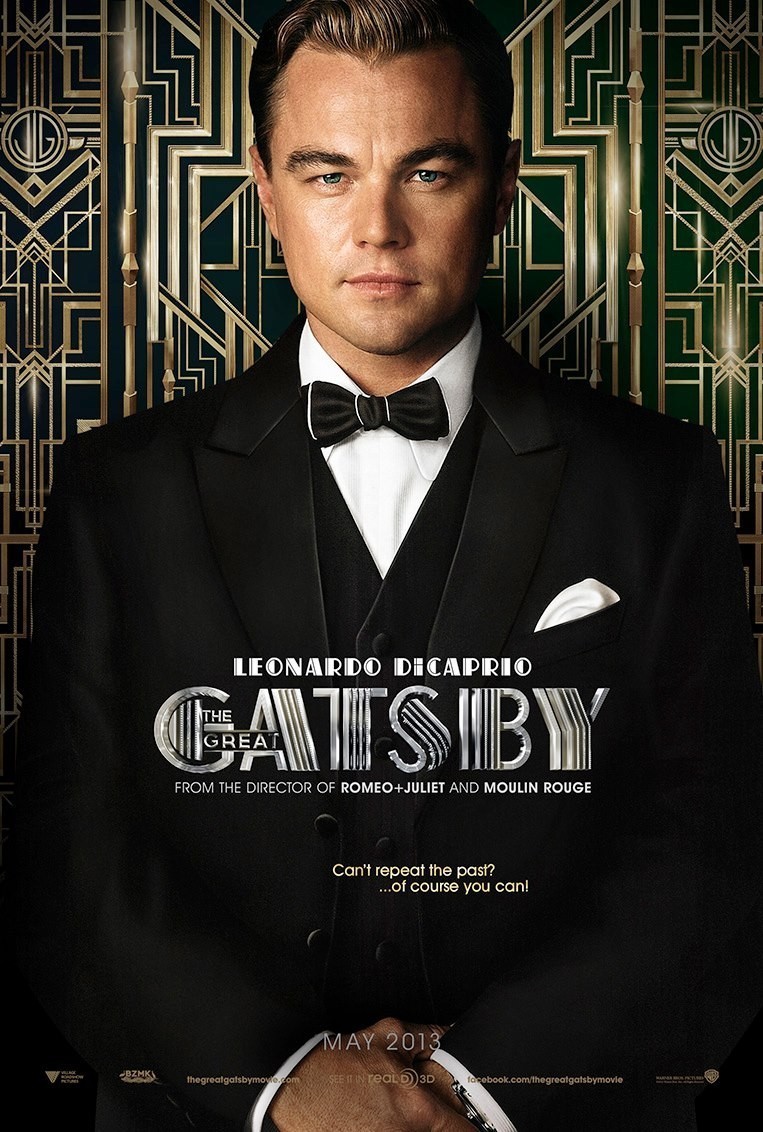
Although their criticisms focus on theatre, they are also irritated by mumbling in film and television, including Baz Luhrmann’s The Great Gatsby. Stubbs, a Rada council member, questioned whether Luhrmann had heard of commas or full stops.

2013-04-The-Great-Gatsby-Poster-7

“You’re just longing for it to stop and breathe. I thought the actors looked embarrassed. They were rather garbling their lines.”

Kemp, also a playwright, feels that part of the problem lies in actors being encouraged to improvise scripts, delivering “something like [what’s] on the page”, rather than the writer’s finely crafted original. “A lot of directors want you to jazz it up,” he said. The demise of repertory theatres has robbed young actors of opportunities to learn the craft of using the voice, while typecasting has also taken its toll, Stubbs suggested.

“The naturalistic, mumbling acting style tends to go with people who are playing something closer to their obvious self … People who are playing against their obvious self tend to embrace the acting a bit more,” added Stubbs.

While keen to acknowledge the excellence of some young actors, Stubbs senses that others are terrified of being caught sounding “like an old-fashioned actor”. But she added: “Acting is playing. You are pretending. Simon Russell Beale or Alex Jennings are theatrical actors who are naturalistic. You can hear them and people love them.”

Part of the problem also lies in the education system. Teenagers leave school unable to understand what they are asked to read, with no apparent relationship with language, let alone a sense of how to shape it, Kemp said. There is no longer a guarantee that even someone with an English degree from a leading university could handle this stuff, he added.

“We’ve had to change our training to adapt to teenagers [without] the faintest notion of basic grammar,” he said. He had a first-year student with English A-level reading a Shakespeare sonnet. “It made no sense to me whatsoever. I said, ‘can you just read out the nouns to me?’ He had no idea what a noun was.”

Rada has introduced grammar classes because of this problem. Kemp spoke of one student – an Austrian – with a finer appreciation of English grammar than a room which included at least one Oxford graduate.

Audiences are voicing frustration online. Stephen Dillane is among actors whose mumbling has irritated them.

the-tempest-006

“Dillane has been Mumbleman for years,” one wrote. “I caught Dillane’s Prospero at the Old Vic, like the rest of the audience couldn’t hear a word and was bitterly disappointed,” wrote another. “I still went along to see him at the Almeida in Masterbuilder but again, he was in a world of his own, totally pre-occupied with his own performance – absolutely no connection with the audience and worse, giving nothing to his fellow actors.”

Older actors draw on the subtleties of pitch, timbre and tempo – crucial for big spaces, yet they have “gone out of the culture”, Kemp said, with today’s actors relying on volume. “You can’t stress through volume, you have to stress through other things … I don’t always struggle to hear, but I do often struggle to understand. There’s the audibility thing and there’s the connection thing.”

Of course, every actor mutters sometimes, and Stubbs joked that her criticism could come back to haunt her.

Singing Sweetly?

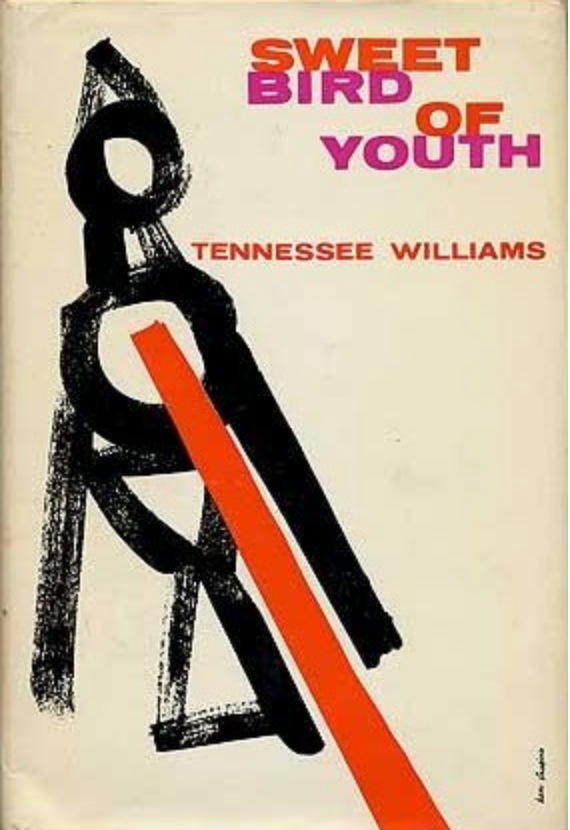
The crazy nature of the end of the academic year has kept me away from here for a couple of weeks; so much to do and so little time to do it in. I’ve got a backlog of things to post and will get going once term is over. However, I thought I would share this article with you that was published in The Independent a few days ago. It is written by playwright and dramaturge, James Graham and talks about his adaptation of Tennessee Williams’ play Sweet Bird of Youth.

Sweet Bird of Youth: A journey in search of Tennessee

Sweet Bird of Youth was torment for its author to write, and in adapting it James Graham had to confront his own fears of ageing

Untitled 3_Fotor

My confession is that I’d never read, seen or barely heard of Sweet Bird of Youth before the director Marianne Elliott introduced me to it. Possibly you haven’t either. For many it’s the blind spot in an otherwise familiar catalogue by that genius American playwright. It has something of a reputation for being… well, a “bit of a problem”. It’s a gruelling challenge to produce, certainly. But having been on this journey for the Old Vic’s new production of the play, I firmly believe it’s a valuable one. And, as a playwright used to writing original work (my latest This House just ended its run at the National Theatre), the notion of dramaturging someone else’s play – whereby an existing text is analysed and edited – was unknown territory for me.

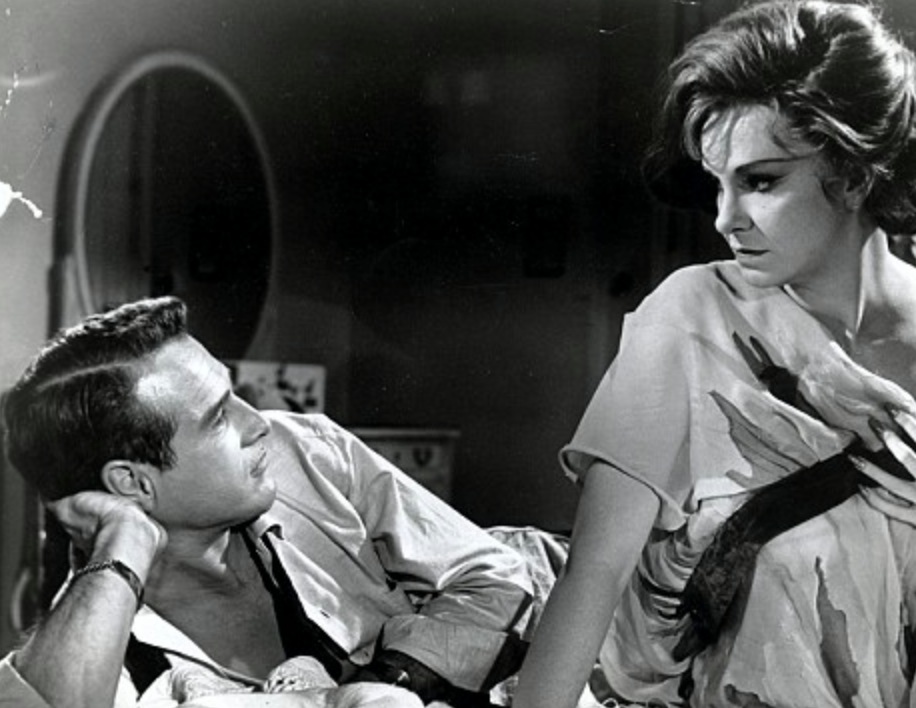
This is without doubt Tennessee’s most personal piece. His life’s turmoils are blazoned throughout it – the loneliness, regrets, the self-loathing and self-doubt. It is a day in the life of Chance Wayne, who used to be “the best-looking boy in town”, returning to St Cloud at the age of 29 – not old, but not young-young any more – to get the girl. But there is violence in the air, accompanying the prodigal son’s return…

What I hadn’t expected was not just how the themes of this neglected masterpiece would grow to haunt me as a young(ish) man, but how much my journey in search of Tennessee, and the discovery of how much this one tortured him – really, truly, tortured him – would affect me as a playwright.

Untitled_Fotor

So why does Sweet Bird of Youth need someone to dramaturg it? First, I hope it goes without saying how presumptuous and unworthy I felt and still feel, fiddling and faffing at the altar of a master and one of my heroes. The reason we felt justified in our quest is because Tennessee himself confessed that this play eluded him. He spent nearly two decades writing and rewriting, long after productions had opened and closed, long after film adaptations and printed texts appeared. There are an eye-watering numbers of performable versions. In some of them characters survive, in others, they don’t. Endings are sometimes hopeful, in others gruesomely tragic. Most theatres will pick one version and do that one. Not good enough said Marianne and the producers at the Old Vic. So we set off on an adventure to pull together all the strongest elements of all the drafts of all the versions in order to create the very thing that Tennessee failed to find himself – the perfect version of Sweet Bird of Youth. If such a thing is possible…

And to avoid any hubris, it obviously isn’t. Art is too subjective a thing for there to be a “best” or “perfect” type of anything. All I could hope to do was compile the version that made most sense to me. And to do that, I had to work out what Tennessee’s obsessions and motivations were when writing it and refusing to let go. And to find that out, I had to go to Texas. This is the world of Williams – all Southern Belles and raw masculinity; hot nights and tequila and piano music in the dusty streets.

My first thought as I pulled up a chair in the reading room of the Harry Ransom Center in Austin was an odd sort of sadness at the realisation that I and my contemporary playwrights hardly write anything down any more, physically on paper. Any future collection of my own humble dramatic efforts will be assembled entirely on a USB stick. Where’s the romance in that?

Thank God Tennessee was writing in a different age, where his typed manuscripts still bore the coffee stains and the yellowing of cigarette smoke. Where his actual, real-life handwriting adorned the pages (I got far too excited by this).

It’s funny how, when playwright meets playwright, the first thing we often want to talk about is not the themes of our work, or style or form or all that arty stuff. It’s what font we type in. Do we double space? Final Draft or Microsoft Word? Get up early or stay up late? The process. Well here was a window into Tennessee’s. He wrote Sweet Bird hopping from hotel to hotel along the gulf coast – very much the world of the play. I know this because he typed his draft on the hotels’ own stationery, with their logos inscribed upon them. Names like “The St Charles, New Orleans” or “The Robert Clay, Miami”. It made it possible to track his progress through the States and through the play. As though he were chasing it back to his own troubled past in the South. Or running from something in his present, perhaps.

P1010479_FotorIt was seeing comparatively mundane aspects of playwriting that excited me – like watching him search for character names (which always feels overly important – I’m sure my contemporaries will agree). He got more confident and romantic. Valerie becomes the much more quixotic Heavenly. Phil Beam becomes the more screen idol-sounding Chance Wayne. As Kim Cattrall, who plays the Princess, also known as Alexandra Del Lago, in our show, observed in rehearsal to me: once our hero was given that name, his tragic fate was sealed.

Names are important.

Punctuation is also important. It was a thrill to work out Tennessee’s code – how his ellipsis (…) would differ in meaning to a dash (–) in ways that are different from my own. These are a writer’s tools (I’ve recently discovered the joy of the semicolon in expressing the intended rhythms of my sentences). In building my own draft, it felt like slipping on someone else’s tool belt. It wasn’t mine, but it fitted.

And so what are the results? Well, I encourage you to come and see. My commitment from the beginning, in uniting the different narrative strands, was to return the play to Chance Wayne. Possibly this is because his dilemmas resonate so strongly with my own. He is 29 years old, and so was I when I began, obsessing irrationally about age in that hinterland between youth and middle age. He is beginning to panic about the choices he has made, which render him unsettled when friends back home have grown roots. He is a self-destructive character, standing in the way of his own happiness in relationships and life due to his insecurities and flaws. He is paralysed by the unstoppable passage of time, and his inability to reconcile past bad behaviour. Ditto, ditto, and so on. And it’s this raw pain that I have tried to bring to the fore, amid all the poetry and romance that is standard Tennessee. Everything that hurts about the human condition is here. Tennessee once described this writing period as the toughest of his life. He looked himself straight in the mirror and asked hard, ugly questions about what he saw. I think it only right we don’t shy away from that here.

That’s not to say it isn’t funny. Because life is funny, even when it hurts. That’s not to say there isn’t humanity, and hope. There is hope simply in the writing of, and telling of, and in our case retelling of, these stories. Because in getting together in theatres and looking at who we are and what we do, there must always be hope that we can save ourselves.

But does Chance save himself? Well, that would be to give away our ending…

Silent Listening

Following on from my post about mime a few days ago, I have found audio interviews with the some of the performers I mentioned, courtesy of Exeunt Magazine.

Firstly from UK-based theatre company Stan’s Cafe (pronounced ‘caff’) on their latest production The Cardinals, ‘a chaotic and jubilant romp through key Bible stories, the Crusades, and with a final gesture towards Israel/Palestine’s current turbulence’. Graeme Rose, Gerard Bell and Craig Stephens, and director James Yarker, discuss the show with host Dorothy Max Prior:

And secondly, Phil Soltanoff discusses the revival of his piece Plan B, a collaboration with Aurélien Bory’s  Compagne 111 (of Sans Objet in my previous post), celebrating its tenth anniversary as part of the London International Mime Festival. With Dick McCaw, he explores issues surrounding circus, authorship, visual dramaturgy and geometry onstage:

And finally one I didn’t mention, but would like to share is, Letter’s End, by theatre clown Wolfe Bowart of whom it is said
.
combines the pensive humour of French physical theatre with the slapstick of Charlie Chaplin, [and] with the aid of an array of marvellously inventive props and surprises
.
02_Wolfe_Bowart_in_Letters_End_-_Photographer_David_Wyatt_1
In this discussion, hosted by Dick McCaw, Bowart discusses trade secrets, the nature of the clown, and his 99-year-old grandmother-in-law’s take on his work:
.
.

24 Hours In Theatre

TweetWhen I saw this tweet this week I was intrigued. I wrote about Not I recently but a play that lasts 12 hours? I got researching. It is the first time I have heard of the Nature Theater of Oklahoma and their work, Life and Times. I started to read the reviews for the show (which is not yet finished – it will be 24 hours long when it is complete) and they were uniformly rapturous – usually getting 5 stars – The New York Times, The New Yorker, The Telegraph – and so on. So what is it all about?

Well essentially it is  a suburban American life story told in 10 episodes (1 to 5 have been completed so far). It is the brainchild of Kelly Copper and Pavol Liska, the team behind the Nature Theater of Oklahoma, which has been gathering kudos, commissions and cultural awards all over the world. They specialise in collecting the raw material of life, its conversations and events, and conveying them straight to the stage. Verbatim theatre in its essence

life_and_times_-_episode_ii__6___anna_stocher_-_burgtheater_wien

Sixteen hours of telephone conversations will eventually form 10 episodes to make 24 hours encompassing the whole of a young life. The chats used as raw material for the piece are all collected from Kristin Worrall, a performer and musician who works with the company and were promoted by the question, Can you tell me your life story? You can read about the whole, totally fascinating process here in an article entitled ‘Theatre is awkward, weird and dirty’: Nature Theatre of Oklahoma head this way.

There is some more great information here.

Caden Manson wrote on the Contemporary Performance Network

The Life and Times draws its source from the minutely detailed narrative that Kristin Worrall, a member of the Nature Theater of Oklahoma, transmitted by phone to Kelly Copper and Pavol Liška. For 16 hours, this 34-year-old American answered their questions, recounting her very ordinary life, from the cradle to the present day to them. From birth to the age of seven, then from eight to 14, from the most trivial to the most striking memories, episodes 1 and 2 probes her childhood and early adolescence in a cosy American suburb.

Actors from the Nature Theater of Oklahoma perform on stage during a dress rehearsal of the play "Life and Times - Episode 2" in Vienna

It is the period for first times, first emotions, first pain, first rebellion: the period in which molehills seem like mountains. This daily life obviously has something to tell us. We share it in one way or another. It concerns us but, the victims of habit, we no longer see it. Kelly Copper and Pavol Liška’s idea consists in fact in giving this banality a literary, aesthetic and emotional value: the phone conversation was therefore transcribed word for word, without any cuts or corrections, including the “huhs” and “ums”, the “you knows” as well as digressions, slips of the tongue and pat expressions. Set to music and sung in the image of a musical, rigorously choreographed following a totally Soviet inspiration, the conversation turns out to be a genuine dramatic chronicle. Funny, intelligent, fetishist, hypnotic through their repetitive loops, the first two episodes of Life and Times, among the 10 that the cycle will have, which can be seen consecutively or separately, have the virtue of establishing an almost inseparable relationship between the actors and the spectators. Anyone can become dependent on them, in the same way as we can become dependent on an American TV series that goes into the thousand and one details of daily life. But here we also discover all the magic of theatre: regulated with virtuosity, the acting of the fabulous actor-singers constantly challenges the spectators who identify with this bittersweet apprenticeship of life.

Hands Up

Roll with me today……there is a bit of a preamble before I get to the heart of my post. One of the many joys of teaching in an international school is that you are not tied to any one national curriculum, which means you can create a programme of study that you know is right for your students. We are currently reviewing the curriculum for our younger students, which is always fun and generates a lot of discussion. We have just decided to include mime mimeagain and it got me thinking about the the form. In the past we used examples from Charlie Chaplin and amongst others, Mr Bean. Thankfully we have moved on from that after we realised the real purpose of teaching mime was to get our students to consider and understand, more generally, the power the actor has to create belief for the audience by simply using their bodies.

What fascinates me is when I first mention mime, students default to this (right) as their understanding!

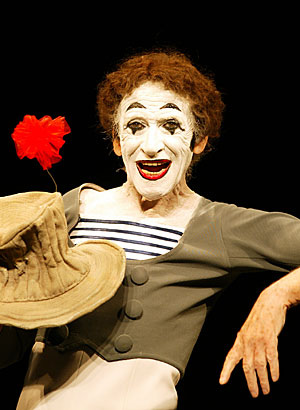
Now whilst these basic skills are part of mime, they are just that and there is so much more. Yes of course there are a many famous mimes, Marcel Marceau (below) being one of the best known, painted white and doing their thing. But there is so much more to mime and I think this is what should be thinking about as we write our new curriculum.

1431271523_11eb419e08So I got researching and this is my post today – mime in the 21st Century.

There are mime festivals all over the world, for instance, in South Korea, and Poland. Similarly there are mime companies all of the world, E Movement Theater in Japan and Mime India to name but two. Now the reason I say this because mime is often viewed as a western theatrical tradition, but that couldn’t be further from the truth. Consider Kathakali, Indian epics told with facial expressions, hand signals and body motions, and Noh with its use of mask work and highly physical performance style. In fact the latter was said to have influenced two of the greatest western mime practitioners, Jacques Copeau and Jacques Lecoq. Even Butoh is considered by some to have its place in a (much) wider definition of mime, although I am not convinced myself.

One of the oldest and most famous mime festivals is the London International Mime Festival that began in 1977 and if you take a trawl through their recent programmes you can see that the definition of mime is far wider than we tend to think. Here are a few examples:

Yeung Fai’s Hand Stories from China

.

Stan’s Cafe’s The Cardinals from the UK (and old friends of mine)

.

and Hiroaki Umeda from Japan with two works, Haptic and Holistic Strata

.

.

I’ve had the good fortune to see a couple of peices in the last year or so that I would absolutely consider to be from the genre:

LEO by Circle of 11

.

and Aurélien Bory’s Sans Objet

.

While I was researching this post I came across a couple of quotes from Nobuko and Terry Press that stuck a chord with me:

Mime is largely a misunderstood art form that needs a chance to redeem itself. This can only be accomplished …….by presenting Mime and Mimes that represent the Art of Mime and not the Tricks of Mime.

and

The first time I saw the “Robot” I was very impressed myself but when there is a Robot on every corner the impact soon wears off.

I couldn’t agree more. Every time I see one of those street mimes, painted silver, I have an urge to run up and punch them!

There is a world of talented performers out there and most of them are not painted white or silver and they are most definitely not making walls!

Shadowlands

A great little article today about the history of shadow theatre, courtesy of Suite 101 and Cheryn Tan. I’ve added some images and video, and at the bottom of the page are some more comprehensive (and excellent) links.

The History of Shadow Theatre

Shadow plays depict fantastic stories of folklore and mythology, but their stories of origin are equally fascinating as they are vastly differing.

The differences of origins may be attributed – or may contribute – to the fact that the styles and cultural significance of these shadow plays differ from one country to the next. For instance, Chinese shadow plays usually depict history and the aristocracy; Indian plays are of religious significance inspired by epics like Mahabharata and Ramayana; whereas Turkish plays are comedic satires with witty banter.

China – Death of a Beloved

Most experts believe that the art of shadow playing originated from China during the Han Dynasty (206BC to 220AD). As the story goes, the Emperor Wu Han had many concubines, but one whom he loved most. When she died, he was so devastated that he lost interest in life, and neglected all his responsibilities. His councillors tried all they could to revive their ruler, but nothing could abate his sorrow.

201172265936719

Finally, one of the greatest artists of the court created a puppet in the likeness of the emperor’s beloved using donkey leather and painted cloths. He lit a silk screen from behind, and with the movable joints of the puppet he imitated her graceful movements, even speaking with the intonations of her voice. Having his beloved seemingly brought back to life, the emperor was thus comforted and returned to his duties, much to everyone’s relief.

An alternative, though somewhat less romantic, explanation of how shadow theatre originated in China was because ladies were not allowed to watch live theatre performances, hence the most successful shows were staged as shadow plays in female quarters instead.

India – Dancing Gods

The art of shadow puppetry gained prominence in India in the sixteenth century, especially during the reign of King Kona Bhuda Reddy. These puppets are the largest in the shadow performance world; and the plays usually take place outside the temple of Shiva, the patron god of puppets.

According to folklore, in the days when dolls were just crude blocks, there was a toymaker who made dolls with separate jointed limbs. One day, his shop was visited by Lord Shiva and his wife, the Goddess Parvati. Upon catching sight of the dolls, Parvati was so entranced that she asked Shiva to let their spirits enter the dolls so they could dance. After she was tired out, they withdrew their spiritual selves and left. The toymaker, who had been watching the entire scene, was inspired to make the dolls dance again. He strung their limbs together and thus gave life to string puppets.

Turkey – Comedic Satire

Shadow theatre also features in Turkish performance arts, with most performances centred around the main character Karaghiozis. Karaghiozis is usually depicted as an ugly little man with a large nose, humpback and enormous black eyes. The legend behind this Middle Eastern incarnation of shadow plays tells of Karaghiozis and Hazvidad as they were at the construction site of a mosque. Instead of working, they were constantly quarrelling – but their verbal sparring was so amusing that their fellow workers would stop to listen to them, to the point that the completion of the mosque was in jeopardy.

picture

The Sultan that had commissioned the mosque was so livid that he had them executed. Later he regretted his rashness, and summoned his viziers to create puppets in their likeness, to perform their humorous squabbles as entertainment for the masses.

Besides China, India and Turkey, shadow plays are still highly popular in more than 20 countries around the world, including Indonesia, Malaysia and France. Their styles and cultural significance may differ, but one thing they invariably share is that they provide hours of entertainment for the audience.


A much more comprehensive source on all kinds of Indian puppetry can be found here. A great resource.

One for Turkish shadow puppetry can be found here.  Again, a great resource.

And a super one here on Chinese shadow puppetry