Grand Designs #2

When I started Reading Room it was based solely here, on WordPress. Slowly it spread to have a presence on Facebook and Twitter, which became a source of material. Recently I added Tumblr in an attempt to reach my students in another way, but unwittingly I tapped into another fascinating source.  There are some great Tumblrs that curate theatre designs by the hundreds and I’m going to share a few today – for inspiration more than anything else.

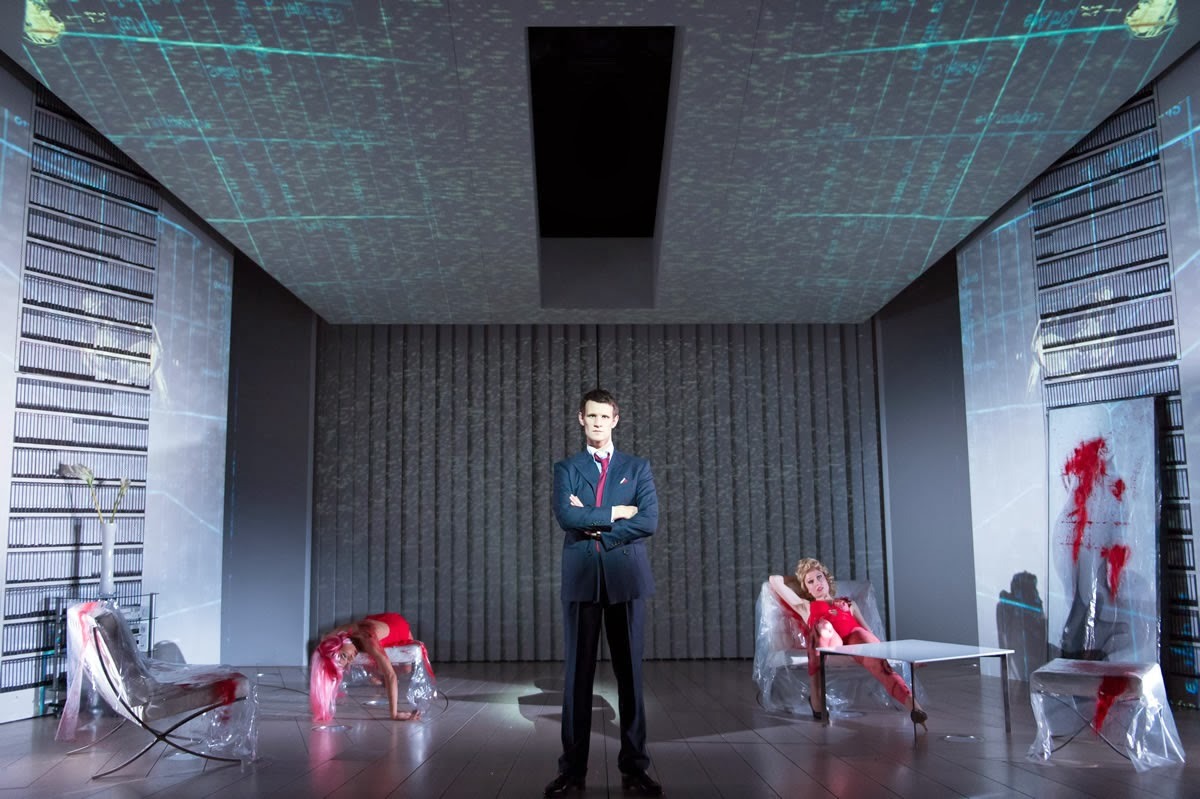
OLYMPUS DIGITAL CAMERAOne Tumblr I follow is yeahtheatresetsandprops who posts regularly and has a great and varied selection of set designs from Europe and the US. The above design is by Troy Hourie for The Classical Theatre of Harlem’s production of Peter Weiss’ play, Marat/Sade. The one below is from the brand new American PsychoThe Musical which has just opened at The Donmar in London, starring Matt Smith – he of Dr Who fame (with rave reviews, I should add). The design is by Es Devlin and has garnered equally great plaudits as Smith has for his performance in the show.

tumblr_mxrld3nrC81qlpqbyo3_1280Another I follow is Everything Scenic who posts some lovely designs and videos too. One beautiful design that struck me is this one, for Sunday in the Park with George, by David Farley.

.

Another is for a rather wet version of Metamorphosis (Ovid, rather than Kafka), designed by Daniel Ostling at the Arena Stage in Washington DC.

.

Everything Scenic also posts some unedited video, straight from the stage manager, like this one that shows the stage machinery used in Billy Elliot, the musical. 


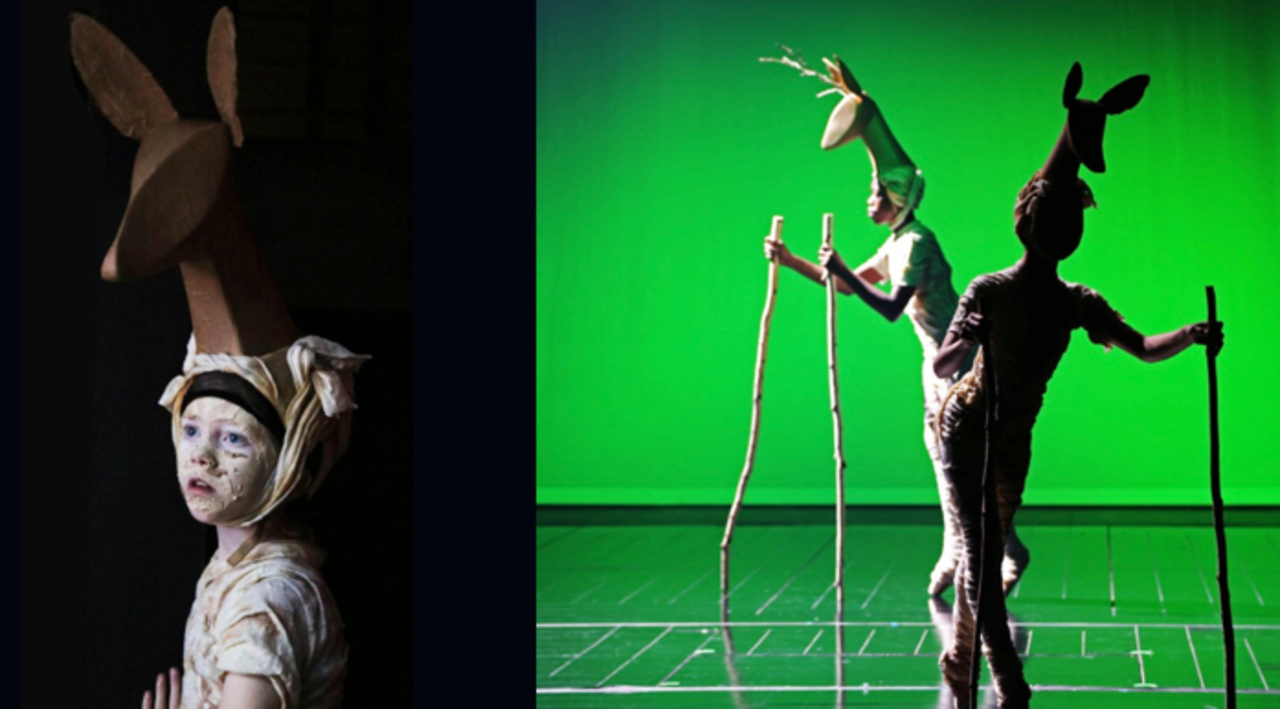
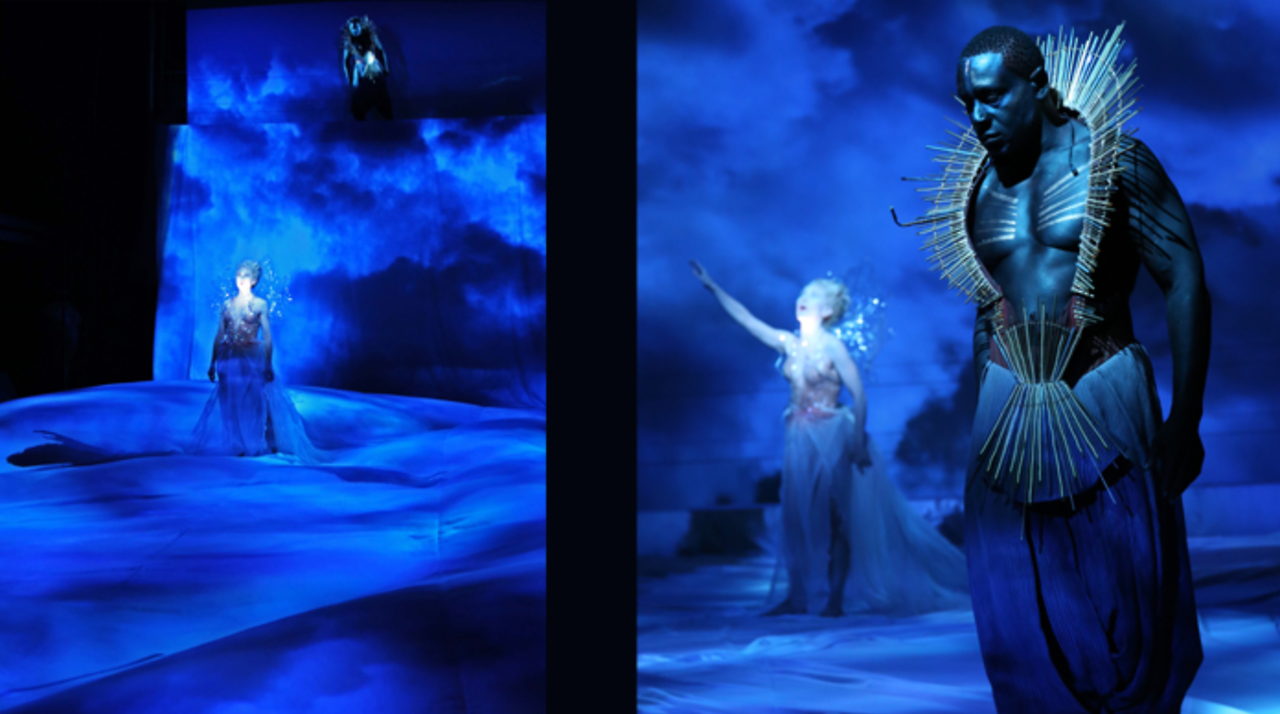
Another Tumblr I follow is the bizarrely named Glut and Decadencewho also posts some great photo sets of scenic design. These are for a production of  A Midsummer Night’s Dream, for Theatre For A New Audience (New York) directed by Julie Taymor (of Lion King fame) and designed by Es Devlin:

tumblr_mwdopiKaDu1s2pri8o1_1280

tumblr_mwdopiKaDu1s2pri8o4_1280

tumblr_mwdopiKaDu1s2pri8o6_1280

The Business

Untitled_FotorI have just stumbled across the content for today’s post courtesy of a tweet from Lyn Gardner. It would seem there is an annual careers conference held in the UK, specifically for students who want a career in theatre, theatrecraft. It looks fantastic and really does cover all aspects of theatre making. Whilst it obviously focuses on working in the UK, the video page has a huge list of categories and links to videos that would be useful to anyone, anywhere, thinking of making their career a theatrical one. Take a look below, and click the title links for the relevant videos:

DIRECTING

Explore the role of a Director and what it takes to survive in the industry. Hear from professional Director Adam Spreadbury-Maher

MAKE-UP

See the character emerge — a demonstration of Stage Make up from experienced theatre make up artist Melanie Winning.

PRODUCING

Take a look at what is involved in producing a show and find out how to pursue a career as a producer from industry experts.

.

THEATRE DESIGN

With professional stage desinger Matt Edwards.

PROPS

An introduction to working in a props department for a major company

DESIGN AND MODEL BOXES

A chance to see how shows are developed from a design concept to a full size on stage production, with advice to those interested in pursuing a career in theatre design.

.

WRITING

Be introduced to the craft of playwriting and find out how to survive as a working playwright.

DIRECTING

What exactly do directors do? An introduction with professional Director Emma Rivlin.

MAKING MONEY…

A unique opportunity to hear how your technical skills can be utilised in the commercial sector.

DIRECTING COMEDY

A look at verbal and visual comedy, focusing on how understanding timing and where to direct the audience’s attention can benefit your ability to direct in every other genre.

BACKSTAGE TOURS

Take a peek behind the scenes at two major London theatres.

DIRECTING AND PRODUCING

We talk to some some top directors and producers about why they love their jobs and how they got there.

SPOTLIGHT ON TECHNICAL THEATRE

Exactly what goes on behind the scenes to make your favourite shows happen…

PLAYWRIGHTS

Leading writers talk about how they got to where they are and what it takes to write a play.

.

THEATRE MANAGEMENT

How to keep a major London theatre running smoothly and not go mad in the process.

MARKETING

The ins and outs of making sure people know about shows and want to see them.

TOP TIPS

A great collection of hints and tips from those in the know (or so they say…).

VIDEO DESIGN

An insight into the work of video designers and how their work contributes to live performance.

SOUND AND SET DESIGN

A fascinating look at the sound designer and set designer and how the two work together to create incredible atmospheres.

SET CONSTRUCTION

See some of the work that goes into building a major set – before it even gets to the theatre.

.

PRODUCTION MANAGEMENT

Amazing buhend the scenes access as we follow the production manager during a get-in at the London Coliseum.

STAGE DESIGN

An informative one-to-one explaining the role of the Stage Designer.

RUNNING A VENUE

Get the low down on running one of the biggest and busiest venues at the Edinburgh Fringe Festival.

COSTUME

A profile of Faye Fullerton – a leading costume designer.

ALTERNATIVES TO TRAINING

Theatre professionals talk about how they took different routes into the undustry.

ROUTES INTO THE INDUSTRY

Insights right from the top of the Theatre World – Nicholas Hytner spills the beans.

DON’T GO TO UNI!

The artistic director of the National Theatre puts forward a controversial point of view.

WORKING IN TECHNICAL THEATRE

Learn about how to “upskill” for this exciting but demanding profession.

.

SKILL UP!

What skills do you need for your chosen profession and where do you get them from?

UNIVERSITY

Do you need to go to University to get ahead in the theatre?

HOW DID I GET HERE?

Various theatre professionals explain the decisions, training and lucky coincidences that led them to their jobs.

APPRENTICESHIPS

A popular way to take your first steps in the industry

SPOTLIGHT ON WIGS AND PROPS

A brief introduction to the goings on in the wigs and props department of major theatres.

..

You Spin Me Right, Right Round

Before you read what I’m writing about today, take a minute to watch this video:

.

I often write about theatre and technology, but this is something else.  This amazing piece of mechanics creates illusion in a very different way. The following article, written by Nina Caplin in The Telegraph explains it all.

Inside the Olivier’s drum revolve

It’s the mechanical beast that allows the Olivier’s actors to be spun round invisibly – and to rise miraculously from the depths. But what’s it like being in the drum revolve’s jaws?

After World War II, when a National Theatre finally became more than an excellent idea that nobody wanted to pay for, the architect Denys Lasdun was appointed to design the new theatre on the South Bank. The company, under Laurence Olivier, was up and running by 1963 but their purpose-built home took rather longer, and the most revolutionary (in every sense) part of it took longer still. The Olivier Theatre’s drum revolve is an extraordinary, five-storey, computer-operated double lift contraption that enables the stage to be lowered through the floor and spun around.

The drum revolve in action, rising up with a cork screw action

The drum revolve in action, rising up with a cork screw action

And, because it’s split into two, operators can swap one half for the other without, in theory, the audience suspecting a thing. It is complicated, expensive and mechanically flawed, but it speaks of the kind of dramatic ambition a national theatre should have – and when it is cleverly used, the results can be amazing. The clever usage took a while, though. The entire building is wrapped around the drum’s contraption, or as Di Willmott, production manager on 2011’s Emperor & Galilean, puts it, “the whole mechanism is inside a big baked bean tin”. The two semicircular elevators, known as Red and Blue, weigh 25 tonnes each, plus 25 tonnes of counterweight. It must have been a brave actor prepared to rise up from the basement to the Olivier stage on a 100-foot lift operated by a 1970s computer.

The control panel and operator of the National Theatre's drum revolve

The control panel and operator of the National Theatre’s drum revolve

And in fact, even though the National Theatre building opened in 1976, it was 1988, and Dion Boucicault’s The Shaughraun, directed by Howard Davies with a set by William Dudley, that – in the words of then-Director of the NT Richard Eyre – made sense of the Olivier revolve for the first time. Shortly after it opened, Eyre met with Lasdun and told him that despite admiring the NT building and getting a thrill out its public spaces, he found the Olivier a difficult theatre to present plays in, “Which,” said Eyre, “I suppose is a bit like saying that you have a watering can that doesn’t hold water.” Lasdun called him a barbarian. Willmott took me backstage, during Emperor & Galilean, to see the beast in its lair. We descended seemingly endless steps, in the dark (well, Willmott had a torch), to find a lone man – show operator Simon Nott – shifting a series of levers in front of a screen. The raising and lowering and rotating is his job; everything must be in just the right place, so that doors line up for actors to enter and leave and scenery to be wheeled in or out. Everything should happen quietly, although until recently that wasn’t the case: ‘When it starts going around,’ said Nott, ‘you can’t hear yourself think.’ The metal tracks of the revolve weren’t quite perfectly round, and loud music was required to drown out the noise of its motion. But that, Sacha Milroy tells me now, has been fixed. Milroy was Production Manager on His Dark Materials, the vastly ambitious adaptation of Philip Pullman’s vastly ambitious trilogy; she is now, perhaps not coincidentally, PM of the entire theatre.

The National Theatre's drum revolve stage in action

The National Theatre’s drum revolve stage in action

Backstage, I stood at the base of the incredible golden gates from the Emperor and Galilean set and craned up. It’s all right this way, Willmott said, but the other way round is harder: ‘The first time you look down and see the floor 100ft away it’s very frightening. But now I’ve done it hundreds of times.’ Ben Wright, an actor in His Dark Materials, described feeling daunted by its size, but added: ‘It’s a great feeling when it’s moving, you’re going up 20ft into air then back down again.’ His co-star, Inika Leigh-Wright, was less robust: ‘You can hear everything going on above you and it sounds 20 times louder than it actually is and it’s quite scary.’

The view from inside the National Theatre's drum revolve

The view from inside the National Theatre’s drum revolve

As the actors floated up and down during that show, more prosaic work went on below: Milroy describes the 6-metre space that they lowered, re-dressed, exchanging furniture and snapping panels on and off, then raised as an entirely different room; critics talked of witches and bears on the stage’s upper regions and Oxford colleges rising from its lower depths. Even those who didn’t love the show marvelled at the design. As well they might: with the exception of Vienna’s Burgtheater, there is nothing like the drum revolve in Europe. So, why isn’t it used – and talked about – more? Partly, because it’s so expensive: ‘It eats money,’ says Milroy, ‘and it’s hard to get your head around – it’s quite cumbersome, so you need to understand the nuances and use it in a subtle way.’ Not easy with a contraption that weighs 100 tonnes. ‘An awful lot of designers are quite terrified of the logistics and the complications,’ says Milroy – and in fact Giles Cadle, who designed His Dark Materials, worked on the show for two years.

The drum revolve in action during 'War Horse'

The drum revolve in action during ‘War Horse’

This Is Your Final Call

This is the most simple, yet greatly informative post for performance students, in so many ways. To quote The Guardian who have published it on their site:

As part of the celebrations to mark the 50th anniversary of the National Theatre, last year film-maker Pinny Grylls was granted exclusive access backstage with some of the National’s company. In the documentary she created, The Hour, we watch the all-important 60 minutes before curtain-up as actors including Simon Russell Beale, Ruby Bentall, Ciarán Hinds, Jenny Jules, Rory Keenan and Sophie Thompson warm up, get into costume and character, and embark on the nerve-racking nightly ritual of preparing to go on stage at one of Britain’s busiest and most high-profile theatres.

What makes me smile most is the unspoken hierarchy. It is really worth making the time to watch it. Click the image below for the link:

Untitled_Fotor

Post Apocalyptic Homer

My first post today is an article that appeared yesterday on Howlround, written by Jonathan Mandell. In it, Mandell posits that television is having an influence on theatre making. It makes an interesting read, and whilst I don’t necessarily agree with all his points, it certainly gives pause for thought. The play that appears to have prompted this, Mr Burns, A Post Electric Play, does sound fascinating and I will share some more about it at the end of the article.

8 Ways Television Is Influencing Theater

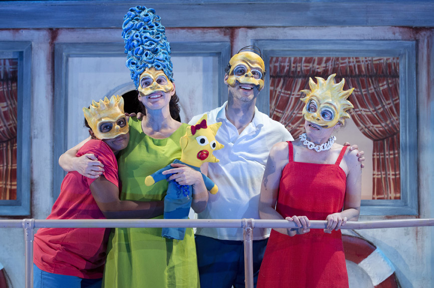
Anne Washburn started watching The Simpsons and writing plays at about the same time, and didn’t think they had anything to do with one another until she wrote Mr. Burns, A Post Electric Play, running at Playwrights Horizons until October 20.
Untitled1

Her play imagines how survivors of an apocalypse would remember episodes of The Simpsons immediately after the end of civilization, then seven years later and seventy-five years after that. It illustrates what might be the most obvious of the eight ways, I am suggesting, that television is influencing theater.

1. Shared Cultural Experience
“I envy the experience of the Greeks or the Elizabethans,” Washburn says. “That whole audience came in knowing the stories. They could focus on the characters.”

Television comes closest to providing a similar shared culture. “Movies do too,” Washburn says, “but movies are gone so quickly. Because TV shows are around so consistently for so long, they’re more finely woven into our lives.”

The Simpsons has always been a part of some people’s lives. Everybody knows who Homer and Marge are,” adds Washburn.

Avenue Q has had a long successful life by tapping into the affection for Sesame Street; imagining what Muppet-like characters (or, in truth, Muppet-watching children) would be like when they become adults.

“The characters on television shows are so much a part of the culture that people want to write about them,” says Washburn. Even plays or musicals that don’t revolve around a TV show can make allusions to them.

2. Direct Source Material
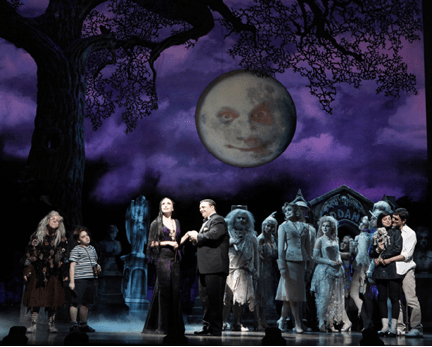
Sometimes a TV show is directly adapted for the stage. A recent example of this is The Addams Family. But while every movie studio has a department whose job it is to adapt its films for the stage, there is no such job in the TV networks.
Untitled2

“There’s a huge influx of movies being made into musicals, but not too many TV shows made into plays,” says Mark Subias, head of the theater department at United Talent Agency.

It is harder to get the rights to a television show, and easier to make money from one without adapting it for another medium. “Once it goes into syndication, there is so much money to be made, there’s not much motivation,” says Subias.

Still, it may be surprising to discover the television origins of some well-established works of theater. Rodgers and Hammerstein’s Cinderella, now on Broadway, debuted in 1958 as a musical written specifically for television. Horton Foote’s The Trip to Bountiful, currently in a revival on Broadway, began life on March 1, 1953 as an hour-long TV play starring Lillian Gish and Eva Marie Saint. Foote turned his teleplay into a stage play later that year, and it briefly ran on Broadway sixty years ago.

“Recently Gilligan’s IslandThe Brady Bunch, and Happy Days have been turned into musicals,” says Rebecca Pallor, a curator at the Paley Center for Media. “Although the producers of Happy Days (and no doubt the others) had aspirations of bringing the shows to Broadway, it has not yet happened. I seem to recall an attempt to turn I Dream of Jeannie into a musical as well.”

Even if few television shows currently serve as direct source material for stage shows, it seems clear that this is for reasons other than their popularity. There would surely be an audience for such adaptations, and a nation of TV-watchers can’t help but exert an influence on what does get presented on stage.

3. Forms And Approaches
“We live in a world now where you could argue that long, series television is the state of the art of storytelling,” director Sam Mendes said recently in explaining why he had turned Shakespeare’s history plays into a four-part TV series renamed The Hollow Crown, currently being shown on PBS.

“People have been doing interesting things with forms on television—The Wire, obviously,” says Washburn. “The way people are thinking about the arc of characters is really exciting.”

In my previous HowlRound article, Too Much Theater? The New Marathons, I said that the recent experiments in epic works of theater such as Mike Daisey’s All The Faces of the Moon—29 different monologues over 29 nights—could be influenced by television. As Daisey told me “the work is the size, in time, of a season or more of a TV show. Which allows new ways to listen.”

David Van Asselt, artistic director of Rattlestick Playwrights Theater, also used television as a reference point when talking to me about his brainchild, The Hill Town Plays—five of Lucy Thurber’s plays presented simultaneously in five different theaters in the Village. “With Lucy’s plays, you could see a play a week. We’re not asking any more of an audience than a TV show.”

These theater artists are far from the only ones who see television’s effect on the forms that theater (and not just “epic theater”) is using.

“It’s easy to see the influence television has had on me as a dramatist,” says Jay Stull, a director, literary manager, and the author of The Capables, a play recently produced Off-Broadway about a family of hoarders caught up in the world of reality television. But Stull doesn’t just mean using television as a subject.

“Television has conditioned me to prefer shorter scenes, quicker cuts, and fractured unities, but also to prefer longer stories generally.”

“I’m sure that watching TV changed how I think about dramatic rhythm,” says Washburn.

“I wonder whether characters like Walter White or Tony Soprano—the preponderance of anti-heroes on cable—make theater audiences more accepting of villains,” says playwright Sam Marks. “There are very few characters in my plays who are just ‘good.’”

Similarly, Matthew Maher, who plays Homer Simpson (among other characters) in Mr. Burns, sees a golden age of playwriting develop in just the past few years, because “the audiences of today have been trained to appreciate and develop an appetite for original thinking…and this training has come largely by way of the good shows on TV”—shows, not incidentally, by TV writers like Aaron Sorkin and Elizabeth Meriweather, the creator of the sitcom New Girl, who had their start as playwrights.

Itamar Moses has a mixed view. “I think it’s had some bad influence, in that you’ll see plays that are basically TV shows on stage, with tons of short, naturalistic scenes, in tons of locations for no particular reason.” On the other hand, Moses acknowledges that there are good shows on TV—and indeed, he is one of the growing number of playwrights who write for television.

4. Moonlighting
“If a playwright gets a bad review, he says: ‘I’ll go write for TV,’” says agent Mark Subias. “It’s sort of like a joke.”

In truth, having television as at least a theoretical alternative offers more than psychological support; there is also the money. “Some artists do make a living in the theater, but it’s rare,” says Subias, which is a reason why “I’m always very encouraging of my playwrights writing for television—if they have the temperament and skills (different from playwriting) and the desire.”

And if it doesn’t work out—that too can in a weird way offer support. “One of my writers was hired for a TV show that turned out to be a very stressful, toxic experience,” Subias says. “It made this person realize: ‘I’m a playwright. I need to write for the stage.’”

Itamar Moses, though primarily known as a playwright, has also written for television shows such as Boardwalk Empire. Asked whether his moonlighting has influenced his playwriting, he replies “It’s hard to have perspective on my own work, but I think the answer to this is yes, in two almost contradictory ways: On the one hand, being in a writers’ room makes it really clear how many ways there are to tell a particular story. The number of ideas—good ones—that get tossed around and then thrown out over the course of a day in a writers’ room, let alone a season, is staggering. So I think it probably made me less precious in my playwriting about staying married to my first idea, gave me faith that if I allowed the writers’ room inside my head to kick things around a little more, there might be a better idea on the horizon, and a better one after that.”

He adds,“On the other hand, because the money is so good in TV, with the trade-off being that you’re generally a cog in a larger machine, serving someone else’s vision, working with characters and a world someone else made up, it made me feel even more strongly that, in my playwriting, there was absolutely no reason to ever do anything other than exactly what I wanted to do. If I’m going to be paid almost nothing to make something that, relatively speaking, almost no one is going to see, I might as well execute my own vision.”

5. Departures (Disruptions)
The list is long of theater actors who have left a stage show for a role on TV or the movies. Some leave abruptly, disrupting the show they are in. Some never return to the theater; the stage was their stepping stone. (Pictured here is Sara Ramirez who made a splash in Spamalot on Broadway, winning a Tony for her role as The Lady of the Lake. She hasn’t been back since cast as Dr. Callie Torres in Grey’s Anatomy).

But even those performers who want to make a career in the theater also have to make a living. “It’s really difficult to cast a play in New York during pilot season, which I think is around February and March,” says Washburn. “All these actors go out to L.A. I hear ‘I’d love to audition for your play, but…’”

The effect is less obvious for playwrights than performers, but, says Washburn, “when you’re writing for television, you’re not writing a play. It remains to be seen whether some of the theater writers who left for TV will come back.”

6. Celebrity Casting
The term “stunt casting” was coined for cameos or “guest appearances”  by celebrities (usually movie stars) in television shows. It is a term almost always used pejoratively when describing the increasing practice of hiring celebrities (usually television or movie stars) to perform in a play or musical.

“If I could get a ‘star’ who’s a terrific actor, that’s a great thing,” says David Van Asselt of Rattlestick. “We’re trying to get audiences. I’m trying to find ways so attention can be brought to a play.”

The problem comes with an expanding definition of celebrity to embrace, that includes, for example, “stars” of reality television, who often have no experience on stage. Such casting is no longer restricted to bit roles; they are often asked to play the leads. Some shows have decided on a strategy to extend their runs by casting a succession of performers hired not for their talent, but because their names will attract publicity and lure in their fans.

“The great pleasure of theater for me is to see really good acting in action,” Washburn says. “Theater acting is a hard discipline; the more you do it, the better you are. People understand that stunt casting is an economic thing. But it does change the experience.”

7. Video Projections
Just this year, the Drama Desk Awards added a new category, Outstanding Projection Design, acknowledging the increasing use of videos on stage.

Untitled4

The winner was Peter Nigrini for Here Lies Love, the musical about Imelda Marcos by David Byrne and Fatboy Slim that was presented at the Public Theater in a theater set up to resemble a disco. But videos were used for more than just pulsating music video images. Videographers trailed the characters, projecting live close-ups on screens, as if they were news cameramen filming the characters making speeches or holding press conferences.

Wendall K. Harrington was given credit as “multi-image producer” for They’re Playing Our Song way back in 1979—the first of thirty six Broadway shows for which she has served as projection designer. Three years ago, she launched a new concentration in projection design at the Yale School of Drama.

“I explain to my classes that every playwright and director alive today grew up in the age of cinema and television,” Harrington says. “There is so much projection because they have been conditioned to think in these terms: Theater directors want scenes to ‘dissolve’ into each other; they’d like a ‘close up’—these are cinematic and TV terms. It would be hard now to write a play like Long Days Journey into Night—four hours in one room seems unthinkable.”

Videos on stage allow the kind of close-ups that were one of the advantages that television and movies had over the theater, and that audiences have come to expect, if not demand. But theater has taken the TV technology and turned it into something else. One example occurred in the Macbeth starring Alan Cumming, which included three video monitors with a live feed. To present the three witches, the three monitors showed Cumming from three different angles.

“The larger issue,” Harrington asks, “is whether the increasing use of video projections is affecting the quality of theater. Stay tuned for that.”

8. Theater As Anti-Television
A director once told Theresa Rebeck, playwright and television writer, “that since realism is done so well by television and feature films, the theater must explore something else.”

In her book Free Fire Zone, Rebeck makes it clear that she thinks the unnamed director is a fool (for one thing, she doesn’t think TV does realism well). Nonetheless, the director’s comment reflects what may be the greatest influence that television has had on theater—the push it has given theater artists to create something that will drag TV watchers out of their home and turn them into theatergoers.

“I can’t tell you how many theater mission statements I’ve read that say: We want to tell stories that can only be told through theater, that you can’t see on television,” Washburn says.

“How good TV has become at doing a certain kind of character-driven long-form storytelling really throws down a gauntlet for playwrights,” Itamar Moses says, “and challenges them to answer the question, with their work: What canonly theater do? What can’t we getanywhere else? And there’s no one answer to that, but it challenges every playwright to try to come up with theirs.”

Now for some more about Mr. Burns, A Post Electric PlayFirstly, the reviews are really good and it is clear that it is quite unique in a number of ways. Have a read here and here.

.

Playwrights Horizons has lots of other stuff worth having a read of, watch and listen to. Click the image below to get there:

burns3.jpg__960x480_q85_crop_upscale

burns5.jpg__960x480_q85_crop_upscale

You can hear more from Anne Washburn here on the origin of the play, its unique development process, and how “The Simpsons” came to represent the high culture of the future.

National Express

Today is a mixed bag of the gems that are coming out of The National Theatre in the UK as party of its 50th anniversary celebrations.

Firstly another in the Scene Changes discussions, this one about lighting design and the role of the lighting designer. Again really interesting and gives you a great idea about the profession and how technology has advanced theatre lighting. Featured on this panel are lighting designers Paule Constable (War Horse, The Light Princess), Richard Pibrow (Three Sisters), Natasha Chivers (Sunday in the Park with George) and Paul Pyant (The Wind in the Willows). Something I didn’t know was that the job of the lighting designer came from the US and until then, the director had been in charge of lighting a show.

.

Secondly, the second part of the radio documentary, The Road to the National Theatre – Whose National Theatre, from BBC Radio 4. The first part is in my post National Debt

.

National AppAnd finally from the Apple App Store which charts the history of the theatre through its productions from 1963 to today. It includes interactive timelines, production materials, costume designs, technical images, annotated scripts, video interviews and so on. Really informative and you could spend a good afternoon working your way through it. A useful resource. Click the image on the left for more information.

.

Theatre, Technology and Chocolate

Recently a well-respected theatre critic wrote that:

Technology is the lifeblood of the Wooster Group company, whose members frequently make clear their scepticism about, and in one case “allergy” to, the theatre.

1hamlet_wooster_group_czernia I have tried and tried with them but their allure has finally evaded me. They have become the Jake and Dinos Chapman of the stage, scrawling across well-known big works.

I have kept this quote floating around as I  wanted to respond, but wasn’t quite sure how. I have seen a couple of their shows and I know what the critic is getting at – their interpretation of The Emperor Jones left me a little cold, not to say perplexed. Not an easy one to stage at the best of times with its mix of realism and expressionism, but I found it hard to find meaning in what they produced.

All this is a bit of a digression really from what I wanted to write about today, but you will see why. Those of you that follow Theatre Room regularly will know I love the use of technology in performance. The opportunities it affords for enhancing meaning, for making meaning and layering meaning are immense and was why I was fascinated by the discussion between the designers in my post, Making Space

However, the embracing of technology by theatre works on so many fronts and I thought it would be good to share the impact it has had on a show I have been following on social media – which is a great place to start.

So I am writing about a play that I have not seen and will not be able to see – It is happening thousands of miles away – yet I feel I have a very clear understanding of it and why it is being performed, even what it will look and sound like thanks to Twitter. Two of the three producing companies are tech-savvy, multi-platfrom theatre companies who have been tweeting through the development and rehearsal processes as well as during the run. Through these I have seen images of rehearsal, learned of problems faced and solved, seen costuming fittings, technical explorations and so on. Of course this also acts as promotion and I am sure is one of the reasons for the play being a sell out before it began its run. In addition, the majority of the cast are drawn the local community and Twitter has allowed them to be part of the process in a different and inclusive way.

You’ll notice I haven’t mentioned the play yet. I will, but not just yet.

Secondly, they have produced a beautiful filmed and edited trailer for the play. A ‘trailer’ for a piece of live theatre was  unheard a few years ago.  Trailers were for cinema, not theatre. Of course the internet has changed all this, but, I would argue, more so YouTube. This allows for free promotion to a much larger audience, and an audience that goes beyond the place where it is being performed.

Thirdly, there is the use of technology in the performance itself, which is promenade and takes the audience on a journey through an historic city centre. Not only are they using a range of filmed and projected sequences and images, the audience members have a set of headphones allowing them to hear live and recorded dialogue, music and sounds to accompany the live action. It has been described as

theatre as you have never seen, or heard it before…….theatre on an epic, cinematic scale…..

Finally, (and great news for me) they are live-streaming a performance on Thursday so I can watch – I can watch 2 continents away – and of course they have made a trailer for this too and I will watch the performance on their own live streaming channel.

BC_web_bannerOK. The play is called Blood and Chocolate and uses the City of York (UK) as its backdrop to tell a story inspired by the employers and workers of the Chocolate factories in York during the First World War, their sense of duty towards their beliefs, each other and their commitment to defending their homeland.  It is produced by three companies – York Theatre Royal, Slung Low and Pilot Theatre with a cast of just under 200 actors, professional and from the local area.

.

The reviews of the piece are uniformly good and very praiseworthy – read for yourself here and here.

The webstream trailer below give you a clearer idea of what the show looks and feels like.

.

This video, from a local news report, give you a further idea of how technology has been embraced in the production..

.

So theatre on a grand scale, and brought to local and world-wide audiences through technology. The reviews tell you it has been successful. All of this has left me wondering about the Woosters and their employment of technology in telling stories, if the stories they are telling are obsfucated by its use?

The other point is how technology, in all its guises, is changing every aspect of theatre making and how exciting that really is. I wonder what comes next?

If you are interested in catching the webcast of Blood and Chocolate, it starts at 6.30pm UK time and you can see it here.

Making Space

THE FANTASTICS - SET DESIGN -LANCE CARDINAL 1I’m going to make a series of short posts today, and I shall start with another in the podcast series from the National.  I have just finished listening to this and really enjoyed what the panel of designers had to say about the changing role and function of design on stage over 50 years. The panel consists of cinematographer and video projection designer Jon Driscoll (ENRON), and designers William Dudley (The Mysteries), Jon Bausor (Silence), and Rae Smith (War Horse). If you like your stage design, you will like this discussion.

I particularly enjoyed their discussion about the rapid advances in technology that have changed the craft as well as how ‘new’ genres have challenged them.

Scene Changes

artworks-000059233832-ig6cjh-t200x200So my first share, from the mountains of material coming out of the National Theatre, is a series of podcasts called Scene Changes. These are for those theatre geeks and techies out there (including myself) and look at some of the developments and changes in theatre, both off and on stage, over the past 50 years.

The first one is about the building itself – the theatre – and how the architecture of theatre spaces has evolved and changed, embracing technology as it has been developed.  It is not something that we think about too often – sadly, new theatre buildings are rare – but this gives a great insight into the process:

.

The second looks at the role of the sound designer, how technology has advanced the industry, and how it adapts to other onstage developments:

.

There will be lots more of these to come and I will post them as they become available.

Building the House

In another life I think I would have loved to have been a theatre designer. They are artists, architects, engineers and magicians all rolled into one. We sometimes forget they are there, that the set is another actor in the space. In the next few days the World Stage Design conference opens in Cardiff, Wales.

WSD_Fotor

WSD is described as a celebration of international performance design from the world of theatre, opera and dance as well as public performances and installations in non theatre spaces that takes place every 4 years. WSD started life in 2005 in Toronto, Canada. In 2009 it was held in Seoul, South Korea. While reading about it, I also learned about OISTAT, the International Organisation of Scenographers, Theatre Architects and Technicians a global network of theatre makers celebrating design and technology in live performance. The websites for both these organisations make interesting perusing.

I would really like to be at WSD, I think it would be a fascinating and exciting few days. However, I did raise a rye smile when I saw they were building a temporary, sustainable theatre for the conference, known as The Willow Theatre, lauding it as something new:

.

Now I know that I have seen them being built for many years and in an even more sustainable way:

.

The location for WSD2017 is yet to be decided, but perhaps they should start thinking about calling in the traditional bamboo theatre builders in instead? Mind you, one of the designers behind the The Willow is Chinese-american architect Tim Lai so perhaps it is just a modern take on a centuries old craft.