Smack My Bitch Up?

Following on from my post last month, Body Talk, about theatre and women’s rights movements two articles produced in the British press in the last couple of weeks strike a particular chord. Following the performance of a piece called Nirbhaya at the Edinburgh Festival, a work that focused on gang rape and sexual violence against women by men, what is best described as a spat has broken out about the portrayal of rape on stage.

index

Nirbhaya was inspired by the horrific multiple rape on a bus and subsequent death of an Indian student, Jyoti Singh Pandey, in Delhi in December 2012, which hit the headlines and provoked shocked reactions around the world.

In her Guardian Blog, Lyn Gardner argued that

with rape centre-stage, theatregoers can no longer turn a blind eye…….violence in theatre makes us contemplate something we may prefer to ignore.

This was in response to an article by Tiffany Jenkins in The Independent which argued that sexual violence onstage (and screen)

demeans both sexes and ignores healthy relationships.

Fascinating, just fascinating and at best, very spurious on the part of Jenkins. Have a read. I would argue that the theatre is exactly the place where human rights issues such as this should be explored. If you are in any doubt, take a look at two reviews here and here.

.

And The Winner Is………

And finally today, a little bit of fun. Three months ago an online radio station launched. Nothing unusual in that, I hear you say, except that this one is devoted to 24/7 show tunes – I kid you not – wall to wall musicals – my nightmare manifested online. The station is called Jemm Three Radio. Take a look at ‘Our Presenters’ page – it had me in fits of laughter, especially Stephen Beeny. Celine Wong and Cyril Ma (my students) this one is for you.

musicalscollage

The station asked listeners to vote for their best musical of all time (!!!) and the results were followed up by Lyn Gardner in her blog as an open thread which you can read here. I urge you to read through the treads – they are so passionate, it is unnerving (and a little odd).

OK. That’s enough – I’m off to have a shower as I feel unclean after writing this,


Speak Up!

A couple of posts from me today. Firstly this article published in The Observer today. Written by Dayla Alberge, it is a bit of a tirade from two leading figures in the theatre world who consider that language is being mangled on stage in bid to imitate American film stars – and audiences are being let down.

mumbling

Imogen Stubbs hits out at mumbling actors

Too many actors mumble their way through their lines, neither enunciating nor projecting words clearly enough for audiences to understand them, according to leading figures in theatre.

Edward Kemp, artistic director of the Royal Academy of Dramatic Art (Rada) and actress Imogen Stubbs are infuriated by the mutterers, who they believe let down playwrights and audiences. Kemp said that some directors and producers encouraged mumbling, believing that “laidback mumbling is more truthful”.

Stubbs, who has appeared in scores of stage roles, including the part of Sally Bowles in Cabaret and Desdemona in Othello as well as film and television dramas, added that muttering – with its lack of variety and tonal interest – was perhaps a misguided attempt to imitate American film stars. “It was so drummed into us at drama school that ‘it’s unforgivable not to be clear and heard’,” she said.

The problem is so serious that Kemp fears “plays of language” – including works by Shakespeare, Wilde, Coward and Pinter – could eventually become so opaque that audiences will stay away. Already, he said, “we are on a knife-edge with Restoration comedy … It’s hard to find people who can teach and direct it”

Kemp and Stubbs regularly encounter stage mumblers. Kemp said: “There’s usually someone [about whom] you think, ‘sorry, what?'” Stubbs appeared in one production where she even found herself having to lip-read a mumbling co-star.

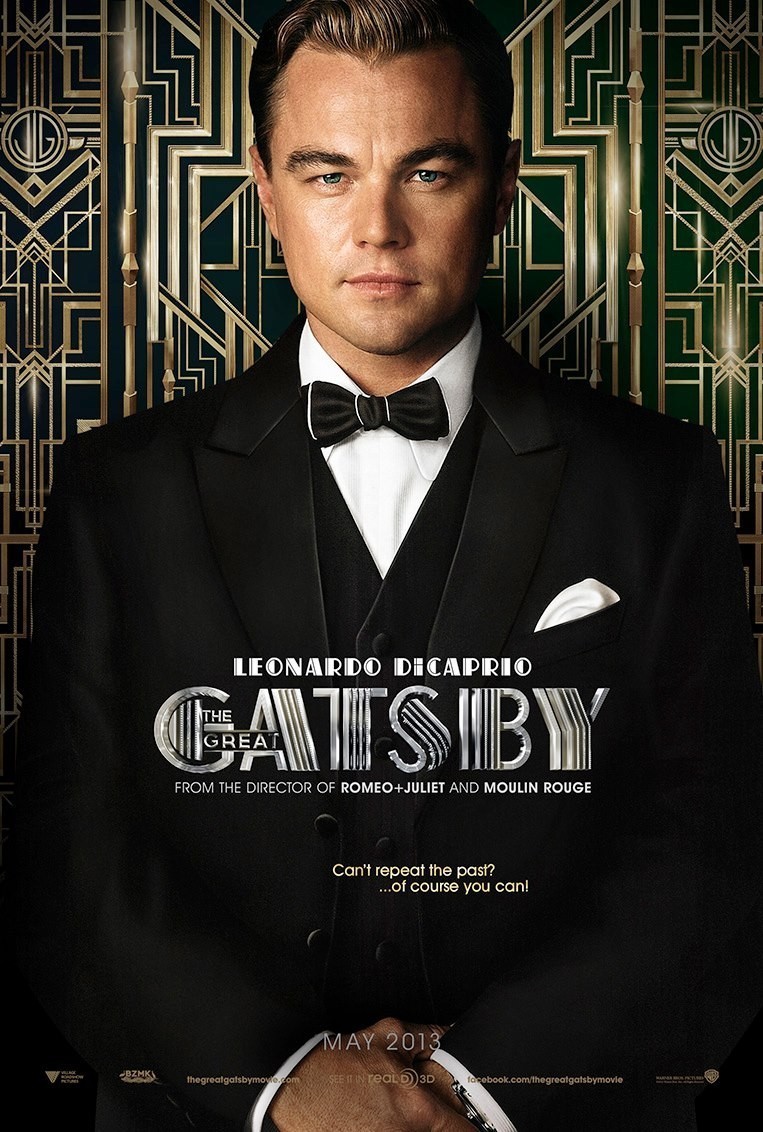
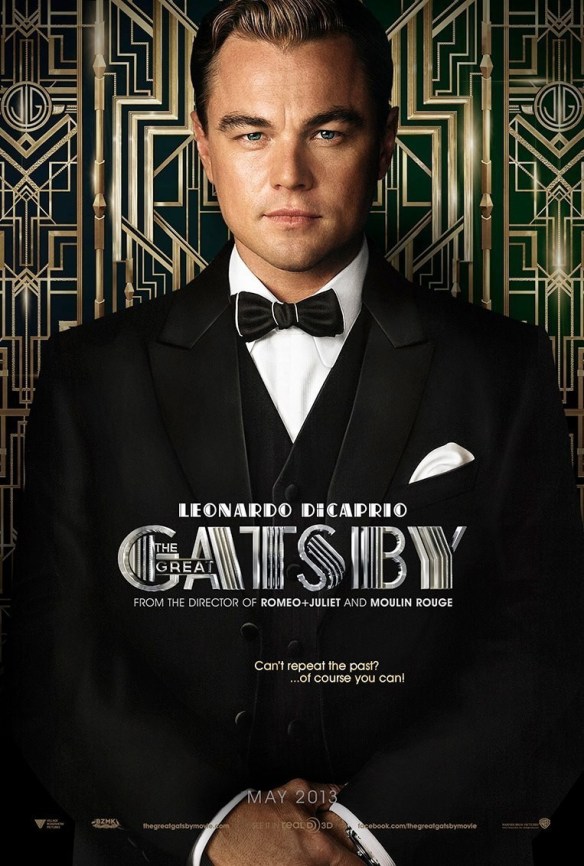
Although their criticisms focus on theatre, they are also irritated by mumbling in film and television, including Baz Luhrmann’s The Great Gatsby. Stubbs, a Rada council member, questioned whether Luhrmann had heard of commas or full stops.
2013-04-The-Great-Gatsby-Poster-7

“You’re just longing for it to stop and breathe. I thought the actors looked embarrassed. They were rather garbling their lines.”

Kemp, also a playwright, feels that part of the problem lies in actors being encouraged to improvise scripts, delivering “something like [what’s] on the page”, rather than the writer’s finely crafted original. “A lot of directors want you to jazz it up,” he said. The demise of repertory theatres has robbed young actors of opportunities to learn the craft of using the voice, while typecasting has also taken its toll, Stubbs suggested.

“The naturalistic, mumbling acting style tends to go with people who are playing something closer to their obvious self … People who are playing against their obvious self tend to embrace the acting a bit more,” added Stubbs.

While keen to acknowledge the excellence of some young actors, Stubbs senses that others are terrified of being caught sounding “like an old-fashioned actor”. But she added: “Acting is playing. You are pretending. Simon Russell Beale or Alex Jennings are theatrical actors who are naturalistic. You can hear them and people love them.”

Part of the problem also lies in the education system. Teenagers leave school unable to understand what they are asked to read, with no apparent relationship with language, let alone a sense of how to shape it, Kemp said. There is no longer a guarantee that even someone with an English degree from a leading university could handle this stuff, he added.

“We’ve had to change our training to adapt to teenagers [without] the faintest notion of basic grammar,” he said. He had a first-year student with English A-level reading a Shakespeare sonnet. “It made no sense to me whatsoever. I said, ‘can you just read out the nouns to me?’ He had no idea what a noun was.”

Rada has introduced grammar classes because of this problem. Kemp spoke of one student – an Austrian – with a finer appreciation of English grammar than a room which included at least one Oxford graduate.

Audiences are voicing frustration online. Stephen Dillane is among actors whose mumbling has irritated them.

the-tempest-006

“Dillane has been Mumbleman for years,” one wrote. “I caught Dillane’s Prospero at the Old Vic, like the rest of the audience couldn’t hear a word and was bitterly disappointed,” wrote another. “I still went along to see him at the Almeida in Masterbuilder but again, he was in a world of his own, totally pre-occupied with his own performance – absolutely no connection with the audience and worse, giving nothing to his fellow actors.”

Older actors draw on the subtleties of pitch, timbre and tempo – crucial for big spaces, yet they have “gone out of the culture”, Kemp said, with today’s actors relying on volume. “You can’t stress through volume, you have to stress through other things … I don’t always struggle to hear, but I do often struggle to understand. There’s the audibility thing and there’s the connection thing.”

Of course, every actor mutters sometimes, and Stubbs joked that her criticism could come back to haunt her.

Igniting Passions

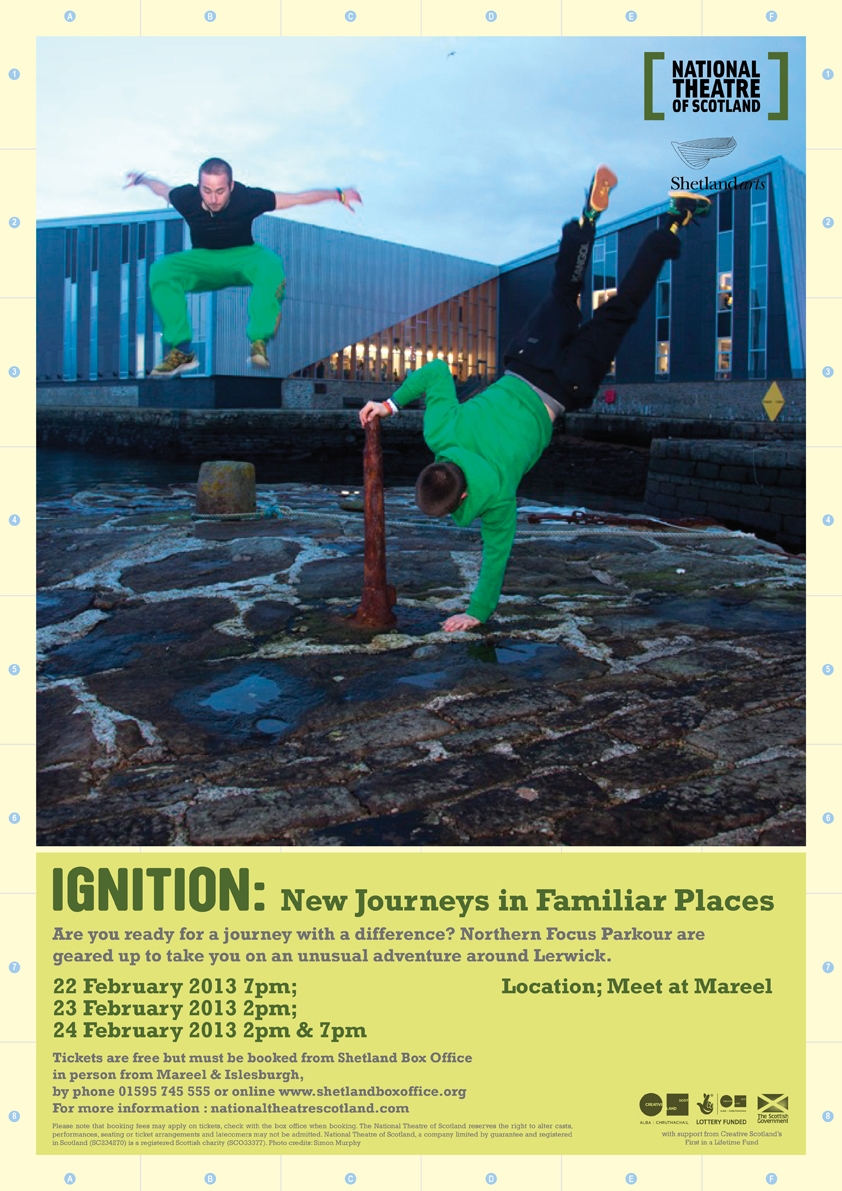
For those of you that read my blog regularly, you know I have a fascination with site specific theatre. Today I’ve been reading about a extraordinary project by the National Theatre of Scotland, who are renown for works that push boundaries.  This new work, that is currently still ‘in progress’ struck a particular cord as it has the place of cars in our society at its heart. As someone who calls Hong Kong home, where the car is king, despite having one of the best (and growing) public transport systems in the world, I thought I would share it with you.

Evernote%20Camera%20Roll%2020130324%20161620

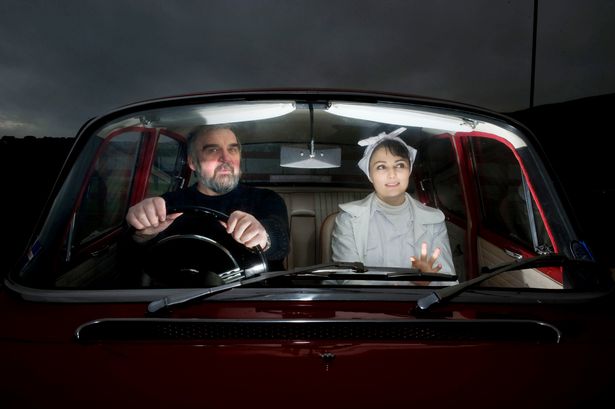
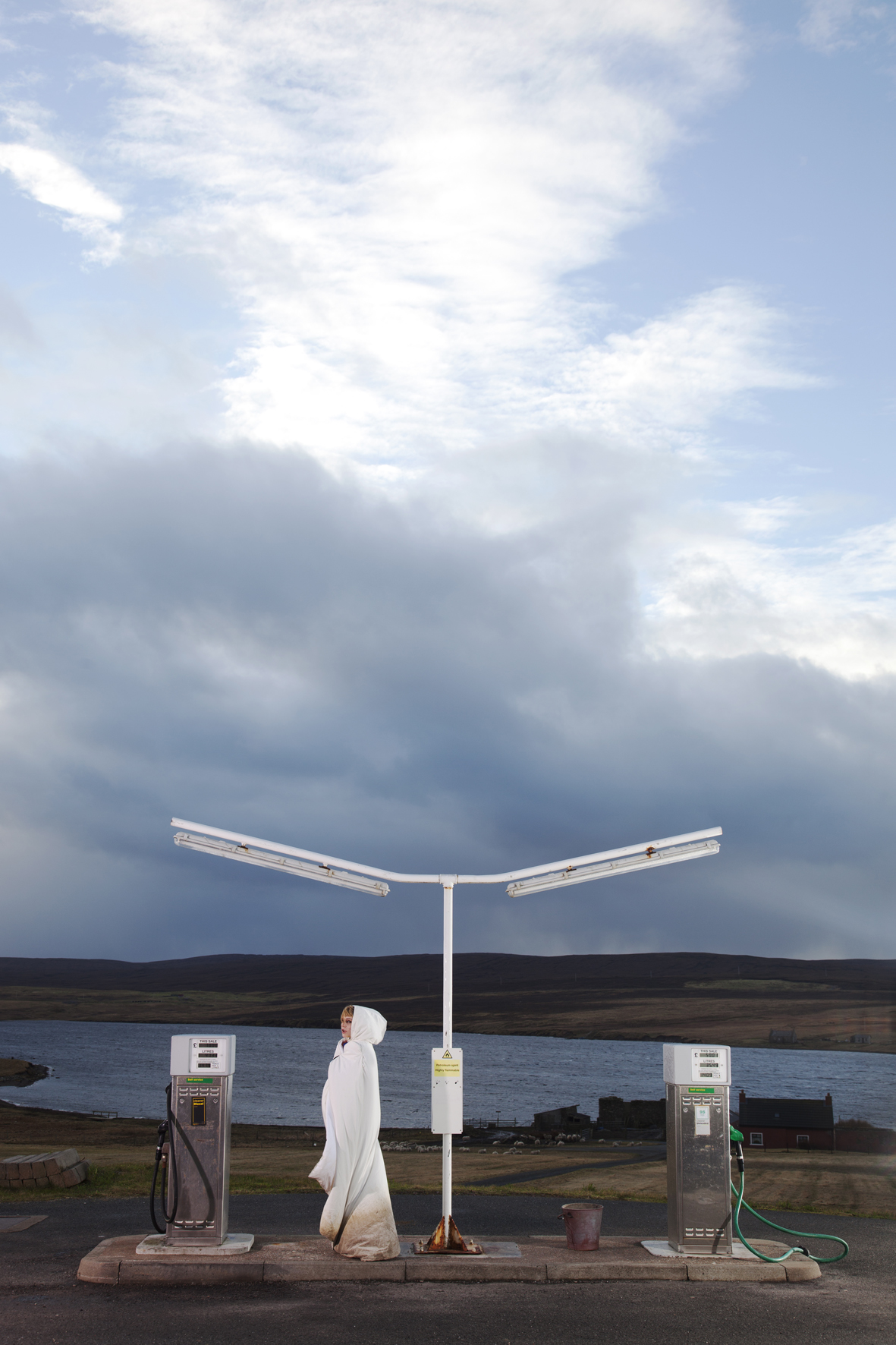
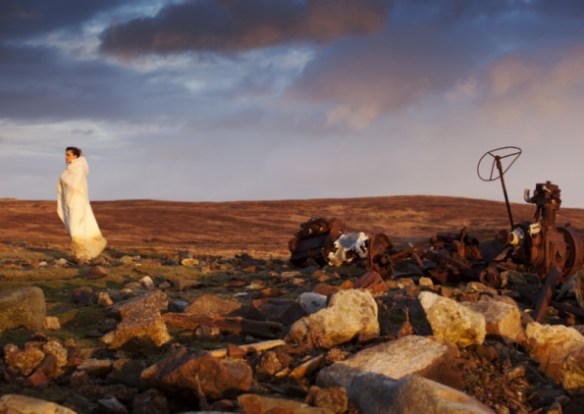
The piece is called Ignition and is set and takes place in the Shetland Islands in Scotland.The idea for Ignition grew from the death in a car crash of a young man called Stuart Henderson. It slowly developed into a project exploring the Shetlanders’ relationship with oil and the combustion engine. It has resulted in this joint creation, developed over the past over six months, by National Theatre of Scotland and Shetland Arts with members of the Shetland community. What makes it extraordinary is the way hundreds of individual stories (many gathered by Lowri Evans, dressed as the “White Wife” of folklore) meld into experience that everyone can recognise, identify with and participate in – rather in the way that you sometime see one big image made up of thousands of tiny photographs  (selection and combination by dramaturg Rob Evans). But, because you are part of the event, you are also making your own picture as you go along. The fire that lights Ignition is, it turns out, the seemingly simple blending of other people’s lives into our own and opening both into something universal.

ignition

By way of explanation, here is a quote from the NTS’s website:

Over the past six months, the National Theatre of Scotland has invited all of Shetland’s inhabitants to explore our bittersweet relationship with the automobile – how it shapes us, defines us, supports us, frees us, challenges our attitudes towards our dwindling resources and, sometimes, kills us. You have told us your stories and now we are ready to take you on the Ignition journey. Set in three locations across Shetland, the site-specific Ignition performances will carry you away on a shared car adventure. The stories will transport you to one indoor and two outdoor locations. At these locations you will see, hear and be a part of the stories that have been collected in the course of the Ignition project. Stories of Shetlanders who have given the White Wife a lift, knitted panels for the Car Yarns car, helped create the music written about the road from Sumburgh to Skaw, taken part in a Sunday Tea conversation, told us their secrets in the Car Confessional, or just taken time out to tell us their car stories. After ten thrilling days of immersive car-theatre between 20th and 29th March, Ignition culminates in a short, but unforgettable, one-off finale for all the Ignition audiences on 30th March in a stunning outdoor location in Brae. The stories will be experienced through exhilarating drive-in theatre, the movement discipline of parkour, music, hitchhikers, dance and text, and will take you on a journey that you will never forget.

If you click the image below, you can watch the BBC report on Ignition

Evernote%20Camera%20Roll%2020130324%20161631

NTS have also recorded a couple of videos about the project and you can watch them here:

and here:

Have a read of some of the reviews here – from The Scotsman, The Telegraph and The Guardian.

The National Theatre of Scotland’s own blog gives you a real feel of the whole creative process behind the project.

Evernote%20Camera%20Roll%2020130324%20161622

Fo-Fighting

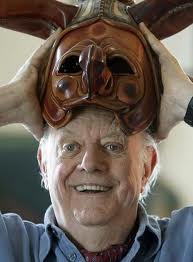
One of my favourite playwrights is Dario Fo and I was reminded of this today, reading an article about the elections in Italy. Fo, 86, is best known for his play Accidental Death of an Anarchist, inspired by the death of a man in police custody in 1969, and has long been a leftwing hero in Italy. He has spent a career writing about injustice and political corruption and together with his wife, Franca Rame, also a playwright, has been one of Europe’s most formidable social commentators. He was awarded the Nobel Prize for Literature in 1997 which places him amongst the true theatrical greats – Harold Pinter, Samuel Beckett, Wole Soyinka, Jean Paul Sartre, George Bernard Shaw even.

fo 2I’ve directed a couple of his plays – Accidental death of an Anarchist, Can’t Pay Won’t Pay – and been in a few too – Trumpets and Raspberries, Mistero Buffo. One of my favourites is The Virtuous Burglar.

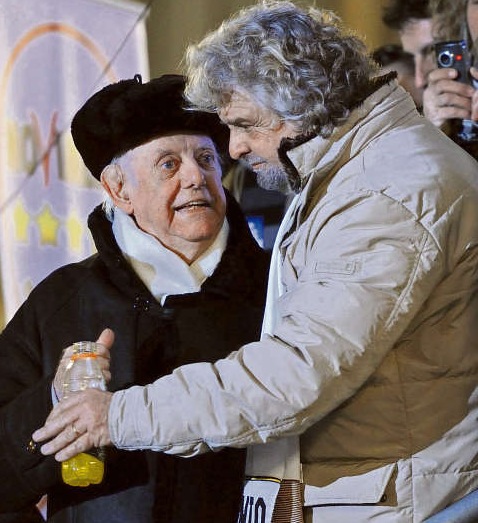
He started writing in 1958 and is still pumping them out today and all the time has been a thorn in the side of the Italian government. Recently he ran for the Mayor of Milan and this week has been outspoken in his support of Beppe Grillo, a comedian turned politician who has just captured over a quarter of the Italian vote, throwing the country into political crisis and unsettling a Europe that is still teetering on the edge  of financial crisis. You can read what he has to say  in an article entitled We need a surreal fantasist like Beppe Grillo to rescue Italy, says Nobel-winning playwright Dario Fo.

fo.

.

.

.

.

.

.

.

.

.

.

.

A good potted biography of him can be found here and if you can speak Italian, have a look at his own website www.dariofo.it

In fact, if you are reading this in Hong Kong, you catch a performance of Accidental Death of an Anarchist at the Fringe Club Underground Theatre this week. I highly recommend it!

Digital Theatre

One of things that has frustrated theatre teachers and students for years is a problem of visual resources. Plays are are rarely recorded in their original form – i.e. using the stage and the set on which they were performed.  If they were, it was a single camera shot that meant most of the subtly of performance and dramatic tension was lost. The alternative was to film a version using the same actors but in a host of different locations, in essence turning from a piece of theatre into a movie – again not much use for students of live performance.

CaptureHowever, in the last couple of years this has begun to change, thankfully. Digital Theatre is a resource that is growing rapidly, capturing British theatre in its original form. This company are building their range of productions and they can be accessed in a variety of ways at quite low cost – sadly not much in life is free.

This is a trailer for their recording of Abi Morgan & Frantic Assembly’s Lovesong, and you get a real sense of the theatricality they have managed to capture.

They also have a daily blog, THE JOURNAL – A Global Culture Mix which whilst not always having a theatre focus, does share some interesting bits and pieces. This week they have started to use guest editors on the journal, and their first is Michael Attenborough, a very well respected director. Take a look!

If anyone of you know of any other similar online services, I would really like to know and share. Please leave a comment if you do.

Women in Theatre

Firstly, apologies for no posts recently, but a school production has swallowed me whole and just spat me out at the end of the run.  More about this later.

Today I want to return to a topic I’ve blogged about before, the roles for women in theatre, both on stage and off.  The all-female Julius Caeser I mentioned a few months ago has opened in London to rave reviews, one of which you can read here.

Julius Caesar at the Donmar Warehouse.

.

.

.

.

.

.

However, it has reignited the debate and I want to share some of articles that have been written in the last few days. Firstly, a piece called Women in theatre: why do so few make it to the top? written by Charlotte Higgins in which she asks leading figures why women are still underrepresented at every level of the business – and what needs to change. It is UK-centric, but the discussion and arguments are universal.

This article is supported by a piece of research, Women in theatre: how the ‘2:1 problem’ breaks down which presents some statistical research. Again UK based, but interesting reading none the less.

Finally, a great interactive graphic that explores women in Shakespeare, bringing us nicely back to the all-female Caesar. Click on the image below to take you there.

WIT

A Black Day

I was going to keep this post until tomorrow, but I can’t wait.

Pulitzer prize winning American playwright Bruce Norris has been forced to remove the performance rights for his play, Clybourne Park from Berlin’s Deutsches Theater after he learned that they planned to ‘black-up’ a white actor to play the role of an African-american – in a piece that that explores race as one of it’s central theme.

Clybourne Park takes place in Chicago, in 1956 and 2006 and deals with the aspirations of black Americans in both of those times.  It has toured the world and has been widely celebrated. I can’t quite believe that in the 21st Century it still might be considered appropriate for a white actor to be cast in a role, whose skin colour is central to the experiences of the character and context of the play as a whole, and then be expected to ‘black-up’.

You might think that such a trick should be unthinkable in a nation with the historical racial sensitivities of Germany – and, indeed, it would be unthinkable in most countries. However, ‘blacking up’ remains a relatively common practice in German theatre and is often justified on the basis of directorial prerogative. Indeed German director Thomas Schendel, commented that “blackface is a part of the theatre tradition”.

Norris has said:

Normally I don’t meddle in the cultural politics of other countries, but when my work and the work of my colleagues – other playwrights – is misrepresented, I do.

However Norris has now called on others to boycott productions of their work by German theatres that continue this asinine tradition. A zero-tolerance position is the only position to take.

.

.

.

.

.

.

Y.You cabn

You can read more here. A quick search of the blogosphere will throw up even more comment. This is not the only case that has been highlighted this year in Germany, The Schlosspark theatre did the same with a production of I’m Not Rappaport by Herb Gardner. This production featured a white actor in black-face in the role of Midge Carter.

You can read Norris’ open letter to the Dramatists Guild of America here .You might even sign the petition.

Finally, I offer you the New York Times review of Clybourne Park which says more than I can here. Slashing the Tires on the Welcome Wagon ‘Clybourne Park,’ by Bruce Norris

Paradise Lost

An unsual post for me!

So. In a world where virtually every job description mentions the word ‘creativity’, and where global accepted educational practice has creativity at its heart, the British government do this!

Wretched shame on them in every way I can think!

I left the UK over 17 years ago and became an international school teacher because I was utterly disillusioned having lived through the Thatcher government and witnessed the arts wither on the vine. But this is abominable. However, I tend to keep my council as I believe I have no right to comment other than in the context of having a world view – say, Obama versus Romney – but this is pure dogmatism.

Read. You decide.

Arts leaders voice deep concerns over lack of cultural subjects in Ebacc

Việt nhà hát

As my mind turns to flying to Vietnam tomorrow, with 50 students, on a CAS trip,  I started to think about performance in that beautiful country. Many months ago I wrote about the traditional Water Puppet theatre for which Vietnam is very famous.  I don’t imagine there is a visitor who has ever been to Hanoi who has not been to the Thang Long Water Puppet Theate to see a performance – I will be there again tomorrow night.

However, there is another theatre form that is very popular in Vietnam and that is Cai Luong, which roughly translated means renovated or reformed theatre. The Water Puppet theatre has its roots firmly in Vietnamese rice farming culture, but Cai Luong is an interesting mixture of East and West theatrical traditions, having being heavily influenced by the French during their rule in Vietnam. Essentially, Cai Luong is the convergence of southern Vietnamese folk songs, classical music, tuong (a Chinese-based classical theatre form) and modern spoken drama, all coming together to create folk opera.

There is a great little website, called, not suprisingly, Vietnam Opera, that has much more background and you can access that by clicking the image below:

Also on this site are pages about two other, more traditional, Vietnamese Opera forms, Tuong and Cheo that are more ‘Classical’ in their nature (and more serious in their themes and content). Cai Luong has a reputation for being lighter and more comic. Perhaps what is most astonishing of all is that unlike many traditional theatre forms across Asia, Cai Luong is thriving, growing in popularity and although some of this growth is driven by tourism, it has huge appeal to the Vietnamese too. There are even some instances of the traditional dress and costume being swapped for more contemporary clothing.

I leave you with a video of a full length performance of Cai Luong titled The Life of Buddah