Stringing Up Royalty

I have spent quite some time recently looking at puppetry as a world theatre form and I have some great things to share – very varied, from the ancient and traditional, to the contemporary and technological. I have always been fascinated by puppets, right from being very young and even now I have puppets in my house, collected from across the globe. There is something quite primal about the way they can be brought to life.

I am going to start with a puppet tradition that goes back at least 700 years. In Myanmar/Burma puppet plays have been performed since at least the 1400s. In the 1700s, the royal court began to formally sponsor and regulate the puppet theatre, causing it to quickly grow in prestige.

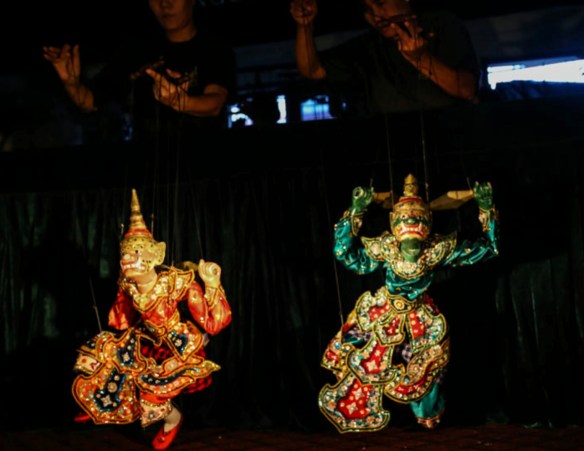
Htwe Oo Myanmar puppeteers perform a group dance of handmaiden puppets

Htwe Oo Myanmar puppeteers perform a group dance of handmaiden puppets

The Burmese court was concerned with preserving the dignity of its members and marionettes were often used to preserve the esteem of a person who had erred. For instance, the emperor could reprimand his children or his wife in this way by asking the puppeteers to put on a parable correcting errant children or careless wives about their reckless ways. While the reprimand would be obvious to anyone who was “in the know” it would largely pass unheeded by the people looking on, something that had a great deal of value in a court that could, and did contain hundreds of people.

.

The Burmese marionettes also served as a conduit between the ruler and his subjects. Many times, people would ask the puppeteers to mention in a veiled fashion a current event or warning to the ruler. In this way, information could be transferred on without any disrespect. A marionette could say things that a human could never get away with.

In many ways, the Burmese marionette troupes replaced the actors of the time. It was considered a beheading offense to put your head above royalty, a fact which made standing on a stage difficult to say the least. Similarly, the laws of Burma were such that an actor could not wear full costumes if they were playing figures like royalty or holy men. While both of these facts would hamper the movement and stylings of a human actor, marionettes were not bound by such things and thrived in the vacuum.

In the 1800s, puppet theatre was considered the most highly developed of the entertainment arts, and was also the most popular. Though no longer as popular today, the tradition is still maintained by a small number of performing troupes.

A Burmese puppet troupe includes puppet handlers, vocalists, and musicians. Plays are based on Buddhist fables, historical legends, and folktales, among other stories. The shows are performed for adults and children together, and typically last all night.
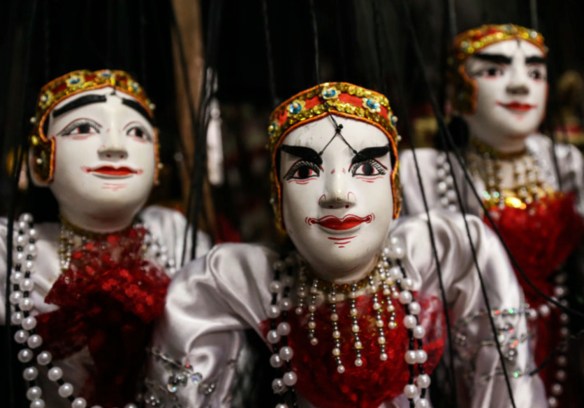
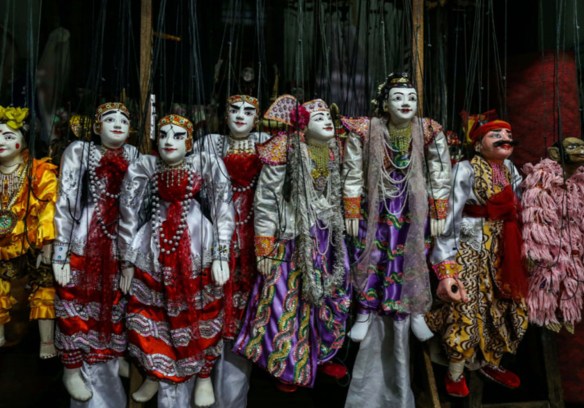
The Burmese puppetry figures of “nat-ga-daw,” or the spiritual medium, at Khin Maung Htwe’s home theatre

The Burmese puppetry figures of “nat-ga-daw,” or the spiritual medium, at Khin Maung Htwe’s home theatre

The puppets themselves are marionettes, ranging in height from about one to three feet. Nearly all are stock figures, changing their names but keeping their characteristics for each play. Some of these puppet types have been standard for centuries—especially those developed from Buddhist fables, which probably formed the puppeteers’ first repertoire.

As Myanmar emerges from years of political and social isolation, it is not surprising that traditional puppet troupes are emerging as a potential tourist draw (as they are in other countries across the world). However, it is clear this is also being done by a drive to hold on to centuries of cultural tradition. Two companies that are particularly gaining a reputation are the Mandalay Puppet Theatre and Htwe Oo Myanmar. The website of the former is packed full of information from how to make your puppet (provided you are a master craftsperson) to how to manipulate them, to a description of all the puppet characters.

.

A transcript of this video can be found here.

On Saturday, The Irrawaddy published an article by Kyaw Phyotha about U Khin Maung Htwe who founded Htwe Oo Myanmar

Bringing Myanmar Puppetry Back to Life

YANGON — Sitting in his makeshift theater at his home near downtown Yangon, U Khin Maung Htwe is dreaming big.

“I want to have a museum or center focused on Myanmar puppetry,” he said, caressing a stringed wooden white horse, one of the figures from a set of 28 Myanmar marionettes.

As well as running a theater, U Khin Maung Htwe is director of the Yangon-based marionette troupe Htwe Oo Myanmar. “Here in Myanmar, there’s no place to go for anyone, both locals and foreigners, who want to learn about the arts,” he laments.

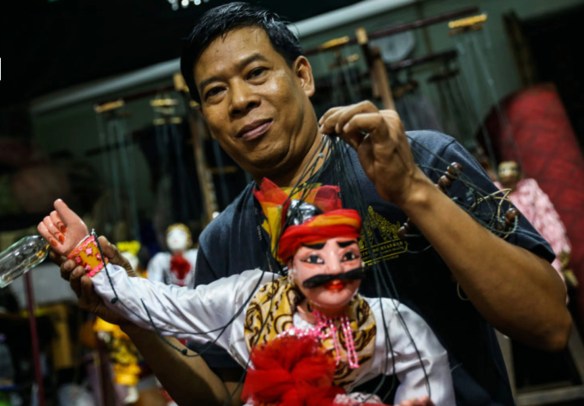
Khin Maung Htwe poses with puppet U Min Kyaw, one of the famous pantheon of 37 spirits, who is fond of drinking and merrymaking

Khin Maung Htwe poses with puppet U Min Kyaw, one of the famous pantheon of 37 spirits, who is fond of drinking and merrymaking

When he established the troupe in 2006, the one-time sailor’s ambition was more humble: He wanted to showcase Myanmar’s traditional performing arts to tourists in a fitting environment.

“I did it because I wanted to see people enjoy our puppetry in the way it is supposed to be enjoyed,” he said, explaining that hotels and expensive restaurants offer so-called traditional puppet shows to attract foreigners. “They treat puppetry like a side-dish to tourism.”

After struggling for seven years to get his idea off the ground—including making 10 overseas trips, from Thailand to Austria—Htwe Oo Myanmar has gained popularity internationally. Visiting Europe, he says, opened his eyes to the importance of opening a center to preserve the art form.

“After visiting puppet museums [in Europe], I have a burning desire to have a center for teaching, preserving and showcasing our puppetry here,” he said. “It would be very convenient for us to pass the arts on to younger generations.”

Myanmar puppetry, known as Yoke Thay, has a long history dating back more than 500 years. In a similar fashion to other folk plays around the world, Yoke Thay functioned as both royal entertainment and mass media, spreading stories of current events.

But Myanmar’s tradition of puppetry is also unique.

“Our tradition is unlike any other puppetry from neighboring countries. Ours has its own unique styles in every respect, including the way to manipulate the puppets and their design,” said U Chit San Win, the author of “Yanae Myanma Yoke Thay Thabin” (“Myanmar Puppet Theater Today”). “In our Yoke Thay you can enjoy all the Myanmar arts, like dancing, music, sculpture, sequin embroidery and painting.”

The puppetry performance of ba-lu, or ogres

The puppetry performance of ba-lu, or ogres

U Chit San Win says Yoke Thay is not on the verge of extinction due to a number of puppetry courses taught at universities. But in general, he says, the traditional arts are unfashionable.

“Young people find it very boring and difficult to understand because even today the Myanmar puppet performance is still very traditional and using old Myanmar [language],” he said. “This means Yoke Thay has seen a serious decline in local patronage and it survives on tourism.”

This could explain why Htwe Oo Myanmar has battled for years to recognition at home, even as it has found interest abroad. When Cyclone Nargis hit the Ayeyarwady Delta in 2008, causing tourist numbers to fall, the troupe was forced to move to U Khin Maung Htwe’s living room, now hastily converted into a stage when tourists arrive.

He said while neighboring countries such as Thailand and Vietnam are attracting international visitors with their puppetry, the Myanmar government does little to promote its traditional performing arts, “because they are paranoid about being labeled a ‘puppet government,’” U Khin Maung Htwe said.

Puppet 4

More than two years after Myanmar’s military junta handed over power to a nominally civilian government, many still wonder if the current administration isn’t just a puppet of former military strongman Snr-Gen Than Shwe.

“Instead of what they are doing now, the government should have more concrete plans for our Yoke Thay,” U Khin Maung Htwe suggested. He sees a puppet museum or center becoming a focal point for puppet masters in the country to collaborate with each other to preserve and promote the arts.

“It would help us generate ideas about how to breathe new life into our dying arts, too,” he added.

..
McTheatre

I’ve been trying to write this post for a few days, but kept getting lost in what I was trying to say. Now I think I have it – my thoughts are now in order.

There is one theatrical tradition that is sure to polarize theatre folk, The Musical, or to give it its proper title, Musical Theatre. People tend to either love it or hate it. It’s looked down on because its ‘populist’ or its celebrated because it is popular and draws a wide audience. I was reminded of this recently by playwright Howard Brenton when asked in an interview which art form he didn’t relate to, he said

Musical theatre. I love opera – I’ve written a libretto – but I can’t bear show music. Every song sounds the same.

I have always tended to agree with him, but while I was thinking about this I began to question why there are some musicals I do like – Les Miserables, Jesus Christ Superstar, Jerry Springer the Opera, The Threepenny Opera, The Lion King and on film, Moulin Rouge. Now this is an eclectic, if not quite odd, mix and I am aware of that, so what is it that they do that draws me too them? Why these, when I know that there are musicals that I simply don’t like and think are utter garbage (the likes of Starlight Express, for example)? Then I listened to this interview with Robert Gordon, who is Professor of Drama at Goldsmiths, University of London.

.

In it he reflects on the perception of musical theatre as pure entertainment and looks at key productions that have had significant political and social relevance across its history, from the 18th century production of John Gay’s The Beggar’s Opera to new musical Mission Drift. It is well worth a listen. (Incidentally, Brecht and Weill based Threepenny Opera on Gay’s Beggar’s Opera and Mission Drift is, and I quote, a pioneering journey west and east across the USA in search of the character of American capitalism).

.

So I went back to my list. Superstar was a first of its kind, one that embraced a popular musical idiom and appealed, therefore, to my generation. Jerry Springer is outrageous and challenged society’s religious norms (and I loved the howls of outrage it produced as well!). The Lion King is an easy one – the beautiful use of puppets was a first. The Threepenny Opera because again, it was the first of its kind, a socialist critique of a capitalist world and remains hauntingly relevant today. Moulin Rouge, ditto Superstar. That leaves me with Les Mis and I guess its appeal to me lies in its pure expansive theatricality – and I did see it in its original incarnation many years ago.

Be warned of the ‘interesting’ language in the video below!

.

All of this goes someway to help me understand my diffidence to musicals, but not all the way. Then it struck me that part of my issue is that they don’t tend into fit my modus operandi as a theatre teacher. You are all aware that I see theatre a tool of challenge, change and confrontation – it should make audiences think and reflect. Most musicals simply don’t do this, so in terms of my teaching life I have simply dismissed them. There is another point I’d like to make here, but it is irrelevant at the moment so I will leave for later.

.

But still I didn’t feel this gave me the full answer I was looking for. A little bit of research got me to look at the numbers of musicals on in London this summer (36) and New York (38). Astonishing! And this is just two cities. The spread of the ‘western’ musical across the globe seems relentless – I refer you back to an early post as a good example, The Gweilos Are Coming. If you compare the two listings you will the same shows again and again. I realised that this irritates me – where is the originality? On the other hand (with my global citizen hat on) why shouldn’t audiences in New York, London, Mumbai, Beijing, Shanghai and Sydney have access to these shows?

.

Then I read these two articles – Does the mega-musical boom mean theatre’s bust? and Some musical theatre is still on song – and it clicked! The final piece of the puzzle. The phrase McTheatre summed up what I don’t like about the modern mega-musical. It doesn’t matter where in the world you see one of the really big musicals it will look and sound exactly the same (unless you are seeing Cats in Beijing of course, where it will be sung in Chinese). Only the original staging is unique and truly creative – all the others are just a facsimile, a direct copy, that’s how it works! I am a believer in the global village, but this kind of globalisation which strips theatre of its creativity just seems wrong. As Robert Gordon says in his interview and Lyn Gardner in her articles, there are fantastic musical pieces of inspirational social commentary emerging, but they come from small, innovative companies, with small budgets, not the mega-theatrical corporations of Cameron Macintosh and Andrew Lloyd-Webber!

So there you have it. I have managed to explain to myself why I have problems with musicals and the answer is complex. You might not agree but let us beg to differ. However, if you really do like Starlight Express don’t ever speak to me again!

shop

By way of a post script to this post – I alluded to this earlier – I’d like to say something about the notion of the ‘school musical’. It doesn’t matter where in the world you are, there is an expectation that a school will ‘do’ a musical. However, let me be frank here, it is not because they extend or deepen learning, it’s because they are good publicity vehicles for an institution. I don’t really have a problem with this as such (actually that’s a lie, but it is my job). What I do have a problem with is that they are exclusive and limiting. The pool of students who have the skills to perform in a musical is small and excludes a much wider range of students who are excellent actors, but can’t sing. They reduce opportunities for participation. That’s not to say I don’t celebrate the students that can perform in them, because I do, and am humbled by their skills. Our last musical outing was Little Shop of Horrors (pictured above) and it was superb. But, I want public performances to impact in the classroom/drama studio and for me, musicals just don’t do that.

Cultural Revolutions

One of things I enjoy most about writing this blog is that I am always learning. So today I’m going to share something totally new to me, Ache Lhamo, Tibetan Folk Opera.

529331_459683667440271_548838428_n_Fotor

Lhamo, meaning sister goddess, is a traditional Tibetan folk opera performed through a unique combination of dialogue, dance, chants, pantomime and songs. Based on Buddhist teachings and Tibetan historical figures, Ache Lhamo are traditionally stories of love, devotion, good and evil.

Lhamo has it’s roots in the masked dance-drama tradition of the Tibetan royal dynasty in the 6th to 9th centuries, but the development of Lhamo as it is known today is attributed to the 14th century teacher and self-made engineer, Thangtong Gyalpo. Thangtong Gyalpo developed a performance medium that told moral tales, based on Buddhist philosophy, in the words of the common people

.

Lhamo is a day long performance played outdoors traditionally under a large circular canvas tent. Music is simple, however the cymbals and drum create remarkable atmosphere. Costumes generally imitate those of the Tibetan aristocracy, and some characters wear masks, which portray their personality with bold symbols.

Lhamo Masks

However, and not surprisingly, Lhamo now has a more political context. The role of China in Tibet over the last 60 years remains one of the biggest human rights tragedies. The suppression or tight control of most of the cultural and religious practices of indigenous Tibetans is well-known. Lhamo only exists in traditional form outside of Tibet where it has been kept alive by exiles.  The most famous centre is in Dharamsala, India, and is known as the Tibetan Institute of Performing Arts (TIPA).  TIPA was established in August 1959, four months after the Dali Lama fled Tibet. You can watch one of their performances here:

.

There is a facsinating blog post, The Wandering Goddess, Sustaining the spirit of Ache Lhamo in the Exile Tibetan capital written by Jamyang Norbu, that tells story of the revival of Lhamo following the Chinese occupation. It is clear from all I have read that the practice of Lhamo by the Tibetan refugee community across the world evokes nostalgia for a lost existence and the struggle for a return to the Tibetan Buddhist homeland.

Meanwhile in Tibet itself it has been ‘redeveloped’ by China following the Cultural Revolution and used to support Chinese claims to Tibet. If you want to read more you can do here, in a rather scholarly paper entitled Tibetan Folk Opera: Lhamo in Contemporary Cultural Politics by Syed Jamil Ahmed.

I said earlier, the music that accompanies Lhamo is traditionally played on a drum and cymbols alone – take a look at this dude:

.

Norbu Tsering, was the TIPA opera master and drummer until he sadly passed away earlier this year. Another link with past traditions lost.

Burying Brecht?

I recently came across a great way of sharing audio streams,  soundcloud.com. A lot of theatres and practitioners are using it as a way of sharing panel discussions. I have set up a sister site to this one so I can add to the diversity of what I post here. I won’t always duplicate posts or what I subscribe to on soundcloud so check it out occasionally to see what I have re-posted. You can find Theatre Room Asia on soundcloud here.

I am going to share a great one today, which is a panel discussion of German and English theatre practitioners on the relevance of Bertolt Brecht and Brechtian theatre in the modern theatrical landscape.

brecht

To coincide with our production of A Life of Galileo, and in collaboration with the Goethe Institute in London, the Royal Shakespeare Company (RSC) hosted a ‘Brecht Meeting’ of British and German theatre makers in March 2013.
Chaired by Mark Ravenhill (RSC playwright in residence and writer of our new English version of A Life of Galileo), we explored the relevance (if any) that Brecht has for us as contemporary theatre makers.

Has Brecht now become a familiar ‘classic’, who can be produced in the same way that we might play Shakespeare or Schiller?

Does he still present challenges that allow us to ask important questions in the making of new theatre?

Should we bury his work and move on as though he never happened?

.

And if would like to, you hear an interview with the director of A Life of Galileo, Roxana Silbert, with journalist Paul Allen.

.

Global Reconstruction

Now for those of you have been reading my blog for a long time will know that I am no big fan of Shakespeare in the context of teaching in an international environment. I don’t see a lot of point trying to teach theatre practice through an arcane language that obfuscates its meaning at every turn – see what I mean?

However, I do like Shakespeare’s plays and have seen some incredibly powerful performances in my time. Also the history and myth behind the man is really interesting. One of the most enjoyable experiences I have had is being stood in the pit, in the open air, watching a production of Measure for Measure at The Globe Theatre in London a few years ago. If you don’t know anything about The Globe, it is a reconstruction of an Elizabethan playhouse on the south bank of the River Thames, London, that was originally built in 1599.

globe_theatre.

.

.

.

.

.

.

.

It is well worth a visit if you are ever in London. So why am I writing about it today? Well The  Globe is in the process of finishing the building of another theatre on its site, but this time a reconstruction of a Jacobean playhouse (which has a roof this time) and will be lit by candles. The new theatre opens next year and will be known as the Sam Wanamaker Playhouse, named after the american actor and director who is credited as the person most responsible for the modern recreation of The Globe.

This is a rendering of what it will look like when it is finished:

CGI+of+interior+of+the+Sam+Wanamaker+Playhouse+from+the+Upper+Gallery.+Design+by+Allies+++Morrison.I am fascinated by this theatrical archaeology. The Globe have produced a series of videos about the building of this new theatre and how you go about it. This is the first here:

There was a great article in The Independent last week, written by Holly Williams that traces this fantastic project

All the world’s a stage (or two): Shakespeare’s Globe to be joined by a candlelit indoor theatre

‘Oh, for a muse of fire that would ascend, the brightest heaven of invention…” So begins William Shakespeare’s Henry V; but it was a wish that would come back to haunt the playwright with unfortunate literalism a few years (and Henrys) down the line.

Four hundred years ago this week, on 29 June, during a performance of Henry VIII at the Globe theatre on Bankside, wadding from a stage canon did indeed ascend up through the theatre’s ‘wooden O’ – setting fire to that circular thatched roof. The Globe burnt to the ground; a contemporary account records that the blaze “burned so furiously, as it consumed the whole house, all in less than two hours, the people having enough to do to save themselves”. Not that the Jacobeans were too precious about it: the Globe was rapidly rebuilt – only this time, with a tiled roof. It lasted till 1644, when it was demolished after the Puritans closed England’s theatres.

Its 17th-century resurrection was certainly swifter than the modern project to rebuild Shakespeare’s Globe on the banks of the Thames. American actor Sam Wanamaker conceived of the idea way back in 1949, and founded the Shakespeare Globe Trust in 1970, but it didn’t actually open its doors to the public till 1997 – after Wanamaker’s death. Even then, it couldn’t be said to be wholly complete.

For Wanamaker’s vision was always that both of Shakespeare’s theatres should be brought back to life – an outdoor playhouse and an indoor theatre, too. It is, to some degree, a testament to the huge popular success of his plan that the public concept now of what Shakespeare’s theatre was like, is the Globe: almost circular, open-air, highly decorated, with a standing pit for rowdy groundlings.

But that’s only half the story. Each year from 1609 onwards, the company Shakespeare acted in, and wrote for, The King’s Men, played indoors at the Blackfriars theatre across the river during the winter. His plays, being year-round popular, would have to work indoors and outdoors, but it is thought The Winter’s Tale and The Tempest were written, initially and ideally, for an indoor venue.

Globe 2

So when Shakespeare’s Globe was being rebuilt in the Nineties, they also threw up a brick structure next door that could, at a later date, when more funds were raised (the Globe does not receive subsidy), be fitted with an indoor Jacobean theatre. This is currently, finally, being realised; christened the Sam Wanamaker Playhouse, its first season opens January 2014.

The structure is based on drawings which were found in the 1960s; falling out of a book in Worcester College Oxford, they showed detailed plans of a Jacobean theatre space. It felt like a gift – but has, in fact, complicated matters somewhat… The drawings were thought to hail from the early 17th century, but at an architectural symposium held at the Globe in 2005, an art historian who had studied the documents dropped a bombshell: drawn by John Webb, they dated from 1660, and were therefore certainly not ‘Shakespearean’ (he shuffled off this mortal coil in 1616).

These plans were radically different to Blackfriars anyway, which we know was itself a conversion of an old medieval hall. Should they try to recreate that instead? But the outdoor brick shell was already in place – it will provide modern entrances and access to a traditional timber-framed structure built actually inside it – and this existing footprint followed the size and spec of the Webb drawings.

So it was decided that they should stick with plan A: it would not be, like the Globe, an as-close-as-possible best guess at an actual named playhouse, but instead a “Jacobean archetype”, a theatre that Shakespeare and his contemporaries would, at least, have felt at home within. And it should recreate the conditions and atmosphere of playgoing in the early 17th century. The wooden space is intimate, will be rather magically lit by candles, and promises very different acoustics to the open-air Globe.

“We wouldn’t have done this if it wasn’t historically viable or feasible,” insists Dr Farah Karim-Cooper, head of the Globe’s Architecture Research Group. “We also did a lot of research into the acoustics and visual effects of Shakespeare’s Blackfriars playhouse – I keep describing it as haunting the project. So we’ve taken elements of that space, and we’ve used the [1660] drawings as a spatial map.”

globe 1

Which was handy for Peter McCurdy, the man who built the Globe and who is now the master craftsman for the Sam Wanamaker Playhouse (SWP). While the building may have been a dream for decades, once they got the green light, funding-wise, it’s all happened astonishingly quickly; McCurdy began building in his workshop last September, and moved on site in April. I was given an early look in at the start of this month, and while scaffolding was still being pivoted above our heads, you already get a good sense of the space – a 320-seater, with two levels of galleries curving round three sides of the stage and a small pit for seats in front.

It feels very intimate; the stage is about a quarter of the size of the Globe’s, and some seating is right up flush to it. In Shakespeare’s day, some of the Blackfriars audience even sat on stage, on stools – it was very much a ‘see and be seen’ place, with tickets much more expensive than the Globe’s. The Shakespeare author and professor at Columbia University, James Shapiro, quips “if you wanted to impress somebody, you’d take them to Blackfriars, like date night, throwing round the money; if you were looking to pick someone up, you’d go to the Globe…”. Even the cheapest tickets at the SWP will be twice the price of those at Shakespeare’s Globe (£10 instead of £5).

McCurdy, an expert in historical reconstruction and traditional building methods, oversees everything from what type of wood is used (oak for the main structure; Scots pine for the seating and stage) to researching the correct shapes for the pillars and the amount of decorative painting – which is still being debated.

“It’s a lot of detective work. You have to find historic precedent and models; without that you’re just inventing history,” says McCurdy, who spends much time researching still-standing Jacobean buildings, as well as drawings and contemporary accounts.

“It is almost experimental archeology: one is learning the process,” explains McCurdy. “One has got to be careful it doesn’t become a pastiche. It doesn’t want to look like you’ve cherry-picked [Jacobean features]; it’s trying to subtly bring them together so they have both harmony and integrity.” All of the wood is hand-finished to give as historically accurate a look and feel as possible, although modern-day power-tools are used in the construction process for speed and affordability. Even so, the project has cost £7.5m.

Globe 3

The question of historical authenticity is one that previously plagued the whole Globe project. In the Seventies, Wanamaker’s vision of rebuilding the first 1599 Globe was widely derided: “the concept of reconstructing the theatre seemed quite ridiculous to a lot of people in those days, and even in the 1990s there were a lot of naysayers, people who thought it was going to be destructive to Shakespeare and the history of theatre, rather than instructive – which is what it’s turned out to be,” says Karim-Cooper. The fear was of a “Disneyfication of Shakespeare, historicising him to such an extent that he no longer has that cultural relevance that we worship now”.

Some scholars and commentators sniffily pointed out it was impossible to recreate the experience of Elizabethan theatre – there were just too many practical unknowns, and we, as audiences, are different anyway – and that to try was to ensure modern productions became mere “museum theatre”. Heavens – the whole thing was even proposed by an American.

When Shakespeare’s Globe finally opened, under the artistic direction of Mark Rylance, it became not just a laboratory for investigating historical stage practices (Rylance has called it “the most experimental theatre space in England”), but a huge popular success. However, there were initially still many disgruntled voices: academics for whom it wasn’t accurate enough, and directors, designers and actors for whom it was too accurate. Many felt there was no room for their artistic vision in the elaborate design of the building, or felt exposed by the proximity of the standing audience, the daylight and the British weather.

Then there were critics who were snobbish about tourist audiences who laughed at the wrong places. Anyone who has seen a show at the Globe will recognise the effect the open-air space has, re-invigorating interaction between audience and actors. Rylance has suggested that unexpected comedy was “truly revealed in Shakespeare’s writing by the reconstruction”, but critics have not always agreed. Productions were accused of being pantomimic, or likened to football matches.

But today, the Globe is an established part of the theatrical landscape of Britain, and under the more recent directorship of Dominic Dromgoole, has also been home to new writing and international companies, as seen last year during the Cultural Olympiad. It’s still not to everyone’s tastes, but many scholars have found performance experiments there into Original Practices (all-male casts; traditional costume and music) illuminating, while many actors and audiences have found the immediacy of the space throws up new insights into Shakespeare (and other writers), be that unexpected laughter or moments of poignancy.

The cries of Disneyland and museum theatre have abated, then, and the new SWP has, so far, met with little resistance. “I haven’t received any hate mail yet!” jokes Karim-Cooper, before adding that they are still careful to keep “very clear of the word ‘authenticity’ – that word was applied to us, really. As an academic, authenticity is unachievable. [But] I think, overall, reception should be fairly calm, and positive.”

So what is so exciting about this new, old theatre – and will the SWP shed a different light on plays and the playgoing experience than the reconstructed Globe? McCurdy thinks so. “It’s a real contrast to the Globe, even without considering daylight versus candlelight. Although the structure has similarities at the moment, by the time we’ve got the finishes, the lime plaster, the panelling and carving, I think it will be very, very different.”

What effect it will have on performances remains to be seen; much as the construction is a process of discovery-through-doing, so practitioners, playing with plays in a new playhouse, may be surprised by what emerges. But there are a few features that are notable: the intimacy, the candlelight, the actors holding torches onstage, plus much more subtle acoustics, and therefore greater impact from music.

Would Shakespeare have written differently for these conditions? Shapiro thinks so. “Shakespeare had to write indoor-outdoor plays, playable in both. But [moving indoors] absolutely changed the kinds of plays he was writing; they had to take advantage of the music and atmospherics.” He adds that having this space today is “very important”, too, in helping us understand the Jacobean era. “When I started teaching I never really thought of the Blackfriars – now when I teach I’m hyper-conscious of playing space. And Jacobean is not Elizabethan; that’s the main thing for me about the indoor theatre, it’s going to remind us that it was quite a different set of concerns and cultural preoccupations in the early 17th century.”

Karim-Cooper agrees. “When you bed [texts] into the particular space they were written for, things are unlocked. If you take The Winter’s Tale, where Hermione’s statue comes to life; in candlelight, it can be quite a spectacle, the way Shakespeare draws attention in that scene to looking and seeing… it’s an incredibly intimate moment, and the indoor theatre brought you that much closer.”

Sadly, you won’t get to see that magical transformation in the SWP’s opening season in January. It’s ambitious in its programming: there’s a co-production with The Royal Opera of Cavalli’s L’Ormindo, and a new company of talented teenage actors – mimicking the Jacobean craze for ‘boy players’ performing satirical adult dramas – will stage John Marston’s The Malcontent. But there is, oddly, no Shakespeare; in a bizarre programming move, Dromgoole begins with John Webster’s Duchess of Malfi and shuns Will entirely. Very strange – although he’s promised that “in time we will perform the plays of Shakespeare in there”. Whether or not the company will transfer summer Globe hits into winter SWP shows, as The King’s Men would have seasonally re-housed their repertory, is not yet clear.

Either way, the company at the Globe, like Shakespeare’s own, now has two houses to play with. Asked what impact such reconstructed – or archetypal – theatres have, Shapiro is an enthusiastic advocate: “they do amazing things towards making you feel the immediacy and excitement of these plays when they were first staged. You learn that these plays have legs; even if you miss 10 or 20 per cent of the language, the plays carry the audience. It’s quite extraordinary that these difficult plays, written 400 years ago, still work – and Shakespeare’s best of all.”

Singing Sweetly?

The crazy nature of the end of the academic year has kept me away from here for a couple of weeks; so much to do and so little time to do it in. I’ve got a backlog of things to post and will get going once term is over. However, I thought I would share this article with you that was published in The Independent a few days ago. It is written by playwright and dramaturge, James Graham and talks about his adaptation of Tennessee Williams’ play Sweet Bird of Youth.

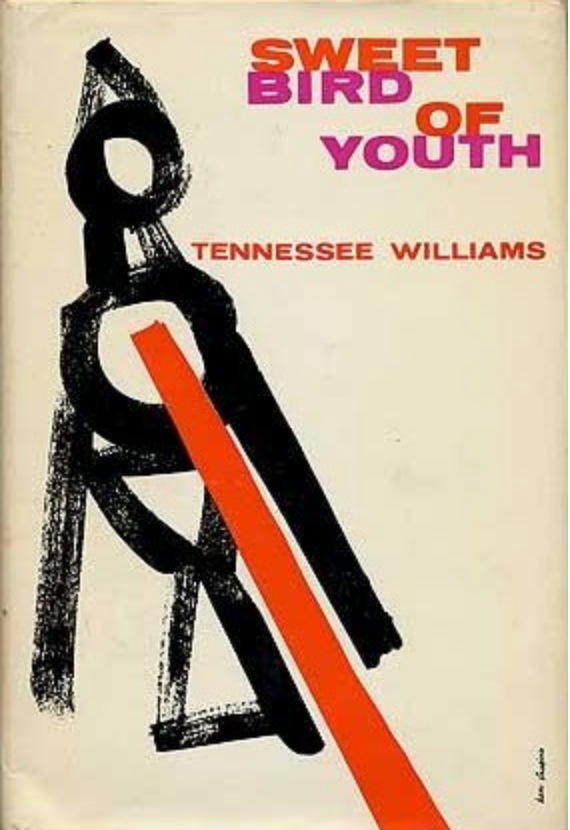
Sweet Bird of Youth: A journey in search of Tennessee

Sweet Bird of Youth was torment for its author to write, and in adapting it James Graham had to confront his own fears of ageing

Untitled 3_Fotor

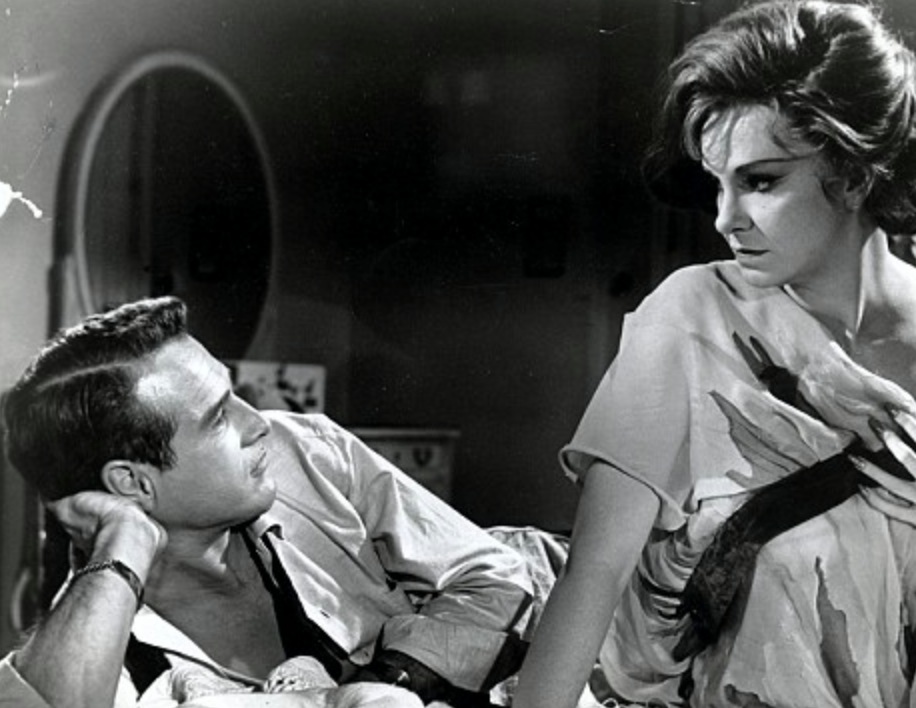
My confession is that I’d never read, seen or barely heard of Sweet Bird of Youth before the director Marianne Elliott introduced me to it. Possibly you haven’t either. For many it’s the blind spot in an otherwise familiar catalogue by that genius American playwright. It has something of a reputation for being… well, a “bit of a problem”. It’s a gruelling challenge to produce, certainly. But having been on this journey for the Old Vic’s new production of the play, I firmly believe it’s a valuable one. And, as a playwright used to writing original work (my latest This House just ended its run at the National Theatre), the notion of dramaturging someone else’s play – whereby an existing text is analysed and edited – was unknown territory for me.

This is without doubt Tennessee’s most personal piece. His life’s turmoils are blazoned throughout it – the loneliness, regrets, the self-loathing and self-doubt. It is a day in the life of Chance Wayne, who used to be “the best-looking boy in town”, returning to St Cloud at the age of 29 – not old, but not young-young any more – to get the girl. But there is violence in the air, accompanying the prodigal son’s return…

What I hadn’t expected was not just how the themes of this neglected masterpiece would grow to haunt me as a young(ish) man, but how much my journey in search of Tennessee, and the discovery of how much this one tortured him – really, truly, tortured him – would affect me as a playwright.

Untitled_Fotor

So why does Sweet Bird of Youth need someone to dramaturg it? First, I hope it goes without saying how presumptuous and unworthy I felt and still feel, fiddling and faffing at the altar of a master and one of my heroes. The reason we felt justified in our quest is because Tennessee himself confessed that this play eluded him. He spent nearly two decades writing and rewriting, long after productions had opened and closed, long after film adaptations and printed texts appeared. There are an eye-watering numbers of performable versions. In some of them characters survive, in others, they don’t. Endings are sometimes hopeful, in others gruesomely tragic. Most theatres will pick one version and do that one. Not good enough said Marianne and the producers at the Old Vic. So we set off on an adventure to pull together all the strongest elements of all the drafts of all the versions in order to create the very thing that Tennessee failed to find himself – the perfect version of Sweet Bird of Youth. If such a thing is possible…

And to avoid any hubris, it obviously isn’t. Art is too subjective a thing for there to be a “best” or “perfect” type of anything. All I could hope to do was compile the version that made most sense to me. And to do that, I had to work out what Tennessee’s obsessions and motivations were when writing it and refusing to let go. And to find that out, I had to go to Texas. This is the world of Williams – all Southern Belles and raw masculinity; hot nights and tequila and piano music in the dusty streets.

My first thought as I pulled up a chair in the reading room of the Harry Ransom Center in Austin was an odd sort of sadness at the realisation that I and my contemporary playwrights hardly write anything down any more, physically on paper. Any future collection of my own humble dramatic efforts will be assembled entirely on a USB stick. Where’s the romance in that?

Thank God Tennessee was writing in a different age, where his typed manuscripts still bore the coffee stains and the yellowing of cigarette smoke. Where his actual, real-life handwriting adorned the pages (I got far too excited by this).

It’s funny how, when playwright meets playwright, the first thing we often want to talk about is not the themes of our work, or style or form or all that arty stuff. It’s what font we type in. Do we double space? Final Draft or Microsoft Word? Get up early or stay up late? The process. Well here was a window into Tennessee’s. He wrote Sweet Bird hopping from hotel to hotel along the gulf coast – very much the world of the play. I know this because he typed his draft on the hotels’ own stationery, with their logos inscribed upon them. Names like “The St Charles, New Orleans” or “The Robert Clay, Miami”. It made it possible to track his progress through the States and through the play. As though he were chasing it back to his own troubled past in the South. Or running from something in his present, perhaps.

P1010479_FotorIt was seeing comparatively mundane aspects of playwriting that excited me – like watching him search for character names (which always feels overly important – I’m sure my contemporaries will agree). He got more confident and romantic. Valerie becomes the much more quixotic Heavenly. Phil Beam becomes the more screen idol-sounding Chance Wayne. As Kim Cattrall, who plays the Princess, also known as Alexandra Del Lago, in our show, observed in rehearsal to me: once our hero was given that name, his tragic fate was sealed.

Names are important.

Punctuation is also important. It was a thrill to work out Tennessee’s code – how his ellipsis (…) would differ in meaning to a dash (–) in ways that are different from my own. These are a writer’s tools (I’ve recently discovered the joy of the semicolon in expressing the intended rhythms of my sentences). In building my own draft, it felt like slipping on someone else’s tool belt. It wasn’t mine, but it fitted.

And so what are the results? Well, I encourage you to come and see. My commitment from the beginning, in uniting the different narrative strands, was to return the play to Chance Wayne. Possibly this is because his dilemmas resonate so strongly with my own. He is 29 years old, and so was I when I began, obsessing irrationally about age in that hinterland between youth and middle age. He is beginning to panic about the choices he has made, which render him unsettled when friends back home have grown roots. He is a self-destructive character, standing in the way of his own happiness in relationships and life due to his insecurities and flaws. He is paralysed by the unstoppable passage of time, and his inability to reconcile past bad behaviour. Ditto, ditto, and so on. And it’s this raw pain that I have tried to bring to the fore, amid all the poetry and romance that is standard Tennessee. Everything that hurts about the human condition is here. Tennessee once described this writing period as the toughest of his life. He looked himself straight in the mirror and asked hard, ugly questions about what he saw. I think it only right we don’t shy away from that here.

That’s not to say it isn’t funny. Because life is funny, even when it hurts. That’s not to say there isn’t humanity, and hope. There is hope simply in the writing of, and telling of, and in our case retelling of, these stories. Because in getting together in theatres and looking at who we are and what we do, there must always be hope that we can save ourselves.

But does Chance save himself? Well, that would be to give away our ending…

Shadowlands

A great little article today about the history of shadow theatre, courtesy of Suite 101 and Cheryn Tan. I’ve added some images and video, and at the bottom of the page are some more comprehensive (and excellent) links.

The History of Shadow Theatre

Shadow plays depict fantastic stories of folklore and mythology, but their stories of origin are equally fascinating as they are vastly differing.

The differences of origins may be attributed – or may contribute – to the fact that the styles and cultural significance of these shadow plays differ from one country to the next. For instance, Chinese shadow plays usually depict history and the aristocracy; Indian plays are of religious significance inspired by epics like Mahabharata and Ramayana; whereas Turkish plays are comedic satires with witty banter.

China – Death of a Beloved

Most experts believe that the art of shadow playing originated from China during the Han Dynasty (206BC to 220AD). As the story goes, the Emperor Wu Han had many concubines, but one whom he loved most. When she died, he was so devastated that he lost interest in life, and neglected all his responsibilities. His councillors tried all they could to revive their ruler, but nothing could abate his sorrow.

201172265936719

Finally, one of the greatest artists of the court created a puppet in the likeness of the emperor’s beloved using donkey leather and painted cloths. He lit a silk screen from behind, and with the movable joints of the puppet he imitated her graceful movements, even speaking with the intonations of her voice. Having his beloved seemingly brought back to life, the emperor was thus comforted and returned to his duties, much to everyone’s relief.

An alternative, though somewhat less romantic, explanation of how shadow theatre originated in China was because ladies were not allowed to watch live theatre performances, hence the most successful shows were staged as shadow plays in female quarters instead.

India – Dancing Gods

The art of shadow puppetry gained prominence in India in the sixteenth century, especially during the reign of King Kona Bhuda Reddy. These puppets are the largest in the shadow performance world; and the plays usually take place outside the temple of Shiva, the patron god of puppets.

According to folklore, in the days when dolls were just crude blocks, there was a toymaker who made dolls with separate jointed limbs. One day, his shop was visited by Lord Shiva and his wife, the Goddess Parvati. Upon catching sight of the dolls, Parvati was so entranced that she asked Shiva to let their spirits enter the dolls so they could dance. After she was tired out, they withdrew their spiritual selves and left. The toymaker, who had been watching the entire scene, was inspired to make the dolls dance again. He strung their limbs together and thus gave life to string puppets.

Turkey – Comedic Satire

Shadow theatre also features in Turkish performance arts, with most performances centred around the main character Karaghiozis. Karaghiozis is usually depicted as an ugly little man with a large nose, humpback and enormous black eyes. The legend behind this Middle Eastern incarnation of shadow plays tells of Karaghiozis and Hazvidad as they were at the construction site of a mosque. Instead of working, they were constantly quarrelling – but their verbal sparring was so amusing that their fellow workers would stop to listen to them, to the point that the completion of the mosque was in jeopardy.

picture

The Sultan that had commissioned the mosque was so livid that he had them executed. Later he regretted his rashness, and summoned his viziers to create puppets in their likeness, to perform their humorous squabbles as entertainment for the masses.

Besides China, India and Turkey, shadow plays are still highly popular in more than 20 countries around the world, including Indonesia, Malaysia and France. Their styles and cultural significance may differ, but one thing they invariably share is that they provide hours of entertainment for the audience.


A much more comprehensive source on all kinds of Indian puppetry can be found here. A great resource.

One for Turkish shadow puppetry can be found here.  Again, a great resource.

And a super one here on Chinese shadow puppetry


Pay Per View

I came across the Houghton Library Blog recently. The Houghton Library is where Harvard keeps it’s rare books and manuscripts, mostly relating to American, Continental, and English history and literature, but with a special concentration on, amongst other things, theatre. This blog entry is about the history of theatre tickets, which I found curiously fascinating, so I thought you might too:

Tickets? Please!

From the perspective of today’s theatregoer, the current method of admission seems like a forgone conclusion: pay ahead of time for a ticket entitling you to a specific seat for a specific performance. But it wasn’t always this way, as evidenced by a wide range of ephemera in the Harvard Theatre Collection. Surveying even one city and time period (London from the Restoration through the late 19th century) is illustrative of a very different set of practices.

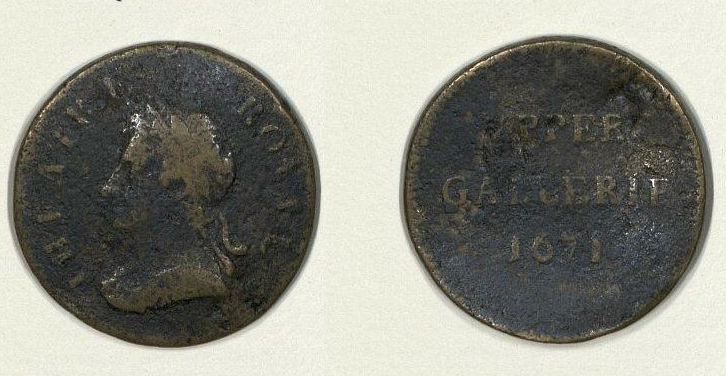
In the playhouses, theatregoers pressed together before the performance, often in a tumultuous crowd, to purchase metal checks for the pit and galleries…………..After purchase, doorkeepers for the respective sections of the house collected the checks, allowing admittance. The only available seats were on unnumbered benches, and crowds larger than the available seating area were routinely admitted, meaning checks did not necessarily guarantee a seat, let alone a specific one. After many Continental theatres adopted a system of limiting ticket sales to the available seating, some English theatregoers clamored for the same practice, but [this] didn’t become standard until 1884.

check4Unlike the pit and galleries, a seat in one of the boxes could be reserved ahead of time for a percentage of the cost, but those who arrived too late might lose their claim to it, as indicated on an 1820s box seat ticket for Astley’s Royal Amphitheatre.

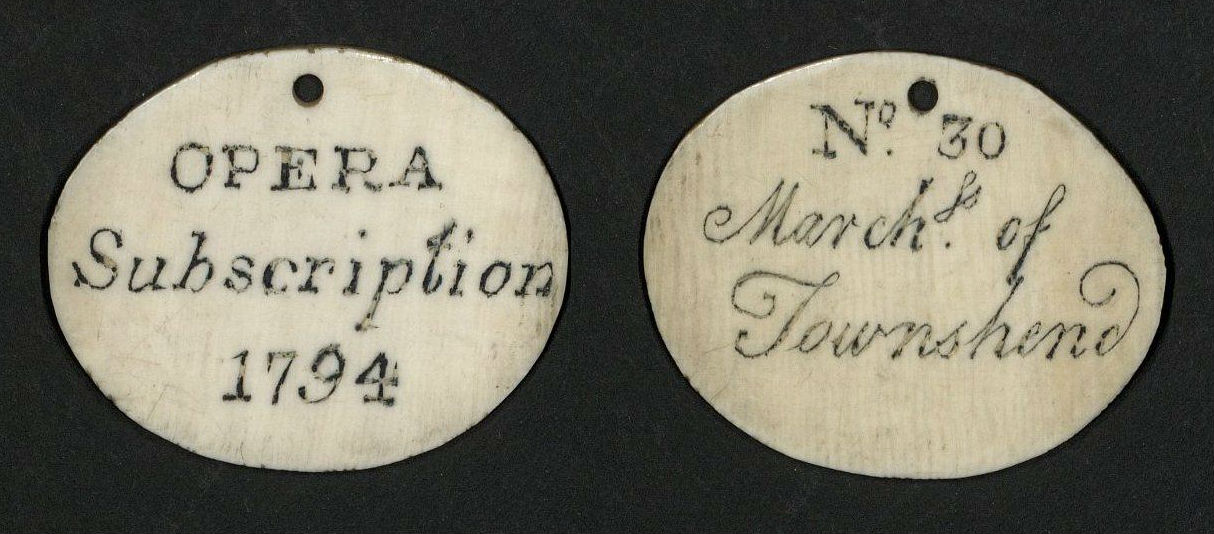
KIC0000031The opera houses also used metal checks for admission to the pit and galleries. Ivory season tickets were issued to box subscribers, however, with the names of the subscribers inscribed on the reverse.

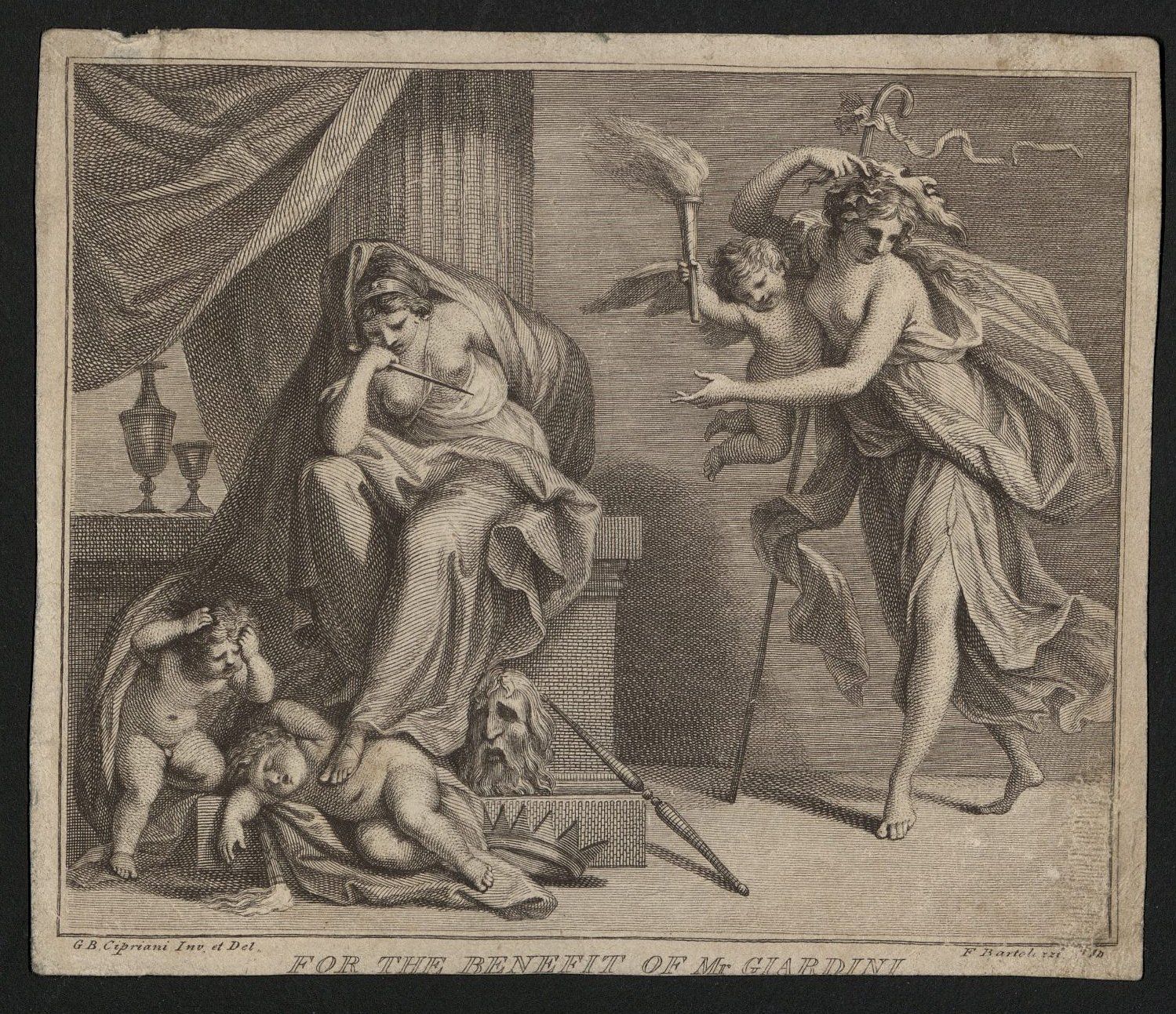
ivory1One type of event did rely on paper tickets issued for a specific performance. Benefit nights allowed recipients to keep a percentage of the night’s profits. The recipients paid for and sold the tickets themselves. Because the proceeds from these sales accounted for a substantial amount of their yearly income, recipients employed a variety of techniques to discourage forgery, such as signing tickets, assigning serial numbers, and affixing seals. Recipients with more income at their disposal could produce elaborate tickets, including ornate engravings, sometimes by notable artists……

KIC0000021In addition to checks and paper tickets, theatre employees also issued written admission known as “orders.” Orders might be given to influential people and the press, or used to fill out the house on slow nights (hence the term “papering the house”). Performers also gave orders to friends and benefactors, who would by custom support the actor’s benefit performances by purchasing those tickets at a higher than standard price.

KIC0000011

Theatre Apps

Something a little different today.  I’ve been looking at what’s available in the iPad app store for theatre people (free and paid for), and there is a surprising mix so I thought I’d share a few of them with you.  First my favourite in terms of design:

Evernote Camera Roll 20130519 141459Played in Britain: Modern Theatre in 100 plays, 1945-2010

This is a beautiful interactive book that looks at plays that have been performed in the UK from 1945 to 2010. It isn’t just about British plays either – any thing that was performed during that period.  Reviews, interviews, production photographs and so on. Suffice to say I bought it.

.

Basically just an ebook, but beautifully illustrated, on the history of Chinese theatre.

Chinese Theater for iPad

Evernote Camera Roll 20130519 141443.

.

.

.

.

.

.

For you techies out there are a number of magazines you can get for free:

Lighting and Sound America

Evernote Camera Roll 20130519 141457.

.

.

.

.

.

.

Make-up Artist Magazine

Evernote Camera Roll 20130519 141446.

.

.

.

.

.

.

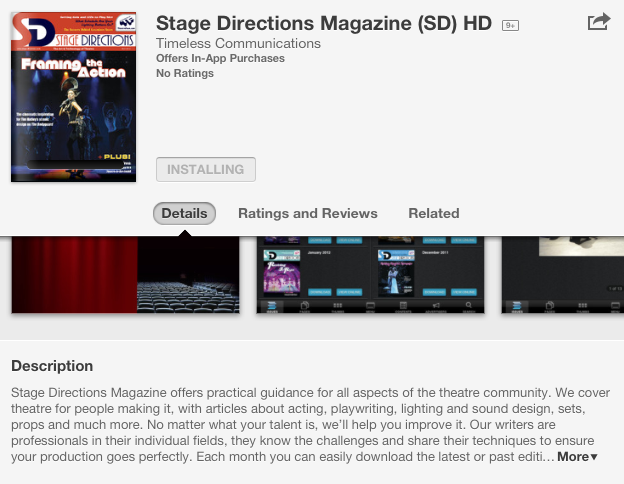
For all things techie Stage Directions Magazine

Evernote Camera Roll 20130519 141454.

.

.

.

.

.

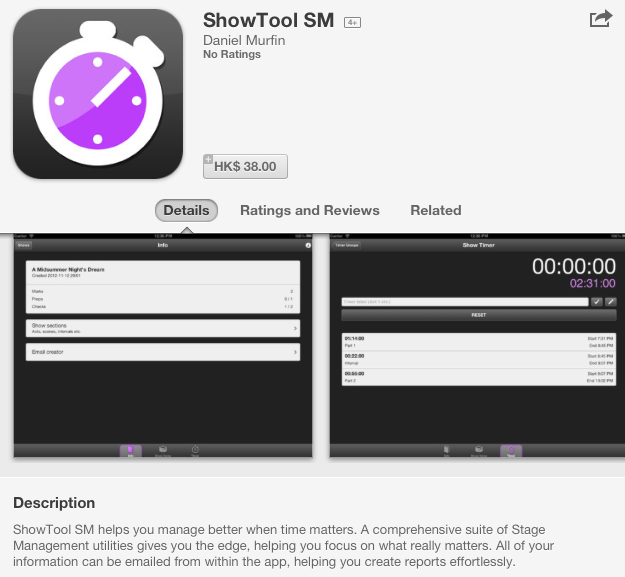
Now this is a super organisational app for stage managers, ShowTool SM

Evernote Camera Roll 20130519 141452.

.

.

.

.

.

.

An app to write plays with called, not surprisingly, Playwriter

Evernote Camera Roll 20130519 141440.

.

.

.

.

.

.

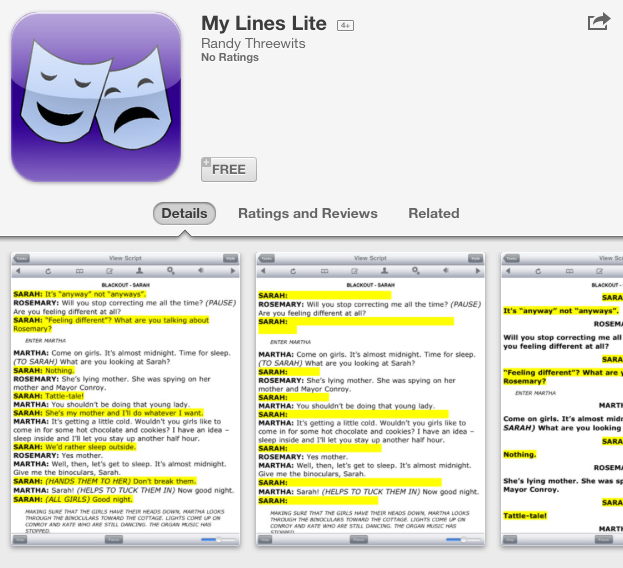
Now there are a few line-learning apps out there. This is one of the free ones, My Lines Lite

Evernote Camera Roll 20130519 141450.

.

.

.

.

.

.

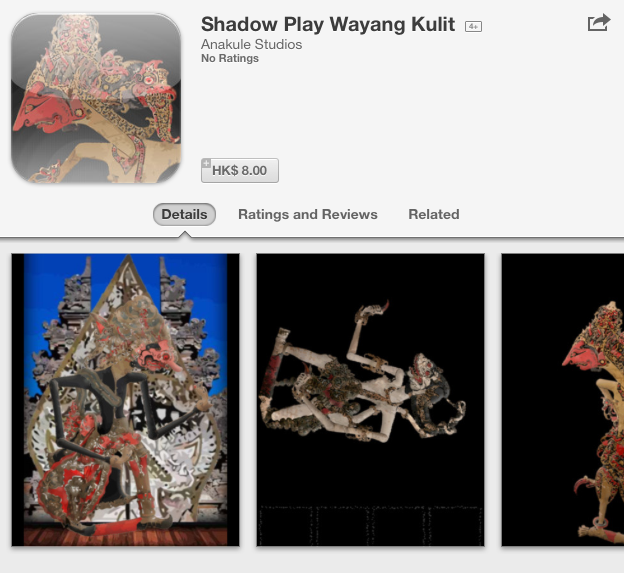
And finally a series of free little apps that bring various forms of Asian puppet theatre to the iPad, Shadow Play Wayang Kulit

Evernote Camera Roll 20130519 141445.

.

.

.

.

.

.

Human Rites

As I have mentioned recently, I have been doing a lot of thinking about the place of ritual in society and therefore in theatre. Being an educator, your life is dominated by ritual of sorts – the cyclical passing of the school year, graduation ceremonies and so 1340009907_59031on. As I write this, outside my windows, down in the bay, are the sounds of a Dragon Boat festival which celebrates the death of Qu Yuan, with the accompanying rhythmic drumming and traditional Chinese instruments. Again, ritual!

A week or so ago, I watched a TV documentary from the BBC entitled Feasts in which a writer, Stefan Gates, makes a journey across India to discover how feasts and celebration divide – and bring together – a turbulent nation that can be riven by religious tension and extremes of wealth. In it, he visits a society Hindu wedding in Rajasthan, which is outrageous in its extravagance, expense and show of wealth. Gates then travels to Kerala and experiences the Onam Festival, a Hindu celebration that brings this massive state of millions of people together, Hindu and Christian, rich and poor alike. Ritual.

I’m a regular visitor to India. I love the country , it’s people and all that it embodies, but I have never really explored why I have that affinity. Gates’ documentary made me come to a realisation – it is the ritual that exists in every aspect of the country’s life, and at every level, whether you are millionaire businessman in Bombay (my Indian friends tell me off when I use Mumbai), or a Dalit in Punjab. The difference between where ritual ends, performance begins and indeed, when it then turns in celebration, is all very blurred. Daily life feels like theatre in India. I’ve witnessed weddings in a tiny Maharashtran village, Uksan, that last for Holi, The Festival of Colors, Indiadays and combine ritual, performance and celebration in a cacophony of sound and colour. I think most people are familiar with the Hindu Festival of Holi – loud brash and immensely vibrant. And the fireworks! Indians seem to manage to squeeze fireworks into every event.

Gates’ programme itself is of course making a wider social comment about the immense kathakali2disparity between wealth and poverty in India. But he finds himself taken aback because in Kerala, The Onam Festival crosses all cultural boundaries, including religious ones. This is not a suprise, Kerala was on the old spice route and is a real mixture of east and west. Onam lasts ten days and includes many traditional dance and theatre forms including Kathakali and Puli Kali (Tiger Dance). The latter is pure popular theatre and Gates himself described it as intoxicating and an extraordinary experience. Again, Ritual.

So back to Artaud. Artaudian theatre is, by its very nature, a ritualistic theatre. It is intended to be full of passion and emotion in order to provoke an emotional reaction from the audience. It is intended to be void of rationality in order to probe at the mental status quo of the audience. The idea of the theatre is to appeal to the five senses and rarely anything else.

In an excellent post on Suite 101, David Porter talks about ritual as a key ingredient in performance.

Physical Theatre: Ritual is Key Ingredient in Performance-Making

Life’s rhythms revolve round rituals: daily tasks, birthdays, weddings and funerals. In creating meaning on stage, performers harness the power of rites.

Almost everything people do regularly has a ritualistic feel. Getting dressed every morning, preparing/sharing food, anniversaries, courtships, conducting business and great occasions of state – are rituals, patterns of regular human behaviour. Often, social convention rites/rituals dictate further ritual: for example, shaking hands on greeting, waving goodbye. Devisers of performance must reflect that in their creating. Then they have to experiment with it.

In psychiatry an action performed obsessively can be interpreted as evidence of compulsive disorder. It is often revealed in manic dance. A ritualistic dance or going through the regular motions of a life with all its tasks, may be called a rite. However, physical theatre practitioners use dance as but one element in the creative and experimenting process.

There is religious ritual as well as secular, a set of ceremonial actions like public worship, hallowed by time. Public performance and spectacle from the ancient Greeks

PentheusMediumto Medieval Mystery plays have drawn on religious imagery and symbolism to tell stories with messages. Performance is the enactment or creation of a version of myth, belief or historical event. It may be political, personal, social but it reflects human life through dance, drama, music or a mix of all three, performing arts.

Ritual in Performance Arenas

In ancient times, the sacrifices and appeasement of various deities informed crowd behaviour which became rites which became absorbed into theatrical convention……..Nowadays, sporting events like boxing, wrestling, football, cricket, rugby, baseball are played out in often circular spaces, a large audience around, perhaps increased by television viewers, and although it’s sport, it’s also entertaining spectacle that stirs strong emotions. The same applies to bull-fighting,…….. Son et Lumiere events, some street theatre activities and circus, whether people like the genre or not. When the floodlights go on, the event is heightened into pure theatre.

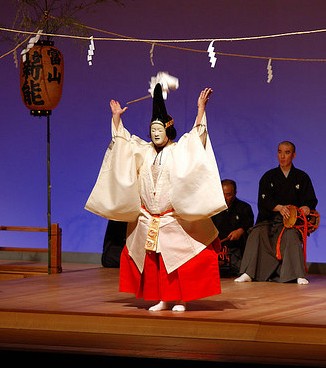
Evernote Camera Roll 20130517 150236[1]The New Zealand national rugby union team ritualistically precede games with the ka mata haka, a traditional Maori dance. This combines ancient warrior practice with psychological advantage for the participants by noh4demoralising opponents through a dance performance.In Japanese Noh theatre, slow, deliberate, ritualistic, symbolic movement characterises theatrical tale-telling, unchanged for centuries.

The theory that theatre originated in ritual was accepted by such practitioners as Jerzy Grotowsky (Polish), Peter Brook (English, but mainly resident in France), Arian Mnouchkine (French), Eugenio Barba (Italian) and Richard Schechner (American), all of whom have contributed ritual elements into theatre performance to restore its lifeblood at different times. Schechner has said that while performance is an inclusive term, theatre is one node on a continuum that reaches from the ritualisations of animals through life’s everyday rites to performances of great magnitude.

Artaud and Theatre of Cruelty

Attending traditional theatre has rituals of its own: tickets, ordering drinks, programmes, lights down, usually polite attention to the performance. Listening to a concert is similar, plus the convention of no-clapping between movements. Bertold Brecht broke traditions with his making strange (verfremsdungseffeckt), forcing audiences to know they’re watching performance by actors demonstrating a viewpoint.

Physical theatre tends to break old traditions. Antonin Artaud, (1896-1948) led with theories about assaulting the senses of the audience. His Theatre of Cruelty, total theatre ideas were heavily influenced by surrealism, oriental theatre, Balinese theatre, masks, magic and myth, colour, balicultureMS_428x269_to_468x312rhythm, sound, ritual, ceremony, spectacle, psychoanalysis, the drugs he took and the mental illnesses he suffered from.

He explored the cruelty of existence rather than mere bloodshed or torture, the works he devised attacked spectators’ subconscious to release deep-rooted fears that they normal suppress and made them face their inner reality. The technique is both derided and imitated today. Anything in-yer-face, from the dark psychosis is broadly Artaud, and useful in physical theatre creation. To be ‘Artaudian’ means to risk everything in an experimental performance, acknowledging ritual or not. His name now signifies the theatre of scream, despair and inner torment.

One group who are exponents of physical theatre, risking through experimentation, challenging the traditional stage/performer/audience settings, are London-based Complicite. Founded in 1983, this is a constantly evolving Complicites-Shun-kin-002ensemble of performers and creators. Artistic Director, Simon McBurney, says that there is no Complicite method, but collaboration is essential. They constantly incorporate new stimuli, new integrations of music, text, image, visual art and action to create what he calls disruptive theatre.

Experiments arising from ritual produce fruit in the devising process. Most people are unaware they‘re partaking in minor daily rituals, but are deeply conscious of the great rites of life. Physical theatre, draws on that great force to create and experiment and so adds to the richness of that life they are celebrating, examining, exploring and fulfilling.

If you are feeling adventurous, there is a great chapter here titled RITUAL IN THEATRE (Ritual concepts in Artaud and Grotowski), which is taken from a PhD dissertation written by H. Sadasivan Pilla, which is really interesting. The dissertation itself, The Uses and Functions of Rituals in Malaylam – their relevance to the ritual concepts in the theatre of Artaud and Grotowski, focuses on the performance traditions of Kerala (where Mayayalam is the spoken language).

So that kind of brings me to a neat end, full circle, if you wish.