All Mouth

As the Hong Kong International Arts Festival kicks off this week with a trilogy of Samuel Beckett plays in the shape of Not I, Footfalls and Rockaby I thought I would share an interview with celebrated British actress Juliet Stevenson about her current role of Winnie in one of Beckett’s more accessible plays, Happy Days. Stevenson was interviewed by Heather Neill for Theatre Voice in January this year.

We-can-both-laugh-at-her--008

This particular show is a revival of a critically acclaimed production for Stevenson, as these reviews are testament to in The Telegraph and The Guardian. She has spoken extensively about playing Winnie and getting to grips with Beckett, one of them being an interview with Paul Taylor in The Independent.  The productions of Happy days and Not I/Footfalls/Rockaby have brought about a rash of writing in the UK with regard to Becket and his work. One of them, Up to their necks: The singular joys of appearing in Samuel Beckettwritten by Holly Williams for The Independent is great read, as is What lies beneath Samuel Beckett’s half-buried woman in Happy Days written by Beckett’s biographer, James Knowlson for The Guardian. Natalie Abrahami, director of Happy Days, spoke in January to the BBC Radio 4 programme Start The Week. This is the excerpt from that programme that carries her interview as part of a panel discussion about memory:

001_980x360

The production of Not I/Footfalls/Rockaby which we will have the joy of seeing here this week, is the original London production starring Lisa Dwan, on its way from playing internationally in New York and Perth.

.

Again, the reviews have been universally superb; The New York Times, The Telegraph, The Guardian and The Independent all throw superlatives at the production and Lisa Dwan in particular. Dwan wrote a piece published in The Guardian Beckett’s Not I: how I became the ultimate motormouth in which, not surprisingly, she talks about playing ‘the mouth’. You can see an excerpt of her in action here

One review spoke of the piece as being a ….deeply sobering and equally intoxicating experience…[and a] harrowing and beautiful production.  I can’t wait.

Is The Playwright Dead?

2011-02-14-9358-2086_Vanessa_Redgrave_IMG_x900

Vanessa Redgrave

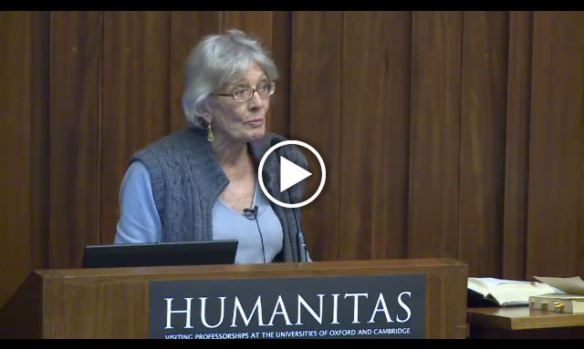
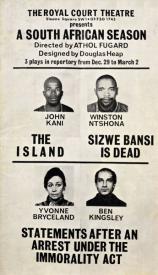
Today, I have stumbled across an astonishingly fascinating series of video recordings and I am compelled to share them straight away. They come from Humanitas, a series of Visiting Professorships at the Universities of Oxford and Cambridge which brings together leading practitioners and scholars to explore major themes in the arts, social sciences and humanities. In one of the strands, Drama Studies, the visiting professors so far have been actor Vanessa Redgrave, director Greg Doran, playwright Athol Fugard and will be joined this year by another playwright, David Edgar. All of them are giants in their respective fields. Fugard speaks in three videos; firstly about the defining moments in his life and work, then about staging his plays and finally about his playwrighting process. In his first video Doran gives a practical masterclass looking at what clues Shakespeare puts into the verse for the actor and in the second, another, masterclass, this time on how Shakespeare spins rhetoric for the actor. However, my favorite, are the series given by Redgrave, doyen of the theatre on both sides of the Atlantic as well as prominent social activist. Click on the image below to take you to the first of a series of four lectures and panel discussions, entitled, not surprisingly, Theatre and Politics.

vANESSA 1

The 2015 series, with David Edgar, promises to be equally interesting and provocative as he explores contemporary playwrighting from a number of perspectives. In an article in The Guardian born out of his appointment as Humanitas Visiting Professor, entitled Is the playwright dead?, he is quoted talking about the anti-writer trend that he considers to be prevalent in current collaborative theatre making. This notion will form the basis for his first lecture and the article itself, my next blog post.

Say It As It Is

little-revolution-posterTwo audio recording shares today. Firstly an interview, courtesy of Theatre Voice, by theatre critic Matt Trueman with verbatim playwright Alecky Blythe (and director Joe Hill-Gibbon) about her play Little Revolution. Performed earlier this year and receiving very polarised reviews, it explores the 2011 London riots. The interview gives a fascinating insight into the processes of writing and staging verbatim theatre. Blythe also writes about her approaches in The Telegraph, It looked a bit hairy. But I had to go. Interestingly, the same newspaper also gave Little Revolution one of it’s best reviews, calling it Absolutely Compelling. Truman’s own review of the play is a little more interrogating.

The second share, and not wholly unconnected,  is an interview with writer and theatre maker Stella Duffy (and others) about the life of theatrical maverick Joan Littlewood, whose centenary has been marked this year by many events, not least the Fun Palace initiative, started by Duffy herself. Again a great listen about a woman who made theatre differently.

.

Curated By Kwei-Armah

JLR_271_cA super new resource, The Black Plays Archive has just been launched in the UK. Curation started in 2009 and the aim is for it to be an online catalogue of the first professional production of every African, Caribbean and Black British play ever produced in Britain. It was born out of an idea by playwright Kwame Kwei-Armah and involves a considerable number of institutions from across the UK, with the National Theatre being the primary partner.

It contains Essays that can be read online or downloaded, Interviews (both video and audio) and recorded Play Extracts, either from their original staging or specifically recorded for the archive.

SB_22aThe plays are drawn from around the world by playwrights with an African or Caribbean heritage. Once complete the archive will be an incredible resource of black theatre writing. However, it is wider than that and includes interviews with directors, academics and practitioners that cover the whole spectrum of theatre making. For instance there is an essay from Dr Michael Pearce (academic, theatre director and native of Zimbabwe), Tracing Black America in black British theatre, which explores the rise of the Black Power movement in the US in 1970’s and how this was manifested in British theatre. This is a truly extraordinary and unique project and well worth an explore.

Body Mechanics

I wanted to share a short video today, an excerpt taken from a piece called Nowhere  by Greek experimental theatre director, choreographer and visual artist Dimitris Papaioannou, (who incidentally was the creative director for the Athens Olympics in 2004). Nowhere is dedicated to Pina Bausch and was created to inaugurate the new main stage at the Greek National Theatre.

b_1012_pouthena3

To quote the theatre’s website:

Nowhere is a work about the physical space of the theatrical stage. Constantly changing and defined by the men and women that inhabit it, it can be countless different places while designed to be nowhere at all.

The scene I’m sharing contains nudity, so be warned, but the reason it caught my attention will be obvious when you watch it.  Simply stunning.

.

Known as the body mechanic system, it was used by Akram Khan in his piece Dust, part of a large work called Lest We Forget for the English National Ballet. Khan credited Papaioannou in the programme for the idea:

dm-dust-akram-khan-dancers-lines-arm-wave_1000

I have a feeling it might be making an appearance in some of my students’ work, minus the nudity I hope, given their reaction to it.