Green Stages

Royal Court Theatre, 2004Today, I want to share a thought-provoking video. It is a panel discussion from the Royal Court Theatre in London entitled Can Theatre Ever Be Green. Part of a larger Day of Action on climate change, the theatre’s spaces, including the stage, the bar and the bookshop, were taken over by climatologists, environmentalists and other experts exploring how we might fight climate change as artists, audiences and human beings. This is connected with the performance of 2071 which I wrote about in my recent post Willing To Speak Truth To Power. In the discussion, the panel analyse the responsibility to climate change in their work and discuss more environmentally friendly ways of producing theatre.

.

The speakers are Natalie Abrahami (Theatre Director), Natasha Chivers (Lighting Designer), Alison Tickell (CEO, Julie’s Bicycle) Ben Todd (Executive Director, Arcola Theatre) and Paul Handley (Production Manager, Chair).

Give it a view. As theatre makers, it will really make you think.

Curated By Kwei-Armah

JLR_271_cA super new resource, The Black Plays Archive has just been launched in the UK. Curation started in 2009 and the aim is for it to be an online catalogue of the first professional production of every African, Caribbean and Black British play ever produced in Britain. It was born out of an idea by playwright Kwame Kwei-Armah and involves a considerable number of institutions from across the UK, with the National Theatre being the primary partner.

It contains Essays that can be read online or downloaded, Interviews (both video and audio) and recorded Play Extracts, either from their original staging or specifically recorded for the archive.

SB_22aThe plays are drawn from around the world by playwrights with an African or Caribbean heritage. Once complete the archive will be an incredible resource of black theatre writing. However, it is wider than that and includes interviews with directors, academics and practitioners that cover the whole spectrum of theatre making. For instance there is an essay from Dr Michael Pearce (academic, theatre director and native of Zimbabwe), Tracing Black America in black British theatre, which explores the rise of the Black Power movement in the US in 1970’s and how this was manifested in British theatre. This is a truly extraordinary and unique project and well worth an explore.

Noh It All

izutsu_FotorA quick but superb share today, especially if you have an interest in world theatre forms. Discovered by a student of mine, Tsz Yu, while she was doing some research into movement and gesture of Japanese Noh actors. A new site, The Noh.com is a superb english language resource.  There are a few other online sources out there, but they tend to be quite brief in their content aimed  at a tourist market, rather than a resource for students. Noh.com is an evolving site with new material being added all the time. In the Trivia section you can ask, and expect an answer to any Noh related queries. The Play section is a real gift, as it contains a database of over 200 Noh plays, translated into english (shown alongside the Japanese text) which can de downloaded as PDF files.

Traditional print sources can be quite heavy going, so Noh.com is real find.  Having said that there is one book that is particularly good, MASK: A Release Of Acting Resources Volume II. The Training of The Noh Actor, which is also on Google Books.

One of the better other online sources is from the Japanese Arts Council which has revamped its website and it is now much more accessible to non-Japanese speakers, including the process of booking tickets, should you find yourself in the country. They have three introductory guides available on the site:

kabuki_Fotor

Untitled_Fotor

bunraku_Fotor.

These are great beginners guides if you are a novice in the main three traditional theatre forms. There is also a fantastic playlist on Youtube that has over 50 videos about these theatre forms, from documentaries to traditional music to recordings of performances. A veritable feast of all things Japanese Theatre.

Willing To Speak Truth To Power

Three articles published over the course of the last week, by The Guardian UK, have caught my attention. The first, a review by veteran theatre critic Michael Billington, about a ‘play’ called 2071. I use the inverted commas advisedly at this point, as the piece has one actor, a scientist called Chris Rapley, who spends 70 minutes talking to the audience about climate change. Some might, and indeed have, called it a lecture, nothing more.

2071_3099361b

In his review, 2071 – urgent call for the greatest collective action in history, Billington argues otherwise:

Some will argue this is not really theatre. But the idea that theatre should be exclusively reserved for fiction has been knocked on the head by a surge of documentary dramas and verbatim plays. And Katie Mitchell, who directed both this show and Ten Billion, realises that the eye needs to be satisfied as well as the ear. Rapley sits in a chair and, without notes, talks to the audience with an astonishing calm and command of facts for 75 minutes. Meanwhile Chloe Lamford’s design presents us with swirling video images behind him that illustrate Rapley’s arguments and have a strange beauty of their own.

The play is being staged at The Royal Court in London under the directorship of Katie Mitchell, who did a similar staging two years ago with a piece entitled Ten Billion where scientist Stephen Emmott (below) spoke about global over-population and its consequences. In fact Ten Billion was given the number 10 spot in the best plays of the year, according to one newspaper.

10bill_2281662b

In this podcast from the Royal Court Duncan Macmillan (co-writer), Mitchell (director) and Rapley (speaking as scientist, co-writer and performer) talk to literary manager Christopher Campbell about the play.

.

I’ll leave it to you to ponder whether the classification as theatre is a correct one. Mitchell and Macmillan talk further, in the second of the articles I referred to earlier, about their reasons and the processes behind verbatim theatre of this kind. Climate change play 2071 aims to make data dramatic is written by Stephanie Merritt:

“As a dramatist, I’m interested in working with text in a different way,” Macmillan explains, when I meet them during a break in rehearsals at their south London studio. “There was the formal challenge of how to express Chris’s science, and what we could bring to him as theatre-makers – not just with a different audience for those issues, but in terms of technique and how to structure the material. For example, if Chris is writing a scientific paper or delivering an academic lecture, the convention is that you begin with your finding and go on to explain it. But that’s like Hamlet avenging his father’s death in the first five minutes. The simultaneous challenge we’ve had is how to take the anger and emotion out of the issue and at the same time make the data dramatically compelling to listen to.”

The subject matter is undoubtedly emotive, but more so political and therefore ripe for the theatre – even if it is a difficult subject to stage.

I am sure that it is no coincidence that on the same day Billington’s review for 2017 was published, he also wrote a rallying piece entitled Speaking truth to power: this is the rebirth of political theatre in which he talks about the resurgence of political theatre on the British stage at the moment, 2017 included.  You can read the article yourself, but I’ll finish this post with his final paragraph which says much about the theatre I was brought up with, educated by and in which I believe passionately.

It is also something that seems part of our native bloodstream. Some years ago I was invited to take part in an international discussion of political theatre organised by the British Council in Santiago. After I had talked about the British theatre’s oppositional tradition, two French delegates treated my remarks with polite condescension. They observed that someone had recently staged a play in Paris about President Bush but that it had excited little interest. As we talked, I realised we were arguing from different premises. For my French colleagues, theatre was primarily an aesthetic discipline and something apart from life. From my entrenched Anglo-Saxon perspective, it was a vital part of life; and that inevitably embraces politics. I remain convinced to this day that among British theatre’s greatest strengths are its readiness to put our society under the microscope and its willingness to speak truth to power.

Body Mechanics

I wanted to share a short video today, an excerpt taken from a piece called Nowhere  by Greek experimental theatre director, choreographer and visual artist Dimitris Papaioannou, (who incidentally was the creative director for the Athens Olympics in 2004). Nowhere is dedicated to Pina Bausch and was created to inaugurate the new main stage at the Greek National Theatre.

b_1012_pouthena3

To quote the theatre’s website:

Nowhere is a work about the physical space of the theatrical stage. Constantly changing and defined by the men and women that inhabit it, it can be countless different places while designed to be nowhere at all.

The scene I’m sharing contains nudity, so be warned, but the reason it caught my attention will be obvious when you watch it.  Simply stunning.

.

Known as the body mechanic system, it was used by Akram Khan in his piece Dust, part of a large work called Lest We Forget for the English National Ballet. Khan credited Papaioannou in the programme for the idea:

dm-dust-akram-khan-dancers-lines-arm-wave_1000

I have a feeling it might be making an appearance in some of my students’ work, minus the nudity I hope, given their reaction to it.

Whenever I’m dancing, inside my head, I’m talking

John_poster_notitle_v2The latest piece from internationally renowned physical theatre company DV8 has just opened at the National Theatre in London, following a premier earlier in the year at the Vienna International Dance Festival.  The company is almost 30 years old, yet the work they continue to produce is still be considered cutting edge. To define them precisely in terms of genre is a difficult – they work in a mixture of dance and physical theatre as well as verbatim theatre, and usually all done with a dark sense of humour.  Of course over time their ‘style’ has evolved and of late has become much more speech driven. Lloyd Newson, the co-founder and leader of the company said in a recent interview:

 I could never understand the discrepancy of dancers yakking away in the wings, then pretending to be mute the minute they stepped out on stage,” Newson says. “A friend and former colleague of mine, Nigel Charnock, once said: ‘Whenever I’m dancing, inside my head, I’m talking to myself the whole time’.”

The new work, eponymously entitled John, is again a verbatim piece, created using interviews conducted by Newson with more than 50 men asking them frank questions about love and sex. To quote their publicity:

One of those men was John. What emerged was a story that is both extraordinary and touching.  Years of crime, drug use and struggling to survive lead John on a search where his life converges with others in an unexpected place, unknown by most. JOHN authentically depicts real-life stories, where movement and spoken word combine to create an intense, moving and poignant theatrical experience.

Newson has given two interviews to coincide with the opening of the show in London. Firstly to The Independent and Hugn Montgomery, DV8: Three decades of the provocative dance-theatre company where he speaks about the aesthetic of the company’s work in a typical refreshing forthright manner:

This is a man who has talked of dance as “the Prozac of the artforms”, for what he sees as its vacuous, anaesthetising beauty; he sums up his own approach as “if people don’t understand what’s being said physically, I’m not interested”

1a-dv8-performer-hannes-langolf-photographer-ben-hopper-low-res

The second, for The Guardian with Alfred Hickling, Death, drugs and survival: DV8 Physical Theatre tells the story of Johngives more of an insight to the new work.

Yesterday, the BBC Front Row programme interviewed Newson about the creative process behind the work:

.

Too early for the english language reviews to be out, but Twitter has been alive with fulsome praise:

Untitled_Fotor

John is will be on a national tour when done in London, but is sure to be heading off across the globe soon. I do hope so, anyway.

Post Script:

Joh the national theatre

Since writing this post, the reviews are in for John. Almost without exception, they are praiseworthy and talk fulsomely about Newson’s work. The London Evening Standard sums up the piece thus:

John is a powerful and absorbing piece full of innovative visual touches but there’s a question over the bisected nature of the narrative and the sudden switch of tone, the new cast of characters, the move into (scatological) comedy.

Yet it works because there are themes that thread all the way through: the search for something, be it escape, obliteration, sensation, intimacy or love — at whatever cost

Obviously confronting in many ways, John has clearly made an impact. There is one review however, that had me whooping with laughter. Written by Quentin Letts for The Daily Maila right-wing, ‘hang ’em high’ and ‘send the immigrants home’ rag published in the UK, screamed with the fabulous headline A National DISGRACE: Sleazy. Amoral. And paid for by you! I think Letts might be missing the point, don’t you?

A Roaring Success

Lion King Las VegasAs those of you who read Theatre Room regularly will know that I’m no great fan of musical theatre.  There are however some exceptions, one being The Lion Kong. I first saw it in Los Angeles many years ago, and have been urging people to go and see it ever since. It first opened in Minneapolis in 1997, quickly transferring to Broadway. in 1999 it opened in London at the Lyceum Theatre, where it is till running 15 years later. In fact, it is currently playing in 10 cities world-wide. In its 17 years it has been seen by an estimated 75 million people and taken $6.2 billion, making it the highest grossing musical ever. Impressive figures indeed.

.

In a great article by David Gritten in The Telegraph, How The Lion King became the most successful stage show of all time he quite rightly points to the original director, Julie Taymor, as the creative genius behind the show.

It’s easy to overlook, what with all the trumpeting of huge grosses and audience figures, what a radical piece of theatre The Lion King is, and always was.

Credit for this goes to the prime mover of this stage version, director Julie Taymor, who came from avant-garde, ritual and experimental theatre, and had already used masks and puppetry in other productions. Taymor also helped design the costumes for the Lion King, and even wrote the lyrics for one of its songs, Endless Night.

lion-king

She has created a world that is fiercely non-literal, often to moving and wondrous effect. She makes no attempt to disguise the fact that these animals are moved and performed by humans. A drought on the African plain is conveyed by a circle of blue silk gradually vanishing by being pulled through a hole in the stage. When a lioness weeps, she pulls lengths of white ribbon from her eyes. Taymor evokes a waterfall using a huge sheet of billowing silk. A score of actors stride on stage, boxes on their head with long grass sprouting from them; this is Taymor’s way of representing the African savannah.

Simba - Nicholas Nkuna and the Original UK touring company.JPG

All of which seems a long way from the animated film and video of The Lion King, which proved immensely successful for Disney in the 1990s. They’re agreeable entertainments, based on a hero-myth story redolent of Hamlet. As a young lion cub, Simba is hoodwinked by his malevolent uncle Scar into believing he was responsible for his father the king Mufasa’s death. Simba flees before returning as an adult to reclaim his birthright from Scar, who has installed himself as king.

the-lion-king-musical

This is all fine as far as it goes, yet there’s a cosiness and reassurance about the film that Taymor withholds; in the stage version there is simply more at stake, along with a recognition that life is fragile. She also gave far greater emphasis to the film’s female characters. There’s a tough-mindedness about her method of story-telling; it’s surprising that Disney, to its great credit, approved such a radical reboot of the film.

Gritten’s article is well worth a read in its entirety here.  Another one, this time by Adam Sherwin here in The Independent explores the money-making side of the The Lion King. Apparently Sirs Tim Rice and Elton John, the composers and librettists of the musical, have made a whopping US$120 million apiece from the show!

To finish with,  it was recently announced that Disney have adapted the musical for schools which will be licensed for performance from January 2015. Disney, Rice and John will no doubt need to get deeper pockets.

By way of a post script, I should say that the show’s appeal for me is the ingenious way in which the animal characters have been brought to life with puppetry.  The man behind most of the puppets is Michael Curry, and there are a couple of interesting interviews with him here and here about his work on the show .

Set In Aspic

Helen McCrory as Medea, National Theatre

Helen McCrory as Medea, National Theatre

A gnarly little piece today I came across in The Independent, Why are theatre directors messing with the classics? Written by journalist Adrain Hamilton, he bemoans (British) theatre directors who play with the text and/or original intent of the playwright. Has it ever been thus. Now far be it from me to suggest that Mr Hamilton (who is not a theatre critic or in any way connected professionally with the theatre) is simply whining because he may have witnessed a production of one of his favourite classic plays that he didn’t like (although I suspect there might be something in this). It’s not that I disagree with him totally. Indeed he makes some decent observations, but theatre is an interpretive art form, especially when dealing with the more classic/historical texts. There has to be a relevancy for a contemporary audience and it the director’s job to make that so. Of course it doesn’t always work, but that is theatre for you.

Why are theatre directors messing with the classics?

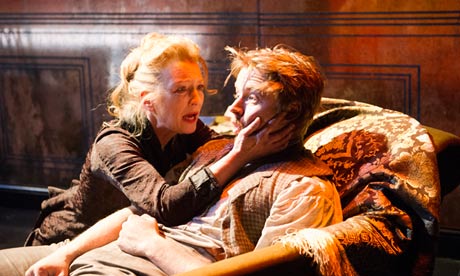
There are no more dreaded words in the English theatre today than “in a version by”. Whether it’s Ibsen’s Ghosts, Euripides’ Medea or Sophocles’ Electra, nothing will do but that the international giants of the stage be taken by an English writer and refashioned for the English audience in their own words.No one should doubt the theatricality of these “versions”. Greek tragedians, as indeed Ibsen, created great parts for female actors and this is what the British directors have seized on with such fervour today. Kristin Scott Thomas as Electra, Helen McCrory as Medea and Lesley Manville as Ibsen’s Mrs Alving have all been successively hailed as the new divas of drama for their anguished performances of tortured, wracked women.

Just as we perform Chekhov as the supreme English ironist, rather than the caustic writer of near farces, which is the way the Russians do, so our directors and dramatists rework the classics as studies in angst and high emotion, women on the edge not just of a nervous breakdown but of infanticidal self-destruction.

Lesley Manville in Richard Eyre's production of Ghosts

Lesley Manville in Richard Eyre’s production of Ghosts

Only that is not what these dramas are actually about, or not as their authors intended. The great classical dramatists didn’t set out to present psychiatric studies of individuals and their torments. They wrote about the human condition through the dilemmas and fates of individuals. The same goes for Henrik Ibsen. A would-be poet himself, he wanted to express what he saw as the societal truth of his times.

Sir Richard Eyre’s reworking of Ghosts, and his earlier Hedda Gabler, at the Almeida, are finely crafted works of domestic drama in which events speed their way to a horrifying conclusion, impelled by revelations which strip their heroines of all illusion. It’s Chekhov on speed, even to the point of climaxing the play with Mrs Alving administering the medicines with which to aid her son’s death.

But Ibsen didn’t write that. He left his heroine gripped by indecision whether to carry out her son’s desire to die or to refuse such an unnatural maternal act. Sir Richard’s version makes for a more melodramatic finish; Ibsen’s for a more troubling one. Which is how he saw his play, a very carefully modulated study through the dialogue of human evasion of how we are all made by our past and convention.

If you want to see the difference between the way that the British domesticate drama and other countries seize on the ideas behind a play, then the Barbican’s current series of international productions of Ibsen should be a revelation. The Berlin Schaubühne ensemble’s An Enemy of the People, the play he wrote in anger at the way Ghosts had been dismissed by the critics, is an interpretation full of the urgency that this angry assault on bourgeois conformity requires. Switching the time to now, it has all of Ibsen’s weight and weariness with the society about him but also his sense of the human part within it. If the production stuttered in London it was in trying, in the middle, to involve the audience in the debate. It apparently worked in performances elsewhere but not here. The English don’t go in for direct confrontation, let alone over ideas.

The Berlin Schaubühne ensemble’s An Enemy of the People

The Berlin Schaubühne ensemble’s An Enemy of the People

It gets worse with Greek tragedy. With a deeply affecting central performance, the National’s Medea wrung every emotion out of the story of an abandoned woman who wreaks revenge by killing her own children and dragging their bodies into exile in an end reminiscent of Bertolt Brecht. Only Euripides is not Brecht and he didn’t write Medea as a story of a wronged woman wrestling with her conflicting emotions. The Medea of Greek legend is a witch woman of terrifying force. The tragedy is one of anger and vengeance which cannot be constrained. At the end you feel not pity but horror and fear.

You don’t have to do Greek tragedy on a bare stage and skimped costumes. The poet Caroline Bird’s version of Euripides’ Trojan Women at the Gate Theatre in 2012 was one of the most intense theatrical experiences I’ve ever had. Moving the scene to a maternity hospital, it worked because it remained true to Euripides’ vision of captured women, turning in on themselves as they await their fate. But you can’t do what Frank McGuinness, whose adaptation of Electra is now playing at the Old Vic, did in the opera of the Theban Plays and mess around with the order at will. At least you can’t do it and still leave Sophocles on the credits.

Yukio Ninagawa, arguably the greatest theatre director of our times, who directed an electrifying Medea in Japanese, will only work with line-by-line translation. Presenting Shakespeare’s Cymbeline recently the Barbican (he’s back there with Hamlet next year), he apologised for changing a word in making a cedar into a pine for visual reasons. If only British directors would pay foreign dramatists the same respect when they turn them into English.

I went in search of the reviews of some of the plays that Hamilton vilifies as domestic. The same paper that carried his article, The Independent, gave the production of Euripides’ Medea he mentions 4 stars, calling it unforgettable and horribly gripping, as did The Telegraph who said it was thrilling and merciless. Richard Eyre’s production of Ibsen’s Ghosts, meanwhile was given 5 stars in The Independent – A spellbinding production – as it was in The Telegraph, with the final line of the review observing that Theatre seldom, if ever, comes greater than thisFinally, the production of Sophocles’ Electra was again given 5 stars by The Independent, calling it an evening of unalloyed magnificenceThe Telegraph said it was Theatre at its best with The Guardian undermining Hamilton’s whole premise in the final paragraph of its 4 star review.

Theatre cannot be preserved in aspic, perhaps more so today than ever. I’m looking forward to reading how other less conservative commentators react to Hamilton’s views

Dancing Revolution

gz-political-mother-blurd-dancers-circle_1000Sometimes a trip to the theatre can be truly exhilarating, confronting and prescient. Last night I went with my friend Sara to see Political Mother by British based Israeli choreographer, Hofesh Shechter, and it was indeed all of those things – and a lot more besides. In essence, it is a piece that explores the relationship between society and state, duty and service and brutalisation by a repressive power. The staging is epic – and very loud (being issued with ear plugs by the theatre was a first for us, although they remained unused). Political Mother has had a few incarnations and we witnessed another one, with it being re-worked a little for the festival it was part of and the addition of young, local musicians, largely drummers, to an already significant cast of dancers and musicians.

.

It has toured significantly around the world and I am delighted to have had the opportunity to see something I had been reading about with envy – the reviews have been almost uniformly outstanding. You can see for yourself here and here.

Hofesh-Shechter-Political-Mother-600x399However, it wasn’t simply the piece that was so enthralling, it was also the context in which it was being performed. The monolith of a building in which it was staged, the Hong Kong Cultural Centre, was commissioned and built under British colonial rule and is currently celebrating its 25th anniversary. Ten minutes walk away is the commercial district of Mong Kok, where protests for universal suffrage continue. Across Victoria Harbour from the theatre is the other site of protest, with roads closed and a growing tent city springing up. It was palpable that the irony of a governmental sponsored festival hosting Political Mother was not lost on the majority of the audience. We were left wondering what the performers thought about the timeliness of their work in Hong Kong.

Dance and politics have never been far apart. One of the founders of contemporary dance, Martha Graham was no stranger to this fact, as this short documentary shows:

.

Soviet By Design

c3ada36768c4bcfd35c1fc16ab83985bMy first share today was published this week in The Guardian. Written by Oliver Wainwright, it explores theatre design in the Soviet Union in the early 20th Century, which is currently the focus of an exhibition at the Victoria and Albert Museum in London.

A critical period in the development of stage design, Wainwright’s article, Russia’s stage revolution: when theatre was a hotbed for impossibly space-age design talks about how artists created radical sets and costumes for a futuristic new era of theatre that are said to have inspired Fritz Lang’s Metropolis.

.

A square-headed figure stands in a jagged harlequin costume, like a toddler’s drawing of a Christmas tree, beside a red-clothed character with black spines emerging from his limbs. There is a portly green-skinned man bursting out of a tight red vest, while another figure’s body swells from a triangular skirt in a big blue bulge.

Set against a mysterious monochrome backdrop of triangles and squares, these were the costume designs of then little-known Kazimir Malevich for the world’s first “futurist opera,” Victory Over the Sun, produced in St Petersburg in 1913. Complete with a libretto in the experimental “zaum” language – a kind of primeval Slavic mother-tongue, mixed with birdsong and cosmic utterances – it infuriated audiences, who reacted with violent outrage.

Malevich was not deterred. The stage sets formed the basis for his first Black Square painting, and the foundations for his fractured visual language of suprematism, one of the defining movements of the period. It was here in these gnomic theatre designs that he began his urgent pursuit of the “supremacy of pure artistic feeling”, of geometric splinters flying through limitless space, fuelled by the impending trauma of revolution.

These striking drawings form the opening to a new free exhibition in the V&A’s theatre and performance galleries, which traces the effect of war and revolution on Russian avant-garde theatre design, from 1913–33, a period that saw an earthquake of artistic transformation.

Comprising 160 works by 45 designers, much of what’s on show has been unearthed from the dusty depths of the Bakhrushin Theatre Museum archive in Moscow, some exhibited in public here in London for the first time – and it is a thrilling hoard.

Lyubov Popova’s fantastic mechanical set for The Magnanimous Cuckold, 1922.

Lyubov Popova’s fantastic mechanical set for The Magnanimous Cuckold, 1922.

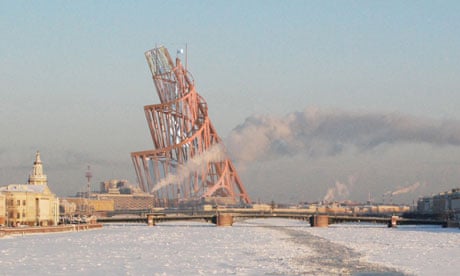
Facing off against Malevich are the early costume designs of Vladimir Tatlin, who would go on to dream up the spiralling skeleton of the Monument to the Third International, a plan for a gargantuan double-helix structure that would have loomed 400m above St Petersburg. While Malevich was brewing up a universe of dynamic shards, Tatlin’s designs – for operas with nostalgic titles such as Life for the Tsar and His Disobedient Son Adolf – reveal the beginnings of his constructivist style.

These counterpoints set the tone for a show that reveals the breadth of artistic styles spawned in these tumultuous years, with the theatre proving a hotbed of experimentation and a powerful vehicle of revolutionary propaganda.Women designers loom large, with the dazzling work of Alexandra Exterfeaturing extensively, from her bold reinventions of classics like Romeo and Juliet, to impossibly futuristic costumes for Aelita, one of the first ever sci-fi films, made in 1924. Based on a Tolstoy novel, it tells the story of an engineer who travels to Mars, falls in love with the Queen of the Martians, and organises a revolution. The space-queen was conceived as a Soviet Barbarella, clothed in a swirling dress of orbiting loops, topped with a many-pronged head-dress that gives her the look of a human TV aerial. It exudes the excitement of what the promised revolution would bring, the humble engineer discovering a brave new world through hard work. Utterly groundbreaking for its time, Exter’s alien set designs would go on to inform the dreamy aesthetic of Flash Gordon and Fritz Lang’s Metropolis.

Vladimir Tatlin, costume design for Life for the Tsar, 1913-15.

Vladimir Tatlin, costume design for Life for the Tsar, 1913-15.

“I want to burn with the spirit of the times,” declared Vsevolod Meyerhold, another influential figure of the period, and one of most enthusiastic activists of the new Soviet theatre. He joined the Bolshevik party in 1918 and became an official of the theatre division of the Commissariat of Education and Enlightenment, trying to radicalise Russian theatres under Bolshevik control. Developing what he called “biomechanics”, he championed a form of acting in which bodily expression was all, teaching his students gymnastics and circus skills, in a bid to transform the theatre from a place of naturalism and emotion to a full-blown fairground spectacle.

“Meyerhold laid the foundations for modern physical theatre, and groups like Complicite,” says curator Kate Bailey, “as well as a lot of the techniques of projection and moving sets that we take for granted as part of contemporary theatre design.”
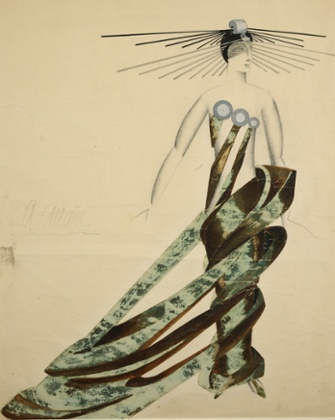
The Queen of the Martians, costume design by Alexandra Exter for the 1924 sci-fi film Aelita, based on a Tolstoy novel

The Queen of the Martians, costume design by Alexandra Exter for the 1924 sci-fi film Aelita, based on a Tolstoy novel

A key to realising his vision was Lyubov Popova, the daughter of a textile merchant who had been a member of Malevich’s Supremus art group from 1914-16. She produced a spectacular moving set for his production of The Magnanimous Cuckold in 1922, a model of which takes pride of place in the exhibition. The play follows the trials of a miller who suspects his wife of being unfaithful and pursues her lovers through the village, and Popova transforms the mill into an all-consuming acting machine, a thrilling landscape of rotating cogs and wheels.

Under the influence of Meyerhold, theatrical characters were reduced to types, emotion and psychological experience substituted for the gawp of physical and mechanical prowess. Similar narratives recur, in which “impure” characters of merchants and royalty, capitalists and priesthood, face off against “pure” peasants and sailors, the old order trounced by the newly awoken masses. Costumes of the old world are heavy and clumsy, set against the thrusting, cubo-futurist lines of the new Communist utopia.

It all comes to a satirical climax in Vladimir Mayakovsky’s comedy, The Bedbug, in which the brave Bolshevik protagonist, Prisypkin, is cryogenically frozen in an impossibly modern-looking spacesuit – to designs by Alexander Rodchenko – to be thawed when the ideal Communist world has been attained in 1979. Severely underwhelmed when he awakes, he finds a bedbug on his body, which becomes his only friend.

Alexander Rodchenko costume design for Bedbug, 1929, a comedy by Mayakovsky whose hero is frozen for 50 years to await a Communist paradise

Alexander Rodchenko costume design for Bedbug, 1929, a comedy by Mayakovsky whose hero is frozen for 50 years to await a Communist paradise

It is an appropriately gloomy end to the exhibition, which concludes with the rise of Stalin, who presided over a return to socialist realism, and the accompanying vicious backlash against the avant-garde. The final piece on show is a miraculous wooden and plaster model for Mayakovsky’s satirical play, Mystery-Bouffe, directed by Meyerhold, which depicts the North Pole, where the earth’s last survivors have voyaged, to be offered the choice between heaven and hell. They decline heaven, in favour of the promised land of the Communist paradise.

It was not to be so for the two leaders of the avant garde under Stalin: disillusioned and driven to despair, Mayakovsky shot himself, while Meyerhold was arrested, tortured and executed. “Theatre is not a mirror, but a magnifying glass,” Mayakovsky once said. And their powerful lens clearly looked a little too closely for the regime’s comfort.

The V and A exhibition, Russian Avant-Garde Theatre: War, Revolution and Design 1913-1933 has an associated Pintrest Board with some great images, as well as a blog.