One of things that has frustrated theatre teachers and students for years is a problem of visual resources. Plays are are rarely recorded in their original form – i.e. using the stage and the set on which they were performed. If they were, it was a single camera shot that meant most of the subtly of performance and dramatic tension was lost. The alternative was to film a version using the same actors but in a host of different locations, in essence turning from a piece of theatre into a movie – again not much use for students of live performance.
However, in the last couple of years this has begun to change, thankfully. Digital Theatre is a resource that is growing rapidly, capturing British theatre in its original form. This company are building their range of productions and they can be accessed in a variety of ways at quite low cost – sadly not much in life is free.
This is a trailer for their recording of Abi Morgan & Frantic Assembly’s Lovesong, and you get a real sense of the theatricality they have managed to capture.
They also have a daily blog, THE JOURNAL – A Global Culture Mix which whilst not always having a theatre focus, does share some interesting bits and pieces. This week they have started to use guest editors on the journal, and their first is Michael Attenborough, a very well respected director. Take a look!
If anyone of you know of any other similar online services, I would really like to know and share. Please leave a comment if you do.
The phrase ‘global village’ sprung to mind when I read what I am going to share with you today – on a number of levels. The Young Vic and Royal Court theatres in London have collaborated to produce a new musical, Feast, that spans 300 years, takes in five countries – and needed 10 writers in an ambitious attempt to dramatise the culture and belief system of Yoruba.
.
.
.
.
.
.
.
A piece truly worthy of the title of world theatre – not only in its content but how it was created and by whom. I reproduce here, in full, an article by Maddy Costa that appeared in The Guardian this week that tells the fascinating story of Feast‘s conception and development.
Feast: the Young Vic goes Yoruba
There’s a party going on. Damon Albarn is busy improvising on a thumb piano. Sola Akingbola, the drummer from Jamiroquai, is playing a shuffle on a shekere (a large maraca strung with beads). And Cuban dancer Yanet Fuentes is shivering her hips to the rhythm. In the middle of it all sits theatre director Rufus Norris – the man responsible for harnessing this hubbub and putting it on stage.
These are the rehearsals for Feast, a new play tracing the spread of the Yoruba belief system and culture from its home in Nigeria to Cuba, Brazil, the US and UK. Since he began directing in the late 1990s, Norris has sought out difficult projects – among them London Road, a jagged musical dealing with the aftermath of serial killings in Ipswich; and Dr Dee, Albarn’s first opera, about a 16th-century alchemist. (The two have remained friends, hence Albarn’s open ticket to this rehearsal room in a London warehouse, even though he’s not in this show.)
Feast is no exception. It has five writers, who live in four continents, and a cast of 13. The story covers 300 years of Yoruba experience, taking in slavery, liberation, family and social politics. But Feast isn’t a history lesson, says Norris, and if it’s going to feel authentic to the Yoruba belief system – in which everything from a table to a sheet of plastic has its own spirit – “you can’t just have a load of blah-blah on stage”. Which is one reason why, right now, he’s gently arguing with his choreographer, George Cespedes, about the actors’ intricate dance moves. Norris thinks they will liven up the staging; Cespedes, who is used to having more rehearsal before curtain-up, is getting worried about the time.
Feast was dreamed up by Elyse Dodgson, who runs the international department at London’s Royal Court, which is co-producing the show with the Young Vic. In the mid-2000s, Dodgson happened to be working simultaneously with playwrights in Nigeria and Latin America, and was struck by how the orishas, or spirits, of Yoruba belief had travelled across the Atlantic with the men and women who were transported as slaves, and fused with Catholicism to form the basis of local religions: santeria in Cuba, candomblé in Brazil. “It’s such an amazing story of survival,” says Dodgson – the trouble was how to tell it. It took two years of workshops, involving as many as 10 playwrights, to reach the form Feast is in now. Those workshops, writer Gbolahan Obisesan admits, were a tussle, as he and his fellow writers struggled to “agree on something that links all of us together”.
Norris insisted from the beginning that he didn’t want the show to feel like a string of vignettes, so Feast coalesced around four figures drawn from Yoruba cosmology: Yemoja, the mother goddess; Oshun, goddess of love; Oya, the spirit of change; and Eshu, the trickster, who causes chaos wherever he goes. These are reincarnated across the show, taking the form of sisters separated by slave traders, civil-rights protesters in 1960s America, and athletes in modern London vociferously debating whether black people should have white lovers or white bosses. Each of the five writers – American Tanya Barfield, Cuban Yunior García Aguilera, Nigerian Rotimi Babatunde, Brazilian Marcos Barbosa, and Obisesan, who moved to the UK from Nigeria in 1990, when he was nine – is responsible for the segments set in their own country.
Clearly this hasn’t been the simplest of ways to work (just trying to interview the five writers proves almost impossible). Why not settle on a single voice? Babatunde speaks for all of them when he says: “The dynamics of the story of Nigerian diaspora can only properly be reflected by the changing tones of each section.” Barfield adds that, given the hybrid nature of much Yoruba culture, there was no other way: “It’s rare to have the structure and the theme [of a play] work so much in tandem. The weaving of the stories mirrors the weaving of belief systems.”
Norris suggests a more down-to-earth reason: “There are details in the Cuba scene that nobody who wasn’t from there would come up with. Similarly, nobody can really write the Nigerian scene unless they have a deep understanding of the women there.”
Strikingly, the five writers met only once, in London last spring, but discovered links between them both expected and unforeseen. Babatunde knew the orishas had travelled to Latin America with slavery, but hadn’t realised how openly they are worshipped in Brazil and Cuba. For his part, Aguilera knew that orishas inform a lot of day-to-day Cuban rituals (such as the deliberate spilling of the first drop of rum from a bottle, to appease the spirits), yet it wasn’t until he was in London that he attended his first santeria ceremony.
The writers found connections in their different upbringings, too. “When you step out of the household [in Nigeria],” says Obisesan, “you’re not just a representation of yourself as a human being, you represent the whole family, the house you were brought up in. You represent your ancestors.” That’s something Barfield was surprised to recognise from her Oregon childhood: “Many black Americans have no knowledge of our ancestors whatsoever, yet the belief system of ancestral heritage is fundamental to the black community.” And although she was brought up Christian, the Yoruba belief in pervasive spirits did feel familiar: “The idea of God being everywhere is very much a part of African-American belief.”
This notion of pervasive spirits was key to Norris’s staging of the Wole Soyinka play Death and the King’s Horseman at the National Theatre in 2009: the audience could see that the props and furniture were “alive” because they were given life by puppeteers, but the white colonial characters couldn’t. Norris lived in Nigeria for the first three years of his life, while his father taught in a university there; to him, belief in spirits makes perfect sense. “It’s not romantic. There’s an energy to things, and the people there have a deep understanding of that.” He remembers reading an interview with a Yoruba priest who, at the suggestion that his beliefs were mere superstition, replied along the lines of: “If somebody is blind, you cannot talk to them about sight. You can’t see it; I can. I’ll just have to allow you to remain in ignorance.” Such resilience helps to explain the tenacity of Yoruba culture, he suggests: the way it survived slavery, its permeation into other lands.
For all his belief in Feast, Norris is anxious about putting it on stage. Not only do multi-authored plays tend not to go down well with critics, but this is the latest production from World Stages London, a collaboration between eight London theatres whose work last year – including outdoor community piece Babel, pan-European play Three Kingdoms and Bollywood musical Wah! Wah! Girls – received mixed reviews. “If I’m honest, I’m bracing myself,” says Norris. “But this is a celebration of an amazing culture – you can’t deliver that in a lecture form. And our theatre needs to open up.”
And with that, he goes back to the Latin dancers, the uplifting rhythms, the vibrant story of saints and survivors.
Firstly, apologies for no posts recently, but a school production has swallowed me whole and just spat me out at the end of the run. More about this later.
Today I want to return to a topic I’ve blogged about before, the roles for women in theatre, both on stage and off. The all-female Julius Caeser I mentioned a few months ago has opened in London to rave reviews, one of which you can read here.
.
.
.
.
.
.
.
However, it has reignited the debate and I want to share some of articles that have been written in the last few days. Firstly, a piece called Women in theatre: why do so few make it to the top? written by Charlotte Higgins in which she asks leading figures why women are still underrepresented at every level of the business – and what needs to change. It is UK-centric, but the discussion and arguments are universal.
Finally, a great interactive graphic that explores women in Shakespeare, bringing us nicely back to the all-female Caesar. Click on the image below to take you there.
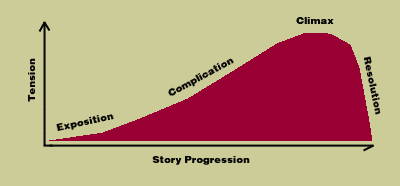
This article by Mark Lawson, as part of his Theatre Studies series, which I have blogged about before, really raised a smile from me. I spend a lot of time with my younger exam level students getting them to question whether they really need the 100 blackouts they have included in their 15 minute piece, or whether the numerous tables, chairs and stage blocks that are constantly being dragged on and off, on and off and on again are pivotal to the understanding of their narrative. Eventually, and with my tongue removed from cheek, we have a meaningful discussion about dramatic tension and the narrative arc and how this works and how to best sustain it at a level they really want. They get it eventually, and never look back, with chairs banned, other than for the audience, and exploration of far more creative ways of indicating change of space or place.
Scene changes – the traffic jams of theatre
Theatres can’t keep asking us to hang about in the dark while actors move house. We may as well go to the cinema
All performers hope for applause – but the new London West End production of Uncle Vanya twice feels at severe risk of receiving a slow hand-clap. Because the play is written in four acts and Chekhov has specified a detailed different setting for each, the curtain comes down in the middle of each half and remains lowered for what seems like several minutes while the set is changed. The only consolation for audiences is that the other two transformations are able to take place before we come in and during the interval.
Although Lindsay Posner’s production contains some high-class acting – from Ken Stott, Samuel West and Anna Friel in particular – the staging has suffered indifferent notices, with particular criticism for slow pacing. I’m convinced that this sense of sluggishness is encouraged by viewers’ frustration at having to endure the theatrical equivalent of a traffic jam.
Colleagues have told me of similar complaints against the recent production of Nosferatu by the Polish company TR Warszawa at the Barbican in London, in which black-clad stage managers with head-sets regularly entered to prepare the stage for the next scene. One critic attacked its “infernally slow pace”.
The problem is that viewers literally don’t know what to do during a lengthy change-over. We are technically still within the action, our disbelief theoretically suspended, and yet are witnessing something that is clearly (and often clatteringly) factual rather than fictional. And because we don’t know the extent of the delay – timings of scene-changes, unlike those for intervals, are not listed in programmes – it’s impossible to know whether to risk beginning a conversation with a companion or – for many theatre-goers these days – to check emails or read about the latest catastrophes at the BBC on mobiles and tablets. These furniture breaks are much more disrupting to an audience than they would have been in the 19th century theatre of Chekhov or Ibsen (another playwright reluctant to use the same room for two successive acts), because the concentration and patience of viewers is increasingly shaped by the fluidity of TV or movies.
Ideally, a piece will aspire to the swift seamlessness of screen. For example, Richard Eyre, a director who has moved between theatre and film, is about to open the premiere of The Dark Earth and the Light Sky, Nick Dear’s play about the poets Edward Thomas and Robert Frost, in which (I noted at a preview) 28 scenes are played out during 110 minutes, smoothly flowing between locations and states of reality with a cinematic elegance. Admittedly, Eyre had the advantage over Posner’s Uncle Vanya that this play was written in the light of contemporary sensibilities, but, seeing the two shows in close proximity, it struck me that people can no longer be asked to hang about indefinitely in the dark while the cast move house.
The perfect solution is a revolve stage (the subject of an earlier piece in this series), but relatively few theatres have these. Some productions of multi-set classics have scheduled what the programme calls a “pause” (a five-minute mini-interval), in which the house lights come up. But this, too, is unsatisfying and confusing, with the gap not long enough for the consumption or removal of fluids and some theatregoers in the middle of rows inevitably stranded coming or going when the action resumes, having misjudged the duration of the interlude.
In my experience, the most successful tactic – common in America – is to project on to the safety curtain or gauze screen historical material or specially shot film relating to the play, using the break as a sort of extension of the programme. Indeed, in these financially tough times, it’s a surprise that playhouses don’t project adverts on to the frontcloth.
More fundamentally, though, we may have to change our attitude to the changing of the set in stagings of 19th-century realist writers. The reason for the dull lulls in Uncle Vanya is the assumption of director and designer that Chekhov demands an elaborate specificity of setting. Surely it would be better to use suggestive, easily manoevered scenery – a single samovar, a solo wicker chair – or there is a risk that audiences will go the cinema instead.
Today I want to share an article that really is a true meeting of the East and West in theatrical terms. A project by British theatre The Royal Court is about to see the staging of 12 new plays by Indian playwrights in London. However it hasn’t just been a case of commissioning new work, it has been about development, mentoring and shaping work with the young writers. In the article by April de Angelis, which I reproduce here in full, you can see what an exciting programme this really is.
..
.
.
.
.
.
.
Royal Court’s New Plays from India: snapshots of the subcontinent
How do you capture one of the fastest changing places on Earth – and do so on stage? Playwright April de Angelis reports on 12 new plays that should change our image of India for ever
In October 2010, Elyse Dodgson, director of the Royal Court Theatre’s international department, playwright and dramaturg Carl Miller and I arrived at the Jindal guest house in Vasind, in India’s Maharashtra state. Staying with us were 12 Indian writers whose work we’d read but had not yet met. It was an exciting, curious, daunting moment: in three months we would be expecting them to deliver 12 new plays, and in some senses that depended as much on us as them.
One of the first discussions we had centred on the Royal Court’s artistic director Dominic Cooke’s dictum that there are two questions a playwright must address before they start to write: what is a play now (a question of form)? And who are we now (subject)? These questions resonated through the workshop. In an early session, the writers were asked to list the urgent subjects facing their society that they felt were important to address. The results were wide-ranging, surprising and gave an extraordinary picture of the diverse forces at work within contemporary India: Maoism and the red corridor; migration from villages to cities; the clash of modernity and mythology; the influence of western-style celebrity, especially an obsession with youth; “honour” killings; the emotional isolation of modern living; the homogenisation of culture; political corruption; religious identity; low value of life; loss of ethnic identity. Someone mentioned the Gulabi gang (a women-only vigilante group, who wear pink saris and smash up liquor shops because they don’t want their men drinking).
We then asked the playwrights to bring in newspaper cuttings with contemporary stories: these included reports on the plight of street children; the ongoing Bhopal compensation case; female infanticide; the case in which a male student killed himself after being secretly filmed having sex with another male student; the cheap-rates offered to westerners for Indian surrogate mothers. From these the playwrights began to identify subjects they felt drawn to and to investigate ways of telling their story.
There was much amicable debate. Were we trying to impose a template of a play on them? Could we honestly say that the concept of an “objective”, for example, is incontrovertible? No, we couldn’t, but on the other hand we found it to be a useful tool. The plays being written were for Royal Court audiences as well as for audiences in Mumbai, Bangalore, Pune, Chennai and Delhi, as well as, hopefully, elsewhere in India. Just as we had specified a contemporary Indian play – as opposed to, say, a historic, poetic drama – we were also proposing a vocabulary of playwriting. The playwrights were industrious and wanted to get on with the business of writing. By the end of the first workshop, each had created a proposal for a play and written a first scene. We met with each of them, gave dramaturgical advice, ironed out any potential problems, and said goodbye – for now.
Three months later, 12 plays arrived. Those written in Hindi and Marathi were translated. Stage two commenced. Rage Theatre Company, the creators of the Writers’ Bloc festival, our collaborators, arranged for a group of actors to be involved in another workshop. The plays were read aloud and each writer selected a scene they knew would be in the next draft, but which had problems to be solved. These were then worked on with actors who might improvise the more unclear or unconvincing moments. We all watched and discussed the scenes in their latest incarnation. It was very exciting to see the plays “living” for the first time and many memorable moments occurred: Shernaz Patel playing the ageing Bollywood actress in Siddarth Kumar’s Spunk desperate for the male lead’s, well … spunk, and its magical properties of endowing male children only; the startling image of two Kashmiri children stealing into a morgue to retrieve the football boots from their murdered friend, a victim of state repression in Abhishek Majumdar’s The Djinn’s of Eidgah; an older man risking his reputation as he and a younger man meet and become lovers on the Delhi metro in Still and Still Moving by Neel Chaudhuri.
The writers then embarked on their second drafts, which became the basis of productions in their own cities as well as being performed in January 2012 at the Writer’s Bloc festival hosted at the Prithvi theatre in Mumbai, a non-profit making theatre founded by the famous Bollywood Kapoor family and run, like all Indian theatre, on a non-subsidised basis. This, of course, makes life as a playwright extremely hard for Indian writers. In Britain, without subsided theatres such as the Royal Court, new writing would be a pipe dream. Five of these plays were then invited for the upcoming readings at the Court this month.
Purva Naresh trained in classical Indian dance and works as a film producer. Her play OK Tata Bye Bye is a provocative articulation of some of the central schisms in contemporary India: between rural and urban, traditional and modern, western and eastern ways of living, all pivoting on the contentious ground of gender politics. “OK tata bye bye” is the logo you see inscribed on the back of brightly decorated Indian trucks, and the play takes as its subject and setting caste-based prostitution that has sprung up along the side of an Indian highway. This teasing play takes as its premise the collision of two worlds, that of a young, independent-minded sex worker, Seema, who becomes the subject of a well-meaning documentary made by Pooja, an urban educated Indian woman fresh out of film school and her white American boyfriend, Mitch, whose earnest desire to engage with the subjects of this documentary teeters on the edge of voyeurism and exoticism. Pooja is torn so many ways, is she western or Indian? With whom does her allegiance lie? With a white western man, or a rural, lower-caste Indian woman? And underlying it all, the vibrant figure of Seema – refusing to be safely contained within a defining discourse – who worries away at Pooja like a brightly coloured shadow in danger of stealing the show. It is a brilliant and provocative look at sexual politics, identity and the perils of being a modern, urban Indian woman. And with show-stopping choreographic moments.
OK Tata Bye Byeregisters another conflict, that of technological power versus community; asking who is holding the camera? This theme also resonates in Mahua, a play about the enforced loss of tribal lands to a corporate mining company, by the young film-maker Akash Mohimen. As it opens, it has a timeless feel: Birsa, a tribal leader in waiting, in the village of Bihabend in the state of Orissa, commits a minor indiscretion and as a result must marry an “old” woman (she is 30!). This seems to be the set-up for a comedy, but slowly morphs into tragedy as he and his (now) beloved wife suffer the loss of their land and then of their livelihood and identities. The final act of Birsa is both tragic and merciful, underscoring the point that such powerlessness leads to impossible choices.
Back in bustling Mumbai, British-based actress and writer Ayeesha Menon is a contemporary, comic, female Indian voice. The sparkling Pereira’s Bakery at 76 Chapel Road brings the clash of traditional and modern right to the heart of a great city with a diverse cast of characters ranging from the doleful, old-man misanthropist always at hand philosophising home truths, to the young X Factor aspirant whose insistent warblings bring tensions to breaking point.
We see the forces of old and new contending with each other, culminating in the major crisis of the play, the threat to demolish the old quarter for the sake of progress, to steamroller the charm of an ancient district to make way for the sterile constructions of capital. The play captures both the centrality of family to Indian life and the frustrations of those who feel trapped by it and wish to escape the past and tradition – but, having done that, is it ever possible to recapture what has been lost?
Leftovers is set in Pune, written by Saga Deshmukh, a lawyer. It movingly details the difficulties of a family who are left behind in a city that is powering the economic engine of India. It centres on Baba, the patriarch, and his failure to fit into the new order. It is a delicately observed play about the unheard suffering of ordinary people.
Finally, The Djinns of Eidgah by Abhishek Majumdar, is set in the ongoing conflict in Kashmir and tells the story of two children. Ashrafi, a young girl, and her brother Bilal, orphaned by the conflict and struggling to grow up, find themselves in a world defined by violence. They are befriended by a doctor who seeks to steer a path between the warring sides, but the conflict proves too toxic. This play is partly magical in its incarnation of the djinns, ancient spirits which the young girl incants. Perhaps Majumdar’s riposte to our insistence on a contemporary Royal Court play, The Djinns of Eidgah merges old and new in a fusion of traditional Indian theatre forms and contemporary themes.
It is fascinating to look back at the whole process and see the way themes and ideas from the initial stages of the workshop have threaded through to the unique and original plays that exist now. Each play provides a prism through which it is possible to have a glimpse of India today. It’s clearly a great time to be an Indian playwright.
If you are interested in finding out more, you can here as well as watching interviews with the playwrights in their own languages, Hindi and Marathi.
This week, theatre critic and blogger, Lyn Gardner has written two short pieces that got me thinking. The first, Should there be more heckling in the theatre?, essentially deals with interruptions, be they by mobile telephones, snoring, or people expressing their disquiet at the play they are watching, while noting that the revered silence audiences in the ‘west’ are expected to adopt has not always been the case.
The second, Fail safe: how good can come of bad theatre, discusses the notion that when actors and directors are actually involved in a show, it’s rare for them to acknowledge that it might be anything less than brilliant.
Both of these are connected for me and basically deal with how audiences are expected to behave. If you live in Asia, as I do, you start to develop a different (and I have to say, more refreshing attitude) to what it means to be an audience member. If I go to a professional venue in Hong Kong to watch Beijing Opera, I expect the audience to talk through the production, perhaps walk in and out or even eat their lunch – its just what happens. Similarly, if I go to see Cantonese Opera at one of the temporary stages that spring up around town (and country) at various times of year, it is much more of a community event, with villagers popping in and out as they fancy. In neither of these contexts do the actors or fellow audience members feel annoyed or slighted by such actions.
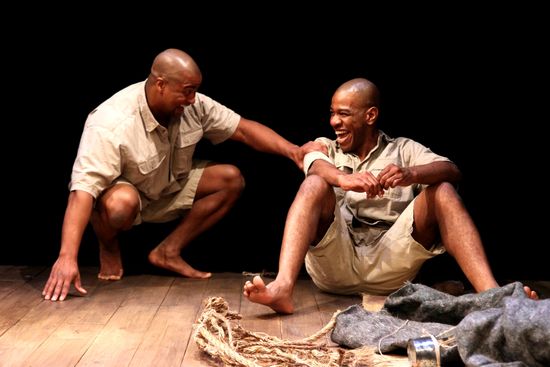
In the West however, very different responses ensue and I would like to share two examples with you. A number of years ago my school ran overseas theatre trips to London and on two separate occasions I remember being party to an incident. On the first occasion, having arrived in the UK only hours early, we went to see a wonderful, lyrical and powerful play called The Island by Athol Fugard, John Kani, and Winston Ntshona.
The play is an apartheid-era drama, inspired by a true story, is set in South Africa’s notorious Robben Island prison. It focuses on two cellmates, one whose release draws near and one under a life sentence, who spend their days at mind-numbing physical labor and at night rehearse for a performance of Sophocles’ Antigone. There were 25 in our party and we had front row seats. It was superbly performed and directed, yet, all but one of us (a student) fell to sleep – jet lag – and were woken by very loud applause at the end. I felt acutely embarrassed for the actors who had to witness their front row snoring away while they acted their hearts out. However, it isn’t this that sticks in my memory. It is being shouted at by a rather elderly member of the audience and being told how rude we were and that we shouldn’t be taking children to the theatre if all they were going to do was sleep through the play. I tried to point out that in fact we had made a huge effort to see the production, having flown 8000 miles to do so, but the irony was lost on the shouting individual.
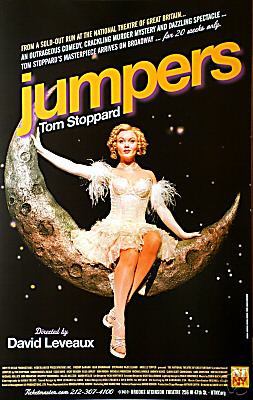
The second occasion, a year later, back in London with another group of students, we went to see Jumpers by Tom Stoppard.
.
.
.
.
.
.
.
.
.
.
Now, Jumpers explores and satirizes the field of academic philosophy, likening it to a less-than skilful competitive gymnastics display. It raises questions such as What do we know? and Where do values come from? As you might imagine, it is a very challenging play to watch even if you are a philosophy major. So my students who were philosophy students were whispering quietly to their friends in an attempt to help them understand what they were watching. Again, but this time at the interval, some embittered old harridan started to shout at my students, telling them how disrespectful they were being and when I went to defend them, she started to shout at me too. This time my reply was anything but polite and I told my students to carry on as before.
Now all of these are small tales, but they do highlight the relationship, the pact, that exists between the audience and the stage in the ‘west’. I often have conversations with my students about whether it is acceptable to leave a performance before it finishes. We usually disagree. Generally my students think it is rude and disrespectful to the actors whereas I tend to believe that given I have paid to see the performance, I have the right to leave if it doesn’t reach my expectations. Admittedly this is something I have developed as I have got older, but with reference to Gardner’s second article above, if the actors/director refuse to admit that what they have produced is less than satisfactory, its up to me to be my own judge of what constitutes quality theatre.
There is another side to this which is highlighted in the article Showstopping: why Broadway audiences applaud too oftenby Mark Lawson which deals with the American phenomenon of the “entry round” – the enthusiastic and often over lengthy applause at the moment when theatre-goers recognise a famous actor. Interestingly Lawson comments that
Such reactions remain very rare in the UK. Indeed, in London productions featuring Judi Dench or Ian McKellen, it’s possible to calculate precisely how many American tourists are in the house by counting the number who put their hands together for the celebrity entrance, and are then silenced by disapproving shushing from Brits.
He also outlines another source of disruption that he witnessed in a production of Glengarry Glen Ross.
A group of people sitting near me had clearly come only to see (Al) Pacino, and then become grumpy at his absence from the second and third scenes of the first act. Their response to this was to chat loudly and use their mobile phones silently but flashingly until he came back on.
I could go on. But I suppose basically I’m just blogging about something that has always intrigued and fascinated me. Brecht’s notion of the ‘spectactor’, the breaking of the fourth wall, the actor/audience relationship and the role that it plays in the creation of dynamic, meaningful theatre.
I was going to keep this post until tomorrow, but I can’t wait.
Pulitzer prize winning American playwright Bruce Norris has been forced to remove the performance rights for his play, Clybourne Park from Berlin’s Deutsches Theater after he learned that they planned to ‘black-up’ a white actor to play the role of an African-american – in a piece that that explores race as one of it’s central theme.
Clybourne Park takes place in Chicago, in 1956 and 2006 and deals with the aspirations of black Americans in both of those times. It has toured the world and has been widely celebrated. I can’t quite believe that in the 21st Century it still might be considered appropriate for a white actor to be cast in a role, whose skin colour is central to the experiences of the character and context of the play as a whole, and then be expected to ‘black-up’.
You might think that such a trick should be unthinkable in a nation with the historical racial sensitivities of Germany – and, indeed, it would be unthinkable in most countries. However, ‘blacking up’ remains a relatively common practice in German theatre and is often justified on the basis of directorial prerogative. Indeed German director Thomas Schendel, commented that “blackface is a part of the theatre tradition”.
Norris has said:
Normally I don’t meddle in the cultural politics of other countries, but when my work and the work of my colleagues – other playwrights – is misrepresented, I do.
However Norris has now called on others to boycott productions of their work by German theatres that continue this asinine tradition. A zero-tolerance position is the only position to take.
.
.
.
.
.
.
Y.You cabn
You can read more here. A quick search of the blogosphere will throw up even more comment. This is not the only case that has been highlighted this year in Germany, The Schlosspark theatre did the same with a production of I’m Not Rappaport by Herb Gardner. This production featured a white actor in black-face in the role of Midge Carter.
You can read Norris’ open letter to the Dramatists Guild of America here .You might even sign the petition.
My post yesterday about the casting controversy in the UK has elicited some interesting responses and became a focus for discussion for one of my TA classes this morning.
I have been digging deeper and have come across a comment piece by Anna Chen, a writer and performer who lives in the UK, entitled Memo to the RSC: east Asians can be more than just dogs and maids: The Royal Shakespeare Company’s casting for The Orphan of Zhao seems to hark back to an age of British imperialism.
I have reproduced an edited version here:
It’s no fun being bred out of the cultural gene pool. Watching TV, theatre or film, I’m on constant alert for a glimpse of someone who looks Chinese, for the slightest resemblance to an estimated 499,999 others like me living in the UK.
So it was with a sense of “here we go again” that we learned that the esteemed Royal Shakespeare Company (RSC) is mounting the classic play The Orphan of Zhao in the way prize trophies usually get mounted: gutted and stuffed. This 13th-century Yuan-dynasty masterpiece may be the first Chinese play, to make it to the hallowed RSC, but the only parts given to actors of east Asian heritage are two dogs. And a maid-servant. Who dies. Tragically.
Yes, out of 17 roles in the classic known to Eurocentrics as “the Chinese Hamlet”, a grand total of three have gone to Asians. Another dog is played by a black actor, making you wonder exactly what the RSC is trying to say.
All director Gregory Doran came up with is that the blizzard of complaints is a case of “sour grapes”, and that the critics should “get real”; not the most eloquent response you might expect from the intellectual heavyweight described as “one of the finest Shakespeareans of his generation”. Any finer, and he might appreciate why casting Asians as dogs and a maid – the latter dying in the most tiresome Madame Butterfly tradition – might elicit consternation. Quite rightly, “blackface” was long ago laughed out of court on the grounds that it not only challenges credulity but is also both ludicrous and demeaning to all parties concerned. Yellowface, however, apparently remains acceptable and credible. Why?
Had Doran remembered the lessons learned by director Peter Brook when he cast a range of ethnicities in his well-intentioned 1980s film and stage adaptations of the Indian epic Mahabharata and was forced to face his own ideological assumptions in the ensuing row, he might have trodden more sensitively instead of crashing in like a 19th-century colonialist after our tea and silks.
Only last year in the US, La Jolla Playhouse felt compelled to hold a public debate after it was caught having cast a mere two of the roles in the Chinese story, The Nightingale, as Asian, and one of them was a bird.
Cheekily, the RSC targets Chinese audiences (and their growing disposable wealth) in their marketing – with adverts in Chinese and a poster featuring a Chinese kid who looks nothing like the actors playing the main roles in the show – so we know it can make the effort when it wants to. Playwright David Henry Hwang of the Asian American Performers Action Coalition which fought in the Nightingale battle, says: “By producing The Orphan of Zhao, the RSC seeks to exploit the public’s growing interest in China; through its casting choices, the company reveals that its commitment to Asia is self-serving, and only skin-deep.”
Once again: why? The RSC casting is something of a litmus test, indicating how a failing superpower asserts its cultural dominance when its economic base is disintegrating. It may no longer operate under cold war rules to consciously exclude representations of the upstart Chinese, or feel pressured to depict us as Fu Manchu monstrosities . But, as George Orwell pointed out, you don’t need a whipped dog when a well-trained one will do.
Such minds are hard-wired to eliminate an entire group’s cultural representation, and they don’t even realise it. Amanda Rogers of Swansea University, says: “As a national company they have a responsibility to represent all sectors of British society. There is a real paucity of east Asian representation in this country, and when we do see it, it is usually confined to minor or stereotypical roles.”
One danger is that, the more a minority is presented as a blank canvas, the easier it is to project all sorts of rubbish on to it.
It’s a shame that James Fenton, with his progressive track record, allows his adaptation of The Orphan of Zhao to be cast along colonialist lines. As a component of the establishment’s entertainment wing shaping our perceptions and feelings, the RSC continues to airbrush us out of the picture, ready to be re-inserted into the frame only when villains are required. Whipped dog, well-trained one or puppet: you have to ask the old question: cui bonio?
The La Jolla Playhouse Chen refers too (and referred to in some of the links yesterday) is based in Los Angles and suffered the same fate earlier this year when it mounted a musical called ‘The Nightingale’ set in ancient China with a cast of 12, only 2 of whom were of east Asian decent. You can read more here in the LA Times. However, La Jolla’s reaction was more immediate than the RSC and they held an open, public discussion which was generally well received for opening up the debate about cultural casting. You can watch the opening 10 minutes of the debate (and then the rest of it) here:
Fascinating. Theatre and cultural politics – never too far apart!
For the last few weeks I’ve been following a really interesting debate that has been getting the theatre world chatting right across the globe. The Royal Shakespeare Company in the UK are about to stage a production of the the Chinese play The Orphan of Zhao. The play, from the 13th century, is often referred to as the ‘Chinese Hamlet’, and the RSC production is a new translation by James Fenton.
Fenton writes here giving a wonderful background to the play.
However, controversy has arisen because out of 17 actors cast in the piece, only 3 are of South East Asian origin and they play two puppeteers and and a maid. The debate and back lash has been harsh and forced the RSC on the offensive about their casting policies.
What I find even more interesting is that the ‘blogoshere’ has joined the debate in a very vociferous and intelligent way and I wanted to share some of that too: Madam Miaow, Dangerology and Theatrical Geographies all write passionately about the debate. The latter blog is particularly interesting and worth a read. Even Twitter and Facebook are not immune to the uproar.
I’ll let you read through and make your own mind up, but I have to say it is the first time I have come across the term yellowing-up and it is disturbing.
Finally, I want to include an interview with the director of the show that was made before the storm hit.
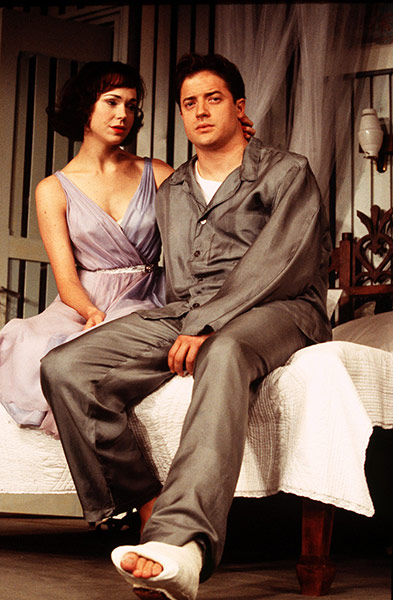
A national newspaper in the UK has just launched a project that really interests me – the idea of a crowd-sourced theatre project. The Guardian is working with a regional theatre, The West Yorkshire Playhouse, on a production of Tennessee Williams’ Cat on a Hot Tin Roof. During the production they are running a series of articles that take you through the production process as well as exploring in more depth other aspects of staging the play. But more than this they asking their readers to review the show and share their reviews, as well as offering advice from professional theatre critics about how to write a good review.
The link that will take you to the ‘series’ page is here.
.
.
.
.
.
.
.
.
.
.
.
.
..
.
I have already posted the article written by Michael Billington about the history of the play itself, but if you click on the image below you can re-read it:
.
.
.
.
.
.
.
There is a collection of images from various productions of the play from 1958 onwards which you can view by clicking here and advice from Lynne Garnder, professional critic, about review writing here
You can even watch trumpet player Simon Beddoe and pianist Matthew Bourne talk about the challenge of providing ‘reactive and emotive’ improvised accompaniment to the play, working with the cast and the director to create a soundscape that reflects and comments on the world of the play by clicking here.
However, my favorite so far is an article by Alfred Hickling, which follow the fit-up week when the set is built and technical rehearsals take place. It’s that interesting I’m not going to link to it, but reproduce it in full.
Behind the scenes: Cat on a Hot Tin Roof at West Yorkshire Playhouse
A society drowning in bourbon-coloured water, an opulent mansion and improvised jazz are not the easiest of illusions to create on stage, as Alfred Hickling discovers as part of our unique crowd-sourced theatre project
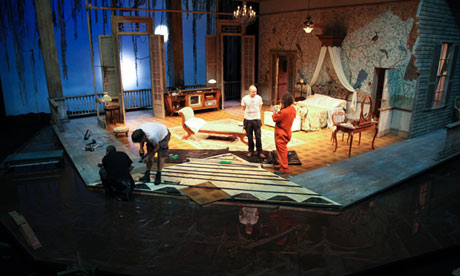
It’s the first day of the fit-up at the West Yorkshire Playhouse – the week in which the set is installed and technical rehearsals begin – and already production manager Eddie de Pledge has a sinking feeling. Not that there’s anything wrong (the build is progressing on schedule), but the design for Cat on a Hot Tin Roof requires approximately a third of the stage to be submerged in brown, bourbon-coloured water.
Before anything else can happen, several layers of industrial-grade pond-liner have to be deployed. “If a designer wants water as a scenic element, you have to add at least an extra day to the schedule,” De Pledge says. “Even 10 centimetres of liquid creates over three tonnes of additional weight. Then there’s issues of humidity in the atmosphere, especially where electrics are involved. And the water has to be changed regularly to prevent it becoming stagnant.”
De Pledge will be doing his utmost to avoid any aquatic disasters on the scale of the National theatre’s production of Alan Ayckbourn’s boating comedy Way Upstream, which notoriously flooded the Lyttelton auditorium in 1982. But there are valid artistic reasons for turning the Playhouse into a temporary swimming pool. Designer Francis O’Connor explains: “The Quarry theatre is one of the largest stages in the country – it demands that you make an epic, visual statement. At the same time, Tennessee Williams’ play is remarkably intimate – there are lots of sequences which are basically two people talking in a bedroom.” O’Connor’s solution has been to increase the rake of the stage, so that the the room itself plunges into a tide of muddy, brown water. “The play deals with death, alcoholism and a family in crisis,” O’Connor says. “The idea was to suggest a society sliding into the drink.”
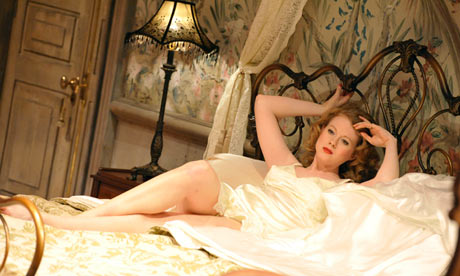
Recreating the opulence of an antebellum mansion is an expensive business. There’s a budget of more than £1000 for balustrades alone (all the show’s carpentry is done in-house) and a parquet floor to be laid – albeit from painted MDF rather than solid wood. Even the chinoiserie of the decorative scheme is the outcome of a careful search to find period-correct silk wallpaper: “Though not in Mississippi,” O’Connor says. “Sadly, the research budget doesn’t stretch that far. But we found something very close at Nostell Priory, near Wakefield.”
.
.
.
.
.
.
.
The director, Sarah Esdaile, did visit the Mississippi Delta, however, while on honeymoon four years ago. The trip fired her ambition to direct what many consider to be Williams’s finest work. “What this play gives you is that otherworldly sense of southern Mississippi,” she says. “It’s like no place on Earth; the flatness, the humidity, the weird alien moss hanging in the swamps. And then there’s the music of course.”
Williams’s fictitious plantation is in the region of Clarksville, often referred to as the birthplace of the blues (Elia Kazan’s original Broadway production featured an appearance by the great country-blues duo Sonny Terry and Brownie McGhee. Esdaile’s production shifts the action slightly further south, to the swampland surrounding New Orleans, and takes inspiration from the sounds of that region. “We originally discussed commissioning a jazz-based score,” she says, “but then we realised that a jazz composition may be a contradiction in terms.”
Instead, the music in the production is the result of an unusual experiment in which a group of musicians from Leeds Improvised Music Association (LIMA) were invited to interact directly with the cast. As the actors rehearsed, the musicians improvised, and the results of these sessions have been edited into a montage by sound designer Mic Pool. “In an ideal world, we’d have live musicians improvising every night,” Esdaile explains. “Unfortunately we couldn’t afford that. But what we do have is a bespoke score that developed as the result of an improvised dialogue between actors and musicians.”
.
.
.
.
.
.
.
Esdaile has just one further day in the rehearsal room before a gruelling week of 13-hour days begins. “It’s the most exciting and the most nerve-racking part of the process,” she says. “You have four weeks to create a theatrical illusion in the rehearsal room; and then four days to recreate it all again with lights, sound and costumes. It’s the point where you most often find yourself switching into problem-solving mode, and it can sometimes seem as if the poor play is being ignored.”
The main contribution to a successful tech is anticipating problems in advance – nowhere more so than in the wardrobe department, for which a classic costume drama such as Cat on a Hot Tin Roof is a major operation. Deputy head of wardrobe, Victoria Marzetti, explains: “You read the script and note that it is set in 1950s Mississippi. That means lots of white linen. And lots of linen means lots of laundry.”
Her job is made more challenging by the fact that some of the actors will be required to wade ankle-deep through filthy brown water. This won’t present such a problem for cotton and light fabrics, but some of the more elaborate women’s costumes are dry-clean only. It’s not practical for theatres to work with cleaning chemicals, but Marzetti reveals that there is a secret, temporary fix for emergencies: “Vodka. A quick squirt with neat alcohol works wonders because it kills the bacteria.”
Marzetti pulls out the wardrobe department’s proudest creation for this show – the outfit worn by the matriarch Big Mama, whom Williams describes as being like “a Japanese wrestler wearing at least half a million in flashy gems”. Big Mama’s bling was made possible by the fortunate find of several metres of emerald, beaded fabric at a knock-down price. But an even greater bargain is the padded underwear – a Debenhams leotard stuffed with birdseed – to plump the actor, Amanda Boxer, to an appropriate size. “It will be very hot and very heavy” Marzetti says, “but Amanda wanted to feel the incapacitating effects of genuine weight.”
Movement director Etta Murfitt has been teaching Boxer how a much larger person gets in and out of a chair; and has spent time developing a suitably feline stance for Zoe Boyle, who plays Maggie the Cat. But there is little point in the actors looking right if they don’t sound right; and perhaps the most indispensable role has been that of voice specialist, Kara Tsiaperas, who has coached the cast in the nuances of deep south dialect.
“Williams was very specific about melodic speech patterns he wanted to hear,” Tsiaperas says. “There’s a stage direction which states that Maggie’s voice must have ‘range and music’.” Tsiaperas, a New Yorker herself, says there is nothing worse than actors falling into “generalised, American drawl. It’s a myth that everyone in the south talks slowly – it’s just that the stress falls on different vowels. But the hardest thing of all is not to sound condescending. Whenever I’m required to coach southern American accents I’m reminded of a line from the film Sweet Home Alabama: “Just because I talk slow doesn’t mean I’m stupid.”

 However, in the last couple of years this has begun to change, thankfully. Digital Theatre is a resource that is growing rapidly, capturing British theatre in its original form. This company are building their range of productions and they can be accessed in a variety of ways at quite low cost – sadly not much in life is free.










 Theatre Room Asia