Trafficking Words

My second post today is an article from The Guardian written by Haleh Anvari. It is about a rather special piece of immersive theatre that takes place in the back of a taxi, in the Iranian capital Tehran. Just fantastic!

Immersive drama set in a Tehran taxi

Iranian cabs afford passengers a degree of anonymity, paving the way for uninhibited conversations and a new play

That Tehran is beleaguered by appalling traffic and toxic air is no secret. The use of that traffic as backdrop to a play in a moving taxi, especially during some of the most polluted weeks of the year, is testament to the resilient creativity of the city’s young artistic community and their readiness to push boundaries not just in terms of art but physical wellbeing.

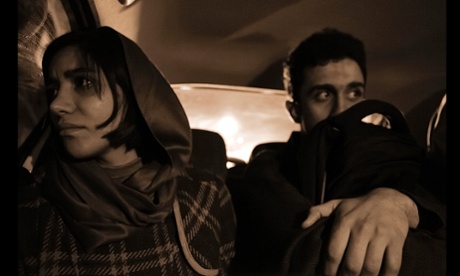
"Unpermitted Whispers", a play by Azadeh Ganjeh.

“Unpermitted Whispers”, a play by Azadeh Ganjeh.

Unpermitted Whispers is a 35-minute play that takes place in one of Tehran’s “Rahi” taxis, which traverse the city along fixed, often straight-line, routes. Rahis pick up passengers at major intersections and drop them off anywhere along their set route, making for a convenient method of getting around town and one cheaper than the minicabs available in every neighbourhood of the capital.

In contrast to the minicabs, which provide door-to-door service, the Rahi system affords passengers much more anonymity, allowing for candid and uninhibited conversation. Tehranis frequently share stories that they have overheard in these communal cabs; for many, they serve as an extension of the private sphere in which Iranians feel safe to talk about issues of the day. Unpermitted Whispers takes advantage of this unlikely superimposition of public and private to tell the story of three passengers, all women, who are picked up by a male driver at different points along his route.

To see the play, we were instructed to assemble at a busy downtown coffee shop around the corner from the University of Tehran. The modern café, run by a troop of young, funky Tehranis, is an essential part of the production. It acts as the foyer to the moving theatre.

A short wait and a couple of lattes later, we were asked by a young woman to follow her outside to the nearest intersection. We waited on the street corner just as we normally would to catch a Rahi. A nondescript older model grey Peugot stopped at our feet and the usher beckoned us to get in. Before the taxi pulled away a young woman threw herself in beside us, and the play began.

There are four shows nightly, necessitating arduous organizational exertions. For one thing, the sessions can hardly be expected to start exactly on time, since the stage is at the mercy of Tehran’s nightmarish traffic. The taxi’s dramatic maneuvers are an additional cause for concern. Twice during the performance we attended, the driver swerved violently to the side of busy Taleghani Street to facilitate the unfolding drama.

As Tehranis we are very familiar with the communal cab, both its discomforts and its possibilities: the forced intimacy that results from sitting beside total strangers, the unwanted physical contact, the vexingly loud conversations on mobiles, as well as the impromptu debates and spontaneous venting about contentious social and political topics.

The play’s first scene was performed entirely on the telephone, as we eavesdropped on a conversation of a kind with which many Iranian women are familiar: a young bride wants to go to the theatre with her university friends but needs an alibi as her traditional family and jealous husband will not approve.

The second scene involved another young woman, who had lost her brother and fiancé after they were called up for national service. It was confusing and a tad overdramatic – especially when she leapt out of the car while it was still in motion.

The third featured a chador-clad woman from the shore of the Caspian Sea – her perfect Gilan dialect would have benefitted from subtitling – in search of her abusive husband, hospitalized somewhere in the city. We were taken to three hospitals and watched as she disappeared into each to “make enquiries.”

By this point, we had willingly suspended our disbelief and were interacting naturally with her plight, more like actual Rahi passengers than spectators. I and the other woman in our little group told her she should not endure being beaten, while the male passenger resorted to an Iranian adage:“You enter your husband’s household in a white dress and you leave only in another white garment – a shroud.” This provoked a heated conversation which was missed by the actress, then evidently hanging around the A&E room of the last hospital for the sake of verisimilitude.

The play was produced by Urban Arts House, an innovative new collective of young professional artists from different disciplines who are devoted to the urban culture of Tehran. They produce and encourage the making of experimental art in and about the capital, aiming to engage the public with the arts amid the city’s everyday spaces.

The show’s creator, Azadeh Ganjeh, is a scholar of Shakespeare who specializes in environmental art. Her three female characters were ostensibly inspired by major Shakespearean figures: Othello’s Desdemona, Hamlet’s Ophelia and The Taming of the Shrew’s Katharina. I felt that the play would have made better use of its setting had she introduced some male characters from Tehran’s own bustling streets and rounded out the stories with some of the more comical moments we encounter daily negotiating life in the city.

The Rahi drivers are as vociferous as the cabbies in any metropolis and often hold court, directing the conversations within their vehicles. In Unpermitted Whispers the only male character, the driver, was no more than that, a sidekick to the drama of the three women, each trying to overcome her difficult circumstances. At best he served as a symbol for the modern Iranian man, willing to help but unable to effect any real change.

It was a little disappointing, thus, to find that the stories addressed the strains and challenges of just one half of the population. The innovative use of the urban environment, on the other hand, was effective. Our voluntary participation in the drama within this one Rahi amplified the sense of Tehran as a living stage with ongoing dramas in every unseen corner.

We were dropped off some blocks away from the coffee shop where we had started our journey by the apologetic driver, who declared that he would continue to help the lady from out of town find her husband.

Trying to find the way back to our car, we asked directions from a young couple strolling down a quiet tree-lined street. As the man stopped to assist, his female companion ignored us and continued to walk on. There were tears quietly running down her face. Was this a real lover’s tiff or were they both part of the play? For a moment, it wasn’t easy to be sure.
The Third Collaborator

Theatre Room has been on an extended Christmas vacation, but I am back now and have lots to share over the next few days.

I want to start with an article from the Boston Globe from last week. Written by Joel Brown and entitled Offstage, dramaturgs are playing a prominent role it explores the burgeoning role of dramaturgy in American theatre. As I have written here before, dramaturgy often defies definition and this great article tries to put that right.

Offstage, dramaturgs are playing a prominent role

The posters and programs for Company One’s “Splendor” last fall offered three credits where there are usually two:

“A WORLD PREMIERE by Kirsten Greenidge

Directed by Shawn LaCount

Dramaturgy by Ilana M. Brownstein”

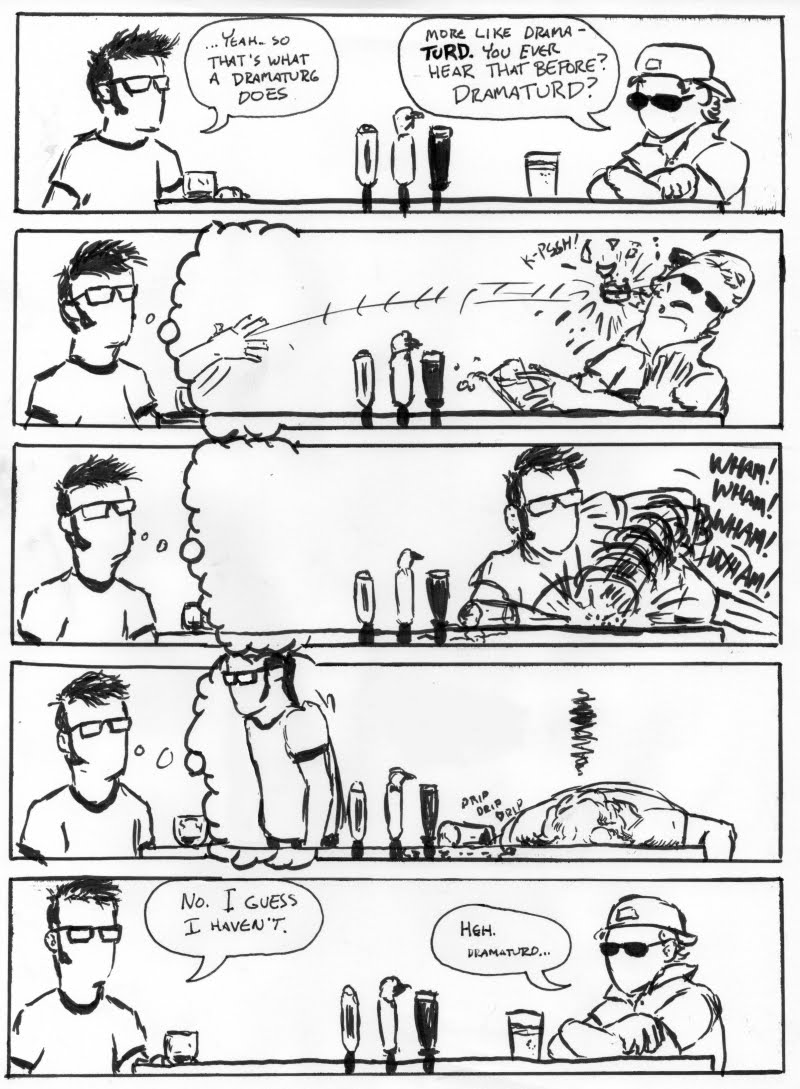
Playwrights and directors always get prominent credits, but a dramaturg almost never does. The billing for Brownstein was one outward sign of a backstage shift in Boston theater. In today’s theater, dramaturgs do anything from mundane script management to researching a play’s historical background, from suggesting changes in a play’s structure to arranging post-show discussions with the audience.

“The role of the dramaturg was, really, we saw it as a third collaborator,” said LaCount, Company One’s artistic director.

But it’s a job that’s at best dimly familiar to the audience. Partly that’s because the role of the dramaturg changes from show to show and company to company. Dictionaries broadly define dramaturgy as the art of dramatic representation. Even dramaturgs say the job is not easy to explain. In today’s theater, they do anything from mundane script management to researching a play’s historical background, from suggesting changes in a play’s structure to arranging post-show discussions with the audience.

“You ask 10 dramaturgs what they do, and you’ll get 17 answers,” said Brownstein, whose title at Company One is director of new work.

From left: director Shawn LaCount, dramaturg Jessie Baxter, and actor Peter Andersen discussing an upcoming production of “The Flick.’’

From left: director Shawn LaCount, dramaturg Jessie Baxter, and actor Peter Andersen discussing an upcoming production of “The Flick.’’

From a small-company production like “Splendor” to the Broadway-bound “The Gershwins’ Porgy and Bess,” dramaturgs have been shaping much of what Boston theater audiences see. LaCount and others say that a dramaturg is especially valuable to a new play, and that’s why dramaturgs have a higher profile here lately. “I think Boston is becoming a player in new work in the American theater, (and) it’s been a while,” said LaCount. “I think the role of the dramaturg is a lot more noticeable and valuable.”

The Literary Managers and Dramaturgs of the Americas will hold their annual conference here in June. “The theme of the conference is looking to the future to see where we are going,” says conference chairwoman Magda Romanska, an associate professor at Emerson College and editor of an upcoming dramaturgy textbook. “I think it’s a really good moment for the field.”

Playwrights are artists and rightly protective of their creations. But Greenidge said she was happy to have Brownstein’s input during the development of “Splendor,” which is built around a Thanksgiving weekend and centers on ties of family and community.

Freelance010 - edit

“One thing Ilana brought up was, ‘Nobody ever has Thanksgiving dinner in your play — what does that mean?” Greenidge said. By the time of the premiere, the playwright added a brief, dreamlike scene in which all the characters come to the table to get a piece of pie before dispersing again.

Dramaturgy (it rhymes with clergy, though “dramaturg” is pronounced with a hard G) dates to Europe in the 1700s, when the first dramaturgs were sort of in-house critics. Formal dramatic structure was long their main concern. Now institutional dramaturgs may be involved in selecting plays for a company to produce; they often carry the job title of literary manager. Production dramaturgs work on a specific show. Some dramaturgs are freelance, some on staff. Duties and titles overlap.

In the modern era, dramaturgs are known mainly for researching the context of a play to ensure an accurate production, and to provide background information to cast and designers. They have long been considered “the in-house bookworm,” as one joked.

But even that role is not necessarily dull. “Today I’m reading all about S&M for ‘Venus in Fur,’ ” said Charles Haugland, dramaturg at the Huntington Theatre Company.

Dramaturgs enter the field in various ways, but few have had as consistent a path as Ryan McKittrick, director of artistic programs/dramaturg at the American Repertory Theater in Cambridge. “I sort of grew up in this theater,” he said.

McKittrick was an undergraduate at Harvard when he fell in love with ART’s work, studied dramaturgy at the ART Institute, and has worked with the company since he graduated in 2000. He works on projects developed sometimes over years at the theater, including 2011’s “The Gershwins’ Porgy and Bess” under artistic director Diane Paulus that made it to Broadway.

“When I was an undergraduate, I didn’t really know what dramaturgy was,” McKittrick said. “It provides an opportunity for someone who loves academic research but also loves the theater and wants to pursue a life in professional theater. And within the theater you get to do many, many different things.”

keep_calm_and_trust_the_dramaturg_ceramic_tile-r32585b26ebd944a391f65451dfcf19ae_agtk1_8byvr_512_Fotor

Most dramaturgs write program notes and organize post-show discussions. Their quest: “How do we deepen an audience’s connection to the material?” said A. Nora Long, a dramaturg whose job title is associate artistic director at the Lyric Stage Company of Boston.

On productions, a dramaturg may also be responsible for “moment-to-moment rehearsal stuff” that requires a deep knowledge of the script, Brownstein said. “Splendor” follows numerous characters in a fictional Boston suburb over decades, jumping back and forth in time. The cast rehearsed the scenes in the order in which they appear in the play, not in the order in which they happen. So the scene they were working on at any given time might hinge on developments not shown until later.

“So it was one of my jobs for every scene to be the person who was like, ‘Context! Here’s what you need to know,’ ” Brownstein said.

Playwright Walt McGough says he’s always happy to have a dramaturg on one of his productions because they can solve thorny problems. When his “Priscilla Dreams the Answer” was in rehearsal with Fresh Ink Theatre a couple of years ago, he and director Melanie Garber got along great except for “one moment where we just kept talking past each other,” McGough said via e-mail.

The issue on which they deadlocked: when to start playing a Belle and Sebastian song in the play’s final moments. Garber wanted to start at the beginning of the last scene, while McGough wanted to wait until the blackout, he explained.

“We were wasting time trying to explain to each other why one choice was right and the other was wrong,” McGough said. “The dramaturg, Jessie Baxter, was sitting and patiently watching us run around in circles. She spoke up and recommended splitting the difference, and beginning the cue about halfway through the scene, so that it underscored the final moments but didn’t kick in fully until the play had ended.”

That solved the problem perfectly, he said, and exemplified the value of having a dramaturg who “observes the entirety of a play and its production, instead of just one aspect, and makes sure that everything that happens is being done in service to the same viewpoint.”

Baxter also “dramaturgs” for Company One and is working on its production of Annie Baker’s “The Flick,” opening at the Modern Theater in February.

The job all depends on the play, the circumstances and who’s involved. Dramaturgs can be less needed on a well-known work, especially with an experienced director. “If we’re doing ‘Private Lives’ with [director] Maria Aitken, she’s done 12 Noel Coward plays, she doesn’t need me,” said the Huntington’s Haugland.

And there are some playwrights and directors who aren’t so enthused about what dramaturgs have to say. Playwright Richard Nelson gave a speech in New York in 2007 in which he deplored a “culture of ‘development’ ” in which playwrights are thought to need help to do their work.

lmda_FotorBoston dramaturgs say it’s often the older generation that has an issue with their growing role.

“I have some people in my family who are theater practitioners,” said Long, “and when I told my uncle I was studying dramaturgy, he was like, ‘As a director, what would I possibly need a dramaturg for? I can do research.’

“But the thing you cannot do is be another pair of eyes,” Long said. “I think the best dramaturgical relationships are about finding a collaborator who knows as much about what you are attempting to do onstage as you do, but who is going to look at it from a different perspective.”

As devised theater and new technologies become more common, younger playwrights grow more comfortable with new kinds of collaboration, said Romanska, who had just returned from a theater festival in Krakow filled with experimental work. “The rigid division of roles, director/dramaturg/playwright, becomes more and more blurred as people move across boundaries,” she said.

There is also an excellent article here, written by Robert Loerzel for Playbill that also tackles the question.

The Literary Managers and Dramaturgs of the Americas, mentioned in Brown’s article, is an excellent source of information. It has a resources page, which contains a Dramaturgy Handbook written by Dr Magda Romanska who is the Assistant Professor and Head of Theatre Studies at Emerson College. This is a real find and a must read. Simply click the link above to download a copy.

Keep Calm And Make Theatre

Today I want to give a shout out to a couple training and learning opportunities that are happening, physically or online, in the coming year.

Patronlogo_FotorTeaching – and learning – theatre in an international context is an immense privilege. Many of you reading Theatre Room, students and teachers, will be doing so in this setting. As a result, it is likely that you have heard of ISTA, the International Schools Theatre Association which is an international arts organisation, a global community of young people, teachers and artists that operates on every continent. ISTA began life in 1978 with just one High School Festival in Europe. Today ISTA holds over 30 annual Festivals and training programmes worldwide,  with a membership of more than 200 schools.

298My own school have been members for many years and it is a vital part of how we promote theatre in our school and connect with theatre makers across the region.  In the last couple of years ISTA has launched a summer training programme for young people (aged 15 to 19), called The Academy, which is a two or four week intensive international summer theatre Festival, held in the south of France. It is a great opportunity to immerse yourself in all things theatre, training and working with professional theatre practitioners from around the world. I’d be there in a flash, but sadly. I’m slightly (ahem) above the upper age limit. Click the image above for more details.

http://vimeo.com/52460227

.

The other opportunity I’d like to mention is a MOOC (Massive Open Online Course) taking place in March. A MOOC is an online course (usually free) with unlimited participation and open access via the web.  They are becoming an increasingly popular way to take short courses in a globally accessible way.

hero_4ff5f8c877b2a5c4c5a1c914161b8011-4_words_wide

This MOOC is an introduction to physical actor training, with a focus on biomechanics. It takes place over three weeks with participants expected to commit 4 hours per week. It is being led by an old friend of mine, Jonathan Pitches, who is Professor of Theatre and Performance at the University of Leeds in the UK. Again click the image above for more information.

.

Future Learnwhich is hosting the above MOOC is also hosting two others in the new year that may be of interest to theatre makers, young and old. Firstly there is Shakespeare’s Hamlet: text, performance, and culturewhere academics from the Shakespeare Institute in Stratford Upon Avon introduce aspects of the most famous play ever written – its origins, texts, and history.  The other is Shakespeare and his World which explores Shakespeare, his works and the world he lived in.

Get clicking!

Just Epic

A quick post today, just to share a few collected video resources about Bertolt Brecht and his theatre.

The first set is from a BBC documentary made 25 years ago, but still a useful source of all things Brechtian. Sadly the whole documentary is no longer available. The final fourth clip is from the same documentary, but from a different source and shows Helene Weigel (Brecht’s second wife and acclaimed actresses of the period) explaining Epic theatre.

.

.

.

.

The second set come from the National Theatre in the UK and were filmed when they were mounting a production of Brecht’s Mother Courage:

.

.

.

The next is an interesting and eclectic small film called The Brecht Document which details Brecht’s and is composed of what its writer/director Warren Leming calls “fragments” from a two-year stay in Berlin,Germany which he made in 1986/87. The final couple of minutes are from The Jewish Wife (Fear and Misery of the Third Reich), one of Brecht’s most haunting texts.

.

This one is Eric Bentley, the eminent critic, playwright and translator on the life of – and his work with – the legendary Brecht.

.

And finally, and perhaps most extraordinarily, a recording of Brecht’s testimony to, and questioning by, the House Com­mit­tee on Un-​Ame­ri­can Ac­tivi­tes (The McCarthy witch hunts), hours before he returned to Germany.

.

Playing The Fool

I realised this week that I sometimes miss the blatantly obvious when I am writing this blog. Once a week I set aside time to explore the things from Twitter that I have mined during the previous 7 days as well as trawl through the tried and trusted sites, blogs and people who feed Theatre Room. Also, I am often prompted by questions from my students and debates and discussions that happen in the classroom and studio as well as discussions with theatre teaching colleagues.

At the moment, all of my senior students are involved with research projects of one kind or another and I have quietly being doing some background research of my own to support them. And so it was that I came to the realisation above. One of my students, Grace, is exploring Commedia dell’Arte for her Independent  Project and although I know have referred in passing to the tradition, I don’t think I have devoted a post to it. So here it is.

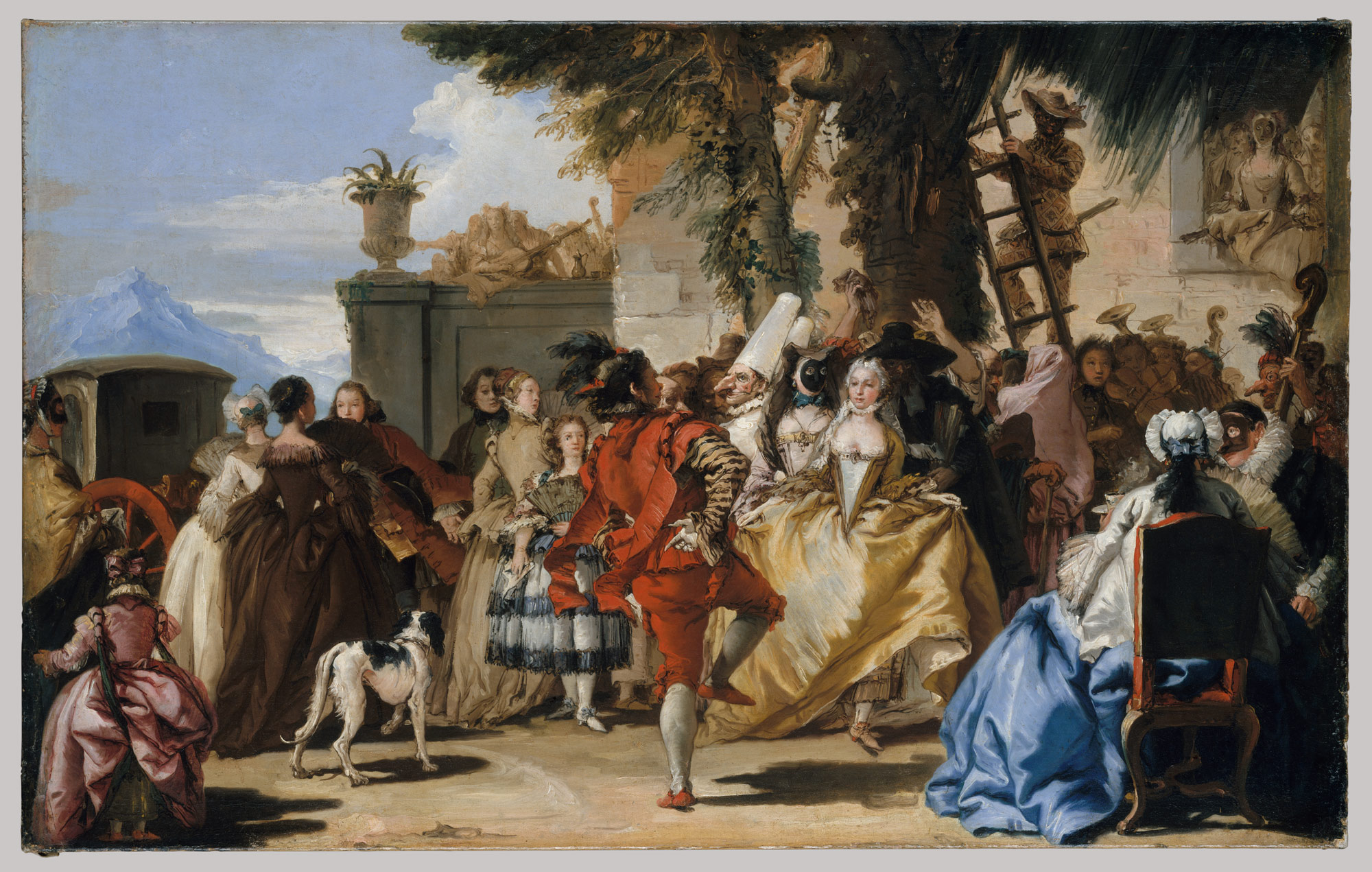
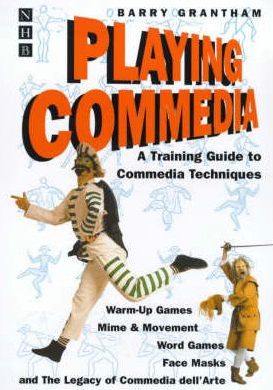
hb_1980.67There are lots of bits and bobs on the internet about Commedia, some more useful than others, but a general Google search will throw all these up. One of the best on-line histories comes from theatredatabase.com and can be found here. However, the best sources of information still remain (much to my surprise and occasionally to my students’ chagrin) printed texts. The best list of these can be found here, complied by Jonathon Becker on his website theatre-masks.com. Of all of these, there are two that stand out. 254682Firstly there is Commedia Dell’Arte: An Actor’s Handbook by John Rudlin which is a bit of a bible, in my opinion. One review on Amazon says It is not an esoteric bible of secret facts which will allow anyone to become a commedia performer.It is an actor’s manual and, if you cannot find adequate live teaching of the form, it is one of the best books you can find to start with. I couldn’t agree more!  The other one I always recommend to students is Playing Commedia by Barry Grantham. It has a section on different types of warm-ups and games specific to 9781854594662_Fotorskills and/or characters and there is another section with a history of each character which is invaluable. There are lots others available, some more practical, some more academic, but these two are my favourites. In fact the number of books still in print says much about the tradition itself – it is alive and flourishing. One company that specialises is Faction of Foolsbased at Gallaudet University in Washington DC.

Commedia is classed by UNESCO as a piece of Intangible World Cultural Heritage and as such there is even a World Commedia dell’Arte Day, 25th February every year. A look at the report produced for the 2013 day shows just how wide-spread (5 continents) Commedia practitioners are.

I want to share a series of videos produced by the National Theatre in the UK, which are a great little resource.

.

.

.

.

.

The workshops in the video are led by Didi Hopkins from Commediaworks, a UK based organisation that aims to keep the [Commedia] flame alive and burning bright. To this extent, they worked with Richard Bean, the writer of the internationally successful modern reworking of Carlo Goldoni’s classic The Servant of Two Masters, in the form of One Man, Two Governors.  You can read Goldoni’s original text here, courtesy of Project Gutenberg. Goldoni is often accused of ‘killing’ Commedia, by writing it down – committing an oral, improvised art, to the page. Hopkins and her partner in Commediaworks, Ninian Kinnier-Wilson, wrote the programme/play bill notes for One Man, Two Governors where they challenged the notion of Goldoni as ‘murderer’.

Did Goldoni Murder Commedia?

When Goldoni wrote The Servant of Two Masters, some say he killed Commedia dell’Arte. Was it alive? What was it? And why was a playwright accused of its murder?

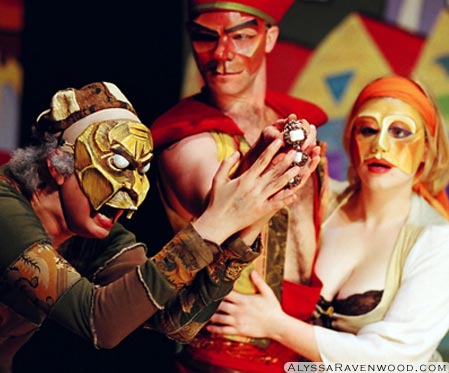
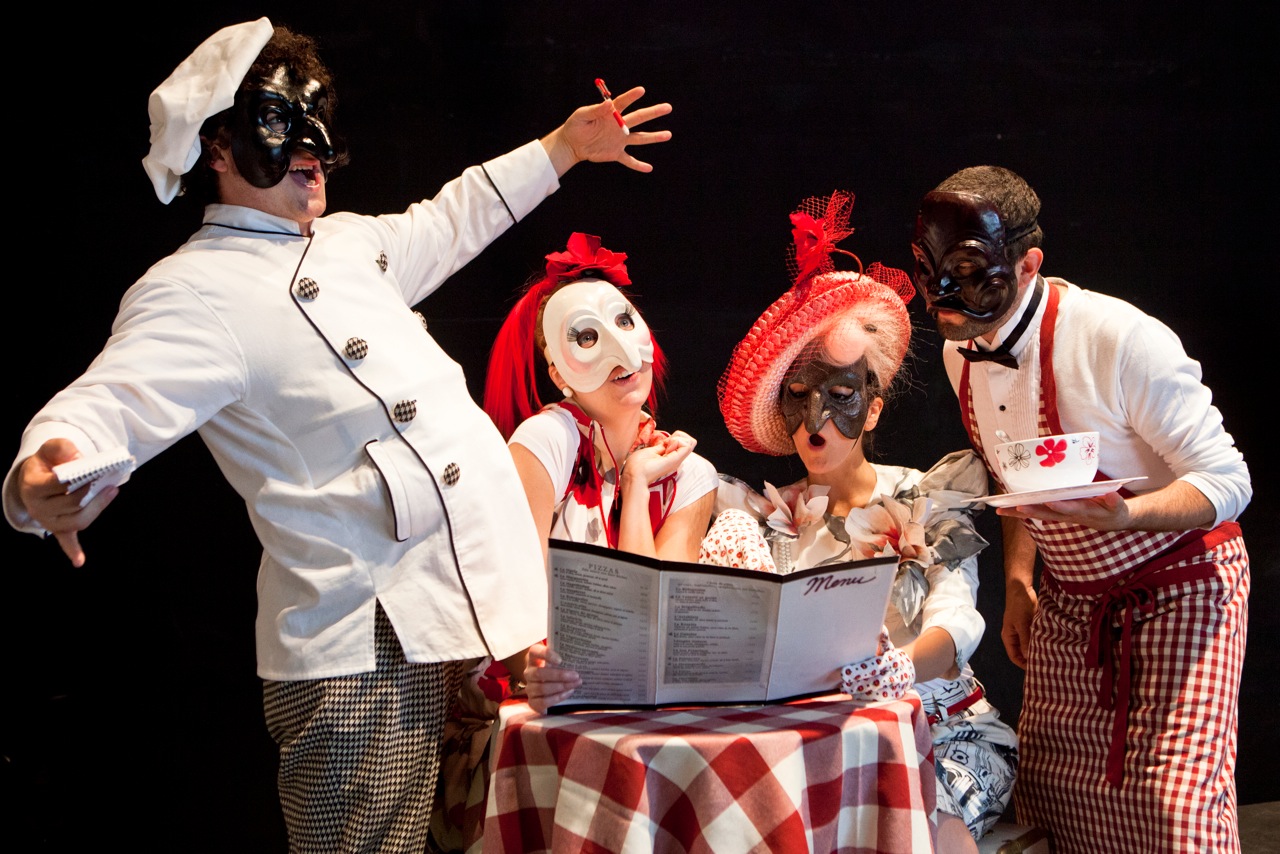
Commedia dell’Arte, or Comedy of the Guild, was the first professional theatre in Europe, appearing in the 1550s in Northern Europe. Actors were paid a fair wage. A round of applause on your exit line meant you often got extra money… and on stage, for the first time, there were women. Before Commedia, Literary Societies, populated with academics, often performed amateur theatre, and there were professional entertainers – jongleurs – but there was no professional theatre. Commedia dell’Arte seems to have been a marriage between the academics and the jongleurs, between ideas and skills, between mind and body, and between high and low class. It was originally known as ‘Commedia all’Improviso’, the players taking the roles of different types found in society, from lowly servants to middle class professionals and lofty aristocrats. These types were clearly defined and contrasted to help the actors with their improvisation: high masters with low servants, lost lovers with knowing maids, cunning servants with stupid masters. As there was no written play, the actors worked from a scenario or running-order pinned up behind the stage, detailing entrances and exits of the players and the main points to be conveyed in the scene.

101203ArlecchinoTraditional themes involved riches and poverty, power and servitude, barrenness and fertility, wisdom and folly, and, of course, life and death – powerful reasons to drive characters through their stories.
There was no central hero in the Commedia dell’Arte, rather each character had a storyline with a beginning, middle and end to their plight, and all these stories were woven together to end, usually with a marriage, in the final scene. As well as socially, the characters were also divided by whether or not they were masked. The masked characters are cyclical and end the story back in their rightful places; the unmasked are linear and go on a journey from one state to finish in another. Both sets of characters have lessons to learn on the way about life, love, justice and society – all topics that would concern their audience.

tablemasks

Commedia actors studied hard for their parts, and learned quantities of text. The unmasked lovers learned love poems and duets; the professionals were familiar with business ideas of the day, the latest interests of the academic societies, and could speak Latin, Greek and Hebrew like their equivalents in the audience. The braggart Captain had speeches of valour and ridiculous long Spanish names. The players of the servants had to practise tumbling and set piece gags, or ‘lazzi’. All this had to be retained and inserted into scenes when appropriate and at the drop of a hat.

Commedia all’Improviso was a literate and visual theatre, speaking the ideas of the Renaissance literary society and using the vulgar visuals of the illiterate lower classes, combining the two to speak to the whole audience. Sound commercial sense! It also meant that the players of the Commedia all’Improviso were truly skilled. Trained to a very high level in their chosen roles, they were more than just actors, they were artisans of the theatre: the Commedia dell’Arte.

commedia-dell-arte-Y-2-3A

So why was Goldoni accused of killing Commedia dell’Arte?

Others, including Molière and Marivaux, had made text plays in the style of Commedia dell’Arte. But by the 1740s the Commedia was old. At its birth two hundred years before, it had sprung to life fully formed and travelled the courts and countryside of Europe, speaking secrets and introducing theatre to many of the countries it visited. It had a purpose. By Goldoni’s time it had forgotten that purpose and was wrapped not in the sharp ideas of the Renaissance but in the fluffy gauze of the Rococo of Watteau and the fairytales of Gozzi. It was not a murder, it was a mercy killing. Commedia was resurrected and brought back to life two centuries later by the Piccolo Teatro of Milan when, in 1947, Giorgio Strehler, Jacques Lecoq and mask-maker Amleto Sartori picked up Goldoni’s script and pieced together, through information and research, a new template for understanding the form, the characters and the rhythms of Commedia dell’Arte. It is a tradition that has influenced theatre, actors and playwrights and its strong imprint can be seen in Restoration comedy, melodrama, music hall, vaudeville, circus, pantomime and in the Zanni of Chaplin, the Marx Brothers, Laurel and Hardy, Mr Bean, and beyond. The work goes on.

8113413776_4e7bab0440_o

Goldoni the playwright is innocent of the murder of Commedia dell’Arte. By writing down what he witnessed in his rich and theatrical Venetian landscape, he helped to preserve it and keep the flame alive. He tried to bring together two traditions of European theatre – the playwrights’ theatre, and Commedia – the actors’ theatre. Viva la Commedia!

If you would like to know more about One Man, Two Govenors, you can download the education pack that accompanies the show here.

Uncut Debate

The Scotsman newspaper published an interesting article this week, Debating Political Theatre, written by Tiffany Jenkins, a cultural commentator. In it she suggests that even in an age of austerity and economic woe across much of the world, theatre has yet to respond in a robust and meaningful way. I don’t necessarily agree with her take, but it certainly gives pause for thought. 

Modern social drama has plenty of targets but is awash with complacency at a time when we badly need riotous debate, writes Tiffany Jenkins

POLITICAL theatre has a long and honourable tradition, reaching back to Ancient Greece when playwrights satirised the existing system to powerful effect. More recently, in the 1970s and 80s, political theatre was alive with attacks on……capitalism. At its best, it was vibrant and uncompromising. Most importantly, it had bite.

Today, over three years into the age of austerity, and political theatre appears to be in rude health. Its boom is suggested by the success of Theatre Uncut, formed in 2010 in response to public spending cuts and with the intention of encouraging debate and action. Leading playwrights have responded to this contemporary vehicle for short work made available for free for anyone to perform for a limited period. And they have done so in their thousands – so far, more than 3,000 people have staged these plays in more than 17 countries across four continents. This Saturday, there is a Mass Action Day where people will simultaneously stage seven new works written in response to the provocation: “Do we all get more right wing in hard times?”

There is a lot on show. Appearances, however, can be deceptive, because despite all this activity – the multiple productions, prizes, plaudits and the applause – there are limitations to political theatre today. These are in part due to certain inherent difficulties with it – it can easily veer into didactic agitprop, which is boring – but there are also more profound problems with the politics at the heart of the works, and the state of affairs that they inadvertently reveal. Taking a closer look at political theatre today – what is on offer, who it is for and what it says – and you find a complacent body of writing that flatters the audience and is devoid of critical thinking.

DSC_0388_web

Theatre Uncut aims to create a conversation about important everyday issues, a laudable purpose, but the work staged is very much a singular view of the world, and notably black and white. The objects of criticism and those who are to blame are cynical politicians, greedy capitalists and racists. One such play is Church Forced To Put Up Gates After Font Is Used As Wash Basin By Migrants, written by the comedian Mark Thomas. It’s about a right-wing newspaper owner who used to publish porn, who is obsessed with depicting immigrants as “shit”, the EU as “shit”, and the BBC as “shit”, and who thinks everyone who works for him is “f****** useless”. He is taken hostage by women in balaclavas who threaten to kill him unless he prints a pro-migration editorial.

If this work contributes anything to political debate, it’s cliché. Because we have heard this before – there is nothing surprising, complex, or nuanced in this play or the others it accompanies. Most of them are cartoon depictions of nasty right wing people and lovely lefties who think the right kind of thoughts. Frankly, most of the plays are just long rants. It is clearly assumed that audiences know better, and are thus reassured about their views and can go home contented having been congratulated. It’s all very safe.

The problem with the pantomime visions of what is effectively the opposition is that they just don’t ring true. I say this not as a right-wing newspaper owner or as a capitalist, but as someone who is interested in working out what is wrong today, and it’s really not as simple as how things are depicted in works such as Church Forced To Put Up Gates After Font Is Used As Wash Basin By Migrants – in which there is a lot of profanity but little insight.

Take another of the plays being performed this week, The Wing by Clara Brennan. One of Brennan’s main characters is Mick, a white working class bloke who reads The Sun (there is a repetitive theme in the plays which depicts tabloids as disgusting and their readers as scum), wraps himself in a “light blood-spattered St George’s flag” and who dislikes immigrants. His daughter, Kerry, is a right-on thinking woman who had had her picture taken for Page 3 in order to later reveal that at the very same time as she was getting her bits out, she was by then already pregnant by a “brown person”.

In The Wing, there is no attempt to persuade those that may not think or feel the same, and no attempt to understand people who do not agree. It also feels out of date, just repeating the politics of the 1980s and 1990s, refusing to address the present. And this is why is has no bite, no power: it doesn’t aim to win hearts or minds, and it doesn’t address the present with any urgency.

The political theatre of the past tried to influence, the political theatre of the present assumes things will never change. What The Wing also and unintentionally shows is the contempt some of these playwrights have for the white working class, the social group habitually blamed for everything, but who were once an important social force in politics.

Theatre-Uncut-007

There is nothing wrong with going to see a dramatisation of opinions with which you agree, but for the work to be effective, to have an impact, it needs to challenge those who come from shared outlooks and try to understand those that don’t. Indeed, some of the best work has done just this – John McGrath, founder of the Scottish popular 7:84 theatre company, is a case in point. McGrath always said that political theatre should avoid agitprop and confront the audience, make them feel uncomfortable and question their own positions.

Political theatre today should be a place of riotous debate. Even if the playwrights and producers are singing from the same hymn sheet – and they usually are – there is plenty to discuss and argue about. I am not advocating that people tear each other apart, but suggest that constructive questioning is needed in the cause of clarification.

If we do not take ourselves and audiences out of our comfort zones, and try and persuade others, political theatre will continue as a dampener to debate, a sedative rather than a spur to action. It is time to stop applauding and cheering. This sort of political theatre doesn’t deserve an encore.

TUheader

Now it is clear that Jenkins is taking particular aim at a movement called Theatre Uncut which was created in 2010

to encourage debate and galvanise action around political issues that affect all of our lives.

According to Lyn GardnerTheatre Uncut isn’t just a performance, it’s an idea: that theatre can be immediately responsive to world events, engender discussion and effect change. Founded in response to public service cuts (in the UK), it suggests that theatre has a part to play in the protest movements that are gathering pace across the world in response to economic downturn and events in Syria. The lead time between a play being written and actually being staged is often more than a year; Theatre Uncut, by contrast, is theatre’s rapid response unit. The plays are written speedily and given just one day of rehearsal: actors often have scripts in hand.

.

So far Theatre Uncut plays have been performed by over 3,000 people in 17 countries across 4 continents. Performances have happened everywhere from theatres in New York, community centres in Scotland, schools across England, universites in South Africa, on the streets in Spain, on public buses in Mexico, to village church halls in Wales.

Untitled 2_FotorPlaywrights have come from many countries – Syria, Spain, Argentina, Iceland, Greece, UK, USA, Egypt and so on. You can even obtain the plays free of charge for performance, as long as any profits are donated to charity. You can read a review of the latest Theatre Uncut performance, by Susannah Clapp here.

.

To me, this is how theatre of protest should be happening, and I think Jenkins’ is misguided in her notion that theatre is not causing riotous debate. Maybe it’s because it is just not happening in the way she would like. Mind you, the final paragraph of Clapp’s review above does say the following:

This is an evening of intermittent sizzle. It intrigues rather than ignites. The idea of the project itself is more political than any particular argument. There is no real answer to the question about getting more rightwing: how could there be without statistical evidence? There is no real anti-left persuasion. Neither are there any rallying cries: Gillian Slovo suggested in one post-show discussion that people no longer feel there is a political alternative. Yet the actors bring the flying-by-the-seat-of-their-pants concentration that the visionary enterprise needs.

.

I’d suggest you watch the three plays embedded here and make your own mind up.

.

The Business

Untitled_FotorI have just stumbled across the content for today’s post courtesy of a tweet from Lyn Gardner. It would seem there is an annual careers conference held in the UK, specifically for students who want a career in theatre, theatrecraft. It looks fantastic and really does cover all aspects of theatre making. Whilst it obviously focuses on working in the UK, the video page has a huge list of categories and links to videos that would be useful to anyone, anywhere, thinking of making their career a theatrical one. Take a look below, and click the title links for the relevant videos:

DIRECTING

Explore the role of a Director and what it takes to survive in the industry. Hear from professional Director Adam Spreadbury-Maher

MAKE-UP

See the character emerge — a demonstration of Stage Make up from experienced theatre make up artist Melanie Winning.

PRODUCING

Take a look at what is involved in producing a show and find out how to pursue a career as a producer from industry experts.

.

THEATRE DESIGN

With professional stage desinger Matt Edwards.

PROPS

An introduction to working in a props department for a major company

DESIGN AND MODEL BOXES

A chance to see how shows are developed from a design concept to a full size on stage production, with advice to those interested in pursuing a career in theatre design.

.

WRITING

Be introduced to the craft of playwriting and find out how to survive as a working playwright.

DIRECTING

What exactly do directors do? An introduction with professional Director Emma Rivlin.

MAKING MONEY…

A unique opportunity to hear how your technical skills can be utilised in the commercial sector.

DIRECTING COMEDY

A look at verbal and visual comedy, focusing on how understanding timing and where to direct the audience’s attention can benefit your ability to direct in every other genre.

BACKSTAGE TOURS

Take a peek behind the scenes at two major London theatres.

DIRECTING AND PRODUCING

We talk to some some top directors and producers about why they love their jobs and how they got there.

SPOTLIGHT ON TECHNICAL THEATRE

Exactly what goes on behind the scenes to make your favourite shows happen…

PLAYWRIGHTS

Leading writers talk about how they got to where they are and what it takes to write a play.

.

THEATRE MANAGEMENT

How to keep a major London theatre running smoothly and not go mad in the process.

MARKETING

The ins and outs of making sure people know about shows and want to see them.

TOP TIPS

A great collection of hints and tips from those in the know (or so they say…).

VIDEO DESIGN

An insight into the work of video designers and how their work contributes to live performance.

SOUND AND SET DESIGN

A fascinating look at the sound designer and set designer and how the two work together to create incredible atmospheres.

SET CONSTRUCTION

See some of the work that goes into building a major set – before it even gets to the theatre.

.

PRODUCTION MANAGEMENT

Amazing buhend the scenes access as we follow the production manager during a get-in at the London Coliseum.

STAGE DESIGN

An informative one-to-one explaining the role of the Stage Designer.

RUNNING A VENUE

Get the low down on running one of the biggest and busiest venues at the Edinburgh Fringe Festival.

COSTUME

A profile of Faye Fullerton – a leading costume designer.

ALTERNATIVES TO TRAINING

Theatre professionals talk about how they took different routes into the undustry.

ROUTES INTO THE INDUSTRY

Insights right from the top of the Theatre World – Nicholas Hytner spills the beans.

DON’T GO TO UNI!

The artistic director of the National Theatre puts forward a controversial point of view.

WORKING IN TECHNICAL THEATRE

Learn about how to “upskill” for this exciting but demanding profession.

.

SKILL UP!

What skills do you need for your chosen profession and where do you get them from?

UNIVERSITY

Do you need to go to University to get ahead in the theatre?

HOW DID I GET HERE?

Various theatre professionals explain the decisions, training and lucky coincidences that led them to their jobs.

APPRENTICESHIPS

A popular way to take your first steps in the industry

SPOTLIGHT ON WIGS AND PROPS

A brief introduction to the goings on in the wigs and props department of major theatres.

..

Playing With Words

This week I have been to see (with lots of students) A Clockwork Orange, an adaptation of the Anthony Burgess novella, staged by UK-based company, Action To The Word. Nothing unusual in that, of course, but it did raise a number of questions for me and my students. But before I go any further have a look as these two videos to put the post in context:

.

.

Firstly I should say that I did enjoy it. It was a great attempt to put something on stage that would otherwise be difficult to do, simply because the sheer level of ultra-violence and sexual violence in the narrative. Secondly, I have to say this as it has a bearing on what I am about to write, I was sitting in the gods (gallery) and had forgotten my glasses, so may have missed a few subtleties.

Clockwork Orange - Action to the Word

This production is an all male one. Single gender companies and casts are very much in vogue at the moment, allowing directors to explore narrative themes that are perhaps not foremost in an original work. In essence I have no problem with this – this is theatre at its most dynamic – theatre as a vehicle to reflect what is interesting to the director and company, and even as a mirror to contemporary societal shifts and passions. However, I was left wondering whether, when you stray away too far from a writer’s original intent, are you indeed putting on, in this case, A Clockwork Orange or a different play altogether.

In her programme/play bill notes, Alexandra Spencer-Jones, the plays director says

My company was rehearsing Romeo and Juliet [when] I decided to bring A Clockwork Orange to the stage……People think of R & J as a beautiful and tragic love story….for me it is much more than that….my main interest came into the role of Romeo ‘as a man’ upholding male responsibility when his friend Mercutio is killed and becoming (sadly) what he hates – a Montague fighter. With this in mind I spent much time concentrating on the fights and the role of testosterone in Shakespeare. Romeo – an angel with rage just under the skin. In the same actor who was in the role at the time, I found this storage balance – can the audience love someone they are scared of, sympathise with a villain – cry for him when he suffers. I was desperate to find out and A Clockwork Orange provided such a character and such a story to experiment.

Clockwork Orange - Action to the Word

It was from this concept, and the fact that I primarily direct men in the Shakespeare company, that I decided to workshop the piece as all male. Suddenly it was to a piece about women being objectified and raped, it was a piece about power and manipulation of all people, dictatorship and youth.

And I suppose this is what I saw this week. The narrative is indeed transformed, but into one that has blunt homoerotic overtones that don’t exist in Burgess’ original and therefore I have to question whether what we watched should still be ‘sold’ as A Clockwork Orange.

Clockwork Orange - Action to the WordAs I said earlier, I appreciated the piece and there were some excellent moments. But should a director be able to take way a central theme, such as the objectification of women, and claim they are staging the same play? I have subsequently had this conversation with some friends and students and we came to no real conclusion….seemingly just left with a nagging doubt that we had seen something other than that which we were expecting.

This also led to some self-examination on my part. As a theatre maker I like taking an original work and exploring certain themes in more depth while relegating others in terms of importance. A few years ago I staged a version of Lord of the Flies which did just this. I have never really thought about the proprietary nature of doing this as part of the creative process, but having experienced what I have this week, it has made question myself a little.

Another question that this particular production raised for me was whether, when one sees a physical theatre re-interpretation or re-imagining of a novel, is there a need to have read the original to make sense of the new work? Do you need to hold on to the depths and nuances of the novel in order to give depth and nuance to the new work? In this case, the reaction of my students would seem to indicate yes. Of course any adaptation from one form to another takes on this conundrum, whether it is from book to stage or screen, but it is a question worth considering I feel.

"A Clockwork Orange"

The other major question that was raised for me was one of venue choice. Here in Hong Kong, the piece was staged in the Lyric Theatre, a 1200 seater, traditional space. Thankfully we have a handful of new production companies in the city who are increasingly bringing in significant and worthy pieces. However, I was left feeling that the decision to put this particular production onto one of the two main stages we have in the city was a mistake. This was confirmed when I started to read the reviews of the original stagings in the UK. The venues there were small and intimate – 150 seaters or so.  This made sense of the reviews for me – you can read a couple here and here – where the critic had clearly had a very experience to my own. The intent behind the direction was clearly to create a piece of theatre that was visceral and arresting, but when you are sat a long way from the stage, this is lost – as it was for us. A shame, as I think, especially given that the audience in the stalls was sparse and the four international schools in attendance seemed to be crammed in to the gallery and balcony. This fact could of course lead to a whole new post about theatre pricing and the real value given by production companies to fostering the next generation of theatre goers…..but that one is for another day.

You Spin Me Right, Right Round

Before you read what I’m writing about today, take a minute to watch this video:

.

I often write about theatre and technology, but this is something else.  This amazing piece of mechanics creates illusion in a very different way. The following article, written by Nina Caplin in The Telegraph explains it all.

Inside the Olivier’s drum revolve

It’s the mechanical beast that allows the Olivier’s actors to be spun round invisibly – and to rise miraculously from the depths. But what’s it like being in the drum revolve’s jaws?

After World War II, when a National Theatre finally became more than an excellent idea that nobody wanted to pay for, the architect Denys Lasdun was appointed to design the new theatre on the South Bank. The company, under Laurence Olivier, was up and running by 1963 but their purpose-built home took rather longer, and the most revolutionary (in every sense) part of it took longer still. The Olivier Theatre’s drum revolve is an extraordinary, five-storey, computer-operated double lift contraption that enables the stage to be lowered through the floor and spun around.

The drum revolve in action, rising up with a cork screw action

The drum revolve in action, rising up with a cork screw action

And, because it’s split into two, operators can swap one half for the other without, in theory, the audience suspecting a thing. It is complicated, expensive and mechanically flawed, but it speaks of the kind of dramatic ambition a national theatre should have – and when it is cleverly used, the results can be amazing. The clever usage took a while, though. The entire building is wrapped around the drum’s contraption, or as Di Willmott, production manager on 2011’s Emperor & Galilean, puts it, “the whole mechanism is inside a big baked bean tin”. The two semicircular elevators, known as Red and Blue, weigh 25 tonnes each, plus 25 tonnes of counterweight. It must have been a brave actor prepared to rise up from the basement to the Olivier stage on a 100-foot lift operated by a 1970s computer.

The control panel and operator of the National Theatre's drum revolve

The control panel and operator of the National Theatre’s drum revolve

And in fact, even though the National Theatre building opened in 1976, it was 1988, and Dion Boucicault’s The Shaughraun, directed by Howard Davies with a set by William Dudley, that – in the words of then-Director of the NT Richard Eyre – made sense of the Olivier revolve for the first time. Shortly after it opened, Eyre met with Lasdun and told him that despite admiring the NT building and getting a thrill out its public spaces, he found the Olivier a difficult theatre to present plays in, “Which,” said Eyre, “I suppose is a bit like saying that you have a watering can that doesn’t hold water.” Lasdun called him a barbarian. Willmott took me backstage, during Emperor & Galilean, to see the beast in its lair. We descended seemingly endless steps, in the dark (well, Willmott had a torch), to find a lone man – show operator Simon Nott – shifting a series of levers in front of a screen. The raising and lowering and rotating is his job; everything must be in just the right place, so that doors line up for actors to enter and leave and scenery to be wheeled in or out. Everything should happen quietly, although until recently that wasn’t the case: ‘When it starts going around,’ said Nott, ‘you can’t hear yourself think.’ The metal tracks of the revolve weren’t quite perfectly round, and loud music was required to drown out the noise of its motion. But that, Sacha Milroy tells me now, has been fixed. Milroy was Production Manager on His Dark Materials, the vastly ambitious adaptation of Philip Pullman’s vastly ambitious trilogy; she is now, perhaps not coincidentally, PM of the entire theatre.

The National Theatre's drum revolve stage in action

The National Theatre’s drum revolve stage in action

Backstage, I stood at the base of the incredible golden gates from the Emperor and Galilean set and craned up. It’s all right this way, Willmott said, but the other way round is harder: ‘The first time you look down and see the floor 100ft away it’s very frightening. But now I’ve done it hundreds of times.’ Ben Wright, an actor in His Dark Materials, described feeling daunted by its size, but added: ‘It’s a great feeling when it’s moving, you’re going up 20ft into air then back down again.’ His co-star, Inika Leigh-Wright, was less robust: ‘You can hear everything going on above you and it sounds 20 times louder than it actually is and it’s quite scary.’

The view from inside the National Theatre's drum revolve

The view from inside the National Theatre’s drum revolve

As the actors floated up and down during that show, more prosaic work went on below: Milroy describes the 6-metre space that they lowered, re-dressed, exchanging furniture and snapping panels on and off, then raised as an entirely different room; critics talked of witches and bears on the stage’s upper regions and Oxford colleges rising from its lower depths. Even those who didn’t love the show marvelled at the design. As well they might: with the exception of Vienna’s Burgtheater, there is nothing like the drum revolve in Europe. So, why isn’t it used – and talked about – more? Partly, because it’s so expensive: ‘It eats money,’ says Milroy, ‘and it’s hard to get your head around – it’s quite cumbersome, so you need to understand the nuances and use it in a subtle way.’ Not easy with a contraption that weighs 100 tonnes. ‘An awful lot of designers are quite terrified of the logistics and the complications,’ says Milroy – and in fact Giles Cadle, who designed His Dark Materials, worked on the show for two years.

The drum revolve in action during 'War Horse'

The drum revolve in action during ‘War Horse’

Specific, Responsive or Sympathetic?

PAI have just listened to this and it is very inspiring in a number of ways. Amongst the panel are Punchdrunk Artistic Director, Felix Barrett and Jenny Sealey who was co-director of the London Paralympic Opening Ceremony and who is Artistic Director of Graeae Theatre Company (pronounced grey-eye). Creatively, to listen to these 4 people all of whom are responsible for making theatre in non-theatre buildings and in open spaces, it is just so impelling. Even more so, however, is Sealey’s passion for what she does and what she believes in. A real force of nature! Give it a listen, I implore you! And if you aren’t sure of the difference between site-specific, site-responsive and site-sympathetic theatre, you will be by the end.

.

.