The Orphan of Zhao

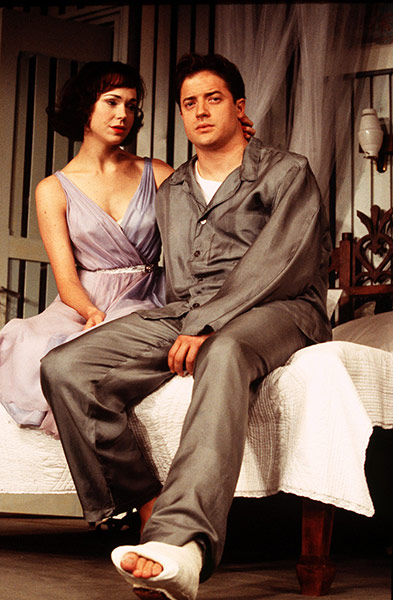
For the last few weeks I’ve been following a really interesting debate that has been getting the theatre world chatting right across the globe. The Royal Shakespeare Company in the UK are about to stage a production of the the Chinese play The Orphan of Zhao.  The play, from the 13th century, is often referred to as the ‘Chinese Hamlet’, and the RSC production is a new translation by James Fenton.

Fenton writes here giving a wonderful background to the play.

However, controversy has arisen because out of 17 actors cast in the piece, only 3 are  of  South East Asian origin and they play two puppeteers and and a maid. The debate and back lash has been harsh and forced the RSC on the offensive about their casting policies.

The media across the world has got involved, from The Huffington Post to the LA Times to the UK Guardian.

What I find even more interesting is that the ‘blogoshere’ has joined the debate in a very vociferous and intelligent way and I wanted to share some of that too: Madam Miaow, Dangerology and Theatrical Geographies all write passionately about the debate.  The latter blog is particularly interesting and worth a read. Even Twitter and  Facebook are not immune to the uproar.

I’ll let you read through and make your own mind up, but I have to say it is the first time I have come across the term yellowing-up and it is disturbing.

Finally, I want to include an interview with the director of the show that was made before the storm hit.


Việt nhà hát

As my mind turns to flying to Vietnam tomorrow, with 50 students, on a CAS trip,  I started to think about performance in that beautiful country. Many months ago I wrote about the traditional Water Puppet theatre for which Vietnam is very famous.  I don’t imagine there is a visitor who has ever been to Hanoi who has not been to the Thang Long Water Puppet Theate to see a performance – I will be there again tomorrow night.

However, there is another theatre form that is very popular in Vietnam and that is Cai Luong, which roughly translated means renovated or reformed theatre. The Water Puppet theatre has its roots firmly in Vietnamese rice farming culture, but Cai Luong is an interesting mixture of East and West theatrical traditions, having being heavily influenced by the French during their rule in Vietnam. Essentially, Cai Luong is the convergence of southern Vietnamese folk songs, classical music, tuong (a Chinese-based classical theatre form) and modern spoken drama, all coming together to create folk opera.

There is a great little website, called, not suprisingly, Vietnam Opera, that has much more background and you can access that by clicking the image below:

Also on this site are pages about two other, more traditional, Vietnamese Opera forms, Tuong and Cheo that are more ‘Classical’ in their nature (and more serious in their themes and content). Cai Luong has a reputation for being lighter and more comic. Perhaps what is most astonishing of all is that unlike many traditional theatre forms across Asia, Cai Luong is thriving, growing in popularity and although some of this growth is driven by tourism, it has huge appeal to the Vietnamese too. There are even some instances of the traditional dress and costume being swapped for more contemporary clothing.

I leave you with a video of a full length performance of Cai Luong titled The Life of Buddah


Crowd Sourcing Theatre

A national newspaper in the UK has just launched a project that really interests me – the idea of a crowd-sourced theatre project.  The Guardian is working with a regional theatre, The West Yorkshire Playhouse, on a production of Tennessee Williams’ Cat on a Hot Tin Roof. During the production they are running a series of articles that take you through the production process as well as exploring in more depth other aspects of staging the play. But more than this they asking their readers to review the show and share their reviews, as well as offering advice from professional theatre critics about how to write a good review.

The link that will take you to the ‘series’ page is here.

.

.

.

.

.

.

.

.

.

.

.

.

..

.

I have already posted the article written by Michael Billington about the history of the play itself, but if you click on the image below you can re-read it:

.

.

.

.

.

.

.

There is a collection of images from various productions of the play from 1958 onwards which you can view by clicking here and advice from Lynne Garnder, professional critic, about review writing here

You can even watch trumpet player Simon Beddoe and pianist Matthew Bourne talk about the challenge of providing ‘reactive and emotive’ improvised accompaniment to the play, working with the cast and the director to create a soundscape that reflects and comments on the world of the play by clicking here.

However, my favorite so far is an article by Alfred Hickling, which follow the fit-up week when the set is built and technical rehearsals take place. It’s that interesting I’m not going to link to it, but reproduce it in full.

Behind the scenes: Cat on a Hot Tin Roof at West Yorkshire Playhouse

A society drowning in bourbon-coloured water, an opulent mansion and improvised jazz are not the easiest of illusions to create on stage, as Alfred Hickling discovers as part of our unique crowd-sourced theatre project

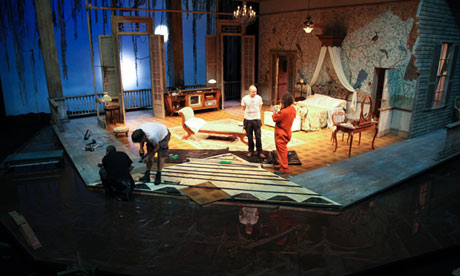
It’s the first day of the fit-up at the West Yorkshire Playhouse – the week in which the set is installed and technical rehearsals begin – and already production manager Eddie de Pledge has a sinking feeling. Not that there’s anything wrong (the build is progressing on schedule), but the design for Cat on a Hot Tin Roof requires approximately a third of the stage to be submerged in brown, bourbon-coloured water.

Before anything else can happen, several layers of industrial-grade pond-liner have to be deployed. “If a designer wants water as a scenic element, you have to add at least an extra day to the schedule,” De Pledge says. “Even 10 centimetres of liquid creates over three tonnes of additional weight. Then there’s issues of humidity in the atmosphere, especially where electrics are involved. And the water has to be changed regularly to prevent it becoming stagnant.”

De Pledge will be doing his utmost to avoid any aquatic disasters on the scale of the National theatre’s production of Alan Ayckbourn’s boating comedy Way Upstream, which notoriously flooded the Lyttelton auditorium in 1982. But there are valid artistic reasons for turning the Playhouse into a temporary swimming pool. Designer Francis O’Connor explains: “The Quarry theatre is one of the largest stages in the country – it demands that you make an epic, visual statement. At the same time, Tennessee Williams’ play is remarkably intimate – there are lots of sequences which are basically two people talking in a bedroom.” O’Connor’s solution has been to increase the rake of the stage, so that the the room itself plunges into a tide of muddy, brown water. “The play deals with death, alcoholism and a family in crisis,” O’Connor says. “The idea was to suggest a society sliding into the drink.”

Recreating the opulence of an antebellum mansion is an expensive business. There’s a budget of more than £1000 for balustrades alone (all the show’s carpentry is done in-house) and a parquet floor to be laid – albeit from painted MDF rather than solid wood. Even the chinoiserie of the decorative scheme is the outcome of a careful search to find period-correct silk wallpaper: “Though not in Mississippi,” O’Connor says. “Sadly, the research budget doesn’t stretch that far. But we found something very close at Nostell Priory, near Wakefield.”

.

.

.

.

.

.

.

The director, Sarah Esdaile, did visit the Mississippi Delta, however, while on honeymoon four years ago. The trip fired her ambition to direct what many consider to be Williams’s finest work. “What this play gives you is that otherworldly sense of southern Mississippi,” she says. “It’s like no place on Earth; the flatness, the humidity, the weird alien moss hanging in the swamps. And then there’s the music of course.”

Williams’s fictitious plantation is in the region of Clarksville, often referred to as the birthplace of the blues (Elia Kazan’s original Broadway production featured an appearance by the great country-blues duo Sonny Terry and Brownie McGhee. Esdaile’s production shifts the action slightly further south, to the swampland surrounding New Orleans, and takes inspiration from the sounds of that region. “We originally discussed commissioning a jazz-based score,” she says, “but then we realised that a jazz composition may be a contradiction in terms.”

Instead, the music in the production is the result of an unusual experiment in which a group of musicians from Leeds Improvised Music Association (LIMA) were invited to interact directly with the cast. As the actors rehearsed, the musicians improvised, and the results of these sessions have been edited into a montage by sound designer Mic Pool. “In an ideal world, we’d have live musicians improvising every night,” Esdaile explains. “Unfortunately we couldn’t afford that. But what we do have is a bespoke score that developed as the result of an improvised dialogue between actors and musicians.”

.

.

.

.

.

.

.

Esdaile has just one further day in the rehearsal room before a gruelling week of 13-hour days begins. “It’s the most exciting and the most nerve-racking part of the process,” she says. “You have four weeks to create a theatrical illusion in the rehearsal room; and then four days to recreate it all again with lights, sound and costumes. It’s the point where you most often find yourself switching into problem-solving mode, and it can sometimes seem as if the poor play is being ignored.”

The main contribution to a successful tech is anticipating problems in advance – nowhere more so than in the wardrobe department, for which a classic costume drama such as Cat on a Hot Tin Roof is a major operation. Deputy head of wardrobe, Victoria Marzetti, explains: “You read the script and note that it is set in 1950s Mississippi. That means lots of white linen. And lots of linen means lots of laundry.”

Her job is made more challenging by the fact that some of the actors will be required to wade ankle-deep through filthy brown water. This won’t present such a problem for cotton and light fabrics, but some of the more elaborate women’s costumes are dry-clean only. It’s not practical for theatres to work with cleaning chemicals, but Marzetti reveals that there is a secret, temporary fix for emergencies: “Vodka. A quick squirt with neat alcohol works wonders because it kills the bacteria.”

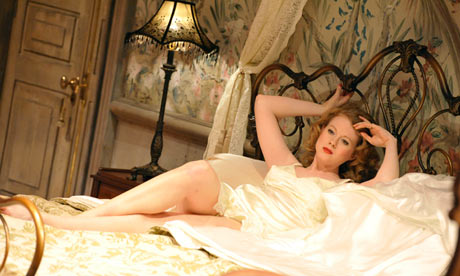
Marzetti pulls out the wardrobe department’s proudest creation for this show – the outfit worn by the matriarch Big Mama, whom Williams describes as being like “a Japanese wrestler wearing at least half a million in flashy gems”. Big Mama’s bling was made possible by the fortunate find of several metres of emerald, beaded fabric at a knock-down price. But an even greater bargain is the padded underwear – a Debenhams leotard stuffed with birdseed – to plump the actor, Amanda Boxer, to an appropriate size. “It will be very hot and very heavy” Marzetti says, “but Amanda wanted to feel the incapacitating effects of genuine weight.”

Movement director Etta Murfitt has been teaching Boxer how a much larger person gets in and out of a chair; and has spent time developing a suitably feline stance for Zoe Boyle, who plays Maggie the Cat. But there is little point in the actors looking right if they don’t sound right; and perhaps the most indispensable role has been that of voice specialist, Kara Tsiaperas, who has coached the cast in the nuances of deep south dialect.

“Williams was very specific about melodic speech patterns he wanted to hear,” Tsiaperas says. “There’s a stage direction which states that Maggie’s voice must have ‘range and music’.” Tsiaperas, a New Yorker herself, says there is nothing worse than actors falling into “generalised, American drawl. It’s a myth that everyone in the south talks slowly – it’s just that the stress falls on different vowels. But the hardest thing of all is not to sound condescending. Whenever I’m required to coach southern American accents I’m reminded of a line from the film Sweet Home Alabama: “Just because I talk slow doesn’t mean I’m stupid.”

Stonewalled

.

.

.

.

.

.

.

This is an image taken on 16th September of British theatre producer, David Cecil. He was appearing in court in Kampala, Uganda, after having been arrested.  What had Cecil done? Well, he dared to stage a play about homosexuality in a country that is currently debating a law that could possibly make being openly gay, punishable by death.  Currently you can be imprisoned for life in Uganda for being gay.  Cecil was, in fact, released on bail, pending another court appearance in mid-October that could see him put behind bars for 2 years.

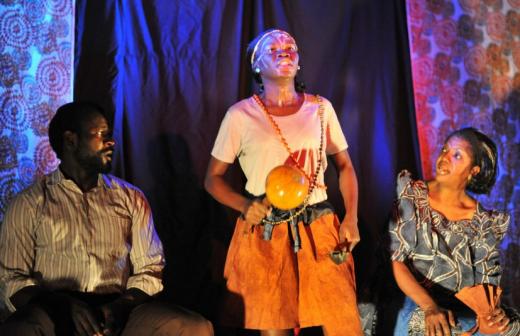
His actual crime was to stage the play, The River and The Mountain, by playwright Beau Hopkins, without gaining authorisation from the Ugandan’s Media Council. The National Theatre of Uganda refused to stage play because some government officials objected to it. The play tells the story of a corporate businessman coming to terms with his sexual identity in a climate of oppressive homophobia.  The protagonist, Samson, is a good man and a gay one. When his mother learns of his homosexuality, she tries to cure it by hiring a pastor, a private dancer and finally a witch doctor. The play ends with his murder at the hands of his co-workers.

.

.

.

.

.

.

.

.

If click the image above, which is taken from the play, you can read an interview with Okuyo Joel Atiku Prynce who played the lead role of Samson in The River and the Mountain.

Theatre has played a significant role in the last 50 years in bringing about the legalisation of homosexuality right across the world. Only yesterday in The Observer, British theatre critic Michael Billington wrote a lengthy piece about Tennessee Williams’ Cat on a Hot Tin Roof entitled Tennessee Williams’s southern discomfort. For those of you who don’t know the play, it deals in part with the suppressed homosexuality of one of the lead characters, Brick.

I have nothing but the utmost respect for people like David Cecil and the cast of The River and The Mountain who dare to challenge what they belive to be morally unacceptable. Only last year a gay rights activist in Uganda, David Kato, was brutally murdered after a tabloid news paper printed details about his private life.

Theatre has a long history of inciting fear in governments and other powerful people, that results in banning – look back as far as Molière and even farther. Molière, a French actor and playwright, wrote Tartuffe in 1664 and that was banned after being performed at Versailles for attacking and exposing the hypocrisy and deceit of the upper classes. People were afraid it would affect change, and wham, it was gone. And as you look through the history of theatre, you begin to realize that a playwright wasn’t tackling enough daring subject matter if they hadn’t been banned in some theatre somewhere. Theatre-goers have historically been a riotous bunch, so you can see where the fear would come from.

A modern audience member really recognizes the power of work on the stage to change the course of politics and daily life off the stage. Playwrights like Bertolt Brecht based their entire body of work off that power. Plays like The Laramie Project (about the murder of Matthew Shephard, a show that brought the discussion of hate crimes and trials to a nation)  were written to directly engage with politics and to change the mindset of the culture around them, to explore territory that had not yet been explored.

The story of David Cecil and The River and The Mountain is not over yet.

Resourcing Asia

The writing of this blog has taken me on a compelling and fascinating journey into the outer reaches of the internet. I am always amazed at what people are prepared to share and take the time to develop and post.

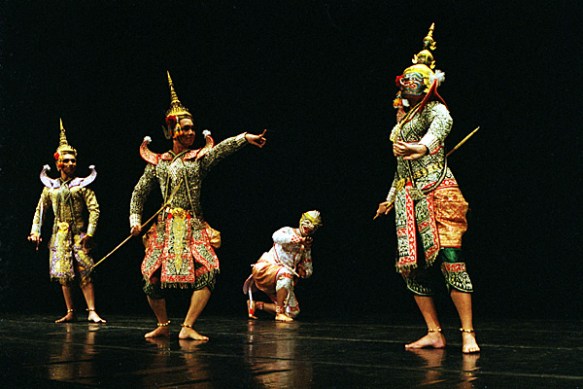
However, yesterday I struck gold for everyone who has interest in, or needs to have a working knowledge of, Asian performance traditions. It is a vastly illustrated web-based text book, an introduction to Asian theatre and dance traditions and so far covers India, Sri Lanka, Myanmar, Thailand, Laos, Cambodia, Vietnam, Malaysia, Indonesia, China, Korea, and Japan. Click the image below to enter this exceptional web-site.

A couple of quotes that stood out for me:

The interrelatedness of drama, dance and music

In Asia drama, dance and music are inseparable. In the European performing arts, on the other hand, they developed their own ways. Thus in the West we talk about text-dominated “spoken theatre”, music-dominated “opera”, and dance-dominated “ballet”.

Most of the traditional forms of Asian performing art combine drama, dance and music into a kind of whole in which it is difficult to draw a clear borderline between these art forms. Most of the Asian traditions employ either dance or dance-like, stylised movements, while movements are frequently interwoven with text. In addition to this, most of the traditions are characterised by their own specific musical styles or genres. The acting technique, which employs dance-like body language, is usually very intricate and it demands many years of arduous training, as western ballet technique, for example, does. Therefore in Asia it is simply not possible to classify stage arts as nonverbal “dance” or “spoken theatre”.

The Interaction between “Living Theatre” and Puppet Theatre

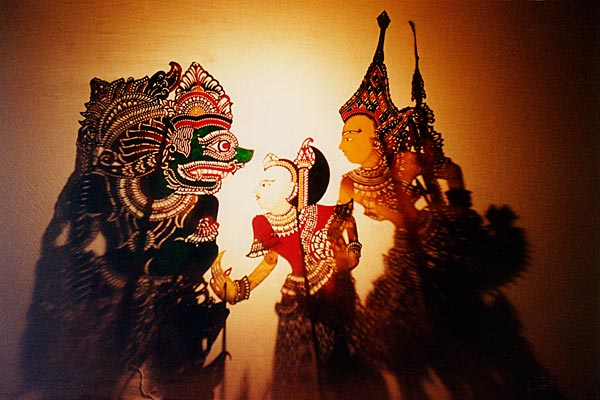
In Asia, puppet theatre and one of its variations, shadow theatre, are often regarded as valued “classical” traditions, whereas in the western tradition puppet theatre is, with only a few exceptions, regarded merely as children’s entertainment.

In Asia there are dozens of important forms of puppet theatre. One could generalise that shadow theatre usually represents the early strata of puppetry with a long history and religious or magical connotations. In shadow theatre the silhouette-like figures are often cut from leather or other transparent or semi-transparent materials and they are seen through a cloth screen while manipulated by one or more puppeteers.

The interaction of puppet theatre and “living theatre” is one of the characteristics of Asian theatrical traditions. There will be several clear examples in this book of how puppet theatre has influenced the structure, acting technique and other conventions of “living theatre” and vice versa.

The main person to thank for this incredible resource, who is the editor and main writer, is Dr. Jukka O. Miettinen, a lecturer at the Theatre Academy and Helsinki University in Finland and Mahidol University in Bangkok, Thailand.

It’s a Mystery

As any good student of performance should know,  the history of theatre in almost all world cultures can trace its roots to religious ritual and celebration, be it the Ramayana in India, the Greek gods in Europe or shamanistic rites in ancient China.

However in the West, the performance traditions of the Greek and Roman Empires were lost during the ‘Dark Ages’ leaving the continent with a gaping cultural hole. I’ve always been fascinated by what evolved next, The Mystery Plays, and the impact that they had on the theatrical heritage of almost a whole continent. If you don’t know about the Mysteries you can read a simple history here or a more in-depth one here.

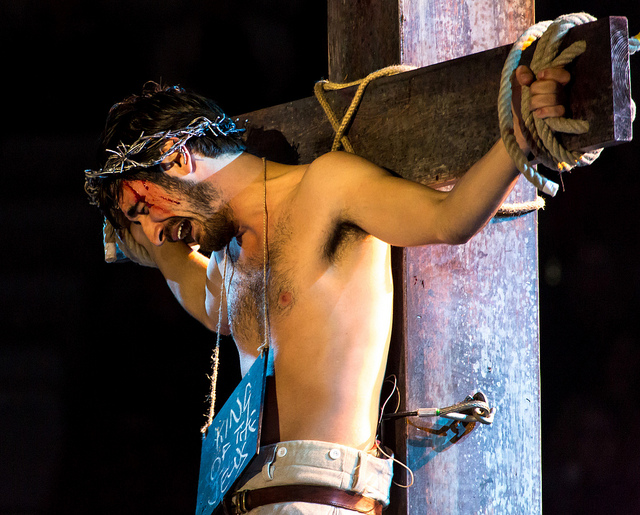
What makes all this worthy of a post here, for me, is that they are still being performed 700 years later. One of the most famous performances takes place every year in the English city of York and this year’s re-interpretation has received some great reviews – have a look at this video, you will see why.

If you want to see more you can here which allows you see the performance from different viewing angles and cameras.

Even more fascinating is that the huge casts for these plays (with the exception of the lead roles) are largely drawn from local people, not professional actors, so it has remained what it began as – community theatre.

You can find Mystery or Passion Plays being performed all over Europe, but perhaps the most famous is in Oberammergau in Bavaria, Germany, where half the village take part – almost 3000 people.  They perform their Passion Play every 10 years and have done so since 1634. All the roles in Oberammergau are taken by locals. Have a look at this short documentary (apologies for the voice-over):


You don’t need to be a religious person (I’m not) to enjoy the spectacle of the modern Mystery Plays but you can appreciate a great story well told and a fantastic piece of theatre.

Burning down the House

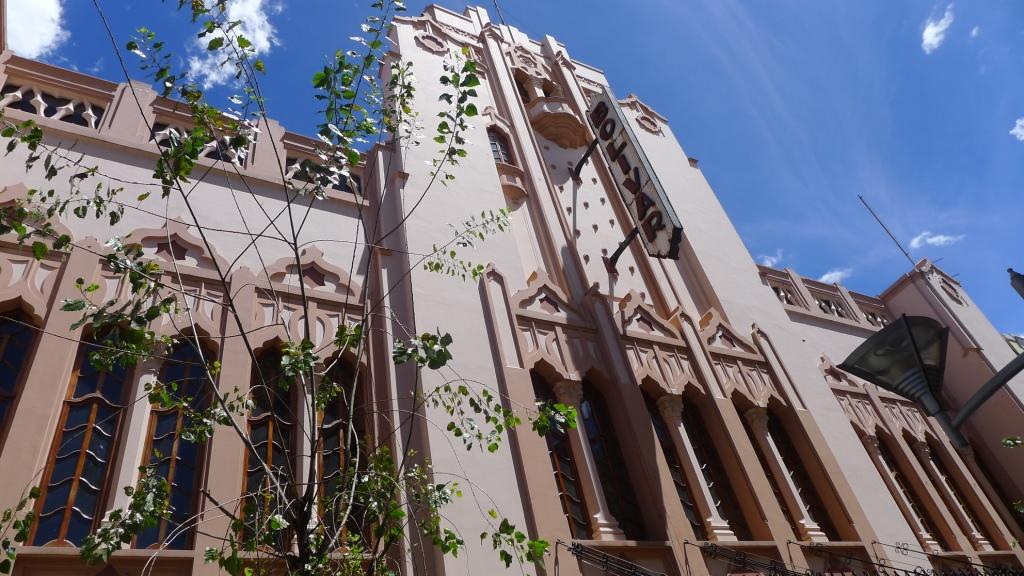
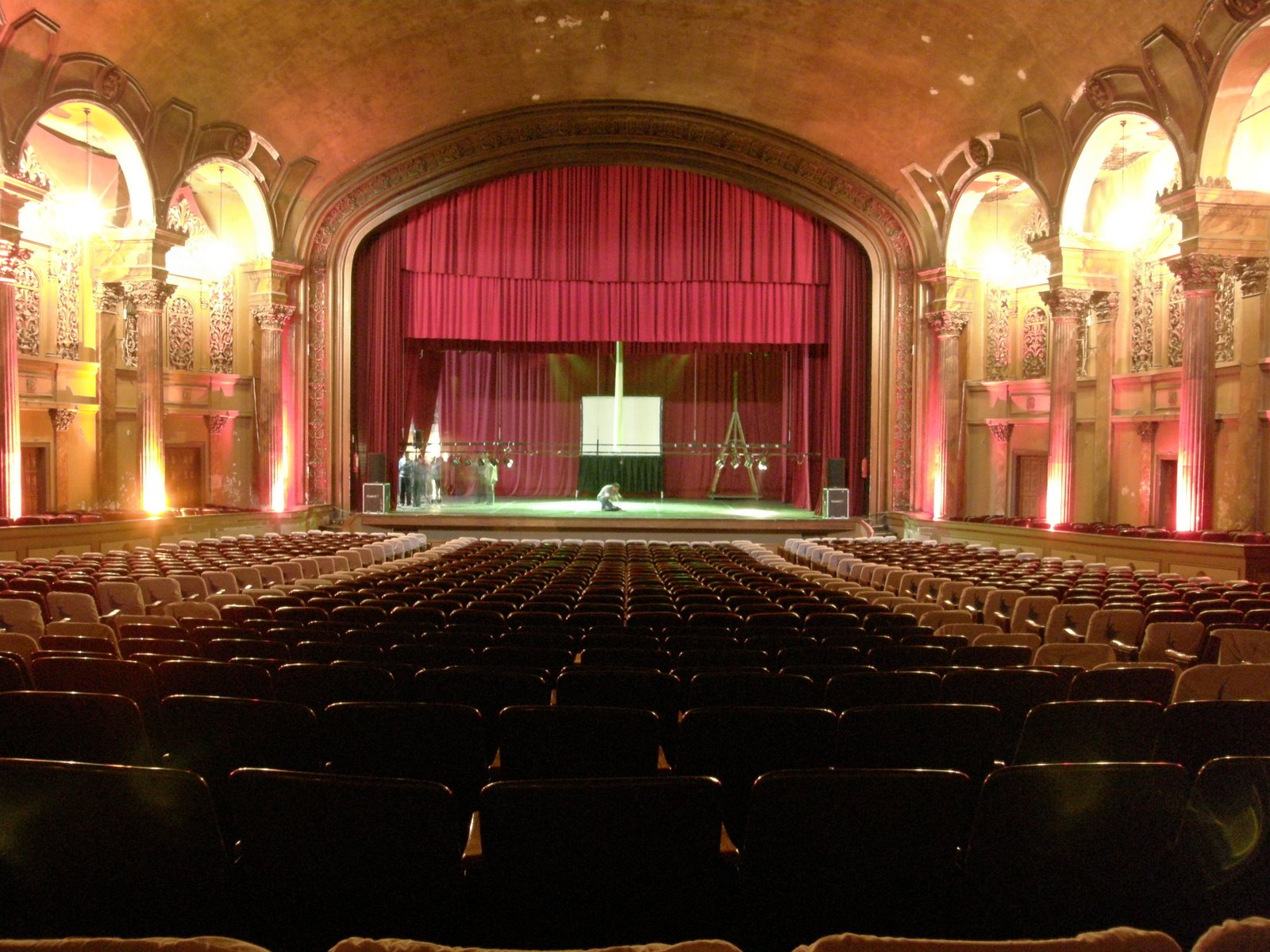
This is the beautiful deco Bolivar Theatre, in Quito, Ecuador, which opened in 1933 with an audience capacity of 2,400.  Whenever I travel I try to visit these grand architectural icons as they often say much about a country’s society and culture, and I was stuck by the grandeur of this one.

Sadly, this is what it looks like on the inside now.  In 1997, after a few years as a cinema, a lengthy restoration process took place, which succeeded in recapturing lost audiences. In 1998 the theatre dedicated itself to promoting culture in Quito, becoming The Theater of the City. 70 events, both national and international, were presented in 1998 and the first half of 1999, bringing more than 70,000 visitors. The future was bright. However, on Sunday, August 8, 1999, a gas leak caused a fire to erupt in the kitchen of the multinational chain Pizza Hut, which was occupying a business area on the ground floor of the theatre. The fire consumed over 70% of the building.

And why am writing about it? Well, as I travelled around Ecuador I was delighted by the lack of international franchises – not a Starbucks to be had, or the greasy stink of a MacDonalds to be sniffed.  The Ecuadorian government clearly has a very tight rein on allowing these companies in.

However, there was a notice on the door of the Teatro Bolivar (to give it is proper title) that explained what had happened, but also went on to say that Pizza Hut refused both to accept responsibility for the fire or help fund or take part in any of the restoration. So much for corporate social responsibility!

The day following the fire, the Theater and Hotel Enterprise of Quito planned the Process of Restoration for the Bolivar Theater that would include a number of principal actions, including initiating legal and public actions to put pressure on Pizza Hut to recognize their responsibility for the fire and to continue to produce cultural events in the Bolivar in the process of rising out of the ashes. The restoration process is clearly a slow one, but the members of the Bolivar Theater Foundation and the Bolivar’s audiences are determined to return their beloved theatre to its original prominence, as one of the most important cultural venues in South America .

The places in which we make theatre can be as important as the performances themselves and represent the significance of creativity in and to a culture. So when one is destroyed by an international corporate giant that then refuses to accept its role in that destruction, it makes me especially angry.

So next time you pick up the phone to order your pizza, please think again and choose a company other than Pizza Hut.

On Cloud Nine

I first encountered Caryl Churchill when I was doing my A Levels, many moons ago. It was her play, Cloud 9, that captured me and her writing has held me enthralled ever since.
It was the structure of the play, not just the content, that caught my attention, although it would be fair to say that the politics it spoke about shouted at me loudly. Act 1 is set in British colonial Africa in Victorian times, and Act 2 is set in a London park in 1979. However, between the acts only twenty-five years pass for the characters. Each actor plays one role in Act 1 and a different role in Act 2 – the characters who appear in both acts are played by different actors in the first and second. Act 1 parodies the conventional comedy genre and satirizes Victorian society and colonialism. Act 2 shows what could happen when the restrictions of both the genre of comedy and Victorian ideology are loosened in the more permissive 1970s. The play uses controversial portrayals of sexuality and obscene language and establishes a parallel between colonial and sexual oppression – and it made laugh!
Also it was developed inconjunction with Joint Stock Theatre Company who were taking the British theatre world by storm at the time with a new way of working, developing plays with well-known playwrights, in the rehearsal room.  The company is no more, but has given birth to Out of Joint, which was founded by Max Stafford-Clark, one of the original members of Joint Stock.
.
.
.
.
.
.
.
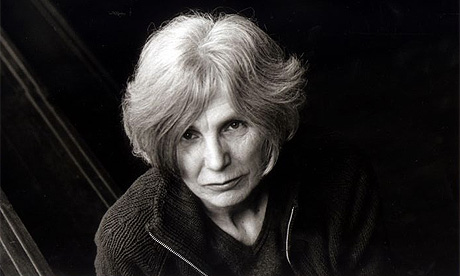
And why am I reminiscing about the play today?  Well, Churchill (pictured above) is about to open two new plays at London’s Royal Court Theatre.  Her writing career has spanned more than 50 years and her influence on Western theatre has been significant, and for me, satisfyingly controversial. You can read about her work and the two new plays in a fantastic article, Caryl Churchill: changing the language of theatre.
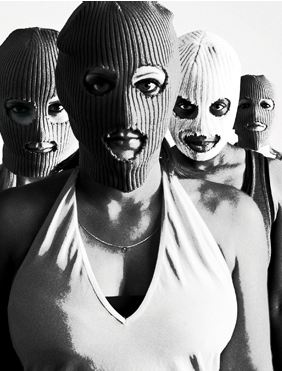
Therefore it also seems fitting that I should return to a post I made in June, “there aren’t bloody well enough parts for women” which bemoaned the lack of roles for women in theatre. Well, Churchill has gone a long way to address this in her career and it caught my notice that an all female version of Shakespeare’s Julius Caesar as about to open at the Donmar Warehouse in London. One writer commented that “The Donmar’s gender switch of Shakespeare’s play could turn a dusty GCSE set text into something much more Pussy Riot”.
 
An interesting thought!
 

Hands Up!

A little added extra for today.  My mother sent me this link and it is quite astonishing.

.

The art form originated in ancient China and has now taken on a new lease of life thanks to modern imaging technology that allows multi-layering of images. The Indian artists behind this work are Amar Sen and Sabyasachi Sen. You can check them out through this link.

A Moment In Time

I was doing a bit of digging and came across these yesterday.  The New York Times has been publishing an occasional series of their original reviews of classic western plays. I am posting three here today. A real piece of theatre history. The links are for readable PDF versions of the images.

Firstly, Harold Pinter’s The Caretaker from 1961

Secondly, Tennessee Williams’ A Streetcar Named Desire from 1947

And finally, from 1905, George Bernard Shaw’s Man and Superman