“there aren’t bloody well enough parts for women”

In Hong Kong, school is most definitely out for Summer.  So me, my students, my colleagues and this blog will be taking a holiday and, even if I do say it myself, a well-earned and necessary break. Those of you in the Northern hemisphere, enjoy, and for those of you below the equator – you will get your turn!

For my last post for a while, I want share an article with you about the opportunities for women in theatre.  This week, the actors’ union Equity in the UK spoke out, highlighting the need for better employment opportunities for women. It was an act sparked by a well-known and respected theatre’s current season, which includes productions of Henry V and A Winter’s Tale from the all-male company Propeller – a choice of casting that, of course, reflects Shakespeare having written for a company of boys and men.

Propeller are a stunning company who create amazing and compelling work.  I know, I’ve seen them twice in HK and their interpretation of Taming of the Shrew (above) was possibly the best I’ve seen (for another time!). They are often cited in this debate, but I have to say, for me, they are a scapegoat. The situation goes much deeper (and back in time). For a world that is generally thought to be populated by liberal thinking people, I still find this very disheartening. Have a read……….

There aren’t bloody well enough parts for women

And when you have,  have a good think about where, across the globe, is indigenous theatre dominated by men?

Thank you.

See you in August.

Pinteresting

As a teacher artist, people always ask you questions like who is your favourite actor?, what’s your favourite play?, what’s the best thing you’ve ever seen? and so on and to be honest, I find it hard to answer most of those questions.  It’s not because I am fickle (well not much), it’s because tastes changes, my ideas develop and I’m always seeing new things.

.

.

.

.

.

.

.

However, there is one constant, and a question I can answer definitely – Harold Pinter. A master and prolific playwright. I love his work.  It is timeless, universal, accessible, funny, heartrending, and in later life, political, powerful and shocking. He was a Nobel Prize winner for good reason.

Today I offer you a wonderful two part documentary on his life and works, that was made just after his death in 2008. Download it and watch it at your leisure.

.

A Theatrical Thriller

My plan today was to blog a great article from Mark Lawson about stage directions, and how some playwrights ask the impossible. However, the article led me to read again about one of the biggest stories in the history of the British theatre. In 1980, a play by Howard Brenton, Romans in Britain, was staged at the National Theatre in London. The play comments upon imperialism, colonialism and the abuse of power and whilst it is set at the time of the Roman invasion of Great Britain 2000 years ago, it  was really a metaphor for British rule in Northern Ireland, which was at its deadliest in the 1970s and ’80s.

So what, you may ask? Well the issue was that the play included simulated male rape as well as some nudity and quite graphic violence and soon there was a moral crusade, led by a figure called Mary Whitehouse. The culmination of this was the director of the play, Michael Bogdanov, being tried in court for having “procured an act of gross indecency………on the stage of the [National] Theatre contrary to the Sexual Offences Act of 1956”.

The outcome of the case changed legal and theatrical history and was indeed a drama in itself. This first link .Passion Play is the full story and it is fascinating.

This article, Dangerous Minds, explores the whole case further.

And finally this is an interview with the playwright, Howard Brenton, 25 years later.

To top it all off nicely is a BBC video interview with Michael Bogdanov from earlier this year, the 30th anniversary of his court appearance.

Still Talking

Earlier in June I blogged about Can We Talk About This?, DV8’s latest work looking at Multiculturalism, Islam and freedom of speech. What I hadn’t picked up on at the time were the debates that were going on surrounding the piece and that, in some quarters, it was being vilified as naive and lacking balance.

.

.

.

.

.

.

.

I suppose the question for me is does it need balance? Merely by provoking the furore it has, doesn’t that mean it has done what Lloyd Newson, it’s creator, set out to do – start a debate? Can a piece of polemic be classed as political theatre? Brecht would, of course, have said no – it should have balance and represent both sides of the argument. On the other hand, perhaps saying publically, albeit through dance theatre, what others are scared to talk about is the correct thing to do.

Linked here are a series of three articles from Exeunt Magazine.  Have a read, I’d like to know what you think:

Talking About This

We Didn’t Talk About This

Talking More About This

.

.

.

.

.

.

.

And finally an interview with Newson entitled Dancing Around Islam

.

Dennis Kelly: “The Quest for Truth” 3

The political theatre debate continues. In an article in The Economist, Natalia Koliada is reported as saying

I am always against separating, saying there should be political theatre or social theatre or female theatre, or aboriginal theatre—it is about theatre. It is about going deep into one life, like a total immersion in personality, in a different circumstance.

Click the image above for the full article. What do you think?

Also in The Economist recently is Mohammed Al Attar,  an acclaimed young Syrian playwright who, given the appalling situation in his country, is talking about play-writing as a tool of protest:

I think theatre is political by default. But I do not directly write statements or propaganda

Again click the image above for a very different take on what is ‘political’ in theatre.

Specific Reflections

I have been keeping this blog for a month and over the weekend, I looked back at what I’ve posted about……and it made me realise a couple of very significant things.

Firstly, just how much I have learned about world theatre, and more particularly Asian theatre, since I started teaching IB Theatre Arts 6 years ago. What an amazing journey! Mostly, my performance education was largely in the western canon and generally about dead, white male theatre practitioners, so now to have knowledge and understanding about so much more is empowering.

Secondly, there are some trends emerging which reflect my own personal interests in a very obvious way – political (sorry Dennis!), site specific and dance theatre, as well as technology in multimedia performance. I knew it, but it is interesting to see it laid bare in front of me.

Site specific theatre is my current passion, fuelled by work with Dr Sally Mackey, from the Central School of Speech and Drama, and Lynne Bradley from Brisbane-based physical theatre company, Zen Zen Zo. This brings me to the this:

Everyday Moments 12: audio drama for private performance

This is a series of podcasts that have been created by different artists to be listened to in specific places, at specific times. Glorious sound scapes and, in my book, very site specific.

Enjoy, when you have 10 minutes

Dennis Kelly: “The Quest for Truth” 2

One thing that Dennis Kelly doesn’t appear to consider is that sometimes the very act of making theatre is judged to be political. In May I wrote about Belarus Free Theatre and it’s co-founder, Natalia Kaliada. Yesterday my friend Paula, blogged the latest from them:

Imprisioned, tortured, threatened, exiled for making theatre

When I interviewed you last year, you’d been forced to leave Belarus and were living with your husband [the playwright Nikolai Khalezin] and your daughter in exile in Britain. Your friends were in prison, some had been tortured, your family had been threatened. Has anything improved?

An extract from an interview with Natalia Kaliad

‘In Belarus it’s very simple – everything’s repressed’

Natalia Kaliada talks more here about the company’s new play and the escalating brutality in her homeland

A very different kind of political theatre to that of DV8. One that exists because of political oppression and is oppressed as a result.  Brave artists who keep creating theatre in the hope that it will bring about change or at the very least, let a wider world understand what needs to be changed – another quest for truth – but this time a more bloody and deadly one.

Dennis Kelly: “The Quest for Truth” 1

If you read Dennis Kelly’s speech that I posted yesterday, then this is by way of a response. Essentially I believe he right.The following extract says so much about the theatre we make and how we make it:

We don’t make our minds up using facts or arguments, we use facts and arguments to support what we have already decided is true.We bend and squeeze reality into a shape that supports what we feel. It is our feelings that rule us, not our minds. And this is where theatre has its impact. Theatre lies in emotion; it is an emotional medium, not really an intellectual one. But how does a playwright reconcile the quest for truth with an understanding that facts and arguments are essentially untrustworthy and that debate is something lawyers use to send people to jail regardless of whether they guilty or innocent? Well, perhaps they don’t. Perhaps they just say fuck it, this is what I feel, and they’re just honest about that. Theatre is essentially, at it’s best, a lone voice standing up in a darkened room and saying ‘I think this’. They’re not necessarily saying this is what’s right, or you should think this or this is what we should do, they’re saying ‘I think this. Does anyone else think the same?’

He goes on to talk about how theatre should come from a ‘desire to change things, from a belief in the power of theatre that is bigger than writers, directors, artistic directors and dramaturges, that it belongs to all of us and is never to be taken for granted‘ and I applaud him loudly for it. He isn’t really saying that political theatre is useless, just that we need to frame in such a way that we accept that ‘theatre lies in emotion; it is an emotional medium, not really an intellectual one‘ and that ‘theatre is essentially, at it’s best, a lone voice standing up in a darkened room and saying ‘I think this…….does anyone else feel the same?”.

Let me give you an example of what I (and I think, Kelly) sees as theatre with a voice, theatre that challenges, theatre that reflects the truth and in itself is a ‘quest for truth’, the latest offering by DV8 and Lloyd Newson, Can We Talk About This? The piece is a verbatim theatre work investigating the interrelated issues of freedom of speech, multiculturalism and Islam as manifest in Western democracies. It has received astounding reviews:

Every so often, a performance comes along that not only reconfigures the limits of the form, but also redefines and rearticulates how we see the world… Without a doubt, it is one of the most important works of our age. Go!

Time Out Sydney
Click the image above to watch excerpts.

ABC Radio Interview with Lloyd Newson, founder of DV8
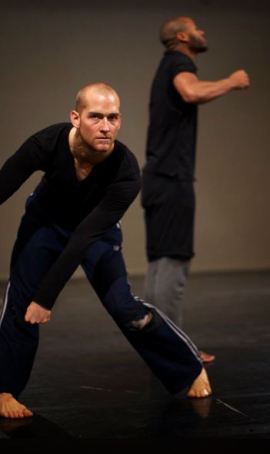
This is political theatre at it’s very best and most powerful. It is most definitely saying “I think this.….does anyone else feel the same?”. Can We Talk About This was in Hong Kong last year (and I missed it, unbelievably) but everyone I know who saw it, spoke about it in the most rapturous way. Even more so those who had never heard of DV8. It was clearly powerful and spoke with emotion to the audience. It comes as no surprise really. Newson insists in keeping his works at once informative and thought-provoking and this has been one of the defining traits of DV8. In fact, while he often displays a readiness to introduce a touch of hyperreality into his works, the eclectic stylist is nonetheless better known for his preference for content over ‘aesthetics and prettiness’. He clarifies:

I want to make theatre work because I don’t want to just make decorative dance pieces – they are like chocolate. They’re very nice at the time you eat it, but not very substantive in terms of [generating] brain power.

.

“Why political theatre is a complete waste of time”.

British playwright, Dennis Kelly, has recently sparked a fierce debate about the power of political theatre.  He gave the opening address at the Theatertreffen’s Stückemarkt in Berlin, Germany entitled Why political theatre is a complete fucking waste of time. Given that he is judged to be one of Europe’s leading political playwrights himself, you can see why Kelly’s words have caused a stir.

You can read the text of Kelly’s speech here Why political theatre is a complete fucking waste of time.

However, Matt Trueman, a theatre blogger questions Kelly’s view How polictical theatre changed it’s tune

The decision is yours. I know what I think……I’ll tell you later.

In The News

A few images from the news in the last week

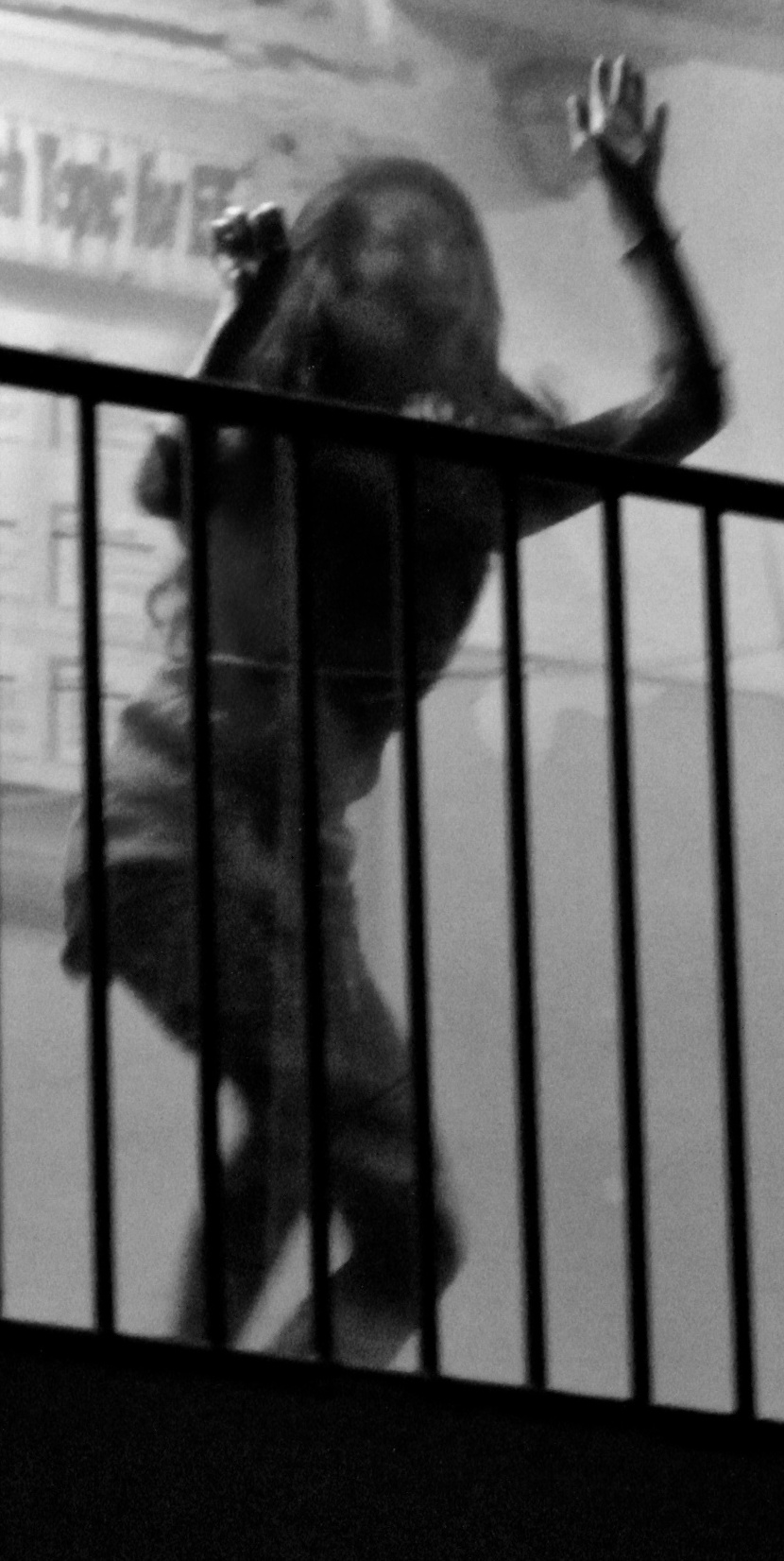
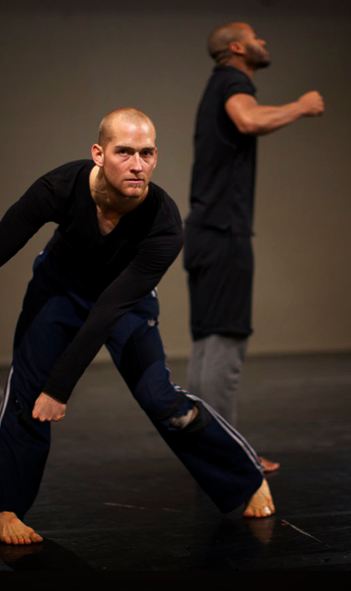
Goma, Democrati Republic of Congo The Busara Contemporary Dance Company rehearse a production about child soldiers.

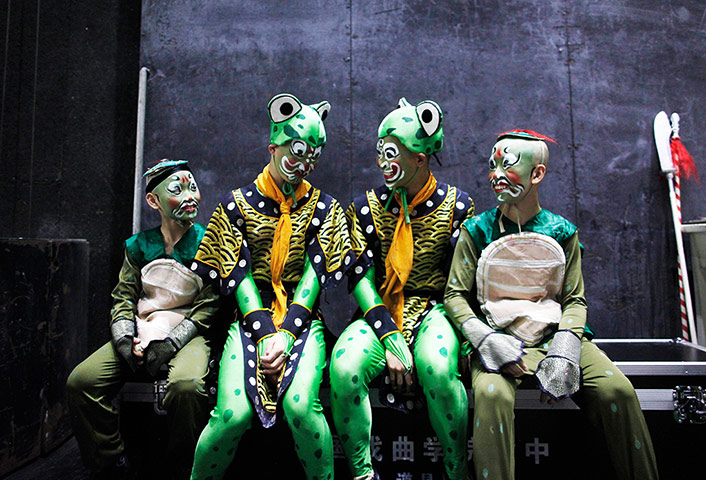
Beijing, China. Young students from the National Academy of Chinese Theatre Arts Middle School share a moment backstage before their Peking Opera performance, Nine-tailed Fox.

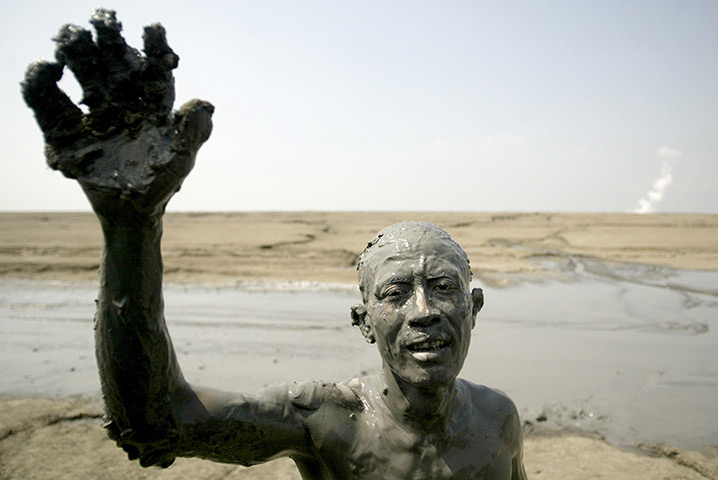
A victim of the Lapindo mud volcano takes part in a theatrical performance on a retaining dike in Sidoarjo, East Java.. Six years after it erupted from the well of a gas company linked to one of Indonesia’s richest men, the mud volcano known as “Lusi” is still spewing its toxic sludge over Java’s countryside. All attempts to plug the geyser have failed and new spouts are opening up, threatening to destroy more villages, homes and livelihoods in the East Java district of Sidoarjo.

And if you haven’t seen this yet – it’s been doing the rounds on social media – live your theatre journey by it

Art Should Comfort The Disturbed and Disturb The Comfortable

Ceser A Cruz