Unknown's avatar

About Theatre Room Asia

IB Theatre Arts teacher

Scene Changes

artworks-000059233832-ig6cjh-t200x200So my first share, from the mountains of material coming out of the National Theatre, is a series of podcasts called Scene Changes. These are for those theatre geeks and techies out there (including myself) and look at some of the developments and changes in theatre, both off and on stage, over the past 50 years.

The first one is about the building itself – the theatre – and how the architecture of theatre spaces has evolved and changed, embracing technology as it has been developed.  It is not something that we think about too often – sadly, new theatre buildings are rare – but this gives a great insight into the process:

.

The second looks at the role of the sound designer, how technology has advanced the industry, and how it adapts to other onstage developments:

.

There will be lots more of these to come and I will post them as they become available.

A National Debt

The idea of a national theatre, one that celebrates its country’s cultural and performance heritage is a known around the world. A quick look at this list confirms that fact. The Comédie-Française in Paris, which was founded in 1680, is thought to be the world’s first national theatre, but it is clear that a theatre supported by the state is considered by most countries to be an integral part of its cultural fabric.

This month, the National Theatre in the UK celebrates its 50th year and there are a whole host of events connected with the anniversary. om757468_429long I will be sharing many of them here as they will have a relevance and a resonance for any theatre student, no matter where you find yourself reading this. The National, as it is known, plays a huge role in defining the production of quality theatre in the UK, and although not alone in this by any means, it’s very prominent London base, on the river Thames, means it is known around the world. For me personally The National is at the very heart of my involvement with theatre. I remember my first visit at the age of 16 and being in awe of the brutalist building and what it represented. I may not have lived in the UK for many years, but whenever I visit London, I go. I can’t recall ever seeing a poor production and without a doubt some of the best theatre I have ever seen has been at The National. For 30 of its 50 years I have been a patron and I always will be.

MotherWhat fascinates me, however, is that the land that gave the world William Shakespeare didn’t have its own national theatre until 1963 and even then, it didn’t have a permanent home until 1976. You can read a short history here, from the BBC, The bumpy road to the National Theatre.

Alternatively you can listen to a radio programme from BBC Radio 4, The Road to the National Theatre, (this is the first of two parts) that explores the same journey. In it the journalist James Naughtie sets out to discover why founding it took so long and what was learned along the way. Click to play, below. Fascinating!

In the last decade, The National has forged an international reputation with shows such as The History Boys and even more successfully, War Horse, both of which have toured internationally.

You might think that a national theatre restricts itself to producing plays from its own country or written in the native language. However, a glance at the following list tells a different story, and one that places The National in a league of its own

Playwright’s plays have had the most productions at the National Theatre in the last 50 years

1. William Shakespeare,70 productions
2. Bertolt Brecht, 19 productions
3. Bernard Shaw, 16 productions
4. Anton Chekhov, 16 productions
5. David Hare, 15 new plays
6. Tom Stoppard, 13 productions
7. Harold Pinter, 12 productions
8. Arthur Miller, 10 productions
9. Eugene O’Neill 10 productions
10. Alan Bennett 7 new plays

For a theatre student, the next month or so promises lots of great resources that can be shared, and I will start that with my next post. However, to round this one off, two things that I found interesting were, firstly, the US does not have a state funded national theatre. Secondly, War Horse is about to open in Berlin, in translation – the first time for a play originating from The National. This is particularly noteworthy because it is the first time the first World War  has been discussed on a German stage. This article from The Telegraph, written by Dominic Cavendish, discusses the implications of this staging – War Horse in Berlin: behind the scenes – both for The National and German audiences.

wh_title

No Stone Unturned

kj1Keith Johnstone is widely regarded as the father of modern improvisation and has been practicing and teaching his techniques for over 50 years. I doubt there is a theatre department in the world that doesn’t own a copy of his first book, Impro: Improvisation and the Theatre. It was published in 1987 and has been reprinted, updated and translated many times, and is still in print. It is divided into four sections, ‘Status’, ‘Spontaneity’, ‘Narrative Skills’, and ‘Masks and Trance’ and is a fascinating exploration of the nature of spontaneous creativity. I would regard it as a must read for any theatre student.

Untitled

The reason for me writing about him today is that Johnstone has just given an interview to Geoff Coleman which is being serialised by Actors & Performers. There are three parts, two of which have been published so far: Part 1 and Part 2 and worth a read by anyone interested in his work. It should be pointed out that he is 80 years old and still hard at work, having given the interview during a lunch break at one of his workshops, which he continues to give around the world.

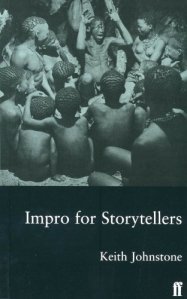
coverHis later book, Impro for Storytellers, is more specialized: a handbook for putting IMPRO (the first book) into practice, including detailed improvisation structures for performance and for rehearsal, and chapters on how to teach these games. It explores the way improvisation can be used as a way of generating narrative and using it to explore human relationships. Again well worth a read for a theatre student.

Who Does What & Where

Before I begin today, I would like to say that I have added 5 new sources to the Key Resources page of Reading Room – very diverse, both in terms of content and origin, and chock full of really useful information on virtually all aspects of performance.

Now to the meat of the post.  The Royal Shakespeare Company in the UK are in the process of staging Richard II and are keeping a video production diary. I am sharing them as a great insight into the professional production process. Obviously the context is the staging of a particular play, but the processes are universal in any large theatre.

In the first video, the director Gregory Doran explains how he’s approaching the play, ideas for the design and introduces his cast.

.

In this the second, Emma Hamilton who plays the Queen, describes the first day of rehearsals, including the welcome games they play to help break the ice and build rapport between the actors. She explains how the show’s Director Gregory Doran is beginning to help them explore their characters and also explains some of the historical truth behind Richard’s Queen.

.

In the third of the series, Historian Helen Castor visits Westminster Hall, one of the last surviving parts of the Palace of Westminster, with the cast and creatives of Richard II. She explains how Richard II transformed Westminster Hall, and talks about we can understand Richard the man, and Shakespeare’s vision of him.

.

In number four, the RSC head of Voice, Lyn Darnley, shows how she helps the actors in Richard II develop their posture, breathing and articulation, as well as bringing together the physical voice with the language and text of the play.

.

The fifth in the series we meet Professor Jim Shapiro who sits in on week five of rehearsals for Richard II. He talks about treason, censorship and seditious material in ‘a radioactive play’, which was both shocking and highly topical for audiences when it was written, and six years later sparked an uprising.

.

In video 6, the latest one released, Alistair McArthur, Head of Costume, shows the process of making costumes for Richard II. He leads a tour of the costume department, through painting and dyeing, on to footwear and armoury and finally into the hats and jewellery team.

.

There are 6 more of these videos to come. If you are interested in looking in more detail at the production you can by clicking the image below.

Untitled_Fotor

Living Nightmare

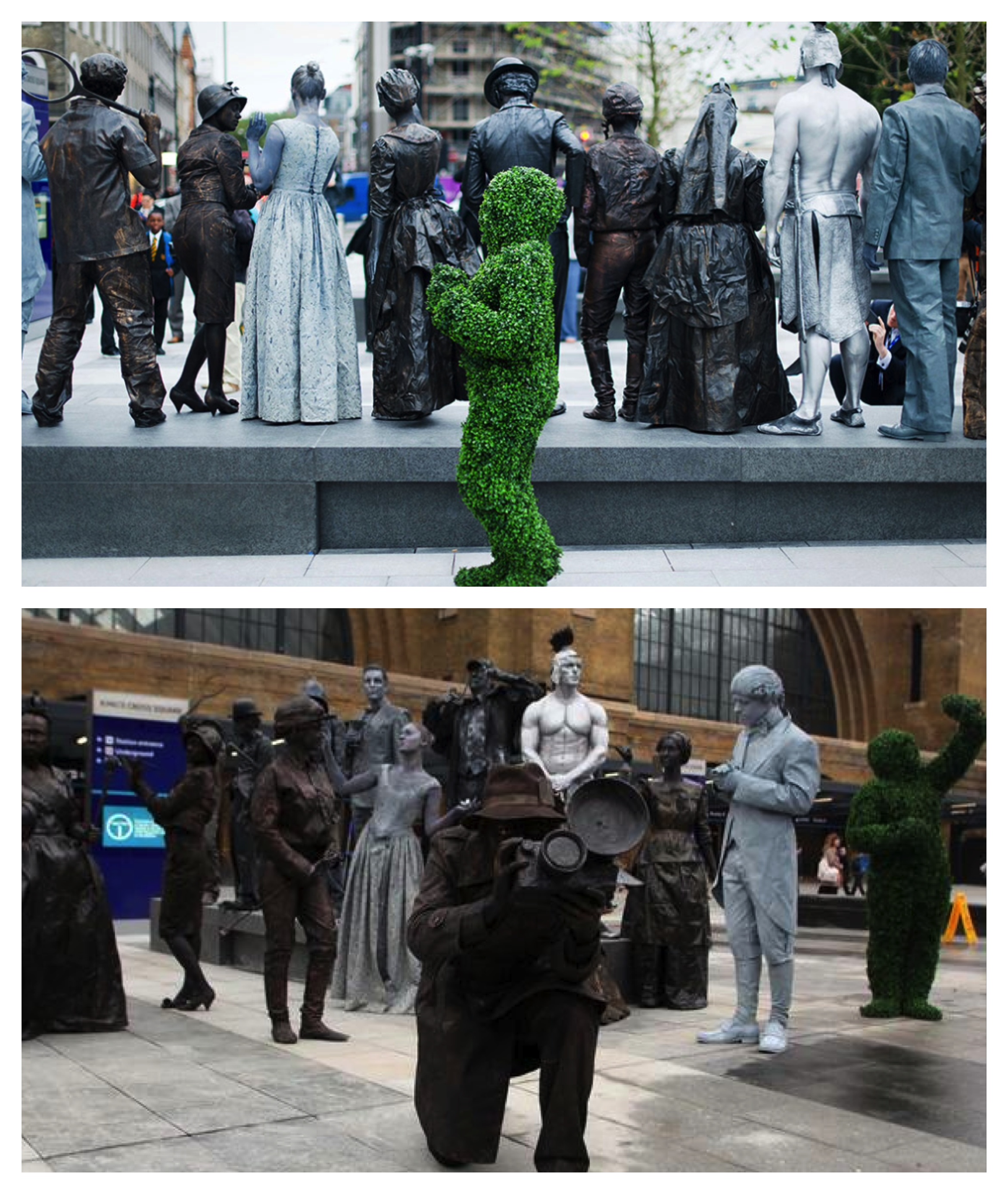
Horror of horrors, a few days ago the biggest gathering of ‘living statues’ (those people who paint themselves silver and standstill for hours in public places) took place in the UK. This was a PR stunt to celebrate the opening of a new public square in London. In modern cities, this should be celebrated. It’s a rare thing when we create open space in a thriving metropolis. Earlier this year, riots broke out in Turkey when the authorities threatened to redevelop Gezi Park in Istanbul. Gezi Park was one of the last open spaces in the Beyoğlu district of the city and people fought to stop a shopping mall being built on it.

Statues

My point I hear you ask? Well, Saatchi, the PR company behind the opening of the new Kings Cross Square (Kings Cross Station of Harry Potter fame) decided that this would be a good way of celebrating the ‘public art’ aspect of the new space. Really, really? Is that all they could think of? In a city that prides itself on the quality of its culture and artistic credentials, this is all they could do? You might have gathered I am no fan of these silver people who seem to inhabit cities across the globe. In fact I have voiced this here before in my post Hands Up and if I had been confronted by all these ‘statues’ on my daily commute to work I would have surely been arrested for physical abuse. They are a distraction, nothing more. There is no skill involved here!

However, I did raise a smile when I read this in The Atlantic, by Fergus O’Sullivan. A very French way of dealing with a problem. I applaud it!

Nighttime Revelers in Paris Get Shushed By a Bunch of Silent Clowns

Perhaps we’ve been getting this nighttime noise thing all wrong. Cities don’t need more police on the streets or tougher licensing laws to keep nightlife manageable. What they really need is a bunch of silent clowns to hush people with their fingers as they creep by on stilts. This is the approach being tried by Paris’ Pierrots de la Nuits, at least.

Pierrots3.embed

Patrolling the city since March last year, this group of mute, sad-faced, black and white-clad mediators stalk the city’s busy bar strips on weekend nights, gently encouraging people to drink, smoke and chat at a lower volume. Usually never uttering a word (though followed by leaflet-distributing “mediatisers”), the Pierrots work under a slogan not easy to translate snappily: “Create atmosphere without turning up the volume.” Their leader explained their intentions to Le Bonbon Nuit magazine thus:

We want to offer a moment of poetry, of dreaming…many emotions happen, at times even people come to cry in our arms. The only condition is that our artists are silent: mimes, actors, breathers of poetry, circus artists or stilt-walkers

Behind the artistic gloss, of course, the Pierrots have a serious task. The group’s 40-odd performers have actually been funded by Paris’s City Hall following a city-wide forum on Paris by night in 2010. With the smoking ban pushing more people out of doors and residents associations in its gentrified core getting more vocal about noise control, Paris (like many European cities) has been dealing with both louder streets than ever and the closure of bars and clubs under pressure.

Screen Shot 2013-09-30 at 11.26.17 AM

Given their official associations, some have seen the Pierrots as quasi-official enforcers, killjoys and even “false pacifists” according to one interviewee in Le Monde. The group claim, however, that their interventions are not about stopping people going out at all, but preventing yet more bars being shut down by the city due to noise complaints.

largest

Looking at this video [below] of the Pierrots on patrol, they come across as charming and gentle. They also seem to be effective, as performers claim that people who interact with them do indeed tend to lower their voices a few decibels. Of course, this airy, artsy approach to crowd control might strike some people as just too damn French for its own good (though it was actually inspired by similar efforts in Barcelona), but their relative success nonetheless speaks well of French restraint. Sadly, I fear that any performers trying something similar in a British city would end up getting glassed sooner or later. And while many people claim to find mimes annoying, watching a man trying to an escape from an imaginary box in spooky make-up is a hell of a lot less tiresome than seeing him in regular clothes screaming about how wasted he is.

.

For those of you reading this in Hong Kong, I was wondering how this would go down in Lan Kwai Fong on a Saturday evening?

His Time Is Now

It is National Day here in Hong Kong, a public holiday across China, so a day for a serious bit of blogging.

tennessee WilliamsRecently I thought I’d been suffering from an odd case of déjà vu, having been consistently reading reviews for the same playwright – in North America, in Europe, in Australasia – and then I realised I was witnessing a trend. 30 years since his death and 103 years since his birth, the plays of Tennessee Williams are riding high in the english speaking world. Perhaps the most american of all great american playwrights, it is no surprise that his popularity goes through cycles in his own country. However, this is being replicated elsewhere and it set me off doing a bit of digging.

This is the time of year that most theatres release their forth-coming seasons and I noticed that the Williams’ classics were amongst them, but perhaps more so than you might expect. I then read this article in the Boston Globe, Tennessee Williams’s time is now. Written by Don Aucion, he asks the question:

So why is Williams more with us than ever? Partly it’s because his work responds to our hunger for expert storytelling and craftsmanship, two qualities that never go out of style. Kaplan says “the greatness of the plays shines through’’ because “they’re lit by something inside them: their understanding of human beings, and very importantly by his mastery of language.’’

His unabashedly poetic sensibility and emotional directness — Williams’s heart was always visible, right there on his sleeve — also may appeal to contemporary audiences weary of the ironic distance and detachment that characterizes our eye-rolling, finger-quoting age.

Moreover, when it comes to Williams, there’s a vitality in performance that can’t be denied. He had a rare gift for constructing epic familial showdowns to go along with his nearly unrivaled knack for creating vivid, larger-than-life characters.

Marlon Brando as Stanley Kowalski in the 1951 film version of 'Streetcar'

Marlon Brando as Stanley Kowalski in the 1951 film version of ‘Streetcar’

The stormy likes of Stanley Kowalski, Amanda Wingfield, and Maggie the Cat are irresistible actor bait; each new generation of performers wants to tackle the big Williams roles, including movie stars like Johansson, and producers are often happy to oblige them. Directors, too, are intrigued by the interpretive possibilities.

But the other side of the unceasing Williams wave has to do with the torrent of productions of his least-known plays. The critical response to these dramas has been mixed, but audiences and theater artists alike seem determined to get the fullest possible picture of the oeuvre compiled by this exceptionally prolific playwright.

Cherry Jones, left, as a onetime Southern belle, and Zachary Quinto as her son, Tom, whose memory drives the play

Cherry Jones, left, as a onetime Southern belle, and Zachary Quinto as her son, Tom, whose memory drives the play

So to pick up on the above, obviously Williams’ plays are great vehicles for actors to test their talents. On Broadway in the last week The Glass Menagerie staring Zachary Quinto and Cherry Jones received rave reviews and then took almost half a million dollars in ticket sales in one day. In London, Gillian Anderson has just agreed to star in A Streetcar Named Desire, following Kim Cattrall who has just finished in a run of Sweet Bird of Youth (which I wrote about in my post, Singing Sweetly). 

But it is Aucoin’s last point that I have found most interesting and connected most with what I have been reading. Williams was a hugely prolific writer and you only have to have a look at his incredibly long bibliography to see that, yet he has tended to be known for his ‘Big 5’ –  A Street Car Named Desire, Cat on a Hot Tin Roof, The Glass Menagerie, The Rose Tattoo and Sweet Bird of Youth. However, it would seem that it is his lesser known plays that are pushing the revival.  In London, 27 Wagons Full of CottonTalk To Me Like The Rain And Let Me Listen, and Kingdom of Earth are currently in performance. In the US at the Provincetown Tennessee Williams Theater Festival, which has just finished, you have had the likes of The Milk Train Doesn’t Stop Here Anymore and The Chorus Girl Plays amongst others. In New Zealand, Williams’ play Camino Real is being performed in November.

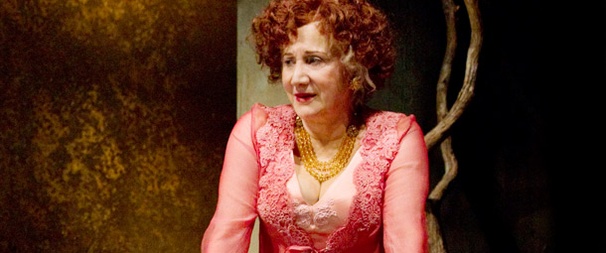
The Milk Train Doesn’t Stop Here Anymore, starring  Olympia Dukakis

The Milk Train Doesn’t Stop Here Anymore, starring Olympia Dukakis

David Kaplan, the curator and co-founder of the Provincetown Festival, estimates there are at least 300 professional productions worldwide each year of Williams plays and that of course doesn’t include the 1000’s of none-professional productions.

William’s himself was a complex and some say tortured individual and there has been much written about his personal life. During my research I have come across a few things I thought I would share.

Firstly, an episode from a BBC Radio series called Great Lives which asks the question was Williams’ life was a wasted one? Click here for the recording.

Secondly, and again from the BBC, a recording of a programme from 1978 called Desert Island Discs in which Williams talks about his own life:

Thirdly, a superb piece written by Paul Taylor for The Independent in 2011, to mark the centenary of Williams’ birth. Tennessee Williams: A tormented playwright who unzipped his heart is well worth a read.

WILLIAMS_2490263bMy fourth offering, written earlier this year for The Telegraph by Theodore Dalrymple, has the great title Put away the pills and listen to Tennessee Williams; America’s great playwright refused to accept that happiness was normal. A somewhat controversial look at his great and complex characters.

Fifthly, a look at The Glass Menagerie through time, by Marc Snetiker for Broadway.com

And finally, The original New York Times review for The Glass Menagerie, written by Lewis Nicholls in 1945.

That Is The Question

An article in the New York Times caught my attention a couple of days ago, Maximum Shakespeare, To Renovate or Not to Renovate. Written by Charles Isherwood, a very well-known american theatre critic, it deals with the hoary old question about whether modern productions of Shakespearian plays should be contemporized. With a slew of The Bard’s plays to open on and off Broadway in the near future, Isherwood and other NYT writers will be

regularly posting commentaries on aspects of them, engaging larger questions about how today’s theater artists approach these canonical works, and inviting you to add your opinions about how vitally Shakespeare continues to speak to modern audiences. (Opera, ballet and movies will come up as well.)

If you read the article below and then follow the link above, you can see the discussion has already begun. I shall be following with interest.

Orlando Bloom in Romeo and Juliet on Broadway

Orlando Bloom in Romeo and Juliet on Broadway

Wherefore art thou riding a motorcycle, Romeo?

So might audiences muse at the start of the new Broadway staging of “Romeo and Juliet,” the first in the season’s plentiful Shakespeare productions, both on Broadway and off.

As the shows open in the coming months, fellow New York Times writers and I will be regularly posting commentaries on aspects of them, engaging larger questions about how today’s theater artists approach these canonical works, and inviting you to add your opinions about how vitally Shakespeare continues to speak to modern audiences. (Opera, ballet and movies will come up as well.)

David Leveaux’s “Romeo and Juliet,” which opened on Sept. 19 at the Richard Rodgers Theater, announces its point of view in the show’s opening moments, as Romeo removes his helmet (odd, that, for a swooning romantic; Mercutio, one suspects, wouldn’t bother) and reveals himself in the comely person of Orlando Bloom, clad in ripped jeans, T-shirt and hoodie, plus the kind of assorted man-jewelry you can scoop up by the handful at Urban Outfitters.

DISCUSS: Is Shakespeare better with contemporary imagery, or clad in classical garb?

The question I opened with — why make Romeo a facsimile of an urban hipster? — points directly toward an issue that I suspect will percolate throughout the season, namely whether in producing Shakespeare today the most effective approach revolves around cloaking the text in contemporary imagery, or hewing to a more “classical” line, dressing the actors in what passes for traditional Elizabethan costume.

With its set dominated by a giant Renaissance-style fresco scrawled with graffiti, the new Broadway production didn’t strike me as an ideal test case for the here-and-now approach. The costuming and visual effects meant to reorient this tragic love story as an urgent bulletin from today’s world felt pretty generic, as did his somewhat half-hearted gesture toward infusing the play with an element of racial tension. (The Capulets are all played by black actors, while the Montagues are white.)

But it is easy to understand the impulse, particularly with this play. “Romeo and Juliet” is the ur-drama of young love, and it is often the first Shakespeare play kids read in high school. Young audiences alienated, or at least challenged, by the arcane language of the play may be encouraged to stop texting and give it a more attentive hearing when the drama comes packaged in imagery to which they can relate.

Baz Luhrmann proved the efficacy of this approach in his fiercely imaginative movie version from 1996, with a pre-megastardom Leonardo DiCaprio and a pre-“Homeland” Claire Danes playing the doomed lovers in a Southern California riven by gun violence.

It was a palpable hit, so to speak, and deservedly so. And of course one of the most popular iterations of the story is the beloved musical “West Side Story,” which dispensed with Shakespeare’s language but kept the fundamental architecture of the plot.

Denzel Washington, far right, in the 2005 Broadway production of Julius Caesar.

Denzel Washington, far right, in the 2005 Broadway production of Julius Caesar.

But there are many grumblers out there, I suspect, who have had their fill of Shakespeare productions that try to shoehorn contemporary relevance into the plays by dressing the conspirators in “Julius Caesar,” say, in business suits, or “Macbeth” in 20th-century military attire.

In fact these days I’d argue that the default Shakespeare style — at least for the major tragedies, and many of the comedies and romances, too — is contemporary. (With the history plays that concentrate in detail on specific periods in the progression of the British royal line, there isn’t always as much innovation.)

What may get lost in the debate is the fact that dressing Shakespeare in off-the-rack duds is nothing new; in fact what’s comparatively newer is the tradition of presenting the plays in Elizabethan or Jacobean attire. As no less an acting authority than Alec Guinness once pointed out, in a 1953 program for the Stratford Shakespeare Festival, the plays were traditionally performed in attire drawn from the era in which they were produced until in the 19th century manager-actors such as Charles Kean and William Macready introduced a vogue for historical accuracy in Shakespeare.

Some scholars cite the innovative productions of Barry Jackson in the 1920s at the Birmingham Repertory Theater as marking a true inflection point in bringing modern dress into Shakespeare production. His 1923 production of “Cymbeline” was a game-changing landmark for British Shakespeare staging. Coincidentally — or perhaps not — the company was home to some of the greatest British actors of the 20th century, from Laurence Olivier and Ralph Richardson to Edith Evans and Peggy Ashcroft.

The great director Peter Brook was hired to stage three productions there at the age of 20. In America, meanwhile, Orson Welles is often lauded as the radical innovator who yanked Shakespeare out of the realm of fusty classicism, with his famous “voodoo” “Macbeth” and his Fascist-styled “Julius Caesar.”

Rory Kinnear and Adrian Lester in the National Theatre's production of Othello in London

Rory Kinnear and Adrian Lester in the National Theatre’s production of Othello in London

Many years of Shakespeare-watching have left me agnostic on the issue of “to update or not to update.” Nicholas Hytner’s riveting “Othello,” which I saw at the National Theater last summer (and which will be broadcast in movie theaters beginning Sept. 26), was a superb case in point. Without altering the text, in setting the play in a 21st-century war zone the production made cogent and disturbing points about the way, in a largely male-dominated military environment, women can become the object of repressed or warped violent impulses. (Emilia, here, was a soldier too.)

A scene from the 2006 production of King Lear at the Goodman Theater in Chicago.

A scene from the 2006 production of King Lear at the Goodman Theater in Chicago.

And perhaps the best overall production of “King Lear” I’ve seen was Robert Falls’s aggressively violent production for the Goodman Theater several years ago, in which Lear’s kingdom was represented as a failing, vaguely Balkan state, illuminating the way in which a power void automatically unleashes violence, which only begets more violence.

But I could just as easily cite any number of bland, unrewarding attempts to dress Shakespeare up in modern garb and gimmicky attempts at relevance, which I suspect some directors impose upon their productions because they (and their actors) are less at ease with the language than they ought to be. The hope is that novelty (although it rarely qualifies as novelty anymore) will prove a distraction from mediocrity.

Fundamentally, a great Shakespeare production will rise or fall not on what the actors are wearing, and whether they are barking into cell phones or slinging swords at each other, but on whether they can infuse these magnificent, challenging texts with the life blood of honest feeling and formal beauty

Are the most memorable Shakespeare productions you’ve seen modern or “classical”? Do you find it jarring when Hamlet picks up an iPad? What did you make of Mr. Leveaux’s “Romeo and Juliet”?

Don’t Take Yourself Seriously

I have stumbled across three articles giving tips to budding playwrights and I thought it would be good to share them.

playwright

Firstly, in a piece called Writing for the theatre? Be practical, by Miriam Gillinson, playwrights are told to use their instinct and heart but also to be pragmatic and stay grounded.

Writing for the theatre? Be practical

Write what you know, write what you feel and remember you are writing for the theatre. These are the fundamental tips I would pass on to a first-time playwright. But playwriting isn’t just about instinct, integrity and heart – it is also about pragmatism.

I read for a number of theatres and playwriting competitions and I’m surprised how often writers neglect the practical side of playwriting: the presentation of the play, the lay-out, stage directions and even the cast list – all these aspects matter greatly.

Some writers are so brilliant they can ignore such concerns, or at least give the impression of doing so. Beckett could have described his characters as vegetables and written his plays in comic strip form and their cool power would have still blasted off the page. But if you’re just starting out, it’s worth paying attention to the small details – they’re a bigger deal than you might think.

Synopsis

Unless this has been directly requested, I would strongly advise against including a synopsis. They are rarely useful and often a hindrance. Most distracting is when a playwright explains or justifies his or her play in the synopsis – no good can come of this.

Such suggestions are always limiting and, strangely enough, often out of sync with the play itself. Playwrights often don’t have the foggiest what they’re writing about or why. This really doesn’t matter – as long as the playwright stays schtum.

Title page quotations are often much more useful. For example, Philip Ridley precedes his brutally moving play Vincent River with Margaret Atwood’s words: “Grief is to want more.” Jez Butterworth uses TS Eliot to introduce his eerie play The River: “Except for the point, the still point/There would be no dance, and there is only the dance.” And Simon Stephens begins The Morning with this: “What it was … still mostly in my mind … is unconnected flashes of horror.” These quotes are brilliant; they give us a whiff of the play without ramming it down our throats.

Character list

I’ve read a huge number of plays that are preceded by pages and pages of character descriptions. Such extensive character lists won’t ruin a good play, but they certainly won’t help a mediocre one.

Look in almost any published play and the character list will be just that, a list of the characters’ names and nothing else. Sometimes, if a playwright is feeling particularly verbose, the character’s age might be included or even a sparse physical description. But that’s about as extensive as it gets.

Just as a lengthy synopsis risks undermining a play, so too does a comprehensive character description. They tend to reduce rather than enrich the overall reading experience; to shut down the imagination rather than provoke it. The best thing about reading a new play is those rare moments of surprise. This is not going to happen if we’re told all the characters’ secrets in advance.

Stage directions

These are often overlooked or underwritten, but they are a crucial component of any play. Stage directions don’t just help visualise a play, they also reveal a lot about the playwright. Good stage directions distinguish a great dramatist from merely a good writer.

The style of stage directions says a great deal about the writer and the time in which he or she is writing. Lyrical stage directions used to be in vogue – see the beginning of Arthur Miller’s Death of a Salesman: “An air of dream clings to the place, a dream rising out of reality.”

Since then, stage directions have become increasingly sparse. Beckett’s Waiting for Godot is a prime example: “A country road. A tree. Evening,” or Sarah Kane’s infamous stage direction in Blasted: “He eats the baby.” More recently, Payne’s directions in Constellations are as restrained as they are extravagant: “An indented rule indicates a change in universe.”

In some ways, the stage directions need to be more honest and lucid than the play itself. They are the reader’s direct line to the playwright and the director’s link to the visual world of the stage.

Presentation

I’ve read plays illustrated with pictures, photos and masses of symbols – some scripts have even included links to clips on the internet. Apart from a few inspired examples, these additions don’t help. Instead, they come across as amateurish: a rushed afterthought rather than a crucial component of the play proper.

These visual touches – which are often poorly executed – suggest a lack of faith in the writing. Obviously, there are no set rules and a series of brilliant sketches could, theoretically, beautifully complement a play. But such additions shouldn’t be shoe-horned into the work; they need to be as carefully considered as the rest of the play, or they will only take away from the writing.

Write your own play

Most playwriting competitions and (fringe) theatres are not looking for adaptations; they are looking for original work. Despite this stipulation, I have lost count of the number of imitation plays I have read, faintly disguised as new work. Even if the play is set at a bus-stop and the central characters are called Victoria and Esteban, it is still Waiting for Godot.

There’s nothing worse than a playwright trying to pass off another writer’s idea – or even their diction, rhythm and use of pauses – as their own. Such iterative writing feels brittle, ugly and thin. But an honest writer, who is true to themselves, their material and their medium? Magic.

playwright

Secondly in a piece published on his blog, Nick Gill offers his own rather satirical take, although with some wise words too.

Some advice for newish playwrights

1. Get a job.

Statistically, the number of people who define themselves as ‘A Playwright’ and who make a living from writing plays is so small that it might as well be zero. It follows that you’re very unlikely to be one of those people. Find something you can cope with, and that allows you enough time and space to write.

2. Take the work seriously.
Work at it.  Don’t say ‘Oh, that’ll do’. If what you’re writing ever gets anywhere, it’ll be judged on the same scale as the most successful shows there are – if you don’t take it seriously, who will?

3. Don’t take yourself seriously.
You want to spend the only life you’ll ever have making up stories.  Have some perspective.

4. Avoid oxides of metals.
By and large, metal oxides are pretty toxic; it’s a good idea to avoid them if at all possible. If it isn’t, be sure to wear relevant protective safety gear when handling them.

5. Don’t have a process.
If you have A Way Of Doing Things, it’ll be very easy to make minor variations on The Same Thing every time you sit down to write something new. The assumption here, of course, is that you want to write something new each time…

6. Suit your medium.
Be sure that the thing you want to write about should be a piece of theatre. Maybe it’s just a story that would work better as a novella, or a short story, or a secret little dance you do in front of your girlfriend.

The thing about defining yourself as A Playwright is that you’re confronted with a classic problem: if all you have is a hammer, pretty soon everything starts to look like a nail. I suspect there’s a strong impulse to say to yourself ‘I find this particular Thing I Saw On The News interesting; I will write An Important Play about it’, while not considering what it is about live performance that particularly suits what you’re trying to do.

I would also add that it’s a good idea to have some perspective about what theatre can do.  Andrew Haydon put it very nicely in his Postcards from the Gods blog:

…there was a repeated strain of question which seemed to be formulated thus: “How can Theatre block the flow of a river in a steep valley, thereby storing all the water in a reservoir, which can then be used for hydro-electricity or irrigation?”
To which the sensible answer is: You want a dam for that, not theatre.

7. Go to see some plays.  But not too many.
Let’s be honest, most plays are rubbish. Not just plays, of course:  plays, films, paintings, albums, novels, dances, drawings- most of them are rubbish. If you go to see too many plays, you may well see too many terrible things, and become disillusioned with the whole medium, which would be sad. Moderate your theatre intake.

8. Network. A bit.
This is a horrible thing for me to write as I hate it, both in principle and practice.  Nevertheless, meeting people is A Good Way to get people interested in what you do.  I find that very few directors and producers pop round to my house to see what I’m up to, so leaving the house seems the only option. I recommend you do the same; but, once again, moderate it.  You need to leave some time for video games and general procrastination, after all.

9. Know your tools.
I have been called a snob for wanting writers to construct a decent sentence, with properly spelt words and even some punctuation in the right place.

If I see a carpenter trying to use a slotted screwdriver on a posidrive screw, I’m going to be a little sceptical about his ability to put up a sturdy shelf; if I see a script with ‘you’re’ and ‘your’ used interchangeably, or paragraphs of text without a comma or a semicolon to break it up, I’m going to be sceptical about the writer’s ability in other areas.

Likewise clumsy metaphors, ham-fisted emotionally-manipulative dialogue, characters so clichéd they could have been culled from 90210, lazy pop references, all that jazz. If you care about writing, you should care about imagery, sonority, grammar, allegory, form, structure, spelling, all the good stuff they teach you in English literature.

10. And finally.
When the first day of rehearsals comes round, and you meet the actors, and the director, and the sound designer, and the wardrobe mistress, remember this:

You have not written A Play.
You’ve written A Script.

And if you really need the difference explained, you should probably reconsider how you’re spending your time.

pw1

And finally Top 10 Tips for Playwrights: Advice from the Other Side of the Line. This is written by Van Badham who is both a writer and literary manager*.

* In a theatre company, literary managers are responsible for reading and selecting plays for production.

Everyone’s A Critic

A few weeks ago I wrote a post, Critiquing the Critics, in which I touched upon the notion that professional theatre critics are being threatened by the rise of the internet blogger/critic. Since then one of the major UK news papers sacked all its arts critics and another got rid of its chief theatre critic. The picture is the same right across the globe.  Arts criticism is clearly and sadly becoming a minority interest in the eyes of newspaper owners. All of this has not surprisingly stirred up quite a debate about the role of critics in relation to theatre and the purpose they really serve.  It has fascinated me and has raised a few questions about the synergy between theatre critic and theatre making.

In her article for Fourthwall magazine, The Future of Theatre CriticismEmily Hardy lays out the debate.

THE ESSAY: The Future of Theatre Criticism

In an information, saturated world, who do you trust? What is the future of traditional theatre criticism? Emily Hardy investigates.
theatre_seats_main

Tim Berners-Lee, creator of the internet, brought about a revolution that overwhelmed, consumed, and eventually defined contemporary society, facilitating freedom of speech in its rawest form.

A universally accessible resource of information, music, film and literature, the internet has reduced the value of the tangible book or CD for example, resulting in the inevitable and devastating decline of particular industries.

Theatre remains relatively safe, largely unperturbed by the culture of the ‘free download.’ A curated theatrical experience can be purchased in the form of aPhantom of the Opera concert DVD, but nothing available online yet threatens live, visceral, organic, fleshy theatre. However, traditional theatre criticism has fallen victim: In one respect, the immediate, wide-spread accessibility of a review has facilitated increased readership, but rapid turn-around and ‘free-for-all’ authorship means that the quality of criticism, at one time an art form in itself, is suffering. After all, “If everyone’s a critic, then no one’s a critic.” (L.Winer, Newsday)

Where once, books were ritually burnt because of the political threat posed by the persuasive written word, the internet, by putting power into the hands of the people, has actively encouraged the spread of opinion. Writer John Moore explains that, “When it comes to arts criticism, the internet was supposed to be the great equaliser,” but, what truth or meaning is there in anything online? The internet is everything and nothing because it has no centralised governance. What is fact without validation? Opportunistic bloggers, tweeters, and rapid-response reviewers, have filled the information vacuum created by the impartial internet, and whilst these unpaid, unqualified, unknowledgable writers slather the web with their opinions, informative, measured and witty criticism slips into the archives of yet another lost art form. Web reviewers, writing to varying degrees of purpose or proliferation have spawned a culture of speed rather than that of considered opinion, and this has resulted in wide-spread unemployment; John Moore, for example, was the last full-time, professional critic in Denver.

As experienced writers become surplus to requirement we need to ask, can theatre exist without criticism? The answer is dependent upon what you believe the purpose of criticism to be. What do you read and who do you trust? What do you hope to achieve by flicking to the arts pages of a paper? In any case, with the standard of criticism (online and in the papers) continuing to slip, the critic’s reputation worsens. What future is there?

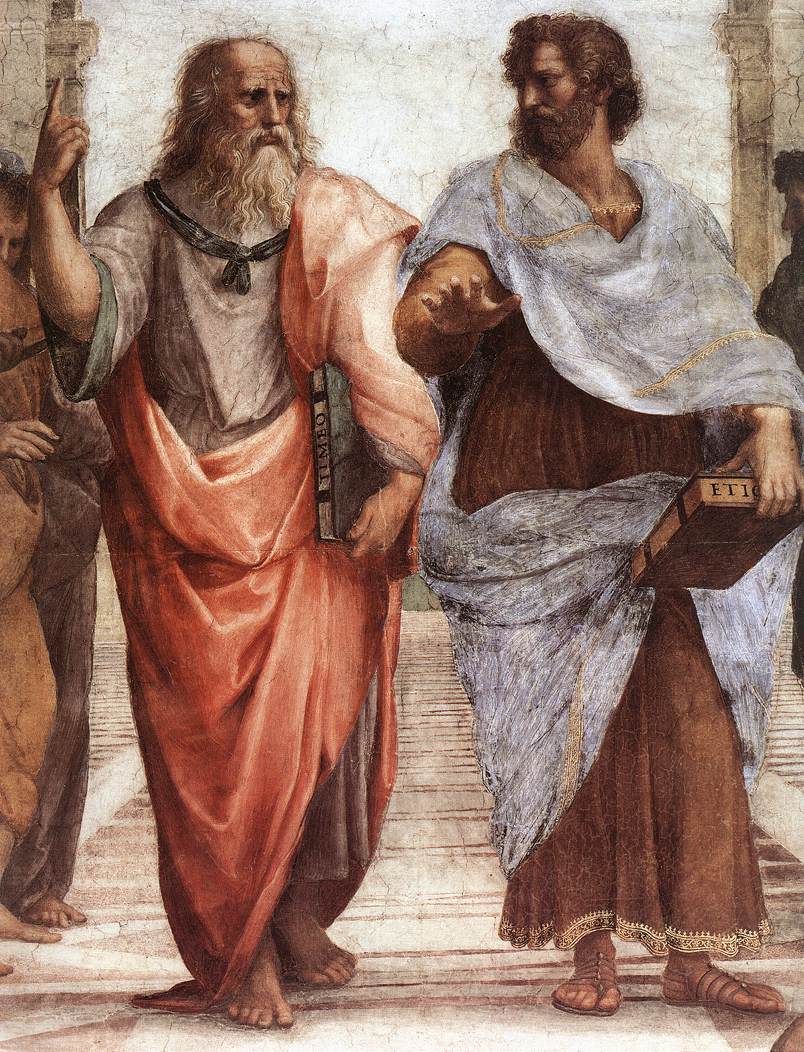
Plato

Plato

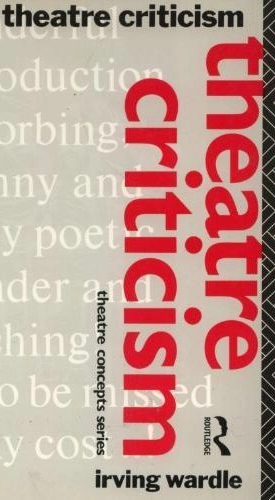
Before we confront the future, let us look firstly to the past. The earliest known reference to criticism dates back to C.380 B.C.E and Plato’s Republic. Laying a foundation for critical discourse in the classical world, Plato explains how it was fitting for a rhapsode, (poet) to respond verbally to theatrical entertainments: “For the poet is a light and winged and holy thing, and there is no invention in him until he has been inspired and is out of his senses, and the mind is no longer in him.” In the beginning then, there were high expectations. In the 1800’s, critics played an increasingly important role within the American press, and despite being accused of reducing feelings to a state of miserable refinement, they were valued, employed and at least possessed such skills. Meanwhile, as Irving Wardle outlines in his book Theatre Criticism, the Grub Street slums of Georgian London rapidly became a bohemian hive of artistic activity and were the probable origin of theatrical criticism in Britain. By the 1850’s, advancements in printing and the press fuelled an explosion in journalism, and in 1935, cementing that progress, establishment of The Drama Critic’s circle ensured that the critic’s influence continued to abound.

Conversely, 2007 saw the beginning of wide- spread layoffs at newspapers and magazines leaving dozens of veteran arts journalists professionally homeless, expunged by internet reviewers or cheaper freelancers. And the situation continues to worsen, evidence now suggesting that criticism has reached such a point of decline that it is no longer significant; it no longer has a part to play.

What could today’s critic offer in order to reinstate their own necessity and worth? What do we want? Reviewing, simply put, is the act of writing or speaking about the performing arts, so no one person can dictate what it should or shouldn’t be, and if critics disagree amongst themselves, that is nothing compared to the public disagreement over what their role should be. We all require something different, but one might hope to locate at least one, two or a combination of the qualities listed below:

A review should be…

Informative. The piece should contain basic, accurate information about the show/production in order to keep the reader in touch with the continuously evolving theatrical landscape – a landscape which, for some, sits at the epicentre of social functioning. The reviewer therefore, is required to attend, watch and inform.

Entertaining. Theatre is occasionally entertaining. Shouldn’t we be entertained when reading about it too? Be it witty or not, criticism should capture the style and essence of the show – reflecting, not just referencing it. It is good for the industry if people flick to the review pages; interesting articles will promote that intrigue.

Historical. Criticism is a way of documenting, remembering and celebrating past theatre, as well as present. Therefore a critic should have theatrical knowledge in order to root the production in question within theatrical history.

Constructive. Good, impartial criticism can provide the fresh eyes a creative team require. Reviewing is a fundamental and integral part of the development process – a way of improving theatre. “Only critical faculty enables any artistic creation at all.” (Wilde) What good does a sycophantic wash of praise do?

Opinionated: A review should assist the reader in making the all-important decision: to buy tickets or not to buy tickets? That’s a big responsibility, and if “everyone is a critic,” then who should we trust? Marketing might initially catch the attention of the consumer but a good review can cement the £60 per ticket spend. The public need an arbiter of taste.
The critics bible

The critics bible

And is this what we are getting? According to writer, John Russell Brown, criticism is an “unmapped quagmire,” – an art form that has remained, until recently, unexamined. But, in light of increased instability, it feels appropriate to turn the tables and examine what remains. Reviews that meet our expectations are increasingly difficult to find, but they do exist: Ben Brantley, for example, reviewed Menken and Fierstein’s Broadway musical, Newsies, for the New York Times. His piece, ‘Urchins with Punctuation,’ is lengthy and entertaining, reflecting the show’s energy and offering a measured and reasoned opinion from which the individual reader can decipher the production’s suitability. A literary achievement, he gives credit without verging into the bland territory of hyperbole: “Mr. Feldmen’s lyrics are spot on, while the melody reminds us just how charming a composer Mr.Menken […] can be.” Overblown praise only provokes cynicism, disappointment and a wilfulness to protest. He is refreshingly witty: “That doesn’t stop them from burning energy like toddlers on a sugar high at a birthday party,” and immediately captivates the reader, much in the same vein as a play might wish to do. Brantley also resists the trappings of writing a gratuitous plot synopsis, instead summarising the narrative in one Plato line: “The show’s title characters, feisty lads of the urban jungle […] make their living pushing the papes.”

In terms of language, Brantley uses the “read all about it,” exclamatory, punctuated energy of the show to drive his piece and employs the colloquial so as to serve the readership and the show’s potential audience. In addition, the grounded review acknowledges current social trends: “These days urchins have mostly been replaced in popular entertainment by troubled teenage vampires (‘Twilight’) and fresh-fleshed human killing machines (‘The Hunger Games’).” Perhaps you could criticise Brantley for failing to address the historical concerns of said urchins, but the all singing all dancing, lavish musical does not lend itself to a serious discussion of these themes. If the show fails to address it, then why should the reviewer? Instead, Brantley reviews Newsies for what it is. Finally and perhaps most importantly, is Brantley’s impressive honesty. He bravely asserts his opinion in the confident 1st person, and in a way that is simultaneously constructive and comical: “I commend the cast members for always appearing to be excited by what they are doing. Unfortunately, that is not the same as being exciting.”

Of course, Brantley is not the only capable writer in print, but with the situation as it is, and talented writers (young and old) being forced to write to unrealistic deadlines, often for no pay, is it any wonder that standards and expectations are not being met? Infuriatingly, criticism also continuously undermines itself in the following ways: Firstly, reviews have become monetized.

It is increasingly common for large production companies to pay papers (inevitably tantalised by the fee) for headline quotes. We are now bombarded with emphatic posters making incredible claims: “It’s the greatest show on Earth!” for example. But, if companies pay for quotes, how are we, the reader, able to distinguish between a review and a sales pitch? The differentiation no longer exists. Secondly, writers for particular sites receive a rate of pay dependant on the number of ‘hits’ a review receives. Obviously, a 5* piece, fizzing with praise, is shared and circulated by the company and consequently, only the sycophant can afford to eat. This severely limits the opinion of the honest reviewer, terrified of displeasing. That’s not theatre, nor is it criticism. That’s bribery and actually, all the reader gets is more marketing.

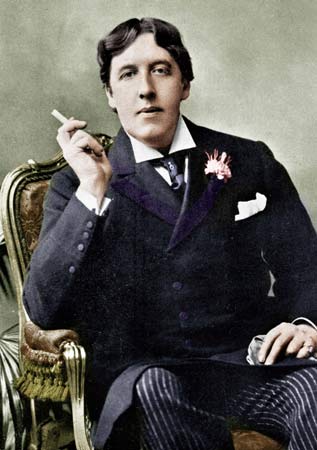
It is no coincidence that as we see more of the above, (not to mention dry, ignorant, distasteful writing) people lose faith in criticism, no longer functioning in the traditional capacity on which they relied. Simply put, the remaining work is not good enough to sustain the form’s validity. Let us remember for a moment Oscar Wilde’s expectation: “It is criticism rather than emotional sympathies, abstract ethics or commercial advantages that would make us cosmopolitan and serve as the basis of peace.” (Wilde) Gone, I fear, are the days of this long lost ideology.
oscar-wilde-1

Oscar Wilde

So what can be done? Due to the human need to impose form on chaos, art will always be accompanied by some sort of criticism; it cannot exist without it. However, in order to prevent being displaced entirely by the unmediated voice of the internet, critics need to act. Public reviews, such as those found on Amazon or Trip-Advisor, for example, tend to be either glowing or scathing. The internet rarely offers informed, impartial, measured opinion. For as long as this remains to be the case, the critic, as an arbiter of taste, stands a chance. Continuing to encourage a wealth of discussion and increasing public awareness will assist to stimulate change; only an amalgamation of minds can forge progress at this stage and suggestions are already being made.

No one can prescribe a format for ‘good’ criticism; pieces are as individual as plays or paintings, but perhaps, as was conceded at ‘The Art of Criticism’ conference in London, 2013, the future of criticism might hinge upon a willingness to adapt. For example, Brantley argues that reviews cannot be written well AND quickly. “I don’t think you should go with your very first instinct. I don’t think theatre is sports.” However, in order to adapt to 21st century demands, critics may no longer be allowed the luxury of “a chance to process what [they’ve] seen.” Mark Shenton, in his blog for The Stage, identifies how critics, such as Billington, Taylor and Letts, have been attending performances ahead of press night, in order to allow

for writing time. This is not an ideal solution – a preview should be a preview, but early viewing could potentially improve the standard of published work. Also in question is the star-rating system, which some papers have dismissed in order to encourage a thorough reading of the piece. It is too tempting to place great emphasis on the over-simplistic, reductionist, blurry distinction between 3 or 4 stars.

There are problems to be addressed and solutions to be trialled, but with persistence, adaptation and adjustment critics may well prevail. (Alternatively, we can hope that readers themselves might start to demand better!) However, if the horizon continues to darken, traditional theatre critics, artists as they are, may continue to suffer, reminiscent of where it all began – Grub Street and the impoverished, bohemian neighbourhood of hack writers.

It is clearly a debate that is going on in many places. For example, in his piece for the Australian newspaper The Age, theatre critic Cameron Woodhead talks about the rise (and dangers) of the internet blogger – Slagging off theatre, a case of foul play. You can read the blog Woodhead talks about, Shit on your play, here.

Meanwhile in London this week, The Critics Circle held its centenary conference and the link below is to a recording of a discussion, hosted by theatre critic Lyn Gardner, about the future of theatre criticism in a, twittering, blogging world.

The Critics’ Circle Centenary Conference: The Future of Criticism.

In the recording, I was particularly struck by the audience and panel talking about Harold Hobson and his championing of new writers that went on to become some of the most successful writers of the 20th century:

.

Irving Wardle also had a fascinating relationship with Harold Pinter, which he wrote about in Intelligent Life Magazine, The Unconditional Harold.

The Chair of the Drama section of the Critics’ Circle is Mark Shenton, theatre critic and avid tweeter. He also blogs for The Stage and two of his recent postings, Critics in intensive care – but can Twitter fill the space? and The critical and Shakespearean conundrum add to the debate.

It seems to me that there is a strong case in all of this for the professional theatre critic and we allow them to be drowned out by the likes of Shit on your play at our peril.

Why? Why Not!

As a theatre teacher working in the northern hemisphere, this time of year always makes me question my motives a little.  It is the time when the graduating class are making their university choices and younger students are choosing their electives at various examination levels. With these decisions comes conversations with both parents and students that usually centre around the questioning of the value of taking a theatre course at any level.

If I had a dollar for every time I have heard a sentence that started with “but what’s the point”  or “how is that going to help in the future” or “but he/she doesn’t want to be an actor”, I would be a rich man. I then find myself churning out the usual responses about life long learning, confidence building, being an effective communicator, the value of team and cooperation skills – the list is long.  I have developed it over my career, almost as a defence mechanism, as I find myself a little offended every time one of those questions is asked.

Unknown

I know the value of a theatre course. When my students leave high school to continue the study of performance at university I am immensely proud, but I am equally proud of those that go off to become doctors, lawyers, business people, writers, veterinarians, linguists, teachers, visual artists, bankers (yes, even bankers)….the list is long and wonderfully varied.

So it was with some glee, a little churlishness and a lot of delight that I read the following blog post by Brian Sibley, under his alias, Change Agent.

9 Ways a Theatre Degree Trumps a Business Degree

Some of you may know this about me, some may not. Despite having spent the last 15 years as a PR & communications professional, my college degree is in theatre. I have never in my life taken a marketing class, or a journalism class, or a business class. Yet, by most measures, I’m enjoying a successful career in business.  ”So what?” you ask… read on.

what_can_you_do_with_theatre_degree_Fotor

I was having a conversation with a friend this week. She’s an actress. Like most actresses, she also has a Day Job that she works to pay the bills between acting jobs. This is the reality for most working actors in LA, New York and the other major centers of the entertainment industry. She was pointing out to me that she viewed her theatre background as a weakness in her Day Job career field, and that it was holding her back. She asked for my advice.

My advice? There IS no weakness in having a theatre background. There is only strength. Here are just a few skills that a theatre degree gave me that have served me enormously well in business:

  1. You have advanced critical thinking and problem solving skills: taking a script and translating it into a finished production is a colossal exercise in critical thinking. You have to make tremendous inferences and intellectual leaps, and you have to have a keen eye for subtle clues. (believe it or not, this is a skill that very few people have as finely honed as the theatre people I know. That’s why I listed it #1).
  2. You’re calm in a crisis: You’ve been on stage when somebody dropped a line and you had to improvise to keep the show moving with a smile on your face, in front of everyone. Your mic died in the middle of a big solo musical number. You just sang louder and didn’t skip a beat.
  3. You understand deadlines and respect them: Opening Night is non-negotiable. Enough said.
  4. You have an eye on audience perception: You know what will sell tickets and what will not. This is a very transferrable skill, and lots of theatre people underestimate this, because they think of theatre as an ART, and not as a BUSINESS. I frequently say (even to MBA-types) that theatre was absolutely the best business education I could have gotten. While the business majors were buried in their books and discussing theory, we were actually SELLING a PRODUCT to the PUBLIC. Most business majors can get through undergrad (and some MBA programs, even) without ever selling anything. Theater departments are frequently the only academic departments on campus who actually sell anything to the public. Interesting, isn’t it?
  5. You’re courageous: If you can sing “Oklahoma!” in front of 1,200 people, you can do anything.
  6. You’re resourceful: You’ve probably produced “The Fantasticks” in a small town on a $900 budget. You know how to get a lot of value from minimal resources.
  7. You’re a team player: You know that there are truly no small roles, only small actors. The show would fail without everyone giving their best, and even a brilliant performance by a star can be undermined by a poor supporting cast. We work together in theatre and (mostly) leave our egos at the stage door. We truly collaborate.
  8. You’re versatile: You can probably sing, act, dance. But you can also run a sewing machine. And a table saw. And you’ve probably rewired a lighting fixture. You’ve done a sound check. You’re good with a paintbrush. You’re not afraid to get your hands dirty for the benefit of the show. In short, you know how to acquire new skills quickly.
  9. You’re flexible: you’ve worked with some directors who inspired you. Others left you flat, but you did the work anyway. Same goes with your fellow actors, designers and stagehands… some were amazing and supportive, others were horrible and demoralizing to work with (we won’t name names). You have worked with them all. And learned a little something from every one of them.

These are the top reasons I’ve found my theatre degree to be a great background for a business career. What are yours?

What I liked even more that the blog post itself were the comments that people made, reinforcing his view. If you need to convince anyone about the value of theatre education, get them to read those comments.