Worlds Apart

Over the course of the summer I have written about Shakespeare a couple of times. Today I am going to share two articles about two plays currently in production from opposite sides of the world. Firstly, Coriolanus directed by Lin Zhaohua for the People’s Art Theatre in Beijing in Mandarin and Hamlet, by The Wooster Group in New York. Both are currently on at The Edinburgh Festival.

The first is by Andrew Dixon for the Guardian, entitled

Guitar hero: Coriolanus goes rock

China’s most controversial director is bringing Shakespeare’s Coriolanus to Edinburgh – with two heavy-metal bands in tow

It’s 45 minutes to showtime at the People’s Art Theatre in Beijing. Backstage, actors in civvies are padding around, studiously avoiding the clock. Behind a dressing-room door, someone is making heavy weather of their warmup. Suddenly, the strangulated squeal of an electric guitar shakes the building, like a crack of thunder. No one bats an eyelid.

21253_653587371334804_1261359802_n

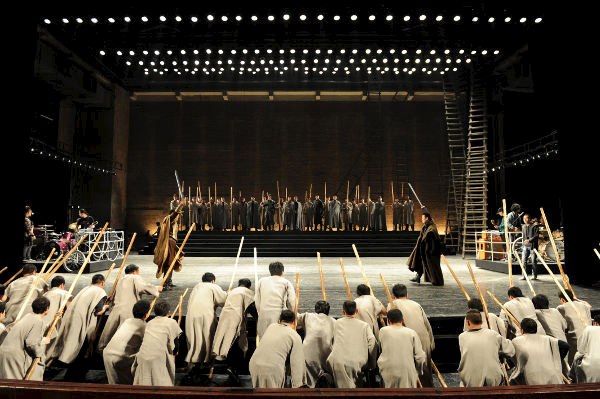
The closest most British stagings of Shakespeare get to guitars is the occasional lute. But in China, it seems, they prefer their Bard a little gnarlier. This is The Tragedy of Coriolanus by Lin Zhaohua, routinely described as China’s most controversial theatre director. First performed in 2007, it is big in every sense: there’s a cast of more than 100, and the action takes place on a near-empty stage against a vast, blood-red brick wall.

But the real surprise is the soundtrack: two live heavy-metal bands, going under the colourful names of Miserable Faith and Suffocated, who slide in periodically from the wings and punctuate the action with frenzied surges of nu-metal. This might be the only version of Shakespeare’s tragedy – the story of a hot-headed general who goes to war against his own people – that turns it into a battle of the bands.

182698_653587424668132_155504144_n

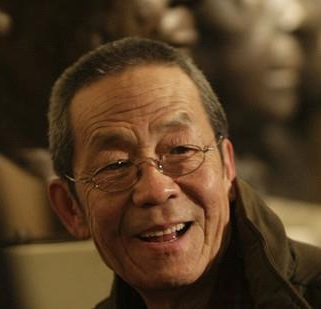
The director is hiding in a cloud of cigarette smoke in the theatre cafe. Were it not for the translator hovering at his elbow, you’d mistake Lin for an elderly caretaker: a slight, somewhat caved-in figure, his jacket hanging absent-mindedly off one shoulder. But, behind neat spectacles, his dark eyes are pin-sharp. He claps me on the shoulder as I sit down; I sense I’m being sized up.

First things first: why the heavy metal? “I wanted to use rock music to display the fierceness of the war, and the rioting of the citizens,” he says. “At first I wanted bands from Germany … I listened to a lot of them, but I didn’t like their electronic sounds. So Yi Liming, my designer, showed me around different parts of Beijing. I chose two of the bands I saw.”

The music certainly adds a volcanic energy. The text has been translated into contemporary Mandarin, and here in Beijing (unlike at the Edinburgh international festival, where the show will open later this month) there are no surtitles. The scalding force of Shakespeare’s verse, though, is echoed in the roaring guitars and pulsing bass. It’s a high-voltage experience, particularly when the Roman mob, dressed in semi-druidic robes, rush onstage brandishing wooden staffs – like a cross between a scene from Star Wars and Reading festival. In the interval, the musicians entertain the crowd, a flock of teenagers pressing close, clicking away with their cameraphones.

Lin smiles. “Some dramatists and critics don’t like the idea of using rock music, and they criticise my way of doing productions.” How does he feel about that? A shrug. “I don’t care.”

Combing the city’s nightspots for musical accompaniment sounds energetic for a director now in his late 70s. But Lin has never done things by the book. After graduating from the Beijing Central Academy of Drama in 1961, he joined the People’s Art Theatre (BPAT) – China’s equivalent of the RSC – as an actor, only to find his career stymied by the Cultural Revolution. Afterwards, he joined forces with the dissident writer Gao Xingjian, who would later win the Nobel prize. A trio of plays, beginning with 1982’s Absolute Signal, all but launched experimental theatre in China, with a confrontational, often absurdist style that unnerved the communist authorities.

316185_653587391334802_432981805_n

In the decades since, Lin has been prolific, flitting between new drama, stylised Peking Opera and ambitious reworkings of western classics. According to Li Ruru, an academic who has written extensively on Chinese theatre, Lin is “a major voice. He’s been doing experimental theatre for more than 30 years, at the absolute vanguard of Chinese spoken drama.” But his approach hasn’t always done him favours: one critic described him and Gao as “harbingers of strangeness” for their efforts to release drama from the straitjacket of Soviet-era social realism. The director refuses even this pigeonholing: “I have no style,” he has repeatedly told interviewers.

Anyone expecting peony-strewn chinoiserie – like that offered by the National Ballet of China two festivals ago – will be in for a shock. This is a Coriolanus of muscular clashes and brutal comedowns; of a leader always itching to administer the hair-dryer treatment, and who does nothing to disguise his detestation of the masses.

In the lead role is one of China’s most famous stage actors, Pu Cunxin: a disconcertingly polite figure who apologies for his sore throat – the consequence of competing with two metal groups. “It is an unusual way of performing,” he admits. “We don’t normally have this kind of collaboration in China. The noise is just so powerful on stage, but we need the rock music to express these emotions. It parallels Shakespeare’s ideas.”

941130_653587461334795_535090116_n

I’m struck by one moment in particular, where Coriolanus’s arch-rival Aufidius grabs a microphone during a battle scene, looking half like a wannabe rock god, half like a politician channelling the energy of the crowd. Politics are everywhere in Coriolanus: the play has been claimed both by leftwing critics as a primer on the dangers of demagoguery, and by the right as a lesson in the fickleness of the masses (the Roman citizens at first swoon over their apparently invincible general, then later turn on him). Given these paradoxes, it feels an oddly appropriate play for present-day China, a country nominally communist, but with an economy many capitalists would trade their copies of Milton Friedman for. On the short walk from my hotel to the theatre, two blocks from the Forbidden City, I drift through a shopping district crammed with western luxury brands; one window of a photography shop is jewelled with glittering Japanese cameras, the other with portraits of Mao and Deng Xiaoping. It would be harder to find a clearer image of Deng’s infamous”socialism with Chinese characteristics”.

What does Lin see in Shakespeare’s text? “The relations between the hero and the common citizens,” he replies. “In ancient Rome, people admired heroes. From my point of view, Coriolanus is a hero.” Is there a resonance with contemporary China? “It’s a good phenomenon if the play refers to current events. Those in power like to control citizens, and some common citizens are foolish.”

I want to find out about a previous Shakespeare production, Lin’s Beckettian staging of Hamlet, first seen in 1989. Performed in a rehearsal room at BPAT, the only prop a barber’s chair, it had three actors (one of them Pu) sharing the roles of Hamlet, Claudius and Polonius. Depending on your perspective, it captured either capitalist alienation, or the disillusion that followed the collapse of the student protests at Tiananmen Square. The parallels were cloudy – theatrical censorship is vigorously alive in the People’s Republic – but there to be seen.

Lin freely admits the show was unusual: in contrast to the traditional Chinese way of presenting Shakespeare, with wigs and western-style makeup (sometimes even prosthetic noses), his actors wore their own clothes, in a conscious decision to show the student prince as just another guy. But he is reluctant to open up on the wider issues. “I hate politics,” he says stoutly. “Hamlet has nothing to do with politics. It’s just about a person’s situation.” I can’t tell whether he’s genuinely uninterested, or unwilling to be frank with a British journalist. “I never discuss politics. I don’t think you can direct a production just from politics.” He isn’t even convinced, he says, he’s avant-garde. “I don’t have that concept. I just direct the production from my interests and from the needs of the play.”

941279_653587384668136_1016224444_n

Our time is nearly up; his lighter is snapping impatiently. Last question: does he like being called a rebel? “I don’t have preconceptions about what I’m going to create,” he stonewalls. “I just follow my instincts.”

I realise as I’m rushed out that I’ve forgotten to ask one thing – why direct Shakespeare in the first place? Why stage reach for a playwright four centuries old? When I email, the answer comes back quicker than I expect. It reads: “It gives me the freedom to say what I want.”
537273_582437285116480_15271441_nInterestingly, the Lin Zhaohua Theatre Studio has it’s own Facebook page which is where all the above images came from.

There is a fantastic outline of him and his work here where he is described as a very controversial drama director in China…one of the most significant figures in Chinese drama history you can’t ignore – whether you love him or not.

.

The second article today is also from the Guardian, by Hermione Hoby, exploring with the Wooster Group why, after all these years of experimental theatre, they decided to ‘do’ Shakespeare.

Wooster Group take on Shakespeare with Hamlet remix

Before Punchdrunk, or Complicite, or Forced Entertainment, or any other experimental theatre company you can name, there was New York’s Wooster Group, an avant-garde ensemble legendary not just for the work it has made since the 1970s, but also for the love affairs and betrayals that have coloured its history. As former member Willem Dafoe has put it: “You become accomplices in life. There’s a terrific power in that. The other side is, there’s no place to run.”

Since 1974 the company has worked out of the Performing Garage in Soho – a Manhattan neighbourhood once characterised by derelict lofts and heroin dealers and now given over to Prada boutiques and cupcake-centric cafes. This year they’re bringing one of their most successful shows ever – a remixed Hamlet devised from a filmed 1964 production starring Richard Burton – to the Edinburgh international festival.

I meet company members Scott Shepherd and Kate Valk in the big empty black box of their theatre and, seated on the steps of the auditorium, Shepherd explains that he directed the play years ago as a student at Brown University. Ever since, he says, he’s had it stuck in his head. That’s not, it turns out, a figure of speech. “He has a photographic memory,” Valk explains, mock-wearily. “It’s kind of obnoxious at times.”

Ham600

The skill is what enabled him, for example, to memorise all 49,000 words of The Great Gatsby for Elevator Repair Service’s acclaimed stage adaptation, Gatz. Hamlet though, was rooted even deeper. Eventually, with speeches still running through his head, it began to feel “like something that needed to be exorcised”.

And so he persuaded Valk, who claims to have suffered from what she calls “Shakespeare deficit disorder”, to join him in after-hours work on the text. From that moment in 2006, very slowly, their production began to take shape.

It began with the two of them, but the woman who continues to hold the company together – the matriarch, you might say – is the quietly formidable 69-year-old Elizabeth LeCompte. The Wooster Group emerged amid the creative ferment of 70s downtown New York, but it was her relationship with Spalding Gray, the late actor and writer, that dynamised the company. After graduating from Skidmore College she got together with Gray – as well as Valk, Jim Clayburgh, Ron Vawter, Peyton Smith and Dafoe – with whom she went on to have a son and a 27-year relationship. Dafoe ended it abruptly in 2004, the same year Gray took his own life by throwing himself from the Staten Island ferry. Miraculously, she weathered it with the company intact.

Before she met Gray in the mid 60s, LeCompte had little interest in theatre and had studied art, thinking she might become an architect like her father. “I think maybe,” she says, “it was just a mistake – I got together with Spalding not because I thought I was going to get involved with theatre but when Richard Schechner [the group’s original artistic director] hired me, I realised that it was really a good place.”

By 1975 she was staging Gray’s famous Rhode Island Trilogy, an autobiographical work that details his childhood and the suicide of his mother through monologue as well as personal materials such as letters and photographs. In 1980, Schechner left, LeCompte became artistic director and they changed their name from the Performing Group to the Wooster Group. What drove them then, I ask. She inhales. “It’s hard to know … I don’t know whether it was just youth, because it wasn’t exactly idealism. We weren’t afraid of anybody. We had a certain kind of feeling of the world was ours, so we could do what we wanted.”

67e72df164dbb6752b0f3871276b9f81

The company seems to retain that sense of boundlessness, I suggest.

“You really don’t really know where you’re going to end up when you start,” she agrees. “And there’s something very exhilarating about that, but it’s also very difficult. In most theatres the director has to know what’s there so the other people involved can rely on her. I don’t afford anyone that comfort. I’m as confused as everybody else a lot of the time.”

When LeCompte began working on Hamlet, “I didn’t really think I was working on Shakespeare, I thought I was working out on figuring outabout Shakespeare. I kind of came in a side door.” That’s often the best way. “Well,” she says drily, “it’s the only way I can do most things.”

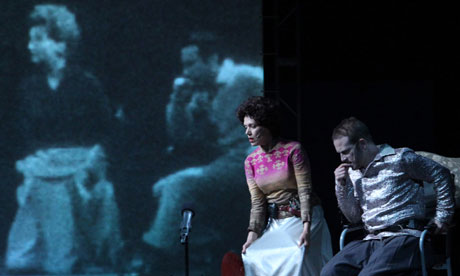
She remembered seeing the Burton production, which was directed by John Gielgud – himself a famous Hamlet – and thinking of it as experimental purely because the actor playing Gertrude wore not a bodiced dress and ruff, but a mink coat. “That’s what experimental was then!” she laughs. More exciting though was Burton’s futuristically named “Electronovision”, an innovation that used 17 cameras to film and broadcast the performance for two days in 1,000 cinemas across the US . In the Wooster production, that grainy 1964 film is projected above the set, forming a ghostly backdrop of a past Hamlet. The New York Times described the Woosters’ show as “an aching tribute to the ephemerality of greatness in theatre”.

Kate Valk and Ari Fliakos in Hamlet

Kate Valk and Ari Fliakos in Hamlet

“The whole metaphor to using the film is the ghost,” Kate Valk enthuses. “The ghost of all those performances!”

Scott Shepherd is a performer who invariably attracts adjectives like “indefatigable” and “tireless”; those seem entirely deserved when it emerges that he edited the entire Burton film into Shakespearean meter, in other words, painstakingly cutting the performers’ pauses so that the iambic pentameter is duly honoured with beats and stresses in the right places.

“This was an arduous task, yeah,” he admits. “To go in and cut pauses if they came in the middle of a verse line and then move them to the end of the verse line.”

It’s Shepherd-as-Hamlet’s imagination, so the premise goes, that creates the onstage action, in which live performers mirror the movements and speech of the actors in the 1964 projection. For all the visual innovations though, LeCompte insists that the text itself remains sacrosanct, and, “on a par with the visual”.

She says: “What I was doing, I realised, was trying to take this shard of what I could get from the past, from that production, and to reinterpolate it into something that made sense to me, in the future.” A brief pause, then: “But I just wanted to delight myself, frankly!”

Despite three decades of making work this is the first Shakespeare the company has ever done. (They’ve since added Troilus and Cressida, a collaboration with the RSC, to their repertoire.)

“I was not hip to the Shakespeare idea at all,” says Ari Fliakos, who plays Claudius and Marcellus, among other roles. Why? “I don’t know,” he says, “maybe it comes out of my allergy to theatre.”

Professing not to be a “theatre person” seems to be a common Wooster trait. Even Valk, who’s been described as “the Meryl Streep of downtown”, has claimed that acting is not among her skills.

1hamlet_wooster_group_czernia

When I mention this tendency to LeCompte she laughs. “I like theatre people!” she protests. “But the process of making theatre in the commercial world I don’t like because it’s too formulaic. I really like to ramble for quite a while,” – and then she corrects herself: “I don’t like to, I have to. I wish I was faster, frankly – we’d be making a little more money.”

Like most members, LeCompte included, Fliakos came to the group through a side door, after hanging around there in 1996, answering phones and fetching coffee. “Everything was stimulating, everything resonated,” he recalls. “It seemed like experimenting with drugs all over again, it was a whole new experience I wouldn’t have expected in any kind of live performance.” He sighs: “The minute you try to describe it, not unlike a trip, it begins to dissipate.”

Every member I talk to about the Wooster Group speaks with this kind of ecstatic devotion. Nonetheless, the creative world of 2013 is a very different one to 1974 – financially and ideologically. LeCompte admits that, “in order to be able to keep the company together I have to be more aware of money, ways of living and ideas. It’s the terrible thing that it’s not hip anymore to not have money, or to be on the outside. It’s much harder for people to give up things that have money and status.”

***4V8G1667©Mihaela Marin

But there are gains, Shepherd explains: “Most people who are in acting are going from one job to the next, and it’s quite hard to develop a sense of continuity, that you’re engaged in building a body of work. And here that’s all you do. One piece bleeds into the other so you’re creating sort of an oeuvre and making something larger than a particular production, you know? This is about developing a philosophy of working, a way of working with a group of people.”

“It feels,” he says finally, “substantial.”

Again the reviews will be out soon for both shows so it will be interesting to see what the critics make of these two very different, culturally and artistically diverse reworkings of Shakespeare. However, according to one critic who Tweeted a few hours ago, the opening night of Hamlet didn’t go well:

domIt happens to the best of us, it seems.
That’s the way to do it

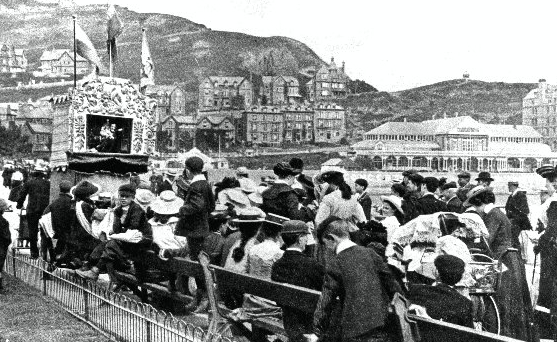
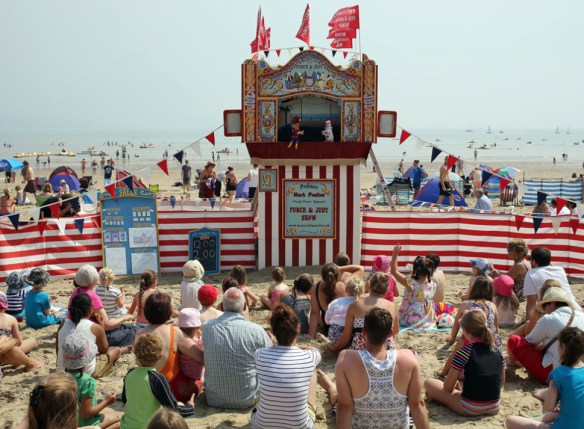
As a child I remember watching a puppet show with my grandfather. Nothing unusual in that, except it was on a beach. I can’t recall it very clearly except that I didn’t like the major character, who frightened me. As I have been exploring puppet theatre across the world I have steadfastly ignored this experience until a colleague pointed out that Punch and Judy was as much a legitimate world theatre form as Wayang Kulit. So I was prompted to dig deeper, and even more so when the image below, taken two weeks ago, appeared in the british press.
photo_Fotor

And the one below is from late nineteenth century.

llancod1_Fotor

I hadn’t realised quite how old the form was, or that it had its roots in Commedia dell’arte – although now that seems really obvious. Punch and Judy is one of the world’s most famous and long running puppet shows. It is essentially linked with England but Punch and Judy can be found just about wherever the colonial English decided to ‘set up home’ and english is spoken as a first language, America, Canada, Australia. Here is a great history of the form, written by Keith Preston, an Australian Punch and Judy man.

Punch and Judy has its origins in the commedia street theatre of medieval Italy and Punch arrived in England in 1663 from Italy as the marionette Pulchinello (noted by the famous London diarist Samuel Pepys). The character evolved into Punch over the next century and Punch appeared extensively both as a marionette and as a comic actor and slowly acquired a more English character that was a cross between the English Jester, Fool and the Shakespearean comic characters. In the late 1700’s the London puppet theatres closed and Punch and Judy as we know it appeared as a busking act on the streets of London as a portable hand-puppet show.

To entertain its new audience of street-wise townsfolk this new form of puppet theatre needed to be fast, loud, action-packed, comic and portable. Punch and Judy was all of these and more. The show started with the bottler (assistant who carried the bottle for the money donations) banging a drum and playing the pan pipes. The Punch-Man (later to be called a “Professor of Punch”) stayed inside the booth and operated all of the puppets and most notably the character of Punch whose shrill shrieking voice was created with a special reed inserted in the throat (known as the swazzle).

punch

The early puppeteers led a gypsy style existence moving through the streets of London and also taking the puppet show to fairs and events. When Londoners began to travel to the seaside towns by train in the 1840’s the Punch Professors followed and soon the Punch and Judy Show became a seaside institution. Some beaches and cities have had a Punch and Judy show every year for well over a hundred and thirty years. The Punch Professors guarded their shows fiercely and only passed on the secrets of puppetry to a son or nephew and kept the business ‘in the family’.

The show itself has changed enormously over the last two hundred years. The first written scripts appear around 1830 but illustrations of shows actually appear in the 1770’s. By the time the first scripts are found the Punch and Judy show has already been around for fifty years and has had a chance to develop into a fully fledged puppet show. While the story is new and reflects the life of the then modern Londoner, the script is also full of references to the early years of Punch, to the Medieval mystery plays and to the symbolic dramas, themes and characteristics of England.

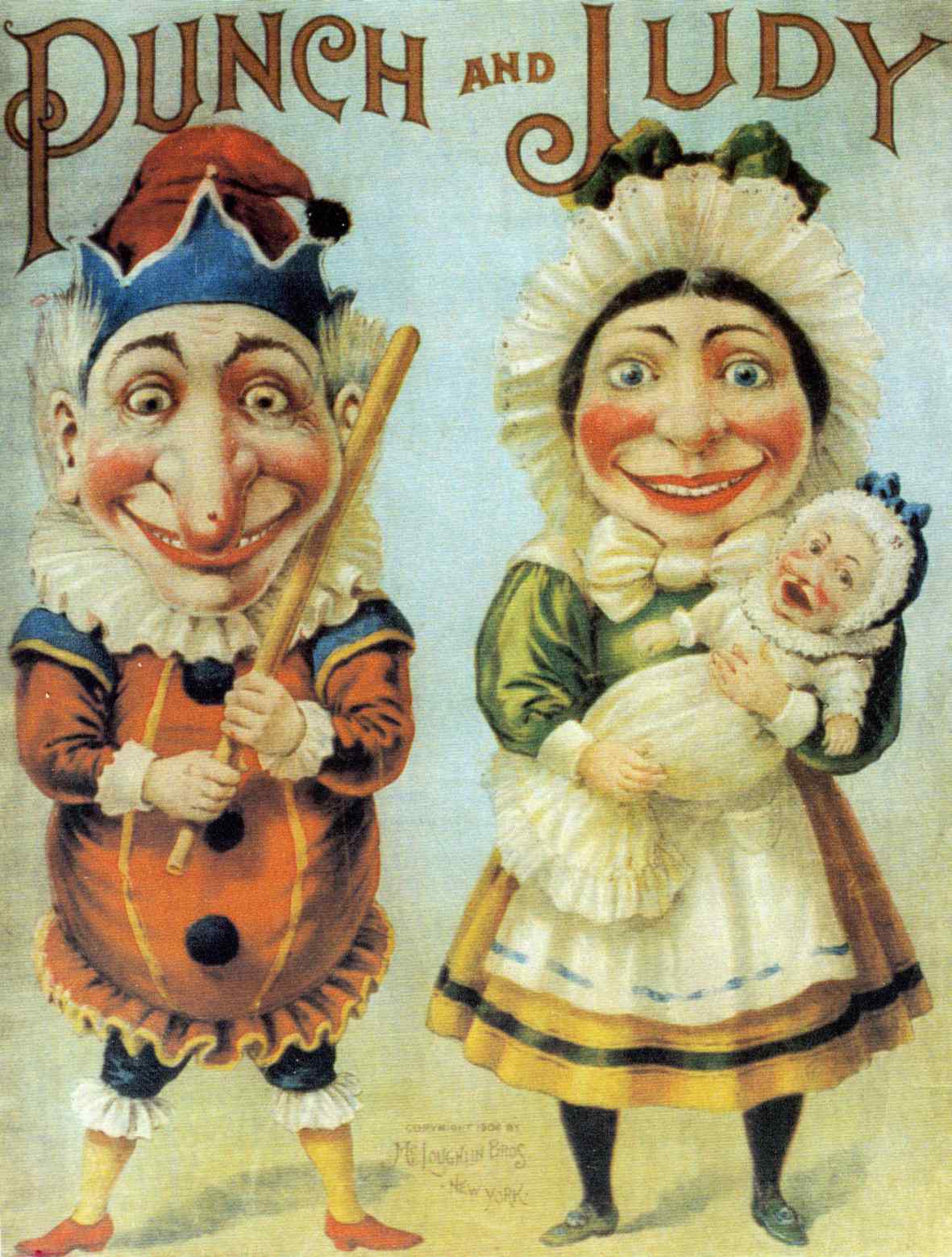
The early shows feature Mr Punch , a hook-nosed comic figure with a stick who is a cowardly braggart but strangely likeable. He hides, lies, cheats, steals, beats, boasts eats, drinks and loves his way through a difficult life. He is a rascal but is also an “Everyman” figure in that he represents the average person. In the old storyline he has an argument with other characters, fights them, sometimes he kills them, is chased by the law, taken to jail, but beats the hangman and the devil and ends as triumphant anti-hero. In between, the whole drama is treated as a total farcical comedy with lots of action, routines, jokes and slapstick moments. Other characters include Judy his wife and their Baby, Scaramouch the neighbour and his dog Toby (often played by a real dog) Joey the Clown, The Beadle or Policeman, The Quack Doctor, The Crocodile, Sweet Polly the Mistress, The Hangman, The Devil. In particular the characters of Hangman and Devil owe their origins to the medieval English dramas and early theatre of the Elizabethan period.

Punch-and-Judy

Obviously much of this is black-humour but with the comic drama, Punch and Judy acquired a symbolic status as a drama about life itself. Punch and Judy was a hugely popular entertainment for ordinary people on the street but also was often invited into private homes and mansions of the aristocrats.

It is interesting to note that a similar evolution of the commedia/marionettes also happened in other parts of Europe around the same time or slightly later and in Germany we have a similar hand-puppet show-Kaspar, in France – Guignol, Petrushka in Russia, Punchinello in Italy as well as links to the Greek shadow puppet theatre.

Punch and Judy emigrated with the English to America, Australia and other parts of the world in the Nineteenth Century but by the 1940’s was in decline with the advent of films and other aspects of popular entertainment. As with many other forms of traditional performance such as Vaudeville, Circus, Fairs and so on Punch and Judy was able to reinvent itself and had a revival in the 1960’s with the new emphasis on community arts, national pride, tourism and so on.

.

However over the years the Punch and Judy Show has also adapted and changed. In some cases it has become more of a children’s entertainment, far removed from its origins as a street-play. The rough and tumble violence has been changed and Punch is very much less of a sinister figure than he was in his early days. Some performers however do present shows that portray old-style performances still to this day.

To me it all seems terribly dated, but it clearly lives on. In an article in the Smithsonian Magazine by Linda Rodriguez McRobbie earlier this year the question is asked, Are Punch and Judy Shows Finally Outdated? It would seem not, although Rodriguez McRobbie does  talk about the violence (and murder!) in the shows:

The violence, of course, has remained—and for that reason, Mr. Punch’s influence on children has understandably long been a source of worry. A New York Times article from February 11, 1896, describes children enjoying a Punch show on West 135th Street in Manhattan—and one “grave gentleman,” who resembled Punch “as if they were brothers,” grumbling at the policeman-beating scene and declaring, “It is a shame to show such things to children! How can you expect them to have any respect for the law?”

In 1947, the Middlesex County Council in England banned Punch and Judy from schools, prompting wide outcry from Punch fans and his eventual reinstatement. More than 50 years later, in 1999 and 2000, other councils in Britain considered banning Punch and Judy shows on the claim that they were too violent for children; they didn’t, but it was close……Punch defenders claim that’s just modern oversensitivity. “Although adults get very upset about the violence, the bashing the baby, it’s no more real to a child than watching a cartoon, like ‘Tom and Jerry,’” says Cathy Haill, curator of popular entertainment for the Victoria & Albert Museum in London. “Ninety-nine percent of children will roar with laughter [at ‘Tom and Jerry’] and not think ‘Oh, I’ve got to write to the society for prevention of cruelty to cats’…Nowadays, people are far more— and I hate this term—politically correct and get ridiculously worried about things like this, in my view.”

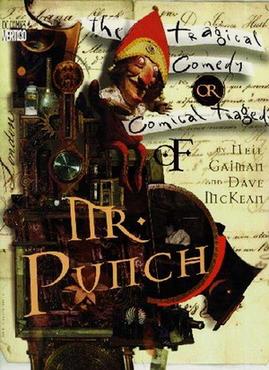
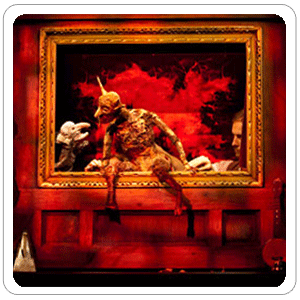
Mr_Punch_coverInterestingly though, Punch has been reinvented in a number of ways. In 1994 The Tragical Comedy or Comical Tragedy of Mr. Punch appeared as graphic novel by Neil Gaiman and Dave McKean. Last year Improbable Theatre created one of its most famous pieces, The Devil and Mr Punch:

DevilPunch.

..

.

.

.

.

There are two excellent pieces from Exuent that look at this particular show, The Immortal Mr Punch by Gareth Martin, and an interview with Julian Crouch (Designer and Director) by Tom Wicker.

.

And to finish, a delightful interview from 3 days ago, entitled Keeping Punch and Judy in the family, by Giulia Rhodes for the Guardian, where she talks to three generations of a Punch and Judy family.

.

Going Global

I found myself recently in a conversation about what the term World Theatre means? I came to the conclusion that it depends on where in the world you are. For me, Cantonese Opera is not World Theatre because it exists on my doorstep, but for my students the work of Harold Pinter is, for example, as is the Broadway Musical.

But an announcement last week by a theatre company got me back on to this subject and it really got me thinking. The Globe Theatre in London, who I also wrote about recently, said they are sending a production of Hamlet on the first genuine world tour in theatre history. Starting on 23 April 2014, the 450th anniversary of Shakespeare’s birth, the company will spend two years travelling by planes, trains, boats and buses to visit every nation on Earth – 205 countries in all.  My immediate thoughts were, ‘is this inspired or is it arrogance  – only a British company would consider doing this?’. However, a quick Google search later disabused me of my cynicism. The proposed tour was reported in Canada, Australia and the US (not surprisingly, you might think), but also in India, China, Egypt, Turkey and many other places where English is not spoken as a first language. The saintly Peter Brook commented that it is:

a bold and dynamic project……the six simplest words in the English language are ‘to be or not to be’. There is hardly a corner of the planet where these words have not been translated. Even in English, those who can’t speak the language will at once recognise the sound and exclaim ‘Shakespeare!'”

Untitled_Fotor

According to The Globe’s artistic director, Dominic Dromgoole the idea came about because they wanted to build on the festival they hosted last year where all 37 Shakespeare plays were performed in 37 different languages, by actors from 37 countries. I wrote about it my post Globe to Globe. Further details were given in an interview with Maev Kennedy in the Guardian

Globe theatre plans 205-nation Hamlet world tour

Two-year tour will start next April on 450th anniversary of Shakespeare’s birth, and aims to visit every nation on Earth

“I think having a lunatic idea is a very good thing, it’s a great way to keep everybody focused and dazzled and delighted by the ambition and energy of the company,” said the artistic director, Dominic Dromgoole. “If we’re going to do every country in the world it has to be every country, we’re not going to leave anyone out. All the ‘Stans, South and North Korea – we’re very keen to get into North Korea. Antarctica? Fuck yes.”

He said it had to be Hamlet for the project. “It is an iconic play, instantly recognisable anywhere. It has that capacity to question, to challenge, to inspire in any country in the world,” he said.

The show will open at the Globe next April, and close there exactly two years later on 23 April 2016, which also happens to be Dromgoole’s last day as artistic director.

The 204th and 205th stops are already decided: the Rift Valley in Kenya – “where human life began on Earth”, Dromgoole said – and Elsinore in Denmark, the castle where Shakespeare set his tragedy. They will be performing in theatres, in town squares, on beaches and in jungle clearings. There are, however, many gaps and question marks in the plan.

The company will snake across Europe, at one point playing four countries in five days, into the Caribbean, America north and south, down the west coast of Africa, on into Australia and the Pacific islands (“logistically that could be quite hard work,” Dromgoole said, looking slightly anxious for the first time) on to Indonesia, Japan, China and Asia, back up the east coast of Africa, to Elsinore and then home. Easy.

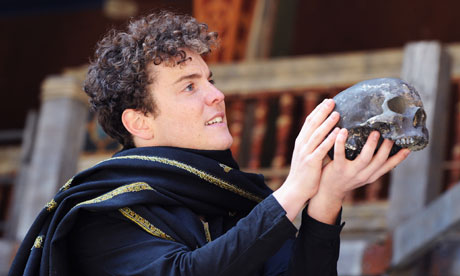
Hamlet at the Globe

The experiment is unprecedented but builds on links forged through the Globe’s last spectacular attempt to link nations through the words of the glover’s son from Stratford-upon-Avon. Last summer as part of world Shakespeare season celebrating the Olympics, the Globe invited companies to come and perform every play the Bard wrote in 37 different languages – including Troilus and Cressida in Maori, Two Gentlemen of Verona in Shona (spoken in Zimbabwe and Zambia), and the Henry VI plays divided among the Balkans in Serbian, Albanian and Macedonian.

The season proved a wild success, seen by more than 100,000 people in six weeks, 80% of them first-time visitors to the Globe. “It was such a fantastic experience I thought we need to keep that energy going, we need another bananas idea,” Dromgoole explained.

The touring Hamlet will be the Globe’s scaled-down version, which has already been admired in UK tours, with a cast of eight – from a company of 12 to allow for illness and even the odd day off – playing more than two dozen roles between them, scampering through the text of Shakespeare’s longest play in just over two and a half hours.

6a0133ec96767e970b01538e667140970b

Although they hope to attract sponsorship, the unsubsidised main house on the South Bank has been making a handsome profit in recent years, and small-scale tours having been covering their costs or better.

Since Dromgoole launched Romeo and Juliet in a camper van six years ago – the modern version of the strolling players of Shakespeare’s day arriving in a wagon piled high with props and costumes, he said – he has been trying to reach the parts other tours don’t touch.

This summer he is sending a company out to play Shakespeare’s history plays on the actual battlefields that sparked regime change,  with Henry VI on the wide green fields in Yorkshire where in 1461 streams ran red with blood and ditches were choked with bodies at the battle of Towton.

“Touring is in our blood,” Dromgoole said. “It’s what Shakespeare’s company did, it’s what we do – and it’s great fun.”

Another interview here with The Globe’s executive producer, Tom Bird, gives you an even greater idea about the possibilities and logistics behind the tour.

I have to applaud Dromgoole for his vision. It is inspired. Perhaps Shakespeare is the true World Theatre? He is performed in the original and in translation all over the world. I was reading an interview with a Kuwaiti actor yesterday who said his greatest challenge and love was always Shakespeare (in Arabic). I’ve seen bilingual performances here in Hong Kong. Shakespeare is a favourite in Korea.

This tour will be an interesting one to follow once it gets underway. I am looking forward to how it is received. You can follow it on Twiiter @WorldHamlet.

Riding High

Today’s post is born out of one those moments of revelation when you think ‘how did I miss that? How can I not have heard of that’.  I am writing about the Bamana giant body puppets of Mali. If you have never heard of this tradition it is well worth looking at, because when I say big, I mean BIG!

screen-shot-2013-03-13-at-12-47-05-pm

I need to point out at this stage that in the Bambara language the same word is used for both ‘mask’ and ‘puppet’, since both serve the same function: to enable mythical and supernatural beings to be brought to life by hidden performers. I got a little confused at first, but I like the idea that there is no distinction between the two .

.

Below is a brief background, courtesy of Museum of African Art in New York, but first I suggest you watch this.  The narration is in French (Mali was a French colony until 1960) and very accessible even with my poor school-boy ear.

.

At Arm’s Length: The Art of African Puppetry

The art of Malian puppet theatre, the Sogo bo (the animals come forth), practiced by the Bamana of Mali and originated by the fishing community of Bozo, dates back to pre-colonial Mali. Sogo bo, a performance of puppet and mask dances, tells stories of Malian tradition, imparting valuable lessons in morality while entertaining the audience.

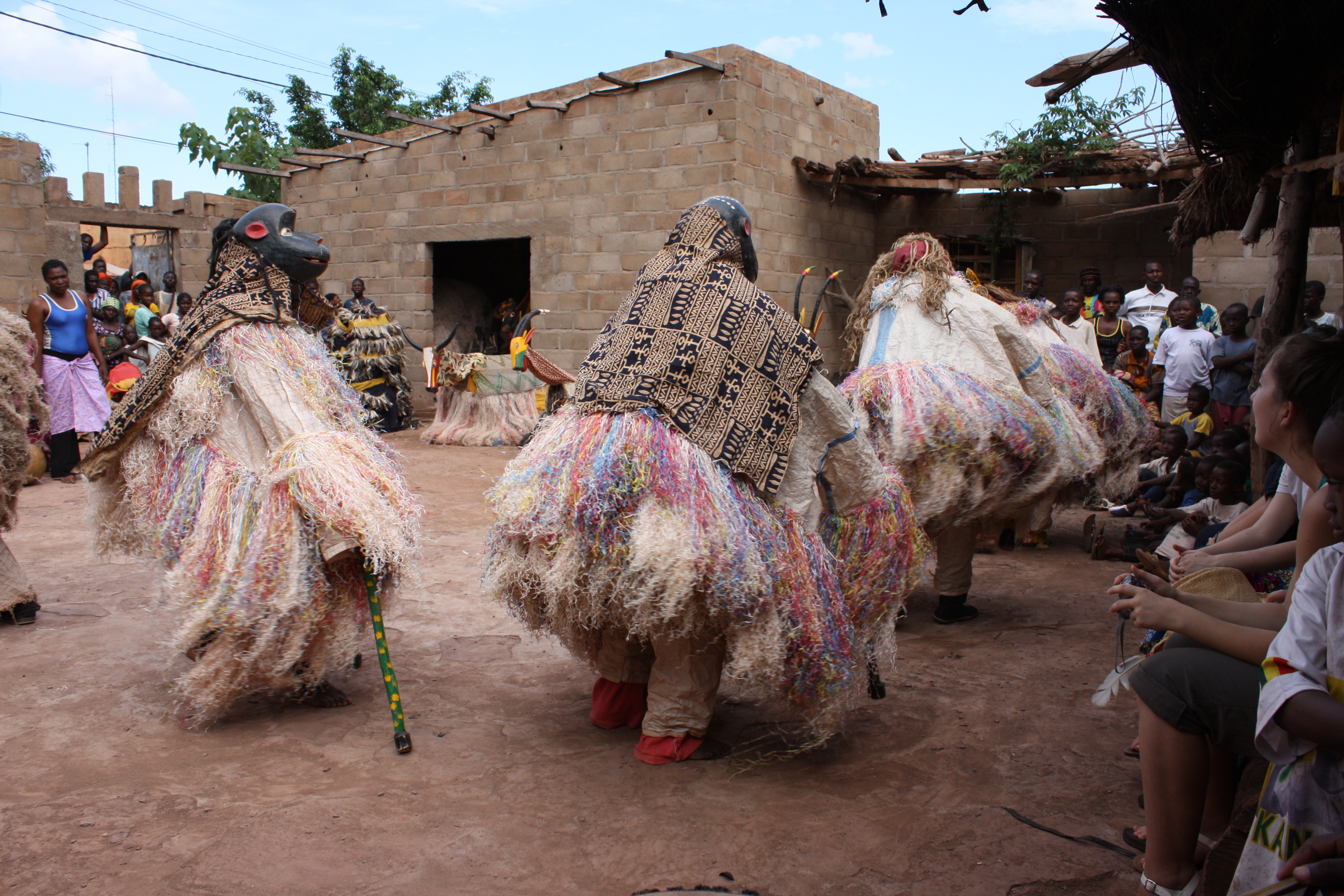
Within the Sogo bo performance animals of the bush are paramount.The Bamana describe themselves as cultivators and hunting people, and it is therefore animals from the bush that predominate. The animal characters represent far more than their counterparts in the bush. They are the symbols, the tangible manifestation of the essential force of the animal. They are the imperial majesty of the buffalo or the conniving duplicity of the hare. The qualities are implied through the costume and the dance of the masker. The buffalo masker regally marches about, and the youthful spark of the hare can be seen in its quick, vigorous movements. The antelope can be seen striding grace-fully, and the baboon jumps about with vigor.

warel508370_540h450w

The Sogo bo masquerades are organized by the village youth associations, the kamalen- ton, and the subject matter most commonly dealt with is hunting and heroic behavior. The youth associations, in essence, own the masquerades. They organize the activities of the night, and it is their stories that the masquerades tell. Weeks prior to the fete, the youth organizations meet frequently, planning and choreographing the events of the masquer- ades. The youths of the kamalen-ton choose the cast of characters, the costumes, the stories, and the masks that will be used. They may choose to bring out and refurbish used masks or create new ones. Their mothers, wives, and sisters provide the textiles neces- sary for the costumes. Once the major planning is completed, the youth organizations split into smaller groups and work on the particular renovation or construction projects assigned to them. Throughout this process, the older men act as consultants, offering advice on the construction of the more intricate puppets.

The puppet masks of the Sogo bo are generally worn over the bodies of the performers (usually two men). The performer(s), surrounded by the wooden frame of their puppet masks, are hidden from view by straw and cloth which cover the frame.The head of the puppet is manipulatable , and from within, the performers move the puppet about in dance.

3947215898_e7764f17d6_o

The Sogo bo performance takes place at night, and can carry on well into the early morning hours, consisting of more than twenty sets of dances. Called to the dance by the beat of the drums, the maskers, either individually or in small groups, dance in character. The large and powerful beasts lumber about slowly, majestically (the more powerful ones come out towards the end of the night), while the energy and spark of youth can be seen in the dance of the smaller animals. Each dance set lasts only five to ten minutes, and in between, the women’s chorus provide song (praise songs for the animals). The chorus, however, does not perform during the dance sets, the sets are without voice. It is the masks, the movement of the maskers, and the beat of the drums that tell the story.Untitled_Fotor

Malian puppetry features maaniw, “little people” or puppets in human form. They range in size, from small hand-held rod puppets to almost 6-foot tall figures. Maaniw play an important role in initiation ceremonies and often appear at nighttime on the backs of kalaka (small stages in the form of a body). They often speak of the individual’s place in society and teach morals.

Though there are certain tenets that are retained in the storytelling, it is by no means a static tradition. Puppet plays that were once held only on specified days are now held on weekends, to accommodate the schedule of those who have left the village to make a living in bigger cities. Modern issues are dealt with, and the plays continue to reflect the lives and times of the Bamana.

.

1244916533630_FotorThen I read about Yaya Coulibaly, 7th generation descendant of Mamari Biton Coulibaly (King of Segou region of Mali) who is the director of the Sogolon Puppet Troupe. After training at the National Institute of Arts in Bamako, Mali,  and l’Institute International de la Marionette in France he mastered the traditional Malian arts of puppetry.  It would seem he doesn’t rest with tradition either. Malian puppet performances are traditionally voiceless, but Yaya has chosen to integrate voice and performance. I realised I had heard of him before and then I remembered he had worked with Handspring Puppet Company, the people who created the horse puppets for War HorseThey collaborated on a piece call Tall Horse which blended two puppetry traditions: the Handspring work which is based in lifelike realism and the stylised, ritual rtallhorsebased puppetry of West Africa. The play’s narrative is of  a giraffe and its handler, Atir, sent as a gift from the Egyptian Pasha to the French King Charles X in 1827. Its journey took it via Alexandria and Marseilles, creating a sensation en route. Tall Horse premiered in Cape Town and then went on to tour the world. This blending of styles really appeals to me. I would have loved to have seen the play.

Many of you reading this will know of ISTA – the International Schools Theatre Association and they published a great article a few years ago by Laurie-Carroll Bérubé about her staging of Tall Horse which you can read here, Malian puppetry traditions.

Changing tack slight, as part of my research I came across this fascinating recording of Basil Jones and Adrian Kohler (Handspring’s founders) and others, talking about puppetry as a contemporary medium of communication and influence. Puppets and politics – fantastic! You will need a couple of hours, but it is really, really interesting and worthwhile.

.

I’ll finish with a few useful facts about Malian puppetry, taken from Bérubé’s article:

Boliw is the raw spiritual energy/ power contained within performance objects such as masks and puppets. It is believed that women possess boliw – because of their ability to give birth.

Castalet: the large body-puppet, which represents a gentle mythical beast. The body of the animal is a cloth and raffia-covered frame which conceals the puppeteer inside who dances, making the raffia skirt sway.

Merens habitables are the long- necked female characters of traditional Malian performance. Merens habitables are manipulated only by men and post-menopausal women because only they are able to control the boliw contained within the puppet.

Sogo Baw or Sogow (Big Beasts): these are large body-puppets (roughly 2 m long, 1.5 m high), generally representing bush, savannah or domesticated animals. Sogo baw can resemble mobile puppet theatres with small puppets on the larger animal’s back, manipulated from within.

Sogo Bo: the annual masquerade (the Animals come forth) held in June, just before the rains come to Mali’s Segou region

Body Talk

{722863BA-C984-4A5A-80E4-10D5297F14AE}Img100

I thought a while before posting today.  I read an article in the New York Times yesterday about a play touring in China. It is inspired by Eve Ensler’s play The Vagina Monologues which has become a cornerstone for a global movement to end violence against women and girls, V DAY. I only hesitated because the article is very frank, then decided that the power of theatre wins out against possible embarrassment. It is written by Didi Kirsten Tatlow:

Play Tests China’s Sexual Limits

BEIJING — There is a moment in the play “Our Vaginas, Ourselves” — a frank and funny exploration of feminism with Chinese characteristics — when the audience freezes in embarrassment. It is right after the actress Xiao Meili asks, “Do you masturbate?”

“It’s so hard getting people to answer that question!” Ms. Xiao, a 20-something with a razor-sharp black bob, exclaimed in an interview. “A lot of the time I had to answer myself,” she said of her scene, in which she plays a teacher.

During a recent performance in Beijing, Ms. Xiao paced in front of a white board demanding answers of her “students” — in reality a standing-room-only crowd of college-age women, some older women and several men. “A former professor of mine who attended told me she was terrified I’d ask her,” she said. Yet at one performance, “a woman yelled ‘Yes, it’s relaxing!”’ Ms. Xiao said, relishing the moment. “Totally spontaneous!”

Inspired by Eve Ensler’s “The Vagina Monologues,” with an English title that makes reference to the feminist classic “Our Bodies, Ourselves” — its Chinese title translates as “The Way of the Vagina” — the taboo-busting “Our Vaginas, Ourselves” was first staged in January at an L.G.B.T. center in Beijing before an audience of 50, said its producer, Ji Hang.

Written by four women, it is based on the life experiences of about a dozen contributors who gathered last autumn at Yiyuan Gongshe, a nongovernmental organization in Beijing, where they sat on cushions in a circle and talked.

“Writing this play was really just getting it down,” said Ai Ke, 29, one of the writers, who by day works for the publishing house of a major social science research institute.

It has been a hit. Since January, the amateur actresses and playwrights have performed it about 10 times in Beijing, Tianjin and Xiamen, to enthusiastic audiences numbering up to 150, who squeeze into small venues, sharing chairs and fanning themselves, as on a recent evening in the MOMA arts district of Beijing. But their performances have been limited in scale. The play has only been staged in unofficial venues because it was unlikely to get the necessary script approval from the authorities to show in official theaters, said Ms. Ji, the producer.

“We really want to enter the mainstream theater scene, but it’s impossible because the scripts would have to be censored,” she said. The subject matter is far too edgy to pass, she said.

While the play clearly owes a debt to Western feminism, what is striking — and exciting for the actresses and their audiences — is how thoroughly localized it is, with uniquely Chinese stories and a fast-paced style that at times recalls the xiangsheng, or crosstalk, of traditional Beijing humor, and rich, pun-laden language. Localization was crucial to the artists. “It’s so important to us I can’t even find the words to say it,” Ms. Ai said. “From the beginning we knew that was what we wanted.” The goal? Nothing less than to bring live, theatrical feminism — with its truths and relevance for hundreds of millions of people — to China. And to create an opportunity for personal transformation.

“It was important to us as a consciousness-raising exercise,” Ms. Ai said. “The personal transformation was No. 1.”

The localization is spelled out in the very first scene. “I’ll say it: vagina!” two actresses, called A and B, say in Mandarin, on a stage with minimal props. “I’ll say it in the Shanxi dialect: vagina,” B says. “In the Wenzhou dialect: vagina,” A says. Then it’s the Hubei dialect, and so on until they have uttered the word in 10 dialects, the audience reacting with delight to the shock of the familiar, yet rarely heard word, spoken in their hometown tongues.

Of the play’s 11 scenes, eight consist of original material, while two are Chinese translations of excerpts from Ms. Ensler’s “The Vagina Monologues,” and one is from an earlier Chinese play inspired by the American play, Ms. Ji said. Humor figures highly, as in Ms. Xiao’s scene and another called “The First Night.” Six women identified by the letters A to F chat about how they lost their virginity. “After we got a room,” sighs E, using a Chinese euphemism for having sex, “he got a receipt,” indicating that the man planned to make the encounter tax-deductible. The audience erupted in laughter.

But there is also real tension, notably in scenes that focus on rape, health and abortion. In the final scene, “I Am an Intern in an OB-GYN Ward,” a medical student recounts her experiences at a hospital: An elderly woman embodying the Chinese cultural ideal of the selfless grandmother — who will not seek medical treatment for a gynecological problem — says, “Son, don’t spend the money on me. Spend it on my grandson to go to university.”

The student also describes helping at births; the horror of aborting fetuses because they are female; and young women coming for routine abortions, sometimes several a year. China has a high abortion rate, and as I gazed around the audience, all their laughter gone, I reflected that quite a few women there probably knew precisely what she was talking about.

In 2005 The Vagina Monologues was banned in Shanghai. In the same year it was also banned in Uganda.

The Vagina Monologues challenges India's taboos

The Vagina Monologues challenges India’s taboos

.

.

.

.

.

.

.

.

I have seen the play a couple of times and it is indeed a powerful piece. If you are interested you can read the original text here. A little bit of researching later, it became apparent to me just how widely the play has been performed – it has been translated into 22 languages (and counting). It has been running in India for 11 years. Following the awful Delhi rape case that made headlines across the world earlier in the year, it is not surprising that the play took on a greater importance, as this report, Vagina Monologues challenges India’s taboosfrom the BBC highlights. Indeed following it, Eve Ensler went to India to support the movement there:

.

A report from zeenews.com, When art impacts life, makes interesting and thought provoking reading as does a review of the play from the Times of India. Mind you, it has been banned in certain parts of India, as it has, believe it or not, in certain American states.

I was surprised to read that it has been staged in a number of more liberal muslim countries – Turkey, Egypt, Pakistan and Indonesia, but is banned in Malaysia.

And the purpose of my post? Simply to highlight the power of theatre to challenge orthodoxy and repression across the world.

Stringing Up Royalty

I have spent quite some time recently looking at puppetry as a world theatre form and I have some great things to share – very varied, from the ancient and traditional, to the contemporary and technological. I have always been fascinated by puppets, right from being very young and even now I have puppets in my house, collected from across the globe. There is something quite primal about the way they can be brought to life.

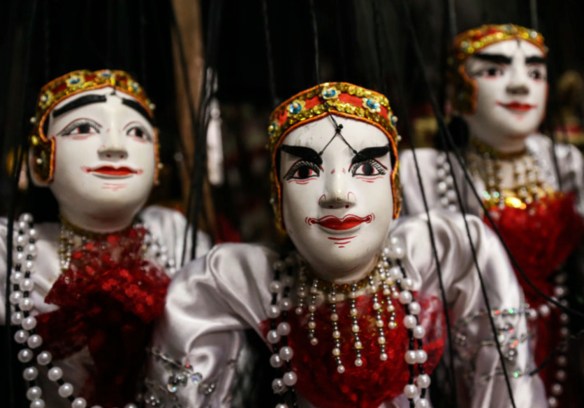
I am going to start with a puppet tradition that goes back at least 700 years. In Myanmar/Burma puppet plays have been performed since at least the 1400s. In the 1700s, the royal court began to formally sponsor and regulate the puppet theatre, causing it to quickly grow in prestige.

Htwe Oo Myanmar puppeteers perform a group dance of handmaiden puppets

Htwe Oo Myanmar puppeteers perform a group dance of handmaiden puppets

The Burmese court was concerned with preserving the dignity of its members and marionettes were often used to preserve the esteem of a person who had erred. For instance, the emperor could reprimand his children or his wife in this way by asking the puppeteers to put on a parable correcting errant children or careless wives about their reckless ways. While the reprimand would be obvious to anyone who was “in the know” it would largely pass unheeded by the people looking on, something that had a great deal of value in a court that could, and did contain hundreds of people.

.

The Burmese marionettes also served as a conduit between the ruler and his subjects. Many times, people would ask the puppeteers to mention in a veiled fashion a current event or warning to the ruler. In this way, information could be transferred on without any disrespect. A marionette could say things that a human could never get away with.

In many ways, the Burmese marionette troupes replaced the actors of the time. It was considered a beheading offense to put your head above royalty, a fact which made standing on a stage difficult to say the least. Similarly, the laws of Burma were such that an actor could not wear full costumes if they were playing figures like royalty or holy men. While both of these facts would hamper the movement and stylings of a human actor, marionettes were not bound by such things and thrived in the vacuum.

In the 1800s, puppet theatre was considered the most highly developed of the entertainment arts, and was also the most popular. Though no longer as popular today, the tradition is still maintained by a small number of performing troupes.

A Burmese puppet troupe includes puppet handlers, vocalists, and musicians. Plays are based on Buddhist fables, historical legends, and folktales, among other stories. The shows are performed for adults and children together, and typically last all night.

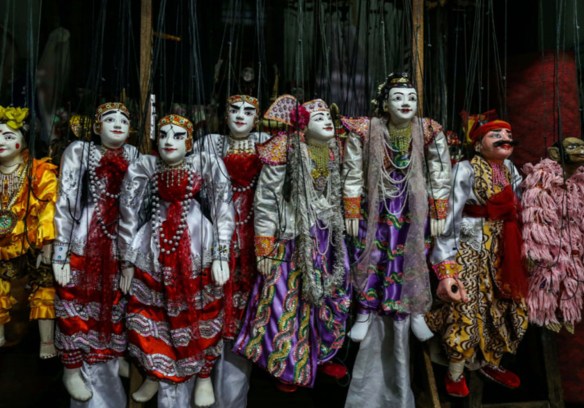
The Burmese puppetry figures of “nat-ga-daw,” or the spiritual medium, at Khin Maung Htwe’s home theatre

The Burmese puppetry figures of “nat-ga-daw,” or the spiritual medium, at Khin Maung Htwe’s home theatre

The puppets themselves are marionettes, ranging in height from about one to three feet. Nearly all are stock figures, changing their names but keeping their characteristics for each play. Some of these puppet types have been standard for centuries—especially those developed from Buddhist fables, which probably formed the puppeteers’ first repertoire.

As Myanmar emerges from years of political and social isolation, it is not surprising that traditional puppet troupes are emerging as a potential tourist draw (as they are in other countries across the world). However, it is clear this is also being done by a drive to hold on to centuries of cultural tradition. Two companies that are particularly gaining a reputation are the Mandalay Puppet Theatre and Htwe Oo Myanmar. The website of the former is packed full of information from how to make your puppet (provided you are a master craftsperson) to how to manipulate them, to a description of all the puppet characters.

.

A transcript of this video can be found here.

On Saturday, The Irrawaddy published an article by Kyaw Phyotha about U Khin Maung Htwe who founded Htwe Oo Myanmar

Bringing Myanmar Puppetry Back to Life

YANGON — Sitting in his makeshift theater at his home near downtown Yangon, U Khin Maung Htwe is dreaming big.

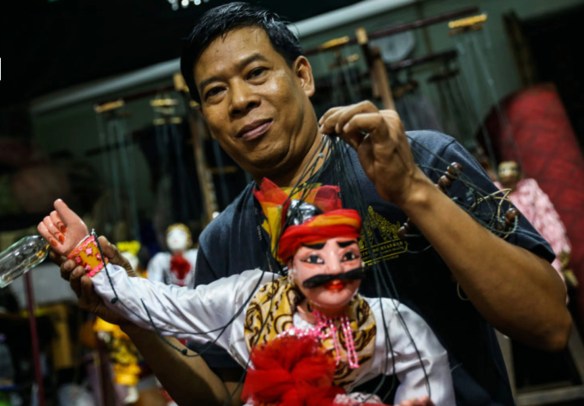
“I want to have a museum or center focused on Myanmar puppetry,” he said, caressing a stringed wooden white horse, one of the figures from a set of 28 Myanmar marionettes.

As well as running a theater, U Khin Maung Htwe is director of the Yangon-based marionette troupe Htwe Oo Myanmar. “Here in Myanmar, there’s no place to go for anyone, both locals and foreigners, who want to learn about the arts,” he laments.

Khin Maung Htwe poses with puppet U Min Kyaw, one of the famous pantheon of 37 spirits, who is fond of drinking and merrymaking

Khin Maung Htwe poses with puppet U Min Kyaw, one of the famous pantheon of 37 spirits, who is fond of drinking and merrymaking

When he established the troupe in 2006, the one-time sailor’s ambition was more humble: He wanted to showcase Myanmar’s traditional performing arts to tourists in a fitting environment.

“I did it because I wanted to see people enjoy our puppetry in the way it is supposed to be enjoyed,” he said, explaining that hotels and expensive restaurants offer so-called traditional puppet shows to attract foreigners. “They treat puppetry like a side-dish to tourism.”

After struggling for seven years to get his idea off the ground—including making 10 overseas trips, from Thailand to Austria—Htwe Oo Myanmar has gained popularity internationally. Visiting Europe, he says, opened his eyes to the importance of opening a center to preserve the art form.

“After visiting puppet museums [in Europe], I have a burning desire to have a center for teaching, preserving and showcasing our puppetry here,” he said. “It would be very convenient for us to pass the arts on to younger generations.”

Myanmar puppetry, known as Yoke Thay, has a long history dating back more than 500 years. In a similar fashion to other folk plays around the world, Yoke Thay functioned as both royal entertainment and mass media, spreading stories of current events.

But Myanmar’s tradition of puppetry is also unique.

“Our tradition is unlike any other puppetry from neighboring countries. Ours has its own unique styles in every respect, including the way to manipulate the puppets and their design,” said U Chit San Win, the author of “Yanae Myanma Yoke Thay Thabin” (“Myanmar Puppet Theater Today”). “In our Yoke Thay you can enjoy all the Myanmar arts, like dancing, music, sculpture, sequin embroidery and painting.”

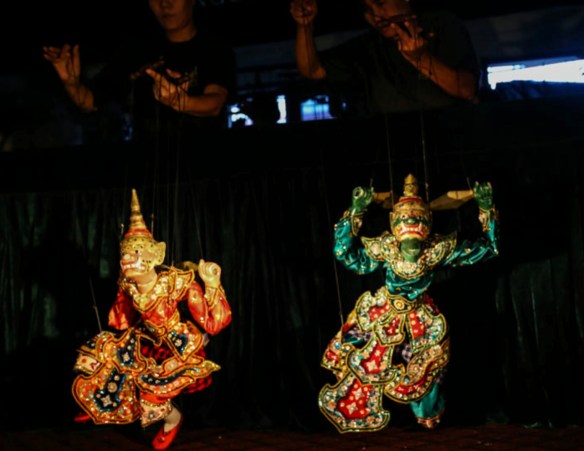
The puppetry performance of ba-lu, or ogres

The puppetry performance of ba-lu, or ogres

U Chit San Win says Yoke Thay is not on the verge of extinction due to a number of puppetry courses taught at universities. But in general, he says, the traditional arts are unfashionable.

“Young people find it very boring and difficult to understand because even today the Myanmar puppet performance is still very traditional and using old Myanmar [language],” he said. “This means Yoke Thay has seen a serious decline in local patronage and it survives on tourism.”

This could explain why Htwe Oo Myanmar has battled for years to recognition at home, even as it has found interest abroad. When Cyclone Nargis hit the Ayeyarwady Delta in 2008, causing tourist numbers to fall, the troupe was forced to move to U Khin Maung Htwe’s living room, now hastily converted into a stage when tourists arrive.

He said while neighboring countries such as Thailand and Vietnam are attracting international visitors with their puppetry, the Myanmar government does little to promote its traditional performing arts, “because they are paranoid about being labeled a ‘puppet government,’” U Khin Maung Htwe said.

Puppet 4

More than two years after Myanmar’s military junta handed over power to a nominally civilian government, many still wonder if the current administration isn’t just a puppet of former military strongman Snr-Gen Than Shwe.

“Instead of what they are doing now, the government should have more concrete plans for our Yoke Thay,” U Khin Maung Htwe suggested. He sees a puppet museum or center becoming a focal point for puppet masters in the country to collaborate with each other to preserve and promote the arts.

“It would help us generate ideas about how to breathe new life into our dying arts, too,” he added.

..

Telling Tales

One of the most engaging performance I have seen was given by a professional Jamaican storyteller.  She was telling the tales of Anansi the Spider to over a hundred 5 and 6 year olds in a school hall. She was compelling to watch and I have never seen little children sit so still, for so long, utterly transfixed – as were the accompanying adults. I was reminded of this when I listened to this interview by theatre director, Emma Rice. She is currently Artistic Director of the international, UK-based theatre company Kneehigh.

Essay: On Directing – Emma Rice

riceIn it, Rice explores the role of the director as storyteller, and elaborates on the undertaking that transforms a text into a fully fledged production. It is part of  a series the BBC are broadcasting this week and I will share some of the others at a later date. For any of you yet to cut your teeth in a directorial role, it is a great listen. In an earlier interview with Dan Rubin, Rice said:

Theater is storytelling. Sometimes it becomes about lots of other things, but ultimately human beings like to come together and be told a story and to be transported. There’s something very simple about that notion. I think there are probably very few great stories, and the great stories have survived because they hit a fundamental human nerve. So Cinderella is a classic story because there aren’t many of us who, when we were young, didn’t feel unloved, didn’t feel ugly, and didn’t feel that the world was turned against us. So those stories are told for good reason. They speak to us on a very profound level.

This links nicely with an article by Swati Daftur that was published in The Hindu last weekend. The article, titled A Twist In The Tale, talks about the resurgence of professional storytelling in India and how it is no longer just a means of entertainment or passing on cultural heritage.

Storytelling is no longer just about entertaining children. It is now used, in different contexts, to teach and train grown-ups.

“Animals do not tell stories to each other. Humans do. That is how we make sense of the world. So storytelling is essential to being human. Everyone tells stories…We are just not aware of it”, says mythologist and author Devdutt Pattanaik.

Indians are big on stories. This is a land of myths and mythologies; of tales with pious men and brave gods; of stories with carefully masked do’s and don’ts; of tickling anecdotes and gruesome monsters. We have always loved a good story, and we’ve always had storytellers. But, from then to now, the face of storytelling and storytellers has morphed and evolved into something more commercial and professional, but also less localised and farther reaching than ever before.

In the face of rapid urbanisation, mushrooming malls and multiplexes, this ancient art form is somehow making rapid inroads. The Indian storytelling revival has come of age. Stories are no longer just what you hear on lazy afternoons at your grandmother’s house.

In the late 1960s, the Global Storytelling Revival began, with people trying to connect and associate with the past and the present. This involved finding and exploring heritage, identifying with one another and, of course, some good old-fashioned entertainment. Today, India has also joined the movement with its own personal rendition of the revival. With its already rich culture and heritage, and hundreds of traditional storytelling styles and traditions – villu pattu, bommalaatam, phad, chitrakatha and harikatha, to name just a few — the revival has brought together old forms and new applications to storytelling. Efforts made both by the government as well as NGOs, institutes, groups and private players have helped revive and transform storytelling.

Brought on by the revival is also a new and exciting phenomenon— that of professional storytellers. We are in an age where professional storytelling is a legitimate, accepted career choice. Today, there are institutes and colleges that will take you in and teach you to tell wonderful effective stories, and then send you off into the world to actually earn your livelihood by this art.

The Chennai-based World Storytelling Institute, co-founded by Eric Miller and Magdalene Jeyarathnam, is one such example. A veritable home for professional storytellers, the institute brings together threads of different storytelling techniques and styles. It makes use of both the digital as well as the traditional platforms. The institute holds workshops that use storytelling for therapy, healing, environmental issues, educational purposes and countless other projects. Its workshops play with different ideas and forms of storytelling. One striking example is of workshops dealing with animal stories where every animal featuring in a story is supposed to represent an aspect of the human personality (a fox and his cunning, a lion and his fairness, a horse and his loyalty). The institute also has sessions that specifically retell and discuss episodes from an epic. Every story has a purpose, and participants attending the workshop take away everything from management skills to moral lessons.

While The World Storytelling Institute uses both traditional and digital methods to practise and teach professional storytelling, Geetha Ramanujam’s Kathalaya, in Bangalore, keeps the art form free of digitalisation. Ramanujam, the Director of Kathalaya, believes that the storytelling baton has not yet been passed permanently from bards and folk artists to bloggers and the twitterverse. “It is possible for professional storytellers to stick to the traditional art form and still keep it interesting. When I make presentations myself, I don’t use power points and multimedia, but the reception has always been great. At Kathalaya, I’ve tried to make sure that we keep the old ways of storytelling alive. And it does work. We have hundreds of interested people approaching us for workshops in both personal and professional storytelling.”

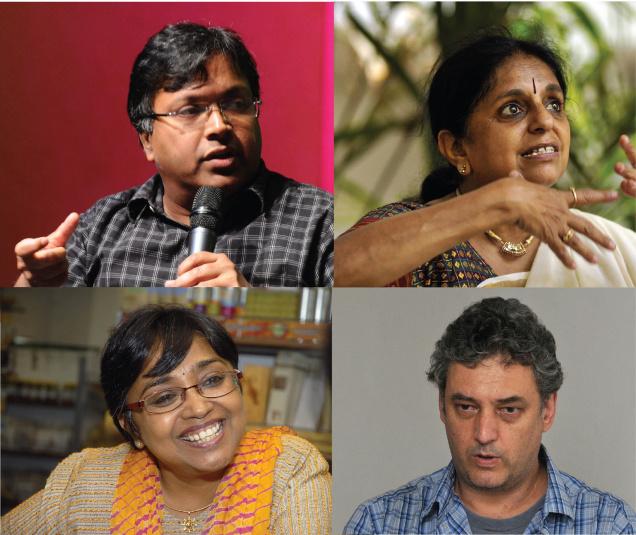
Top: Devdutt Pattanaik, Geetha Ramanujam. Below: Jeeva Raghunathan, Eric Miller.

Devdutt Pattanaik, Geetha Ramanujam, Jeeva Raghunathan, Eric Miller.

Together Geetha Ramanujam and Eric Miller have founded The Indian Storytelling Network, an online portal and confluence inspired by the International Storytelling Network based in Spain and marking the Indian chapter of the Global Storytelling Revival. The Network, in communication with other storytelling organisations around the world, facilitates and assists storytellers as well as festivals and conferences. Its goals focus on reviving and building upon the country’s storytelling traditions and acting as a bridge between performers, trainers and audience.

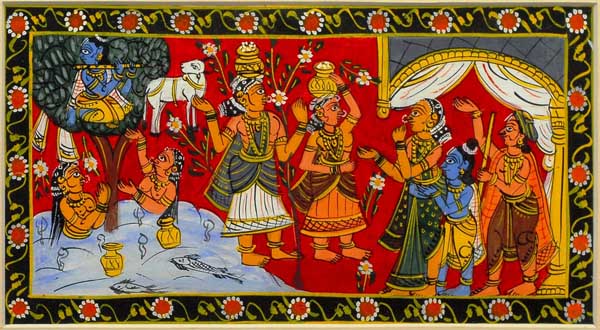
cheriyal_scroll_painting_main001

A professional storyteller has myriad options available to him/her today. The art form isn’t just a source of entertainment any more. From schools and colleges to multinational companies and NGOs, stories have found a place in previously unthinkable places. Management trainees, business experts and educational institutes are fast discovering the benefits of storytelling. “It’s always more interesting to learn something through a story instead of mugging up dry facts. And if it’s told in an interesting way, stories can stick with you longer than any academic or instructive lecture,” says Priyanjalee, a management trainee who has attended workshops organised by Kathalaya. Professional storytelling has indeed complemented learning in a number of contexts, both professional and social. With a little rearrangement, a makeover and a brand new outfit, storytelling isn’t just a way to pass the time of the day anymore. It’s a very useful tool with corporate, humanitarian, psychiatric and educational benefits. The opportunities, instead of shrinking, have exploded with this added qualification actually giving trained professionals a leg-up.

There are certain key requirements for a professional storyteller. The idea behind professional storytelling involves not only effective communication but also the need to engage, inspire and motivate the listener. The qualities at once help the audience as well as the storyteller become a better trainer, speaker and communicator. For example, in management storytelling workshops, the idea is for a leader to illustrate a better future for the company via stories that might not directly involve a corporate setting, but still includes lessons that benefit one in a corporate environment. One of the more popular stories that work in a corporate setting happens to be the simple, yet ingenious, fable of the hare and the tortoise.

indian

After years of being recognised as a source of entertainment, storytelling is now being viewed as a powerful tool for change and the overall development of an individual’s personality, as well as an effective method to address social issues. At once informative, educational and entertaining, professional storytelling is becoming a regular feature at schools, as it is both effective and captures the interest of students, explaining concepts faster than regular textbooks might.

On storytelling’s modern-day reiteration, Jeeva Raghunath, a professional storyteller and one of the pioneers of the movement in Tamil Nadu, says, “What happened within four walls of a house first spread and became a community event. Then, when it turned professional, it became a trade. Now the demand has turned it into a contemporary skill that is required in many fields like therapy, corporate, education, communication, and presentation. Basically, with changing times, due to the lack of comprehension of the old art form, contemporary storytelling has indulged in taking storytelling to another level. Storytelling is turning into a rare but growing commodity and storytellers are becoming brands.”

Jeeva believes that adapting itself to changing mediums is a healthy trend. “Today’s contemporary telling is very different from the traditional styles. Similarly, the digital medium is yet another development; the only difference being the bonding that can happen only in live shows. This change is healthy but just lacks bonding and to a certain extent the stimulation of imagination”. Pattanaik, on the other hand, believes that while the medium might have changed, the human being has not. “I don’t see any real difference. If anything, now we have more versions of the same story and that confuses us. We wonder what is true,” he says.

Today, small and big institutes and groups of professional storytellers are reviving traditions that would otherwise have been long forgotten. For example, Dastangoi, the ancient Urdu storytelling tradition that involved oral narration, was revived by Mahmood Farooqui and Danish Husain in 2005 in the capital. Today, their performances showcasing dastans or fables of fantasy, adventure, intrigue, romance and seduction, have become popular and well appreciated across the country and abroad. Farooqui and Husain have also adapted modern issues and subjects into Dastangoi performances, and their Dastan-e-Sedition or the Tale of sedition was a tribute to Dr. Binayak Sen, conceived during the period of his incarceration and the public outcry against it. The performance was also a part of the Free Binayak Sen campaign held in New Delhi in April 2011.

Acoustic Traditional, founded by Salil Mukhia and Barkha Henry, is another non-profit organisation started to revive and promote storytelling traditions like oral storytelling and tribal folklore, especially of mountain and forest-based communities. Started as a classroom project in Nepal, the organisation is now based in Bangalore. The goal is to preserve the myths, legends and stories of tribal groups, as well as to use these to connect to mainstream communities. Acoustic Traditonals holds The Annual Festival of Indigenous Storytellers along with regular storytelling sessions and workshops.

There is a lot that a story can do. It can affect individuals, or masses. It can bring reform and it can bring joy. It can be used to manipulate public opinion and it can spread misinformation and terror. Clearly, that is a fair amount of responsibility for a storyteller to take on. “Today, storytelling is also used as propaganda to shape people’s political views, as advertising to shape buying behaviour. So what has changed is that we now have an agenda that drives our story. We don’t narrate it innocently, unaware of the underlying thoughts or agenda. It tells us that some products and some services are better than others; it tells us who our heroes should be and who our villains are; they essentially shape the mind of the person who is listening” says Pattanaik.

Whether they use traditional or modern methods; whether they make twitter or a stage their platform, professional storytellers have carved a space for themselves. Skills you couldn’t learn in the classroom, lessons that chapters in your books couldn’t teach you, stories can. Engineering students, children with special needs, prisoners; stories can touch everyone and anyone who is ready to listen, to see and understand.

McTheatre

I’ve been trying to write this post for a few days, but kept getting lost in what I was trying to say. Now I think I have it – my thoughts are now in order.

There is one theatrical tradition that is sure to polarize theatre folk, The Musical, or to give it its proper title, Musical Theatre. People tend to either love it or hate it. It’s looked down on because its ‘populist’ or its celebrated because it is popular and draws a wide audience. I was reminded of this recently by playwright Howard Brenton when asked in an interview which art form he didn’t relate to, he said

Musical theatre. I love opera – I’ve written a libretto – but I can’t bear show music. Every song sounds the same.

I have always tended to agree with him, but while I was thinking about this I began to question why there are some musicals I do like – Les Miserables, Jesus Christ Superstar, Jerry Springer the Opera, The Threepenny Opera, The Lion King and on film, Moulin Rouge. Now this is an eclectic, if not quite odd, mix and I am aware of that, so what is it that they do that draws me too them? Why these, when I know that there are musicals that I simply don’t like and think are utter garbage (the likes of Starlight Express, for example)? Then I listened to this interview with Robert Gordon, who is Professor of Drama at Goldsmiths, University of London.

.

In it he reflects on the perception of musical theatre as pure entertainment and looks at key productions that have had significant political and social relevance across its history, from the 18th century production of John Gay’s The Beggar’s Opera to new musical Mission Drift. It is well worth a listen. (Incidentally, Brecht and Weill based Threepenny Opera on Gay’s Beggar’s Opera and Mission Drift is, and I quote, a pioneering journey west and east across the USA in search of the character of American capitalism).

.

So I went back to my list. Superstar was a first of its kind, one that embraced a popular musical idiom and appealed, therefore, to my generation. Jerry Springer is outrageous and challenged society’s religious norms (and I loved the howls of outrage it produced as well!). The Lion King is an easy one – the beautiful use of puppets was a first. The Threepenny Opera because again, it was the first of its kind, a socialist critique of a capitalist world and remains hauntingly relevant today. Moulin Rouge, ditto Superstar. That leaves me with Les Mis and I guess its appeal to me lies in its pure expansive theatricality – and I did see it in its original incarnation many years ago.

Be warned of the ‘interesting’ language in the video below!

.

All of this goes someway to help me understand my diffidence to musicals, but not all the way. Then it struck me that part of my issue is that they don’t tend into fit my modus operandi as a theatre teacher. You are all aware that I see theatre a tool of challenge, change and confrontation – it should make audiences think and reflect. Most musicals simply don’t do this, so in terms of my teaching life I have simply dismissed them. There is another point I’d like to make here, but it is irrelevant at the moment so I will leave for later.

.

But still I didn’t feel this gave me the full answer I was looking for. A little bit of research got me to look at the numbers of musicals on in London this summer (36) and New York (38). Astonishing! And this is just two cities. The spread of the ‘western’ musical across the globe seems relentless – I refer you back to an early post as a good example, The Gweilos Are Coming. If you compare the two listings you will the same shows again and again. I realised that this irritates me – where is the originality? On the other hand (with my global citizen hat on) why shouldn’t audiences in New York, London, Mumbai, Beijing, Shanghai and Sydney have access to these shows?

.

Then I read these two articles – Does the mega-musical boom mean theatre’s bust? and Some musical theatre is still on song – and it clicked! The final piece of the puzzle. The phrase McTheatre summed up what I don’t like about the modern mega-musical. It doesn’t matter where in the world you see one of the really big musicals it will look and sound exactly the same (unless you are seeing Cats in Beijing of course, where it will be sung in Chinese). Only the original staging is unique and truly creative – all the others are just a facsimile, a direct copy, that’s how it works! I am a believer in the global village, but this kind of globalisation which strips theatre of its creativity just seems wrong. As Robert Gordon says in his interview and Lyn Gardner in her articles, there are fantastic musical pieces of inspirational social commentary emerging, but they come from small, innovative companies, with small budgets, not the mega-theatrical corporations of Cameron Macintosh and Andrew Lloyd-Webber!

So there you have it. I have managed to explain to myself why I have problems with musicals and the answer is complex. You might not agree but let us beg to differ. However, if you really do like Starlight Express don’t ever speak to me again!

shop

By way of a post script to this post – I alluded to this earlier – I’d like to say something about the notion of the ‘school musical’. It doesn’t matter where in the world you are, there is an expectation that a school will ‘do’ a musical. However, let me be frank here, it is not because they extend or deepen learning, it’s because they are good publicity vehicles for an institution. I don’t really have a problem with this as such (actually that’s a lie, but it is my job). What I do have a problem with is that they are exclusive and limiting. The pool of students who have the skills to perform in a musical is small and excludes a much wider range of students who are excellent actors, but can’t sing. They reduce opportunities for participation. That’s not to say I don’t celebrate the students that can perform in them, because I do, and am humbled by their skills. Our last musical outing was Little Shop of Horrors (pictured above) and it was superb. But, I want public performances to impact in the classroom/drama studio and for me, musicals just don’t do that.

Cultural Revolutions

One of things I enjoy most about writing this blog is that I am always learning. So today I’m going to share something totally new to me, Ache Lhamo, Tibetan Folk Opera.

529331_459683667440271_548838428_n_Fotor

Lhamo, meaning sister goddess, is a traditional Tibetan folk opera performed through a unique combination of dialogue, dance, chants, pantomime and songs. Based on Buddhist teachings and Tibetan historical figures, Ache Lhamo are traditionally stories of love, devotion, good and evil.

Lhamo has it’s roots in the masked dance-drama tradition of the Tibetan royal dynasty in the 6th to 9th centuries, but the development of Lhamo as it is known today is attributed to the 14th century teacher and self-made engineer, Thangtong Gyalpo. Thangtong Gyalpo developed a performance medium that told moral tales, based on Buddhist philosophy, in the words of the common people

.

Lhamo is a day long performance played outdoors traditionally under a large circular canvas tent. Music is simple, however the cymbals and drum create remarkable atmosphere. Costumes generally imitate those of the Tibetan aristocracy, and some characters wear masks, which portray their personality with bold symbols.

Lhamo Masks

However, and not surprisingly, Lhamo now has a more political context. The role of China in Tibet over the last 60 years remains one of the biggest human rights tragedies. The suppression or tight control of most of the cultural and religious practices of indigenous Tibetans is well-known. Lhamo only exists in traditional form outside of Tibet where it has been kept alive by exiles.  The most famous centre is in Dharamsala, India, and is known as the Tibetan Institute of Performing Arts (TIPA).  TIPA was established in August 1959, four months after the Dali Lama fled Tibet. You can watch one of their performances here:

.

There is a facsinating blog post, The Wandering Goddess, Sustaining the spirit of Ache Lhamo in the Exile Tibetan capital written by Jamyang Norbu, that tells story of the revival of Lhamo following the Chinese occupation. It is clear from all I have read that the practice of Lhamo by the Tibetan refugee community across the world evokes nostalgia for a lost existence and the struggle for a return to the Tibetan Buddhist homeland.

Meanwhile in Tibet itself it has been ‘redeveloped’ by China following the Cultural Revolution and used to support Chinese claims to Tibet. If you want to read more you can do here, in a rather scholarly paper entitled Tibetan Folk Opera: Lhamo in Contemporary Cultural Politics by Syed Jamil Ahmed.

I said earlier, the music that accompanies Lhamo is traditionally played on a drum and cymbols alone – take a look at this dude:

.

Norbu Tsering, was the TIPA opera master and drummer until he sadly passed away earlier this year. Another link with past traditions lost.

Burying Brecht?

I recently came across a great way of sharing audio streams,  soundcloud.com. A lot of theatres and practitioners are using it as a way of sharing panel discussions. I have set up a sister site to this one so I can add to the diversity of what I post here. I won’t always duplicate posts or what I subscribe to on soundcloud so check it out occasionally to see what I have re-posted. You can find Theatre Room Asia on soundcloud here.

I am going to share a great one today, which is a panel discussion of German and English theatre practitioners on the relevance of Bertolt Brecht and Brechtian theatre in the modern theatrical landscape.

brecht

To coincide with our production of A Life of Galileo, and in collaboration with the Goethe Institute in London, the Royal Shakespeare Company (RSC) hosted a ‘Brecht Meeting’ of British and German theatre makers in March 2013.
Chaired by Mark Ravenhill (RSC playwright in residence and writer of our new English version of A Life of Galileo), we explored the relevance (if any) that Brecht has for us as contemporary theatre makers.

Has Brecht now become a familiar ‘classic’, who can be produced in the same way that we might play Shakespeare or Schiller?

Does he still present challenges that allow us to ask important questions in the making of new theatre?

Should we bury his work and move on as though he never happened?

.

And if would like to, you hear an interview with the director of A Life of Galileo, Roxana Silbert, with journalist Paul Allen.

.