Burning down the House

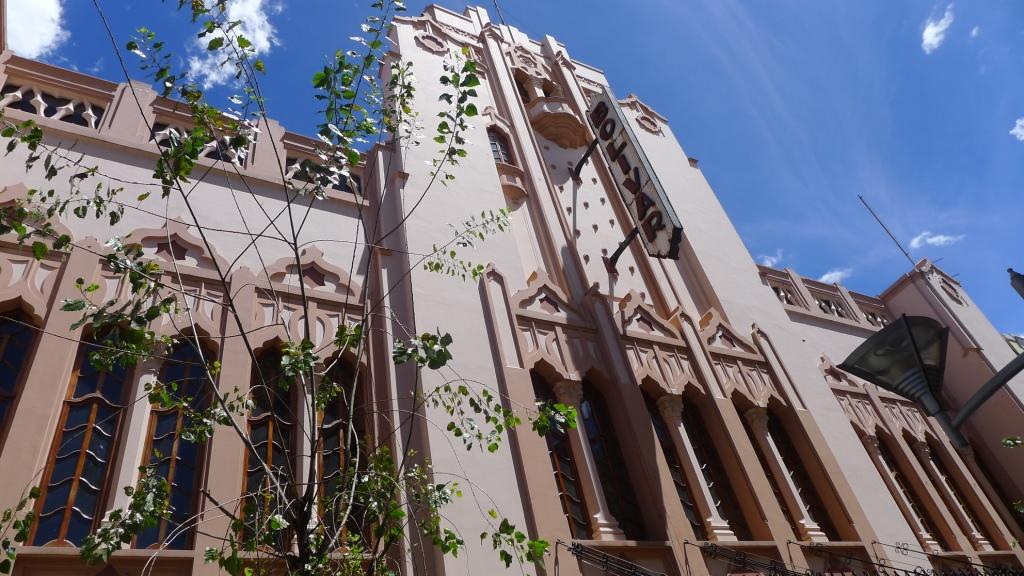
This is the beautiful deco Bolivar Theatre, in Quito, Ecuador, which opened in 1933 with an audience capacity of 2,400.  Whenever I travel I try to visit these grand architectural icons as they often say much about a country’s society and culture, and I was stuck by the grandeur of this one.

Sadly, this is what it looks like on the inside now.  In 1997, after a few years as a cinema, a lengthy restoration process took place, which succeeded in recapturing lost audiences. In 1998 the theatre dedicated itself to promoting culture in Quito, becoming The Theater of the City. 70 events, both national and international, were presented in 1998 and the first half of 1999, bringing more than 70,000 visitors. The future was bright. However, on Sunday, August 8, 1999, a gas leak caused a fire to erupt in the kitchen of the multinational chain Pizza Hut, which was occupying a business area on the ground floor of the theatre. The fire consumed over 70% of the building.

And why am writing about it? Well, as I travelled around Ecuador I was delighted by the lack of international franchises – not a Starbucks to be had, or the greasy stink of a MacDonalds to be sniffed.  The Ecuadorian government clearly has a very tight rein on allowing these companies in.
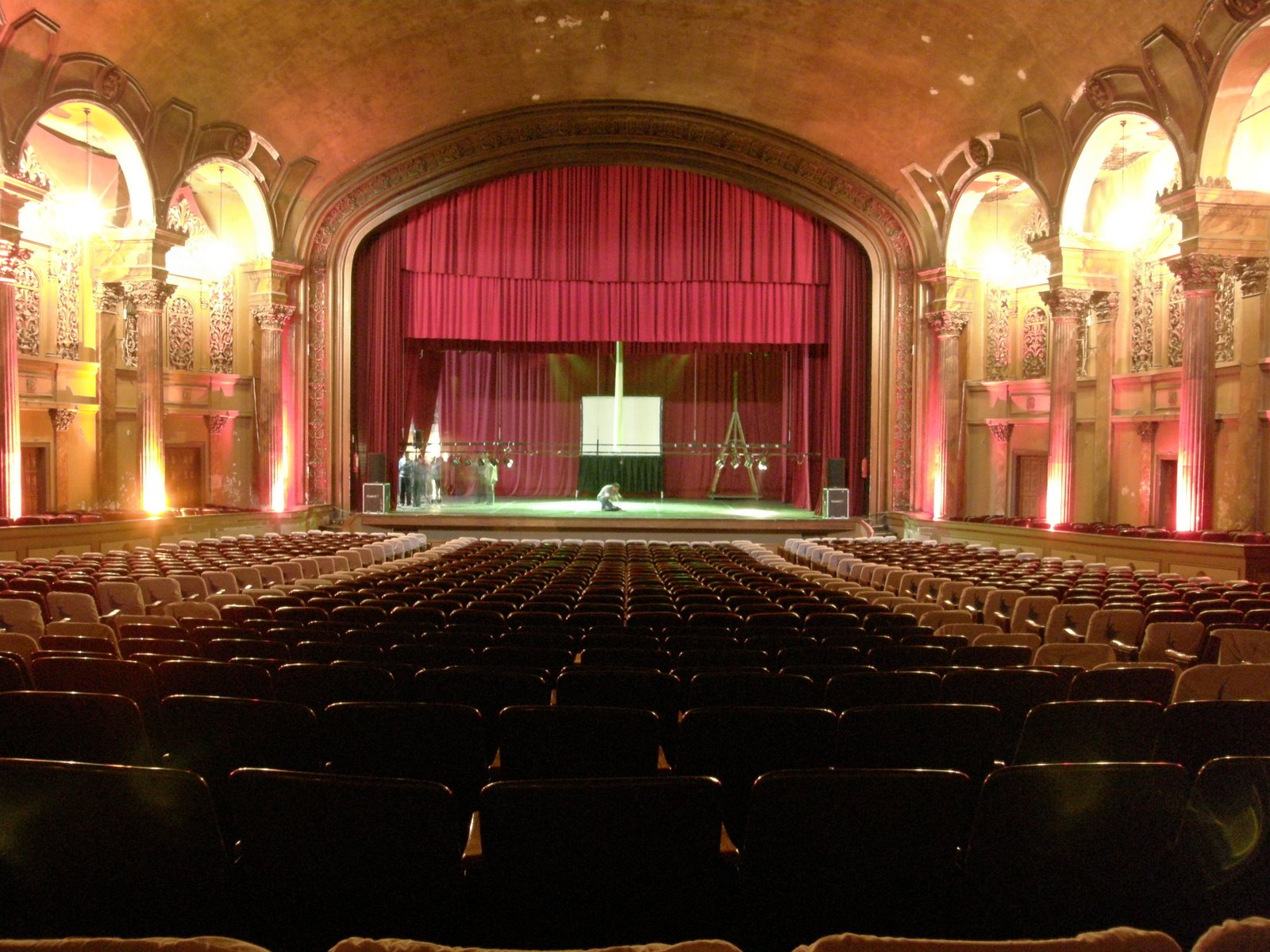
However, there was a notice on the door of the Teatro Bolivar (to give it is proper title) that explained what had happened, but also went on to say that Pizza Hut refused both to accept responsibility for the fire or help fund or take part in any of the restoration. So much for corporate social responsibility!

The day following the fire, the Theater and Hotel Enterprise of Quito planned the Process of Restoration for the Bolivar Theater that would include a number of principal actions, including initiating legal and public actions to put pressure on Pizza Hut to recognize their responsibility for the fire and to continue to produce cultural events in the Bolivar in the process of rising out of the ashes. The restoration process is clearly a slow one, but the members of the Bolivar Theater Foundation and the Bolivar’s audiences are determined to return their beloved theatre to its original prominence, as one of the most important cultural venues in South America .

The places in which we make theatre can be as important as the performances themselves and represent the significance of creativity in and to a culture. So when one is destroyed by an international corporate giant that then refuses to accept its role in that destruction, it makes me especially angry.

So next time you pick up the phone to order your pizza, please think again and choose a company other than Pizza Hut.

Painted Faces

My intention for this blog was that it should be as wide as possible, covering all aspects of theatre and performance, including offering information about production roles and, when appropriate, the wide variety of careers in the creative industries.

So today I offer you an interview with Giuseppe Cannas who works as a make-up artist at the National Theatre in London. It is really interesting and gives you a very clear picture of his job.

A working life: the make-up artist

I’ve blogged elsewhere here about the role make-up plays in world theatre, but think about Chinese and Japanese traditional theatre forms.  Part of the actor training in those traditions is for the actor to be able to apply their own, highly detailed make-up

String Them Up

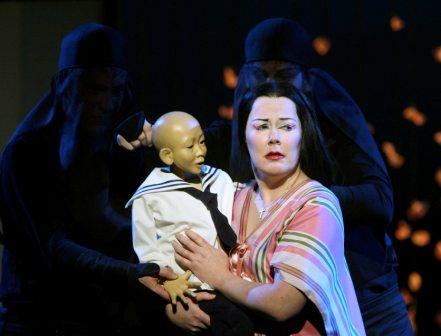
Puppets are one of the true world theatre traditions and no matter where you go in the world, you can usually find a native form of the art. In fact the UNIMA (Union Internationale de la Marionnette) Congress and World Puppetry Festival has just been held in China. UNIMA  is an international non-government organisation of UNESCO.

.

.

.

.

.

.

.

.

Today I bring you an interview with Mark Down, the co-founder of Blind Summit a British based puppet theatre.

Blind Summit’s Mark Down on puppetry and narrative.

Hands Up!

A little added extra for today.  My mother sent me this link and it is quite astonishing.

.

The art form originated in ancient China and has now taken on a new lease of life thanks to modern imaging technology that allows multi-layering of images. The Indian artists behind this work are Amar Sen and Sabyasachi Sen. You can check them out through this link.

Grand Designs

Today its design. I’ve often thought that in a different life I would liked to have been a theatre designer. Some of the best work I have ever seen has been enhanced or even made possible thanks to the designer.  That’s not say I don’t believe in the power of an empty stage, but when the design is right, it should speak to you in the same way the actors and the play do.

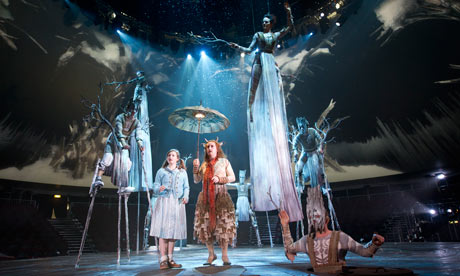
So I’m going to share a few things with you.  Firstly an interview with Tom Scutt, a 28-year-old stage designer who has been taking the theatre world by storm. The above image is from one of his latest creations for a stage version of The Lion, The Witch and The Wardrobe. Scutt gave his interview to ‘The Stage’

Secondly, an article in which theatre critics chose what they consider to be The 10 best theatre designs that have changed the face of modern theatre, from a 1912 Hamlet to Punchdrunk’s immersive Faust.

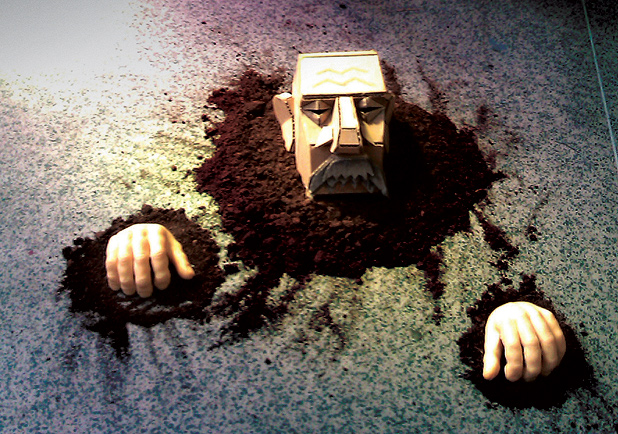
Thirdly a link to a web site by the stage designer J. William Davies that is full of delicious images and material. Click the image below, which is of his box set for a design for Six Characters In Search of An Author by Pirandello.

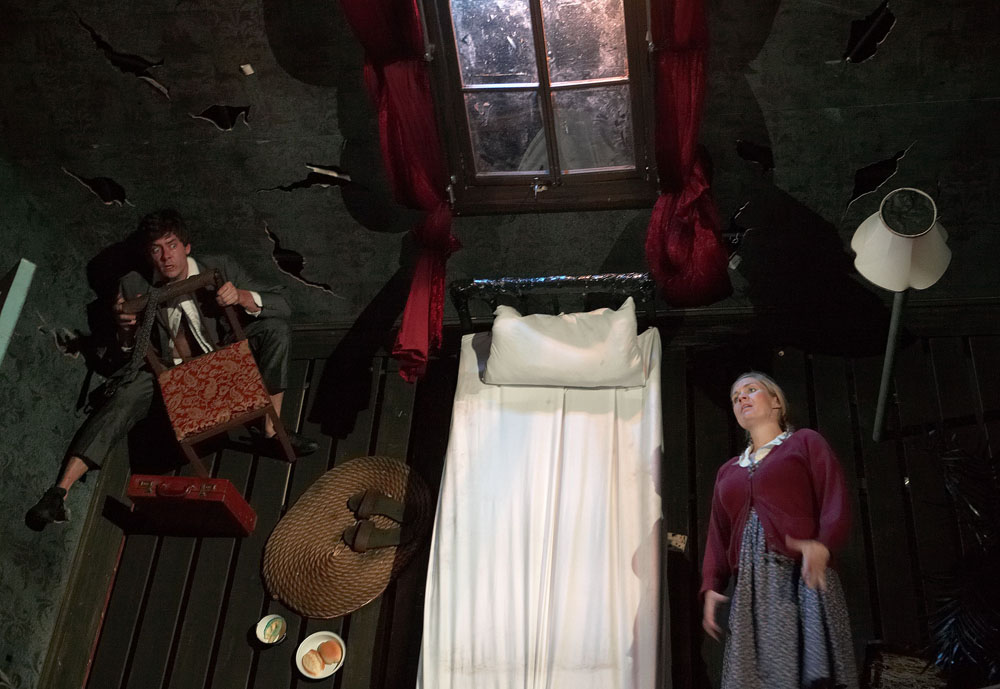
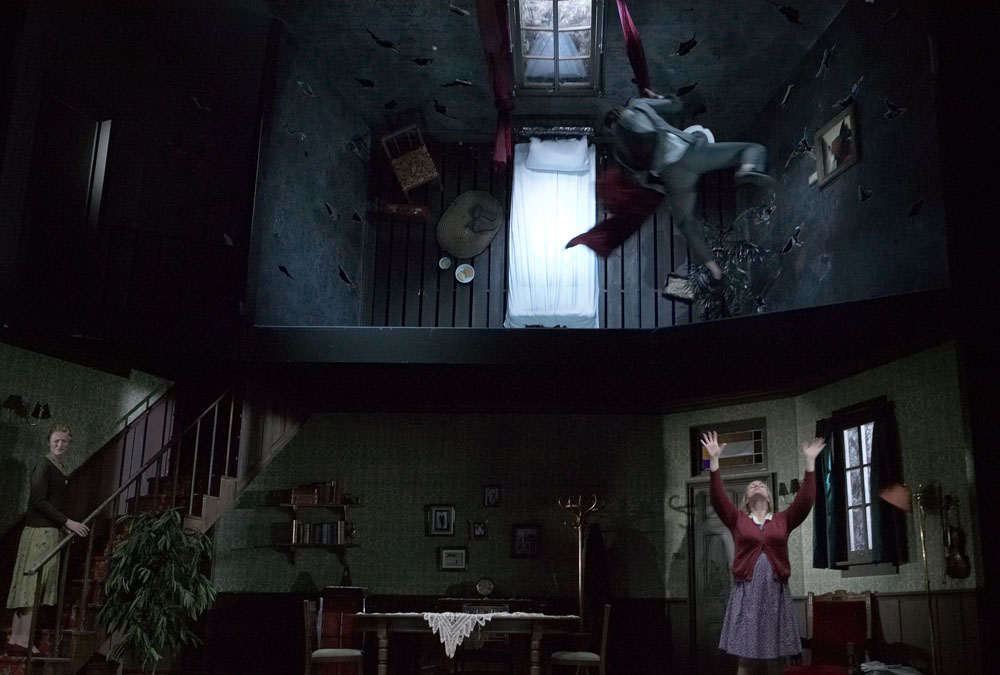
And finally my favourite two designs of the last couple of years. The first is by Börkur Jónsson, for VesturPort Theatre Company from Iceland, for their stunning production of Metamorphosis that played in Hong Kong a couple of years ago.  I was lucky enough to have front row seats and breath was taken away by every aspect of the production.

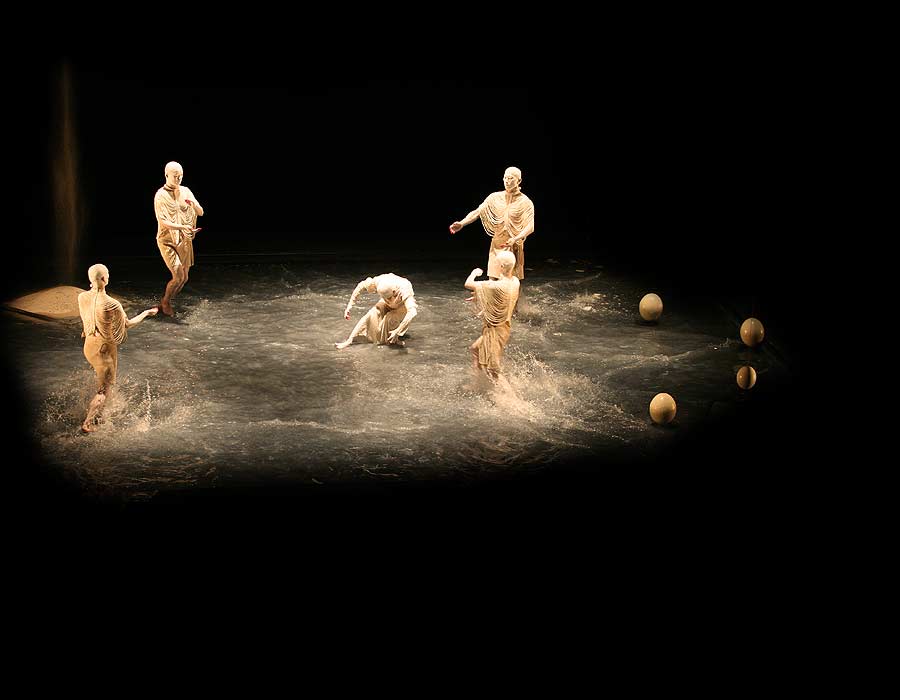
The second is by Ushio Amagatsu who directed, choreographed and designed the butoh piece Kagemi, by the Sankai Juko Company. I was privileged to see this one in Melbourne about 4 years ago. Wow.  The antithesis of my first choice, in its beautiful minimalism.

.

Turning Japanese

It’s Research Investigation time for my TA students and two of them are getting excited about Japanese theatre. So, Tim and Clarissa, three fantastic documentaries to get you going.

And a little added extra.  This is the Ningyo Johruri Bunraku Puppet Theatre in Osaka which I visited 6 years ago.  I went on the opening day of the season, thanks to a very helpful concierge at my hotel. I was fortunate enough to see the greatest living japanese master jōruri – a very wizened old man who was just astonishing.

Dennis Kelly: “The Quest for Truth” 3

The political theatre debate continues. In an article in The Economist, Natalia Koliada is reported as saying

I am always against separating, saying there should be political theatre or social theatre or female theatre, or aboriginal theatre—it is about theatre. It is about going deep into one life, like a total immersion in personality, in a different circumstance.

Click the image above for the full article. What do you think?

Also in The Economist recently is Mohammed Al Attar,  an acclaimed young Syrian playwright who, given the appalling situation in his country, is talking about play-writing as a tool of protest:

I think theatre is political by default. But I do not directly write statements or propaganda

Again click the image above for a very different take on what is ‘political’ in theatre.

Specific Reflections

I have been keeping this blog for a month and over the weekend, I looked back at what I’ve posted about……and it made me realise a couple of very significant things.

Firstly, just how much I have learned about world theatre, and more particularly Asian theatre, since I started teaching IB Theatre Arts 6 years ago. What an amazing journey! Mostly, my performance education was largely in the western canon and generally about dead, white male theatre practitioners, so now to have knowledge and understanding about so much more is empowering.

Secondly, there are some trends emerging which reflect my own personal interests in a very obvious way – political (sorry Dennis!), site specific and dance theatre, as well as technology in multimedia performance. I knew it, but it is interesting to see it laid bare in front of me.

Site specific theatre is my current passion, fuelled by work with Dr Sally Mackey, from the Central School of Speech and Drama, and Lynne Bradley from Brisbane-based physical theatre company, Zen Zen Zo. This brings me to the this:

Everyday Moments 12: audio drama for private performance

This is a series of podcasts that have been created by different artists to be listened to in specific places, at specific times. Glorious sound scapes and, in my book, very site specific.

Enjoy, when you have 10 minutes

Dennis Kelly: “The Quest for Truth” 1

If you read Dennis Kelly’s speech that I posted yesterday, then this is by way of a response. Essentially I believe he right.The following extract says so much about the theatre we make and how we make it:

We don’t make our minds up using facts or arguments, we use facts and arguments to support what we have already decided is true.We bend and squeeze reality into a shape that supports what we feel. It is our feelings that rule us, not our minds. And this is where theatre has its impact. Theatre lies in emotion; it is an emotional medium, not really an intellectual one. But how does a playwright reconcile the quest for truth with an understanding that facts and arguments are essentially untrustworthy and that debate is something lawyers use to send people to jail regardless of whether they guilty or innocent? Well, perhaps they don’t. Perhaps they just say fuck it, this is what I feel, and they’re just honest about that. Theatre is essentially, at it’s best, a lone voice standing up in a darkened room and saying ‘I think this’. They’re not necessarily saying this is what’s right, or you should think this or this is what we should do, they’re saying ‘I think this. Does anyone else think the same?’

He goes on to talk about how theatre should come from a ‘desire to change things, from a belief in the power of theatre that is bigger than writers, directors, artistic directors and dramaturges, that it belongs to all of us and is never to be taken for granted‘ and I applaud him loudly for it. He isn’t really saying that political theatre is useless, just that we need to frame in such a way that we accept that ‘theatre lies in emotion; it is an emotional medium, not really an intellectual one‘ and that ‘theatre is essentially, at it’s best, a lone voice standing up in a darkened room and saying ‘I think this…….does anyone else feel the same?”.

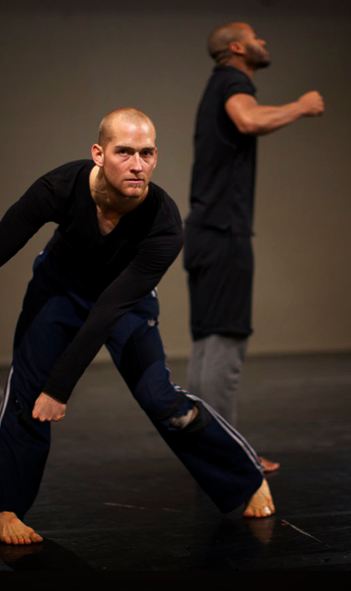
Let me give you an example of what I (and I think, Kelly) sees as theatre with a voice, theatre that challenges, theatre that reflects the truth and in itself is a ‘quest for truth’, the latest offering by DV8 and Lloyd Newson, Can We Talk About This? The piece is a verbatim theatre work investigating the interrelated issues of freedom of speech, multiculturalism and Islam as manifest in Western democracies. It has received astounding reviews:

Every so often, a performance comes along that not only reconfigures the limits of the form, but also redefines and rearticulates how we see the world… Without a doubt, it is one of the most important works of our age. Go!

Time Out Sydney

Click the image above to watch excerpts.

ABC Radio Interview with Lloyd Newson, founder of DV8

This is political theatre at it’s very best and most powerful. It is most definitely saying “I think this.….does anyone else feel the same?”. Can We Talk About This was in Hong Kong last year (and I missed it, unbelievably) but everyone I know who saw it, spoke about it in the most rapturous way. Even more so those who had never heard of DV8. It was clearly powerful and spoke with emotion to the audience. It comes as no surprise really. Newson insists in keeping his works at once informative and thought-provoking and this has been one of the defining traits of DV8. In fact, while he often displays a readiness to introduce a touch of hyperreality into his works, the eclectic stylist is nonetheless better known for his preference for content over ‘aesthetics and prettiness’. He clarifies:

I want to make theatre work because I don’t want to just make decorative dance pieces – they are like chocolate. They’re very nice at the time you eat it, but not very substantive in terms of [generating] brain power.

.