Turning Up The Heat

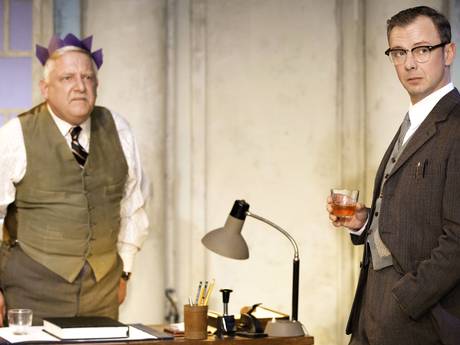
And by way of a neat segue from the last post, a new staging of Harold Pinter’s play The Hothouse has opened in London to rave reviews this week. The history of The Hothouse is that Pinter wrote it in 1958, put it to one side and only rescued it from oblivion in 1980. What is special about it? Well it is eerily prophetic in its vision of a world where psychiatric hospitals are used as a means of curing social dissidents. He said of it 1982

It was fantasy when I wrote it, but now it has become, I think, far more relevant. Reality has overtaken it.

hothouse_2558607bIn a world where torture of ‘political’ prisoners still takes place – think Guantanamo Bay, think Belarus, think Iran…..the list is endless, The Hothouse has many resonances. You can read a couple of the reviews here and here.

However, what I really want to share with you is an edited version of an article commissioned for the play’s programme (or play-bill). It is written by Shami Chakrabarti who is director of The National Council of Civil Liberties (better known as Liberty) in the UK which is a leading voice in the world of human rights.

Pinter’s Hothouse will never cool down

How Harold Pinter’s play about the connection between mind-control and torture is more prescient now than ever

The Hothouse by Harold Pinter

“It was fantasy when I wrote it, but now it has become, I think, far more relevant. Reality has overtaken it.” So said Harold Pinter of The Hothouse, his dark exploration of Kafkaesque incarceration and torture, during a 1982 interview. He was presumably referring to the renewed significance of the play – presciently written in 1958, but shelved until 1980 – given subsequent revelations regarding the political abuse of psychiatry to silence dissidents in the Soviet Union.

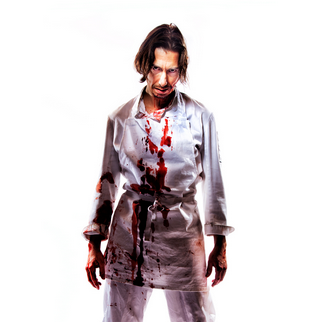
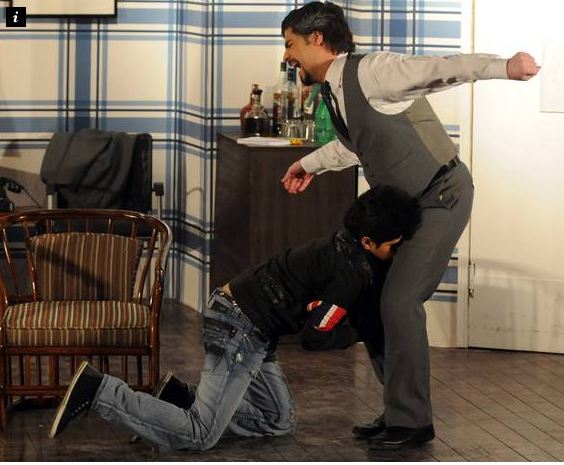
But more than three decades on, the work’s pertinence remains, and on a much wider footing than those original links with the Brezhnev period. The Hothouse is set in a mysteriously undefined institution, obscurely referred to as both “rest home” and “sanatorium”. The “residents” or “patients”, known only as numbers, are regularly electronically tortured. We never actually see their suffering, but we do witness that of a young member of staff.

When he has electrodes attached to his wrists and unbearable sounds blasted into his ears, we get the picture. This isn’t compassionate confinement. The control exercised; the “treatment” administered – it’s all so absolute and inhuman. What’s essentially satire is given a chilling new dimension.

hothouse

Such subject matter should strike a chord with anyone engaged by the movement for fundamental rights and freedoms. Torture is more than the calculated infliction of pain: it also symbolises state power. Governments turn to brutality to reassert authority; to quell opposition and enforce policies. They use torture to convince victims of their strength and protect their supremacy. But in The Hothouse there’s more to it. While the nightmare seems superficially targeted towards humanitarian concerns, in reality this institution seeks to enter “troublesome” people’s minds and “improve” them; thereby creating a “better society”.

Quite how torture can ever lay the foundations for a society superior to one where it remains outlawed is anyone’s guess. We will likely always face evils, but we must not lose sight of what our actions say about us. Society has to be better than the individual, in both the goals it sets itself and how far it will go to achieve them. It’s by these efforts that society should be judged; not some mythical state of perfection. To shrug and offer that the end justifies the means when it comes to torture is unacceptable. Without its prohibition, how can any decent society prevail?

The use of inhuman treatment – whether to punish, gain intelligence or, as The Hothouse examines, exert control – has many consequences. The initial impact upon an individual is extreme; likely to result in various social issues. It also muddies the water as to when it’s legitimate to employ torture. For which causes should it be used? Who makes that call? Can cruelty be the solution to every crisis? If so, what does that mean for society?

1097-5225-hothouse

When torture becomes normalised, other forms of social control, such as the rule of law, diminish. This is fatal for democracy and human rights, which depend not only on public engagement, but also the crucial constitutional principle that no one – including the state – is above the law. These notions might be idealistic, but they remain worth pursuing. As the late Lord Bingham articulated, in a world often divided by nationality, race and religion, respect for fundamental freedoms is the strongest unifying notion there is; the closest we are likely to get to a truly universal secular religion.

These are the values which separate democrat from dictator. They are the essence of the Britishness which unites people of all parties and faiths. And the antithesis of this human rights philosophy is surely the idea of pursuing causes by “whatever means necessary”. It is this sweeping licence for authoritarianism and brutality – two of the themes The Hothouse interrogates – that is the catalyst for tyranny. Pinter’s understanding of the risks of unchecked state power was obviously profound.

Cruelty is still used the world over. In many nations, torture and detention are routine, and there is no adequate judicial system to address violations. Over the last decade or so, democrats have shamefully resorted to kidnap and torture in freedom’s name. Guantánamo Bay, one of the most striking manifestations of post-9/11 policy, remains open, and reports of “systematic torture” are rife. Closer to home, the authorities have hidden behind the “War on Terror” to sidestep, ignore and undermine our legal and moral obligations to prevent torture. In the fight to defend our values and promote our way of life, we have compromised many of the traditions making it worthy of commendation at the outset.

The Hothouse by Harold Pinter

Which brings us back to The Hothouse, where the institution’s staff are so consumed by their desire for control that they are now the “troublesome” party – apparent in their bizarre behaviour and obsession with hierarchy. Perhaps the workers truly think they are creating a “better” society, as democratic institutions undoubtedly believe they are protecting their populations. But so abhorrent are the staff’s methods that their objective is meaningless. Similarly, when governments turn to torture the “ends justifying means” contagion has infected the democratic patient. Previously uniting values are lost; ironically creating a corrosive landscape in which those most likely to thrive are “troublesome” tyrants and terrorists.

Perhaps on this Pinter and I might agree, for much of his later political work focused on abuses of power. And just like the proud human rights framework we now treasure, his fascination with totalitarianism was also inspired by the second world war. “I am aware of the sufferings and the horror of war, and by no means was I going to subscribe to keeping it going,” he once said. As sentiments go, that’s pretty difficult to argue with.
In addition there is a really interesting interview with the director and actors here which I have also tweeted.

Brazilian Style

One of the problems of being a World theatre teacher who only speaks one language fluently (much to my shame) means there is a significant section I miss out on. So I was delighted to come across an article in The Stage by Ian Herbert about Brazilian theatre.

Stage-it-on-Rio-630x310My only real reference point in Brazilian Theatre prior to this was Augusto Boal and his Theatre of the oppressed.

.

Herbert’s article makes for interesting reading on a number of fronts, not least about how theatre is funded in Brazil, especially given the cuts in arts funding across the world in the light of failing economies. I reproduce an edited version here and have tweeted it in full.

Focus on Brazil

The first thing to note about Brazil is its sheer size. Its population, nearing 200 million now, occupies an area into which the European Union would fit comfortably. A closer look shows that the country’s huge population is concentrated in a few major cities – and its theatre activity can be narrowed down yet further.

Recent statistics suggest Brazil has more than 1,200 theatres, of which more than half are in the three big centres of its south-east region – Sao Paulo, Rio de Janeiro and Minas Gerais. Apart from a number of festivals in smaller cities ………. the main thrust of the country’s theatre activity is here. Rio’s 200 or so theatres benefit from the city being the centre of Brazilian TV, where the huge chain Globo produces telenovelas – local soaps that are now seen worldwide. But although Rio has the benefit of a large pool of film and TV actors available for its theatres, it is in Sao Paulo, with 300 theatres serving a population of 20 million, that the real action lies.

Theatre as we know it came relatively late to Brazil, although the 16th-century Jesuit Father Jose de Anchieta is credited with some religious entertainments. It took off with the arrival of the Portuguese royal family in 1808, and by the arrival of independence was already developing the bourgeois comedies that were the forbears of the tele-novela. Theatre was a focus for resistance to the dictatorships under which the country laboured for much of the 20th century.

Two Sao Paulo groups in particular, Teatro de Arena and Teatro Oficina, which were both banned in 1968, produced some of the leading figures in contemporary Brazilian theatre, including Antunes Filho, whose Macunaima stunned London in 1983 with its bare-breasted dancers. Antunes, at 80, is still working today, his latest production being a revival of a play by another great name in Brazilian theatre, Nelson Rodrigues.
The funding of theatre, like the other arts, is supported by the Rouanet Law, a peculiarly Brazilian institution that since 1991 has given companies tax breaks in return for cultural investment…….

On the face of it, the population gains enormously – Brazil has hosted a series of major art exhibitions, for instance, most of them free to the public. But the indiscriminate apportionment of private [money] means that the most popular events attract the most money. Recently, the Kings of Leon received £4 million towards a three-month season in one of Sao Paulo’s biggest theatres. This blurs the distinction between commercial and art theatre – shows like The Lion King….. playing now in Sao Paulo, are just as eligible for backing as The Wooster Group, which is also in town.

Many of the country’s theatres are in fact part of prestigious, well-appointed arts centres, which may be owned by big business. There are also private foundations – I visited one of them, the Instituto Cultural Capobianco. It is set in a rather seedy street, but the inside of the building is beautifully restored. I found a friendly basement bar and two well-equipped studio theatres, the smaller of which was occupied by a cast of 12 and three musicians performing to a full house of 50 people.

The Wooster Group was playing in one of the many venues operated all over the country by the independent centres of SESC, which translates as the Social Service of Commerce. SESC gets its huge income of £400 million from [the tax player], and uses it to provide social centres for workers that equate to rather opulent branches of the YMCA, with restaurants, pools, libraries and entertainment halls. As much as 20% of the SESC budget goes to culture. The body is far more important to the theatre community than Funarte, the country’s equivalent to the arts council, which operates a few theatres and tries to be an enlightened voice for cultural policy. Both are at present heavily involved in the preparation of a new cultural law, which may see more centralised distribution of funding through the capital, Brasilia.

Sao Paulo has another law peculiar to the city – the Lei de Fomento or Law of Encouragement, which gives smaller independent groups a chance to flourish alongside the commercial sphere. Up to around £250,000 each, spread over two years, can be given to some 30 local groups – not for individual productions but for more general ‘research’. The money is distributed regardless of which party is in power……….. Not surprisingly, the number of small groups in Sao Paulo theatre has mushroomed since the law was passed in 2002…………You’ll find two productions of Martin McDonagh’s The Pillowman, two of Strindberg’s Creditors, and a complete cycle of Aeschylus.

In spite of all this, it has to be admitted that theatre in Brazil is still very much a minority pursuit, not the popular platform envisaged by the great Augusto Boal, who is almost unknown to modern Brazilian audiences. Nonetheless, fine work is being done, notably by site-specific directors such as Antonio (‘To’) Araujo, whose latest work involves a helter-skelter journey through the streets and shopping malls of Bom Retiro, a Sao Paulo district…….[seen] as the city’s arrival point for immigrant minorities.

Brazil’s real popular theatre is, of course, carnival, which flourishes all over the country as never before.

Rio_Carnaval_2011_035_-758828

Interestingly, Herbert’s last point links nicely with my last post about what constitutes an act of theatre……….

The Right Wei

I rarely post or post about theatre reviews here – they have little validity if you live in a city 8000km away from where they are being performed.

However, today I am going to make an exception and am sharing a review for a new play that has just opened in London. The Arrest of Ai Weiwei by Howard Benton opened on Saturday evening and was streamed live across the globe. I think most people are familiar with Ai Weiwei, Chinese contemporary artist and actavist and his on going conflict with Beijing.  However, you probably won’t be familiar with Brenton who has been writing stridently political plays for many years.

arrest ai weiwei play.

.

.

.

.

.

.

Michael Billington wrote:

Howard Brenton’s most recent play, 55 Days, dealt with the imprisonment, trial and execution of Charles I. His new one could easily be called 81 Days since it covers the detention, interrogation and eventual release of the conceptual artist, Ai Weiwei, by the Chinese government in 2011.

Based on a book by Barnaby Martin, it is an eloquent piece of quasi-documentary theatre that raises any number of issues: chief amongst them the bafflement of the monolithic state in dealing with artistic freedom.

Any fear we might be in for a dour evening is quickly expelled by James Macdonald’s production which has the excellent idea of treating Weiwei’s story as if it were piece of installation art.

In Ashley Martin Davis’s design we seem to be in a chic, brightly-lit gallery where the busy staff mill around a rotating crate. This opens up to reveal the protagonist and to embody the two different prisons in which he was detained. But it’s not merely a bright idea. It reinforces the concern, expressed by a high-ranking Chinese official, that Weiwei’s greatest work of art could turn out to be his own incarceration.

_67081618_67081613

The two interrogation scenes also beautifully capture the bewilderment of a rigid state when confronted by works of imagination. In the first Weiwei is interviewed by two murder cops who don’t know how to cope with a man who makes art out of bolted-together bicycles or old chairs: their charge that he is a con-man who sells cheap rubbish at high prices is quickly answered by the fact that the Party now allows market forces. Matters turn more serious when Weiwei is transferred to an army camp, finds that even his bodily functions are minutely supervised and is accused by a sportsman, wearing a Giggs number 11 football shirt, of subverting state power.

In a way, the evening is like an odd mix of Kafka and Beckett. You can’t help thinking of The Trial in that Weiwei is never sure, until the last minute, of what he is supposed to be guilty of other than following the dictates of art.

But there is also something deeply Beckettian in the idea that drama can be made out of the process of waiting: for long periods Weiwei is confined to a chair staring silently outwards while his captors seem as much victims of the system as himself. And when Weiwei cries, in one of his many internal ruminations, “Unendurable-must be endured” you feel the words might have come from a novel like Molly or Malone Dies.

izbRGVujUfHs

Inevitably the evening has a palpable design on us but it has enough variety to ensure it is more than a piece of humanist propaganda.

Benedict Wong not only bears a strong resemblance to Weiwei but marvellously captures his mixture of resilience, rage, wiliness and wit: there’s one richly comic sequence where he discusses with his captors how to make the best hand-pulled noodles. David Lee-Jones, Richard Rees and Orion Lee as his interrogators and David KS Tse as a silky politician provide strong support and, when the show is live-streamed for free on 19 April, it is eminently worth catching to see what happens when the irresistible force of artistic imagination confronts the immovable object of the state.

In a blog post recently entitled Every day in China, we put the state on trial Ai Weiwei spoke about how artists have always asked difficult questions about the human condition which resonates wonderfully with the notion of Brenton’s play.

Hanging by a Thread

For my 100th post I want to return to the work and life of a company dear to me and who I have blogged about on a number of occasions. Here are extracts from  an article in the UK newspaper, The Guardian, written by Matt Trueman

Belarus Free Theatre will present a new piece – their first in English – that challenges the use of capital punishment around the world this summer. Trash Cuisine will argue that state-sanctioned capital punishment breeds a wider culture of violence. It will blend verbatim testimony with music, dance and sections from Shakespeare’s tragedies.

Capture

“We want to look at whether a state’s use of capital punishment sets an example to its citizens and legitimises other forms of violence,” the company’s co-artistic director Natalia Kaliada told the Guardian. “If we talk about capital punishment, is it only the state or can it involve one person or a group taking other people’s lives?”

Belarus is the last European country to employ the death penalty, and was urged last year to abandon the policy by the EU and Human Rights Watch in the wake of two high-profile executions. Vladislav Kovalyov and Dmitry Konovalov, both 26, were put to death last March after being convicted of a bomb attack that took place less than a year before. Kovalyov’s mother has since travelled around the world, maintaining her son’s innocence.

“In Belarus, when people are executed, their bodies are not given back to their families, so they never get the chance to bury their relatives,” Kaliada continued.

Trash Cuisine will also feature testimonials drawn from some of the other 94 countries worldwide where the death penalty remains in use, including Thailand and Malaysia. Interviewees include executioners, human rights lawyers, inmates and their families. “For us, it’s always important that we talk to people personally,” Kaliada explained.

Minsk, 2011: A Reply to Kathy Acker by Belarus Free Theatre

 .

.

.

.

.

.

.

She added: “When we were in Malaysia, some journalists asked: ‘Why are you here? Isn’t it enough for you to have your own troubles?’ We go to those places where others don’t get enough attention. We absolutely understand what it means not to be heard and we need to find those areas of the world that are hidden, where people’s stories do not get a chance to be heard.”

Belarus Free Theatre is banned from performing in its home country and, in the past three months, its underground performances in Minsk have been subject to five police raids.

Today, according to Kaliada, it operates as a “two-headed beast”, maintaining operations in Minsk while performing around the world.

Immersive theatre – touchingly relevant

I’m in the UK this week and its bloody freezing – literally 0°C outside – hence my blogging frenzy!

It is that time of year in education – exam madness and the drawing to the end for my senior students – when they have to reflect on all they have learned. What has stuck me in the last few weeks is the impact that particular theatre forms have had upon them. Listening to TPPPs by Tim, Clarissa and Jeff there were some central themes, one of them being the Theatre of Cruelty. Another student, Katie, when asked in a university interview who her favourite theatre practitioner was, said Artaud. All this raised a wry smile from me, because the work of Artaud is notoriously difficulty to teach (and learn). We have so little in terms of definitive thinking from him, save a random collection of essays and playlets, so that much of what he wanted theatre to be is supposition on our part.

Picture1

What was made me clear to me, however, was that the students found the theatre form to be  liberating, something that allowed them to explore the notion of what it is to be human, to challenge the audience and immerse them in an alternative theatrical experience.

So it when I read a review of the Adelaide Arts Festival by Etan Smallman in the Huffington Post  entitled Lap Dances, Groping and Public Marriage Down Under: The One-on-One Theatre Where You’re The Star of the Show it not surprisingly caught my attention and I got reading. Here are some extracts:

………Earlier in the week, I made up an audience-of-one for the strangest show in town as I sat bound and blindfolded while being wheeled around a dark basement – with strangers caressing and feeding me before a woman pushed me on to a bed and stretched out on top of me.

The first of a trilogy of interactive performances by Belgian theatre group Ontoerend Goed, The Smile off Your Face had been the subject of hushed chats across the city.

Blindfolded and at the mercy of the cast’s young performers, you have a nose rubbed against your face, marzipan wafted under your own nose and a carrot – and a man’s bearded face – thrust into your bound hands. My fingers were then tightly wrapped around a woman’s neck in advance of us engaging in a bizarre dance.

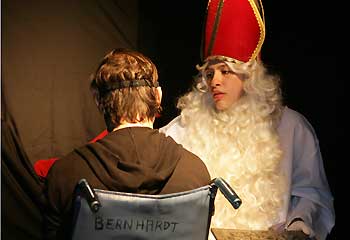
When the blindfold is eventually removed, you find yourself confronted with, depending on your judgment, a priest or Father Christmas – before meeting the man whose face you were forced to fondle.

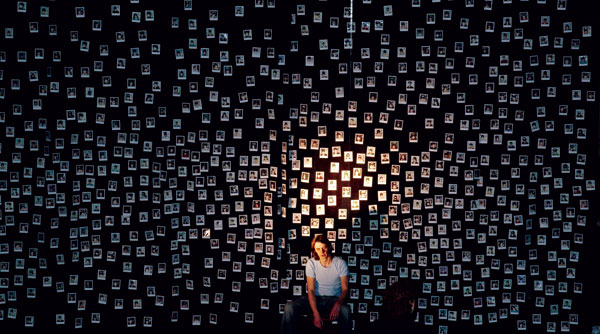
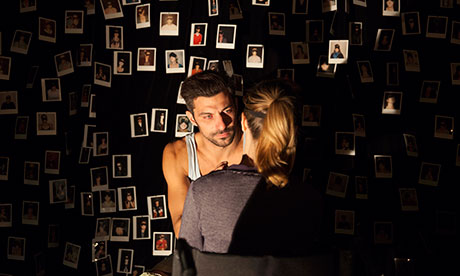
He then proceeds to show you a wall of Polaroid shots containing one of you grimacing. Finally, as you stare into each other’s eyes, tears begin spilling down his face while you’re slowly wheeled backwards out of the building.

The experience, which molested every one of my senses, left me buzzing and struggling to sleep. Meanwhile, it left author Kathy Lette – who was in front of me going into the show – worried she’d been “impregnated by a Belgian”.

What’s more, my experience lives on in the form of my Polaroid snap. Yes, the image of my strained face and bound hands will now be travelling across continents as this powerful performance art continues to tour the world.

Evernote Camera Roll 20130325 175058I knew I’d heard of Ontoerend Goed before so started digging and found what I was looking for, a rather dismissive review by Lynne Gardner:

The Smile Off Your Face is more therapy than theatre

I’ve always believed in the healing power of theatre – and this play, which won a Fringe First this morning, certainly feels like a one-to-one therapy session.

I’ve always believed in the power of theatre to heal. There have been times in my life when sitting in the dark, hearing stories being told, has been a life-saver. I’m often amazed at the way theatre provides just the right story that you need for succour at the exact moment you need it.

However, there is a difference between theatre and therapy. Really good theatre might indeed be therapy but it is first and foremost theatre. Theatre is often extremely good social work — and cheap at the price — but the social work is a by-product, or bonus if you like, of the art…..

…….The Smile Off Your Face is quite an experience. You are taken down a flight of stairs, put in a wheelchair, have your hands tied together and are blindfolded. In this helpless state, you are wheeled into a space where smells are wafted under your nose, lights shone in your eyes and your face tickled. Entirely in someone else’s power, you relinquish yourself to them – dancing when you are asked to dance, lying down on a bed when you are told to, and answering questions about yourself, some of them quite intimate. Somehow, it feels safe to speak. I was reminded of the confessional box of my Catholic childhood or how toddlers cover their faces and think nobody can see them.

Many people have come out crying, deeply affected. I’m not going to spoil the final revelation in case some of you get a chance to see it. But although it is a memorable 20 minutes, I’m not entirely convinced that it qualifies as theatre. Having seen King Lear once, you are unlikely to feel that you should never see King Lear again. Indeed, if you were a real glutton for punishment you could see King Lear 25 times and still get something different out of it every time. Likewise, a Complicite or Punchdrunk show. But once you’ve seen The Smile Off Your Face, there would be no point seeing it again because the element of surprise is destroyed. It’s like riding on the ghost train: the first time you’re spooked, but second time round you know to when to duck so that the dancing skeleton doesn’t whack you in the face.

Perhaps I’m being far too narrow in my definition of theatre, but what The Smile Off Your Face reminded me of most was a trip to the beauty salon for an aromatherapy session, where you are stroked and patted amid delicious smells, and lulled into a slightly hypnotic state where unexpected intimacies are exchanged. Its success is less to do with its power as a piece of theatre and more to do with the fact that the more ways we are offered to communicate in the modern world, the lonelier we feel. So perhaps the best way to look at The Smile Off Your Face is not as a 20-minute show but as 20 minutes of one-to-one therapy.

Evernote Camera Roll 20130325 175057

What I also remembered is that having had a few months to consider her experience at the hands of Ontoerend Goed, Gardner changed her mind and wrote:

Second thoughts about seeing shows twice

I imagined that The Smile Off Your Face was one of those experiences that would only work once, but it definitelystands up to a repeat viewing

Last year in Edinburgh I argued that the hit show The Smile Off Your Face wouldn’t bear a repeat viewing…….

I enjoyed the experience immensely in Edinburgh but wondered whether it was more akin to aromatherapy than theatre. I suggested that since the entire thing is predicated on a final unexpected revelation, it wouldn’t really stand up to a second viewing. Well, I was wrong. I saw the show again the other night……..and it very definitely does stand up. In fact because I knew what was happening, I was able to relax into it.

Detached woman of the world that I am, I’m not quite with those who come out crying or claiming that their lives have been changed forever by the experience. I find something ineffably sad about the way that it encourages intimacy and yet ultimately shows intimacy to be an illusion, but this is a genuinely beguiling piece of theatre and made me think how some of the techniques it utilises could be applied in other ways. It’s only on until tomorrow, but bag yourself a ticket. If you can’t get one, the look on people’s faces as they are wheeled out is a performance in itself.

Now for a woman with quite strident views on theatre in all its forms (and one who I generally respect) that was some turn-around. Take a look for yourself here in the video trailer for the show.

.

Now people have very polarized views on immersive theatre, theatre of cruelty – call it what you want – so it is up to you what you want to make of its relevance and value. I know what I think!

I’ll leave you here with an interview by Alex Needham with Ontoerend Goed’s co-founder Joeri Smet.

Ontroerend Goed: touch-sensitive theatre

The Belgian theatre company have been accused of betraying secrets, exploiting audiences – and not actually being theatre at all. Not guilty, says co-founder Joeri Smet

Belgian theatre company Ontroerend Goed (which roughly translates as “feel estate”) like to work a one-to-one basis. In The Smile off Your Face, actors wheel around a blindfolded audience member, then caress him or her on a bed. In Internal, a show which caused uproar in Edinburgh when it played there in 2009, an actor sits in a booth with a single theatregoer, seduces them into revealing their darkest secrets – then shockingly makes them public in a group session at the end.

In one of these booths, situated in a rehearsal room at Adelaide’s Dunstan Playhouse, sits Joeri Smet, one of Ontroerend Goed’s founders, just before Internal’s final performance at the Adelaide festival – after that, the company will embark on the third part of their immersive theatretrilogy, A Game Of You.

Having performed Internal in several countries, Smet believes British people take the transgression of public/private boundaries much more seriously than other nations. “I don’t want to make generalisations, but that causes a lot of unease for British people. It”s not like that on the continent and here in Australia people are OK with it much more – ‘Sure you can tell that about me’.”

Smet maintains that the company never explicitly divulge anything truly personal or painful, but couch it in general terms. “I will say that someone is making a very big step in their lives and it’s very frightening but also challenging – I wouldn’t reveal what the big step is.”

Joeri Smet in Trilogy: Internal

He denies that he is exploiting the audience’s vulnerabilities. “They always have the choice whether to engage or not.” No-one has ever walked out – “they stay to the end out of curiosity. It’s been said many times that you get as much out of the trilogy as you put in so I guess it’s a 50/50 thing.”

Ontroerend Goed’s exploration of how much audiences will take lead them into hot water at Edinburgh in 2011, when their show Audience – which isn’t showing in Adelaide – featured the one performer training a video camera onto a woman in the audience, and bullying her into opening her legs. Other audience members were furious – after that, they used a plant.

“I found it difficult that all the reviews focused so much on that one moment in the show because it’s about a lot more,” says Smet. “The ethical dimension of the show suddenly became the most important theme, which I found [to be] a reduction of the whole thing.” They toned it down “so people could actually see that the show isn’t about somebody being bullied in the audience.”

As for the woman they picked on, “we had contact with her and with the people surrounding her and in the end it was OK. From what I heard it was not herself who was really angry about it – it was more the people around her.”

Smet says that the controversy over his company’s shows is overblown. “There are some myths that surround the trilogy. People who have expectations of really extreme things happening might be disappointed. It’s all about getting in contact with each other in a respectful way. In The Smile off Your Face we’re exploring your physical trust, which is never damaged.”

The Guardian’s reviewer Claire Armitstead suggested that recent scandals about abuse and exploitation have made The Smile off Your Face seem much darker than when first performed in 2004. “I can see how people invest new meaning it but it’s not a deliberate thing,” says Smet. “The show is exactly the same as when it was developed.”

At its climax, the audience member’s blindfold is removed and an actor talks through their experience, finally bursting into tears. How many people have cried along with him?

“Many,” says Smet. “More women than men, but men also cry.”

Does that make him punch the air?

“I don’t go ‘Yes!’ – it’s great that people are so touched by it,” says Smet. “And I don’t always know why they cry. I can get that The Smile Off Your Face makes you cry – it probably would make me cry as well. It’s about being taken care of physically and being on that bed and having a very intimate conversation. I have to say that many people go and say ‘I haven’t been touched in this way physically, intimately, in so many years’ and sometimes I find it a bit sad to hear that. There are a lot of people who have a lack of intimacy in their lives.”

So is the trilogy theatre or therapy? “Maybe it’s not classical theatre but it is a theatrical performance with just a different approach to the audience – they’re in the show instead of watching it from outside,” says Smet. “It’s not therapy, but creative acts.”

The company’s next show will be called Fight Night, which Smet says will be more like Audience than the immersive trilogy. “It’s five actors and one presenter who try to stay on stage and people vote them off – but apart from that it’s also reflecting on democracy and the fairness of elections and the manipulations that go with that.”

Trilogy: The Smile Off Your Face

Meanwhile, A Game of You seems destined to keep Adelaide talking right until Sunday, the festival’s final day. Ontroerend Goed have been here before, but playing the fringe rather than the main festival. “I have the feeling that we have a lot more theatregoers her in the Festival Centre, says Smet. “I also feel that people are also a lot more understanding of the kind of show it is, the kind of performance it is. In the fringe it was like ‘this is a weird thing’ … in a positive way. Also we’re in a different building – with aircon. Last time it was pretty tough performing for 17 days in the heat.”

Stories that need to be told

I must be on holiday, as I have time post!

Today I want to share three videos that have at their heart the human want to tell stories, but primarily through theatre.

Firstly from David Binder an american theatre producer who is interested in taking performances off the stage. Here, at a TEDx conference he talks about how last summer he found himself in a small Australian neighbourhood, watching locals dance and perform on their lawns — and loving it. He shows us the new face of arts festivals, which break the boundary between audience and performer and help cities express themselves.

Then from Sam West, a hugely accomplished theatre director and actor. Whilst this is somewhat UK-centric he is essentially talking about how we, as theatre practitioners, should be telling everyone’s stories, whether funders and governments want us to.

And finally one from Shane Koyczan, poet and artist. His poem “To This Day” is a powerful story of bullying and survival, illustrated by animators from around the world.

Challenge and Change

In a week where I have watched 13 fantastic, questioning and challenging pieces of devised GCSE Drama examination performances, I was appalled to read this article by Susan Elkin in The Independent.

I reproduce it here in full.  What do you think?

Two drama teachers were sacked for play where students acted out sexual abuse – but drama is meant to shock

Drama is meant to challenge actors and audiences – the teenagers were acting.

Indy

Two unnamed secondary school drama teachers have apparently been sacked by their school and are pursuing unfair dismissal claims.

Their offence? They taught GCSE drama to 15 and 16 year olds as it should be taught, in an uncompromising, rigorous, challenging way.

The students devised (that means worked out and wrote in drama jargon), produced, directed and acted in a short play – which is exactly what they’re supposed to be doing. I don’t know which GCSE drama syllabus they were using but devising your own work is in all of them.

The problem in this case was that the work – which was performed to friends and family – was about sexual abuse within the family and it depicted some pretty graphic activity, including a rape and oral sex.

It sounds – although I have only very samey newspaper reports to judge from – as if it was very powerful effective drama which really got to some of the people who saw it. One child wept and two more – including rather oddly – one of the actors, vomited. And a number of people reported afterwards, according to testimony produced at the tribunal, that they had found the experience a positive one.

My impression is that these teachers were actually doing a good job – making drama pose some very uncomfortable questions, which is exactly what drama is meant to do. It isn’t about putting on pretty bits of shallow, anodyne entertainment and does not begin and end with The Sound of Music or a pantomime version of Cinderella. Yes, it may have been unsuitable for a primary school group but these students were not children. They were young adults who – like it or not – will have experienced quite a bit of the world as it is, rather than as we might like it to be.

The mistake which these teachers made – and it’s hardly a sackable offence – was in failing to warn parents and friends that the play dealt with sensitive issues and was not suitable for younger children.

There is nothing remotely wrong with drama which upsets the audience and makes people think.  I find the blinding of Gloucester in King Lear intensely distressing. When I saw Starfish – a play presented by Y Touring which takes issues-based shows into school – I wept, at the end because it reminded me of the medical dilemmas faced by my father towards the end of his life. The last few moments of Katie Mitchell’s production of Ibsen’s Ghosts for the RSC with Simon Russell Beale and Jane Lapotaire still makes me shiver to think about it, nearly twenty years later.

But, when you see a drama, however much the ‘willing suspension of disbelief’ kicks in, you know, at some level, that these are actors pretending and that they will be in the pub half an hour after the show – or cursing the traffic as they drive home through it.

Teenagers in a school watching their friends know this as well as anyone. They understand how drama works. The issues are real but the action in front of them is not. Drama offers a way to tackle difficult issued impersonally. That is part of its job.

Pity then that this case should have been judged by people who really don’t seem to have a clue what drama is about or what it’s for. The tribunal judge, Lady Smith, has overturned the Employment Appeal Tribunal’s earlier decision in the teachers’ favour. This week she decreed that the case be reheard.

She was guided by the views of the local council’s ‘safeguarding manager for education’ – who is not, please note, a drama specialist. He watched a DVD of the performance and expressed shock that the pupils were ‘allowed to engage in such sexualised behaviour’. They weren’t. They were acting. And acting means that you pretend to be something that you’re not in a very controlled environment.  Actors – whether professional or amateur, young, middle aged or old – are NOT the roles they play or the actions they depict.

So, because a safeguarding manager (with a job title like that …) has experience in role play which is a therapeutic technique and not the same thing at all as drama, two teachers – who are apparently pretty good at what they do – have lost their jobs. Call that justice?

Fo-Fighting

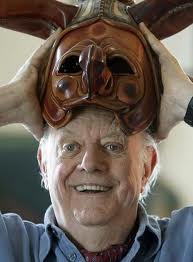
One of my favourite playwrights is Dario Fo and I was reminded of this today, reading an article about the elections in Italy. Fo, 86, is best known for his play Accidental Death of an Anarchist, inspired by the death of a man in police custody in 1969, and has long been a leftwing hero in Italy. He has spent a career writing about injustice and political corruption and together with his wife, Franca Rame, also a playwright, has been one of Europe’s most formidable social commentators. He was awarded the Nobel Prize for Literature in 1997 which places him amongst the true theatrical greats – Harold Pinter, Samuel Beckett, Wole Soyinka, Jean Paul Sartre, George Bernard Shaw even.

fo 2I’ve directed a couple of his plays – Accidental death of an Anarchist, Can’t Pay Won’t Pay – and been in a few too – Trumpets and Raspberries, Mistero Buffo. One of my favourites is The Virtuous Burglar.

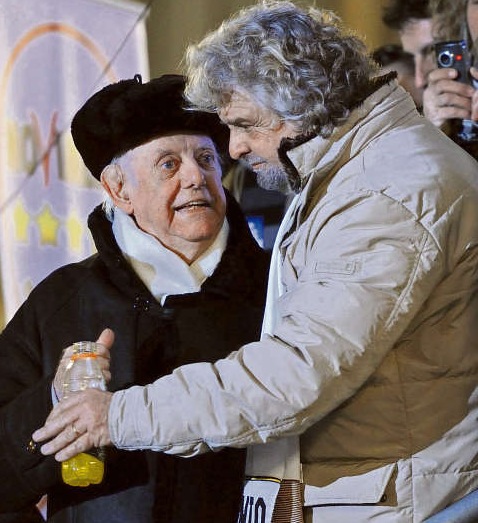
He started writing in 1958 and is still pumping them out today and all the time has been a thorn in the side of the Italian government. Recently he ran for the Mayor of Milan and this week has been outspoken in his support of Beppe Grillo, a comedian turned politician who has just captured over a quarter of the Italian vote, throwing the country into political crisis and unsettling a Europe that is still teetering on the edge  of financial crisis. You can read what he has to say  in an article entitled We need a surreal fantasist like Beppe Grillo to rescue Italy, says Nobel-winning playwright Dario Fo.

fo.

.

.

.

.

.

.

.

.

.

.

.

A good potted biography of him can be found here and if you can speak Italian, have a look at his own website www.dariofo.it

In fact, if you are reading this in Hong Kong, you catch a performance of Accidental Death of an Anarchist at the Fringe Club Underground Theatre this week. I highly recommend it!

The Artists Are Revolting

My post today is for arts students, teachers, educators and professionals everywhere. As the economic recession in the West sees funding for the arts slashed, as political dogmatism sees arts education removed from national curricula and as some societies continue to fail to understand the relevance of arts in their culture I was delighted to read this in the Huffington Post, written by Bruce E. Whitacre. A real call to arms!

I reproduce the article here in full.

Theater Education Programs Are in Demand for Workforce Creativity

Imagine a group comprised of accountants, tech executives, actors, corporate CEOs, playwrights and theater directors engaged in an urgent conversation. These rather divergent personalities are all discussing the state of theater education in America and its impact on our country’s economy, culture and future. They all agree that our nation’s future workforce can’t afford a curtain call on creativity.

Recently, IBM surveyed global CEOs and found that they view creativity as the most important leadership competency for the future. But what are we doing as a country to secure this vital resource? A significant number of young people today, when they enter the workforce, will never have been exposed to the valuable skills that come with arts education and specifically the theater experience — thinking on one’s feet; effectively communicating; practicing and rehearsing; writing; and collaborating as a team. This is a missed opportunity. According to the President’s Committee on the Arts & Humanities, in its groundbreaking report “Reinvesting in Arts Education,” arts education is a particularly powerful tool in reaching students who are otherwise turned off by standard school subjects.

??????????????????????Yet, some surveys on arts participation report that fewer than half of adults have participated in arts lessons or classes in schools – a decline from about 65 percent in the 1980s. In fact, government and arts education groups, as well as theaters themselves, have documented a nationwide decline in arts education of upwards of 40 percent. Most of the young people at risk of losing access to arts education come from disadvantaged communities.

The good news is that this meaningful conversation happening at the intersection of the corporate and arts community has yielded much more than just talk and good will. It has in fact led to a nationwide campaign called Impact Creativity, launched with a $250,000 grant from Ernst & Young and its CEO Jim Turley, to sustain and grow theater education programs serving more than half a million disadvantaged youth across the country. Ernst & Young employees have even recorded testimonials about theater education which can be viewed on the Impact Creativity website.

As a former accountant turned theater director and playwright turned non-profit executive, the synergy that feeds Impact Creativity and its otherwise disparate participants makes perfect sense to me. Over the course of the last 10 years, as executive director of the National Corporate Theatre Fund (NCTF), an association of 19 of the nation’s leading regional theaters, I have been engaging a broad cross-section of individuals across the country with a passion for theater education to explain the challenging circumstances around ensuring that all young people receive meaningful and beneficial arts education.

A perfect storm of state and local budget crises, the lingering recovery in philanthropy, and policy challenges in schools such as a hyper-focus on testing, as well as a resistance by local schools to spend precious resources on field trips to theaters, are keeping thousands of kids from seeing live theater even at greatly reduced prices, or even for free in many cases.

It is clear that challenging times are bringing out new solutions. Through the umbrella of the Impact Creativity campaign and the 19 NCTF theaters, we are able to hold a truly national conversation among the theaters themselves, prospective donors, and advocates about how to strengthen education offerings and challenge the status quo. We are working to address the issue of fragmentation in arts education which can make the entire sector increasingly vulnerable. Programs can benefit from a sharing of best practices across various theaters, assessments of nationwide education trends and using new technological tools.

In traveling around the country to visit with NCTF theaters, I have the amazing privilege of seeing inventive programs that take theater and young people to surprising places. The Illinois Institute of Technology, for example, uses the Goodman Theatre’s (Chicago) production of A Christmas Carol as part of its STEM curriculum to teach physics through stage mechanics and special effects in the show. In Rhode Island, Trinity Repertory Company has one of the country’s most dynamic and robust acting programs for children on the autism spectrum which uses theater based techniques to develop children’s voices and movements ultimately boosting their self-confidence, self-awareness and creativity. Hartford Stage, in partnership with Wells Fargo, has brought to life the bank’s financial literary curriculum through performance-based theater exercises and improvisational activities for middle school students. And at the Seattle Repertory Theatre, young women from diverse backgrounds are participating in the Y-We Speak program to create an original theater piece based on their life experiences empowering them with leadership skills.

These programs have shown me that enriching the nation’s youth through drama is inextricably linked to preparing a robust creative workforce of tomorrow. Strengthening this link, with partners in the arts and the corporate community, remains critical to the social, cultural and economic fabric of our communities. Impact Creativity will be at the nexus of these conversations in the year ahead. Join us.

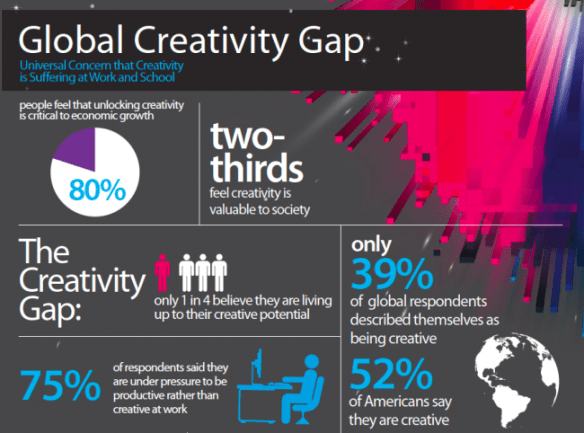
And there is more. New findings from the Adobe State of Create Study suggest a global creativity gap in the world’s largest economies: US, UK, Germany, France and Japan. Click the graphic below to read the headlines of their report

adobe1.1-650x482

Even the BBC are running a series on the value of the arts to our economies and in our societies. Click the image below for their video report and article, Putting a price on the value of art:

Capture1

A ruling for common sense

I’ll start today’s post with an apology to my regular readers. My Christmas holiday from blogging somehow extended through January too. However, I now have a backlog of things to share so be prepared.

snake.

.

.

.

.

Regular readers will know I have been following the story of David Cecil, a British theatre producer, who had been jailed in Uganda for staging a play about homosexuality. The start of 2013 finally saw this injustice put right, when Cecil was released (on a legal technicality).

cecil

.

.

.

.

You can read the full story here.

It is somewhat of a pyrrhic victory, given why he was released, but at least David Cecil is now a free man.