Mummer’s The Word

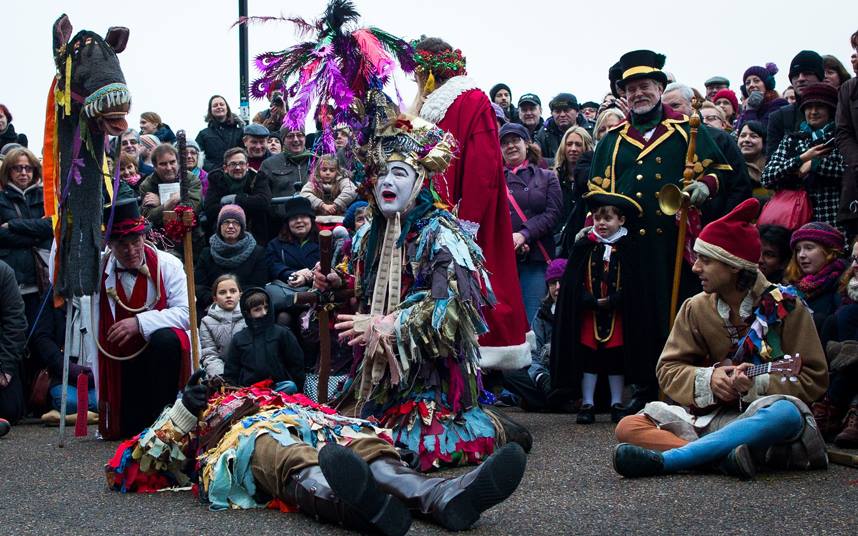
1526395_10152523488451363_3782136421900951347_nI am often asked where I draw my ideas and sources from for Theatre Room. Today’s post is a good example of just how eclectic and diverse those inspirations often are. The image on the left first popped up in my Facebook feed, but it was a busy day and I didn’t read the accompanying post. A day or so later I saw the same photograph in a picture gallery in The Telegraph of a performance celebrating Twelfth Night in London. So this is where the trail began. The photograph is in fact of an old friend of mine, Daniel, who is trustee of and occasional performer with a company called The Lions Part. The Lions Part, amongst other things, recreate traditional Mummers Plays, one of the oldest theatrical traditions in Europe. Mummers Plays or Mumming are short dramas with rhyming texts, traditionally performed at certain times of the year, usually associated with traditional Christian or Pagan festivals, such as Christmas or All Hallows Eve (Halloween). The origins of Mumming are a little obscure, but have been traced to medieval Europe, most specifically Germany, Britain and Ireland although there are suggestions that it was much older than that, perhaps even stretching as far back as ancient Egypt. Another theory places the emergence of Mumming alongside that of Pantomime in the 1700’s, with connections therefore, to Commedia dell’arté

TWHollyarrivesbarg_3154693k

The word Mummer can be traced to Greek mythology.  Momus was the personification of satire, mockery and censure.  Mummer can also be connected to the late Middle English word mommer and the Old French word momeur.   Each relates to miming, masking and folk play. There is a short but comprehensive history of Mumming and its origins, written by Peter Millington, which you can read here. Millington comments that the exact history is unclear and there are a range of views with regard to the real origins. He points to an even more interesting source of information and research by the Traditional Drama Research Group (TDRG),  based at the University of Sheffield. The TDRG site is simple, but full of interesting information including many original  texts.

In Britain, they are rarely performed today, but the images above show that a few hardy individuals are keeping the tradition alive. This particular performance by The Lions Part has taken place on Bankside, outside the reconstructed Globe Theatre for many years. The Mummers are dressed up as characters such as Turkey Sniper, Clever Legs and the Old ‘Oss and perform a boisterous play about the story of St. George, which dates back to the time of the crusades. This is done alongside other Twelfth Night celebrations, which traditionally mark the end of the winter festivals and the turn of a new year. You can get a sense of the occasion in the video below:

.

I was reminded of a recent presentation given by a student of mine, Sidney, on the Irish tradition of Wren Boys which is associated with Mumming in Ireland, where it is also still performed. Perhaps what surprised me most though is that Mumming is still alive and well in Philadelphia, in the US, where there is even a museum dedicated to the form. There is some fascinating (silent) footage from British Pathé which shows the Philadelphia Mummers parade from 1927.  Clearly the American version of Mumming has evolved radically from its original European form, but its roots are evident.

10418993_10152523488131363_8595702403198632381_n

In the unlikely event I ever find myself in London in the middle of a freezing European winter, I shall certainly be taking a look at this great theatrical tradition.

There Is Nothing Like A Dame

e6b732e2-448b-4c2b-a1cf-0bf68ff518bf-1024x2040

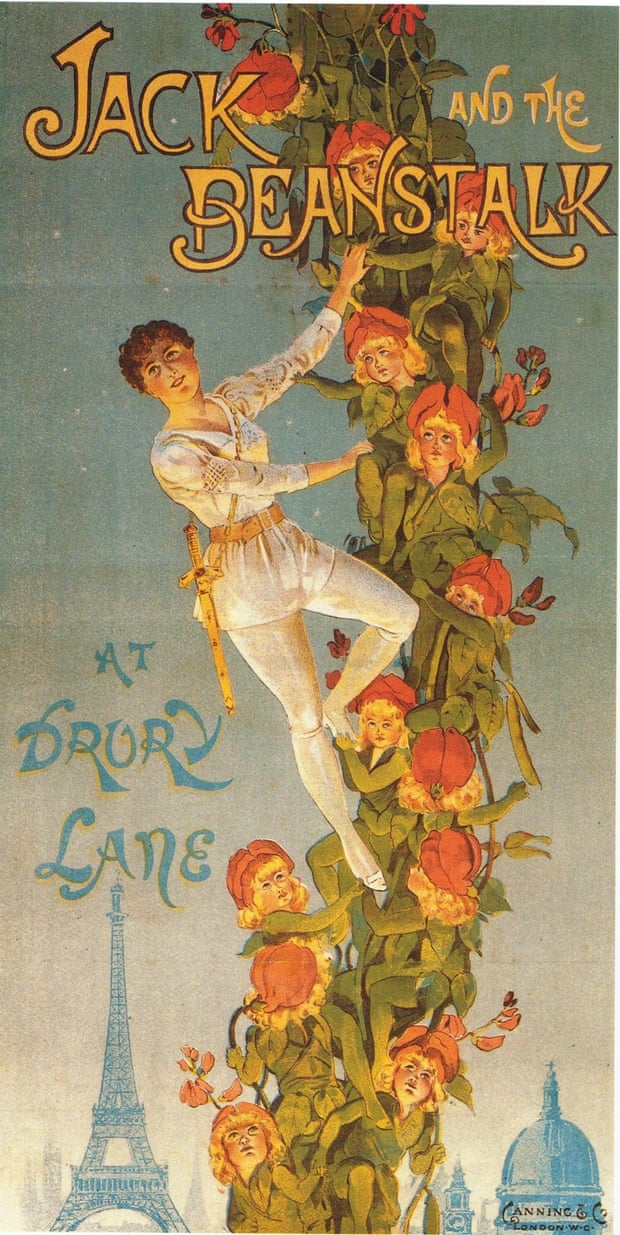
Jack and the Beanstalk, Drury Lane Theatre in 1889

It’s that time of year again, where I am forced to confront my prejudices about the great British theatrical tradition of Pantomime. This year, the International Baccalaureate Organisation re-wrote their Theatre Arts course and Pantomime was placed firmly alongside other world theatre traditons such as the beautifully artistic Indian Kathakali and Japanese Noh. I’ve written about it before here (this time last year, in fact) and I still struggle with it as a legitimate theatre form. I can’t help finding it all rather crass.

I have to remind myself that every year in the UK (and some former British colonial territories) Pantomime is hugely popular – 23 professional performances in the London area alone. Add to these the hundreds of performances outside the capital and the thousands of amateur groups doing their festive Pantomime thing, it is the most popular theatre form in the UK. I’m not going to get into why it’s still so popular, and why it draws huge audiences – that fact is that it is, and it does. Take a look here at the National Database of Pantomime Performance to get a real sense of just how widespread the form is.

However, my intellectual snobbery has been somewhat quashed by a number of things, including a superb article in The Guardian, The Golden Age of Pantomime, written by veteran British actor Simon Callow. It is actually a review of a new book, The Golden Age of Pantomime: Slapstick, Spectacle and Subversion in Victorian England by Jeffrey Richards.

image

The golden age of pantomime

Panto has long provided the heart, soul and high camp of the festive season. How did it all begin?

As you get your kids and your parents and maybe your grandparents ready for your visit to the panto this year – and panto is still in rude health, for many people the only time in the year they go to a theatre – you might perhaps wonder how such a gloriously odd phenomenon came about. There are interesting reasons for this unique combination of the broadest of broad comedy, a sentimental love story, a hero in fishnets, a brick shithouse of a comedian in tights, a ton of spangly scenery and audience participation on a nearly terminal scale, but what’s most surprising is how passionately people have felt about pantomime throughout its history: it has been perceived as important, this mad farrago, this theatrical mongrel that is barely deserves the name of genre.

In 1867, the Era newspaper was pronouncing ex cathedra on the subject: “Time in his course has built up pantomime into an institution as venerable as Magna Carta, as sacred as the bill of rights, as dearly cherished as habeas corpus. The Pantomime is considered as worthy of the boards of Old Drury [Lane] as the works of Shakespeare himself.” But just five years later, there was a furious attack on the form pantomime was taking: what had happened to the charming clowns of yesteryear, the beauty, the innocence? What was this unrelenting emphasis on “that terrible managerial Frankenstein, the Transformation Scene”? No less personage than Ruskin wrote of the long-lost Arcadias of Pantomime. But the truth is that, like Christmas,, like Christmas, pantomime has never been what it was but was forever being refreshed and reinvigorated.

In a new book, The Golden Age of Pantomime, Jeffrey Richards opens with a brisk trot around the birth, development and – depending on your point of view – apotheosis or implosion of panto. It grew out of a partial and never entirely completed merger of three quite separate forms: the harlequinade, an almost completely wordless comic interlude, based on the classic commedia dell’arte characters of Arlecchino, Pantalone and Pulcinella; the extravaganza, a sophisticated and witty satire based on Greek and Roman myth or fairytales; and burlesque, which, as Richards says, irreverently sends up “everything the Victorians customarily took seriously: such as English history, grand opera and Shakespeare”. These elements sometimes existed separately, in parallel, as it were, and sometimes vied for dominance within pantomime itself. Inevitably, a form that was always essentially popular would also reflect the temper of the times, and those times were changing rapidly and radically.

cf7009b1-1c7e-4b0d-8639-fb69af17cfba-638x1020

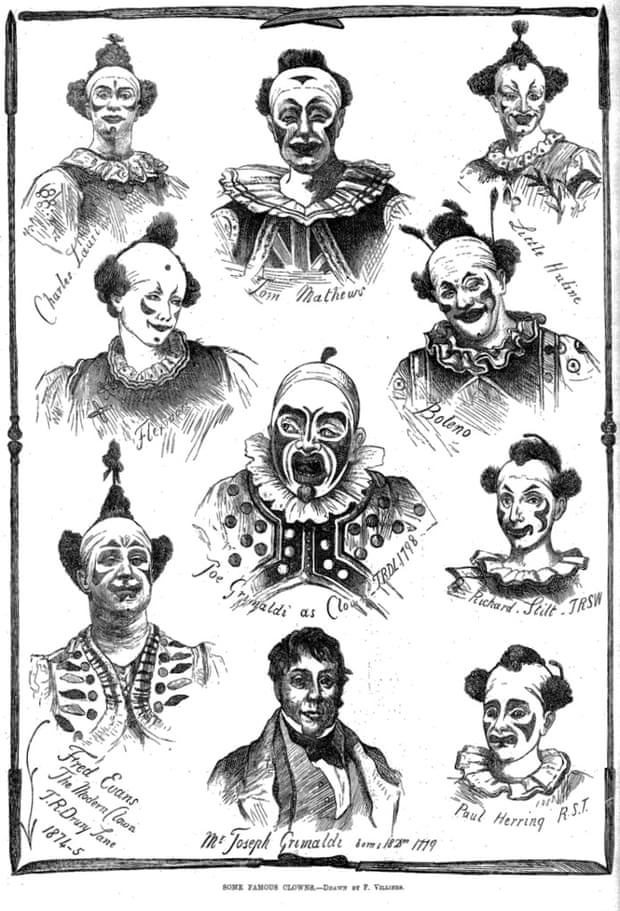
Between 1780 and 1850, according to social historian Harold Perkins, “the English ceased to be one of the most aggressive, brutal, rowdy, outspoken, riotous, cruel and bloodthirsty nations in the world, and became one of the most inhibited, polite, orderly, tenderminded, prudish and hypocritical.” As with the nation, so with pantomime. The greatest of all British clowns, Joseph Grimaldi, who died in 1837, the year the young Victoria became queen, belonged to an older dispensation: Joey, “the urban Anarchist”, was a force of nature, “a half idiotic, crafty, shameless, incorrigible emblem of gross sensuality” ready, Richards says, “to defy authority, law and convention for his own immediate gratification”. His comedy was dangerous, reckless, but deeply recognisable; he was a Gillray cartoon come to life, embodying the spirit of the Regency.

But long before Grimaldi retired, the Evangelicals, seizing their moment as the industrial revolution wrought its changes, had moved in on the nation. And pantomime rapidly began to clean up its act. The genres of burlesque and extravaganza offered fantasies, either ancient or otherworldly, that transported the audience. They were not uncritical of the world around them – satire of a genteel order was acceptable – but the watchwords were elegance and taste. JR Planché, an homme de lettres of Huguenot stock, dedicated himself from his first play as early as 1818, to raising standards, to eliminating the “coarse exaggeration and buffoonery of pantomime”. Teaming up with Mme Vestris – deliciously described as “the most dangerous actress in London” – he wrote and produced a series of shows that were somewhere between extravaganzas and revues, often derived from the French theatre. Olympic Revels and its sequel Olympic Devils were major hits – Offenbach without the tunes. A costume historian by training, he introduced a new level of historical accuracy in setting and clothing and raised the visual tone.

He came to regret the prominence he had given to design. Victorians were intensely visually aware, fascinated by the vast array of new stimuli available to them – the illustrated magazines, the dioramas, the daguerreotypes, the museums – and above all intrigued by the power of optical illusion. A new generation of skilled scene-painters grew up to answer this fascination, and soon began to dominate the performances.2063

Dickens’s friend Clarkson Stanfield had painted many of the dioramas which were briefly inserted into the harlequinade; these proved so popular that they were expanded, and expanded, until, the element of spectacle that they provided threatened story, character, comedy. A master of painting and stagecraft then appeared, a man who has a reasonable claim to be considered the central genius of the Victorian pantomime – William Beverley, who year after year realised one astounding vision after another. It must have been like MTV for his audiences, a kind of theatrical Cinerama, though sometimes the descriptions make it sound more like an acid trip. In Riquet with the Tuft, the Times reported, “there are some 70 or 80 mushrooms, the chief fungus being Miss Hart, which, opening, gradually expand and disclose, reclining in each mushroom, a demon dressed in red with battle axe … when the mushrooms fully expand, the demons simultaneously rise, and beginning to dance, are interrupted by the appearance of Mother Shipton, when they fall to their knees, producing,” the reporter understates, “a novel and exciting effect”. After these transformation scenes had completed themselves, “Cries of Beverley! echoed instinctively though the house.”

Planché and his younger fellow author, EL Blanchard, both felt that their carefully crafted work was underappreciated. They were men of taste and intelligence and some sophistication; they summoned worlds that delighted their audiences. “Each Christmas and Easter for many years,” Richards writes, “the theatres for which Planché worked were filled with fairies, wizards, witches, ogres, dragons, elves, dwarves, sprites, anthropomorphic animals, spells and transformations, magic rings and magic swords, enchanted trees and flowers.” It was The Lord of the Rings avant la lettre. Blanchard, who left a remarkable diary that takes us right to the heart of the Victorian jobbing writer’s life, pulled off the enviable coup of reviewing his own shows under a pseudonym. “It is probably,” he wrote of one of his own pieces, “one of the most original in subject, and most effective in treatment that has ever been offered to the public in this or any other house.” Blanchard’s range was extraordinary, encompassing both fairytale whimsy and up to the minute topical comment, like The Birth of the Steam Engine or The World of Wonders; he was essentially conservative, but strongly against the 1872 Licensing Act: “Some folks have lately come to think / That other folks ne’er want to eat or drink / That bread and cheese and beer must lead to crime / Should they be swallowed past a certain time.”

cc9f84d0-43c4-4733-9482-5a5cd6c29d65-694x1020

Imperial themes increasingly began to feature in the shows, resulting in a carnival of political incorrectness: in Jack and the Beanstalk, played in the presence of the Prince of Wales, a group of minstrels – blacked up, needless to say – sang merrily in the background, as children dressed as monkeys swung from the trees, gaily dressed natives (also blacked up) flocked on with banners inscribed with the words “Tell mama we are happy”. In Queen Maba few years earlier, the Indian Mutiny was reenacted in comic form: at one point a clown, dressed in the uniform of the Grenadier guards, killed an insurgent sepoy, then stuffed his body into a mortar and fired him at a butcher’s shop, where he ends up on hooks, replacing the mutton and beef.

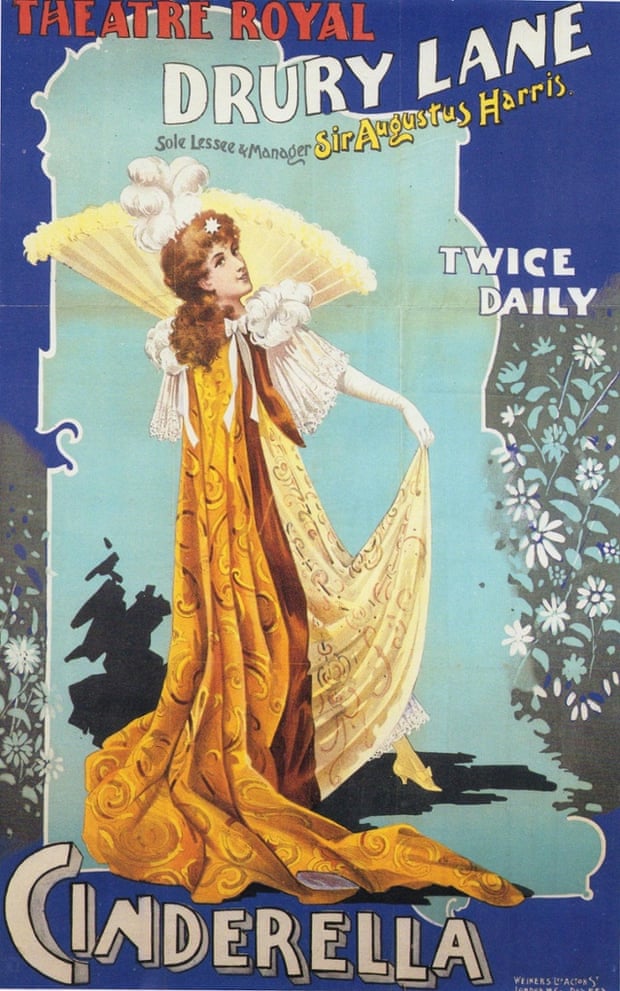
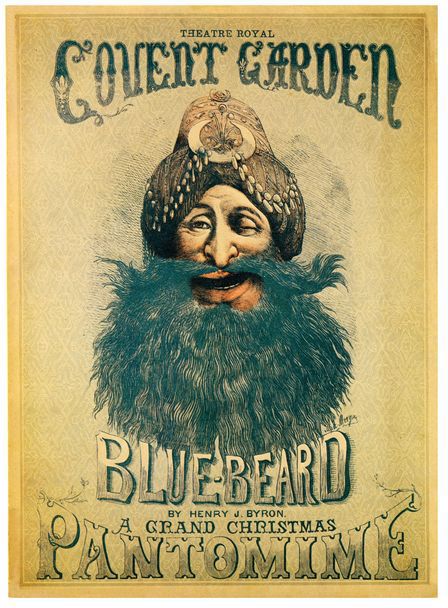
Cometh the hour, cometh the man: Augustus Harris Jr was himself an imperial figure: he took over Drury Lane, after two larger-than-life predecessors had failed, and made it a triumph of Roman proportions; Fleet Street dubbed him Augustus Druriolanus. At the same time as managing Drury Lane, he was running Covent Garden, Her Majesty’s and the Olympic, while sitting on the London County Council and serving as Sheriff of London for nine years. His day would start with dictation from the bath, after which he would meet his creative teams – there were always many shows going on simultaneously, each of which required his personal intervention. Writers, designers, costumiers did their best to keep up with him, executing his sometimes rather imprecise ideas, sketched out on tablecloths or scraps of paper. He met and dispatched the provincial managers, having quizzed them on the details, of which he always seemed to command a greater knowledge. He then proceeded to plough through an enormous lunch, which, his biographer said, ensured that on arrival at the theatre he would be filled with “an energy that was simply appalling”. He directed rehearsals intermittently, withdrawing to deal with some other aspect of the business; he would snatch a nap, or perhaps a more prolonged slumber, then change into evening dress. He stayed right to the end of every show, then dined extravagantly at his own restaurant before heading home to plan, scheme, dream the next cycle of work. Unsurprisingly, he died at the age of 46. His attitude was entirely pragmatic; he aimed to give the people what they wanted and the audiences loved what they got. It was often blatant jingoism. In 1897, the Kaiser was guyed as Prince Paragon. Two years earlier, in Jack and the Beanstalk, the giant was called Blunderboer. When he was arrested, from his pocket emerged a miniature army played by children, some riding small ponies, dressed as soldiers. “There was considerable enthusiasm,” says Richards, drily, “when they raised their helmets on their rifles and sang ‘Rule Britannia’.”

Not everyone was delighted. The spectacular element had gone way beyond anything that troubled Ruskin and co: “the monstrous glittering thing of pomp and humour,” said the Star in December, 1900, betraying an odd unease both with empire and this theatrical child of empire. But in another sense, Harris had restored panto to itself. He invited musical hall performers to participate in his shows, and with them, they brought something of the old rude energy, the quirkiness, the carnival quality that Grimaldi embodied. Genius actor-comedians such as Dan Leno and Marie Lloyd made an extraordinary impact, often writing their own lines and singing their own songs, with which the audience up in the gods gleefully sang along. Charles Lauri’s Man Friday was a vivid creation; Fred Storey’s King Hullaballoo played “with as much care and dramatic intensity as though he were playing King Lear – which of course,” the writer adds, “has been the method of the greatest burlesque actors”.
2059

During the long twilight of empire, panto still rode high. Despite rationing, both of fabrics and building materials, it continued to triumph during and after the second world war. But the arrival of television at the end of the 1940s immediately threatened the existence of theatres and, more subversively, the nature of panto itself. TV stars who had little more than celebrity to offer were imported, while variety, from which panto had drawn so many of its stalwarts, was in sharp decline. It became simultaneously costly and vacuous and began to disappear from West End theatres; it survived elsewhere in Britain – not least in Scotland, where the variety tradition was, and is, still strong – but only just. Then, in the early 70s, something unexpected happened: shoots of new life started to emerge. Alternative panto began to flourish on the fringe: there were gay pantos, black pantos, feminist pantos and Marxist pantos, there were Chickenshed pantos, and physically challenged and able‑bodied young actors performed their Twankeys and their Abanazars, their Baron Hardups, their Dicks and their Jacks amid unseemly mirth.

And then another funny thing happened on the way to Christmas: a class of actors known derisively among the music hall community as lardies – legitimate actors – became interested in what they would no doubt have called “the genre”: the RSC presented a panto in 1981; and Ian McKellen and Roger Allam gave the spirit of Lilian Baylis a spin in 2004 when they triumphantly brought Aladdin in all its ribaldry to the Old Vic. Meanwhile, a generation of American stars who had – who knew? – theatre backgrounds showed up to give their Captain Hooks, with actors like David Hasselhoff and Henry Winkler performing alongside copper-bottomed (no, missus!) homegrown stars such as Christopher Biggins and Bonnie Langford, who carry the grand old traditions forward like beacons.

2058

There has always been a certain uncertainty about what panto is – which continues to the present day. Above all, it’s about the relationship between the actors and the audience. It is essentially theatrical. It can be magical and it can be hilarious; it can be awe-inspiring and it can be seriously subversive. As long as it’s alive and kicking, it’s in touch with its roots.

Christopher Biggins in Dick WhittingtonI also listened to a programme broadcast by the BBC over the holidays. There’s Nothing Like A Dame was hosted by Christopher Biggins (pictured right), a British celebrity/actor known for playing the role of the Dame. The programme (which is embedded below) is very UK centric in its references but it does give a real flavour of this populist theatre tradition. Amongst others, Biggins talks to Simon Sladen, an academic widely acknowledged as one of the UK’s leading experts on British Pantomime. Sladen is also Assistant Curator, Modern and Contemporary Performance at the Victoria and Albert Museum (V &A) in London.

The V & A website carries a good history of Pantomime and places it in its social and political contexts. In the video below, Sladen delivers a paper, Did you ever see such a succulent dish of Chinese takeaway?, about Peter Nichols’ play Poppywhich subverts the pantomime form to explore a particularly dark moment in the history of Victorian colonialism – the Opium Wars.

.

It strikes me that Pantomime has a long and subversive history, which has been generally lost in its current, Z list celebrity filled form. Shame!

Little Voices

A fascinating project has recently wrapped up in London. A group of journalists from The Guardian newspaper, collaborated with theatre makers from the Royal Court Theatre to make a series of six ‘micro’ State of the Nation plays plays, running under the banner, Off The Page.  There is a video introduction to the series here.

ef05cbff-576b-449f-bb98-0a14f4a38ea4-620x372

Each of the plays explores a different topic. Britain Isn’t Eating satirizes the UK government’s approach to food banks and the ‘feckless poor’. Devil in the Detail explores the emotional relationship that women have with clothes. PPE examines the power of politicians’ physical gestures – and the failure to engineer real change after the financial crisis.The Funereal Game explores racial tensions on and off the football pitch and the idea that sport embodies the country’s identity crisis. Finally, Groove is in the Heart examines the changing relationship with music and technology. For each of the plays there is a making of article which you can click-through to via the links above. The videos of the plays are embedded there too. Whilst obviously written about UK orientated issues, the themes are definitely global and all the pieces are really interesting.

142fcb90-23a2-4118-9546-5eef9c3b23c8-2060x1236

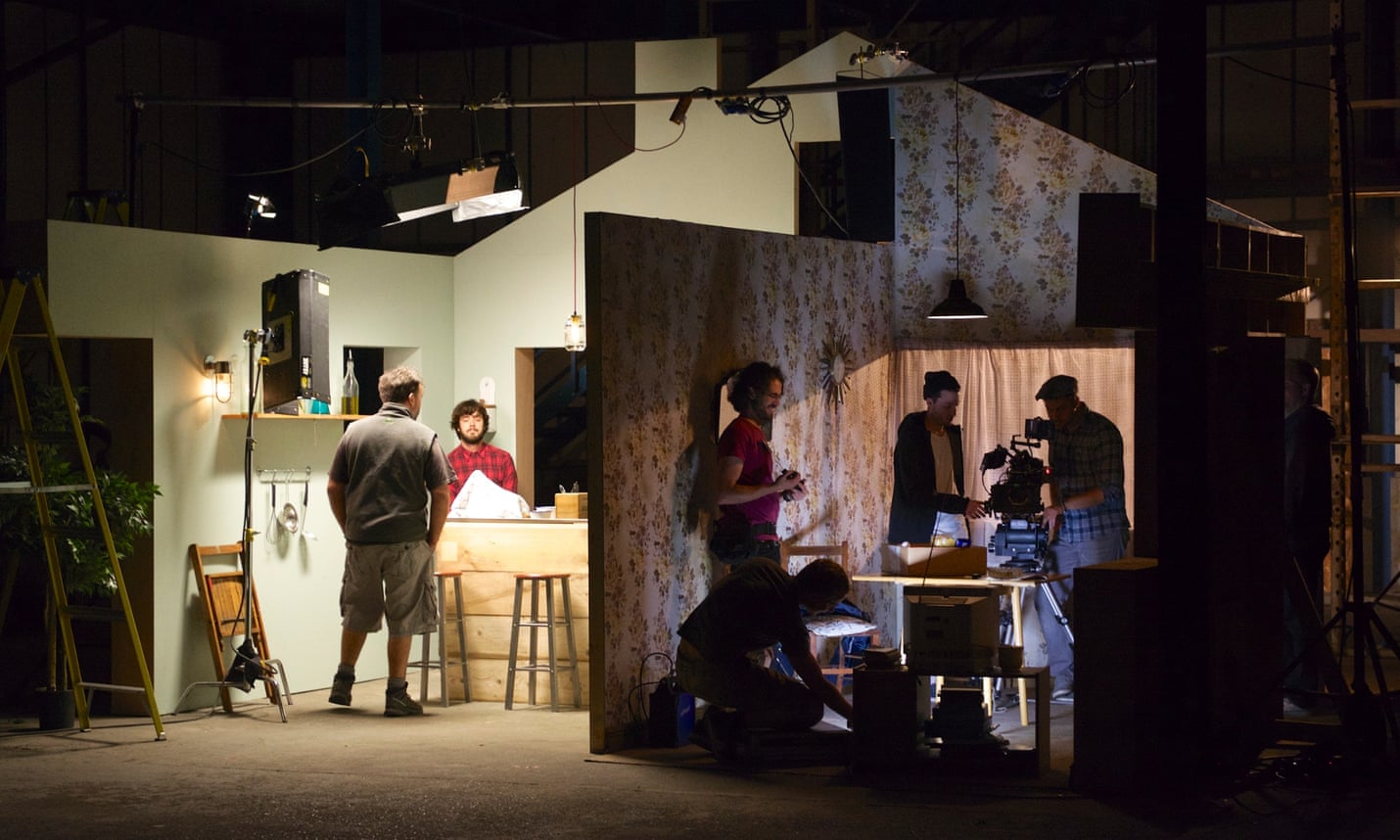
Each play used the same basic staging, but designed individually. A photo montage of the different designs makes interesting viewing here.

Say It As It Is

little-revolution-posterTwo audio recording shares today. Firstly an interview, courtesy of Theatre Voice, by theatre critic Matt Trueman with verbatim playwright Alecky Blythe (and director Joe Hill-Gibbon) about her play Little Revolution. Performed earlier this year and receiving very polarised reviews, it explores the 2011 London riots. The interview gives a fascinating insight into the processes of writing and staging verbatim theatre. Blythe also writes about her approaches in The Telegraph, It looked a bit hairy. But I had to go. Interestingly, the same newspaper also gave Little Revolution one of it’s best reviews, calling it Absolutely Compelling. Truman’s own review of the play is a little more interrogating.

The second share, and not wholly unconnected,  is an interview with writer and theatre maker Stella Duffy (and others) about the life of theatrical maverick Joan Littlewood, whose centenary has been marked this year by many events, not least the Fun Palace initiative, started by Duffy herself. Again a great listen about a woman who made theatre differently.

.

Green Stages

Royal Court Theatre, 2004Today, I want to share a thought-provoking video. It is a panel discussion from the Royal Court Theatre in London entitled Can Theatre Ever Be Green. Part of a larger Day of Action on climate change, the theatre’s spaces, including the stage, the bar and the bookshop, were taken over by climatologists, environmentalists and other experts exploring how we might fight climate change as artists, audiences and human beings. This is connected with the performance of 2071 which I wrote about in my recent post Willing To Speak Truth To Power. In the discussion, the panel analyse the responsibility to climate change in their work and discuss more environmentally friendly ways of producing theatre.

.

The speakers are Natalie Abrahami (Theatre Director), Natasha Chivers (Lighting Designer), Alison Tickell (CEO, Julie’s Bicycle) Ben Todd (Executive Director, Arcola Theatre) and Paul Handley (Production Manager, Chair).

Give it a view. As theatre makers, it will really make you think.

Curated By Kwei-Armah

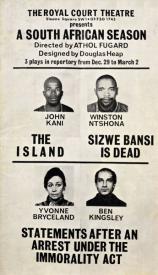
JLR_271_cA super new resource, The Black Plays Archive has just been launched in the UK. Curation started in 2009 and the aim is for it to be an online catalogue of the first professional production of every African, Caribbean and Black British play ever produced in Britain. It was born out of an idea by playwright Kwame Kwei-Armah and involves a considerable number of institutions from across the UK, with the National Theatre being the primary partner.

It contains Essays that can be read online or downloaded, Interviews (both video and audio) and recorded Play Extracts, either from their original staging or specifically recorded for the archive.

SB_22aThe plays are drawn from around the world by playwrights with an African or Caribbean heritage. Once complete the archive will be an incredible resource of black theatre writing. However, it is wider than that and includes interviews with directors, academics and practitioners that cover the whole spectrum of theatre making. For instance there is an essay from Dr Michael Pearce (academic, theatre director and native of Zimbabwe), Tracing Black America in black British theatre, which explores the rise of the Black Power movement in the US in 1970’s and how this was manifested in British theatre. This is a truly extraordinary and unique project and well worth an explore.

Willing To Speak Truth To Power

Three articles published over the course of the last week, by The Guardian UK, have caught my attention. The first, a review by veteran theatre critic Michael Billington, about a ‘play’ called 2071. I use the inverted commas advisedly at this point, as the piece has one actor, a scientist called Chris Rapley, who spends 70 minutes talking to the audience about climate change. Some might, and indeed have, called it a lecture, nothing more.

2071_3099361b

In his review, 2071 – urgent call for the greatest collective action in history, Billington argues otherwise:

Some will argue this is not really theatre. But the idea that theatre should be exclusively reserved for fiction has been knocked on the head by a surge of documentary dramas and verbatim plays. And Katie Mitchell, who directed both this show and Ten Billion, realises that the eye needs to be satisfied as well as the ear. Rapley sits in a chair and, without notes, talks to the audience with an astonishing calm and command of facts for 75 minutes. Meanwhile Chloe Lamford’s design presents us with swirling video images behind him that illustrate Rapley’s arguments and have a strange beauty of their own.

The play is being staged at The Royal Court in London under the directorship of Katie Mitchell, who did a similar staging two years ago with a piece entitled Ten Billion where scientist Stephen Emmott (below) spoke about global over-population and its consequences. In fact Ten Billion was given the number 10 spot in the best plays of the year, according to one newspaper.

10bill_2281662b

In this podcast from the Royal Court Duncan Macmillan (co-writer), Mitchell (director) and Rapley (speaking as scientist, co-writer and performer) talk to literary manager Christopher Campbell about the play.

.

I’ll leave it to you to ponder whether the classification as theatre is a correct one. Mitchell and Macmillan talk further, in the second of the articles I referred to earlier, about their reasons and the processes behind verbatim theatre of this kind. Climate change play 2071 aims to make data dramatic is written by Stephanie Merritt:

“As a dramatist, I’m interested in working with text in a different way,” Macmillan explains, when I meet them during a break in rehearsals at their south London studio. “There was the formal challenge of how to express Chris’s science, and what we could bring to him as theatre-makers – not just with a different audience for those issues, but in terms of technique and how to structure the material. For example, if Chris is writing a scientific paper or delivering an academic lecture, the convention is that you begin with your finding and go on to explain it. But that’s like Hamlet avenging his father’s death in the first five minutes. The simultaneous challenge we’ve had is how to take the anger and emotion out of the issue and at the same time make the data dramatically compelling to listen to.”

The subject matter is undoubtedly emotive, but more so political and therefore ripe for the theatre – even if it is a difficult subject to stage.

I am sure that it is no coincidence that on the same day Billington’s review for 2017 was published, he also wrote a rallying piece entitled Speaking truth to power: this is the rebirth of political theatre in which he talks about the resurgence of political theatre on the British stage at the moment, 2017 included.  You can read the article yourself, but I’ll finish this post with his final paragraph which says much about the theatre I was brought up with, educated by and in which I believe passionately.

It is also something that seems part of our native bloodstream. Some years ago I was invited to take part in an international discussion of political theatre organised by the British Council in Santiago. After I had talked about the British theatre’s oppositional tradition, two French delegates treated my remarks with polite condescension. They observed that someone had recently staged a play in Paris about President Bush but that it had excited little interest. As we talked, I realised we were arguing from different premises. For my French colleagues, theatre was primarily an aesthetic discipline and something apart from life. From my entrenched Anglo-Saxon perspective, it was a vital part of life; and that inevitably embraces politics. I remain convinced to this day that among British theatre’s greatest strengths are its readiness to put our society under the microscope and its willingness to speak truth to power.

Whenever I’m dancing, inside my head, I’m talking

John_poster_notitle_v2The latest piece from internationally renowned physical theatre company DV8 has just opened at the National Theatre in London, following a premier earlier in the year at the Vienna International Dance Festival.  The company is almost 30 years old, yet the work they continue to produce is still be considered cutting edge. To define them precisely in terms of genre is a difficult – they work in a mixture of dance and physical theatre as well as verbatim theatre, and usually all done with a dark sense of humour.  Of course over time their ‘style’ has evolved and of late has become much more speech driven. Lloyd Newson, the co-founder and leader of the company said in a recent interview:

 I could never understand the discrepancy of dancers yakking away in the wings, then pretending to be mute the minute they stepped out on stage,” Newson says. “A friend and former colleague of mine, Nigel Charnock, once said: ‘Whenever I’m dancing, inside my head, I’m talking to myself the whole time’.”

The new work, eponymously entitled John, is again a verbatim piece, created using interviews conducted by Newson with more than 50 men asking them frank questions about love and sex. To quote their publicity:

One of those men was John. What emerged was a story that is both extraordinary and touching.  Years of crime, drug use and struggling to survive lead John on a search where his life converges with others in an unexpected place, unknown by most. JOHN authentically depicts real-life stories, where movement and spoken word combine to create an intense, moving and poignant theatrical experience.

Newson has given two interviews to coincide with the opening of the show in London. Firstly to The Independent and Hugn Montgomery, DV8: Three decades of the provocative dance-theatre company where he speaks about the aesthetic of the company’s work in a typical refreshing forthright manner:

This is a man who has talked of dance as “the Prozac of the artforms”, for what he sees as its vacuous, anaesthetising beauty; he sums up his own approach as “if people don’t understand what’s being said physically, I’m not interested”

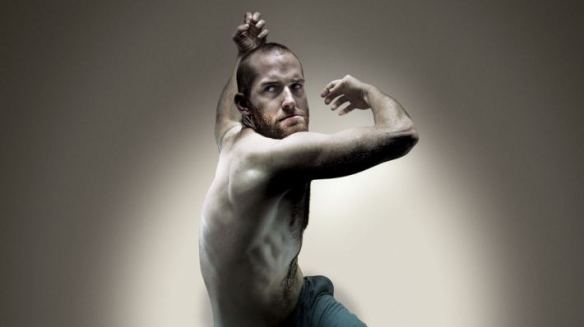
1a-dv8-performer-hannes-langolf-photographer-ben-hopper-low-res

The second, for The Guardian with Alfred Hickling, Death, drugs and survival: DV8 Physical Theatre tells the story of Johngives more of an insight to the new work.

Yesterday, the BBC Front Row programme interviewed Newson about the creative process behind the work:

.

Too early for the english language reviews to be out, but Twitter has been alive with fulsome praise:

Untitled_Fotor

John is will be on a national tour when done in London, but is sure to be heading off across the globe soon. I do hope so, anyway.

Post Script:

Joh the national theatre

Since writing this post, the reviews are in for John. Almost without exception, they are praiseworthy and talk fulsomely about Newson’s work. The London Evening Standard sums up the piece thus:

John is a powerful and absorbing piece full of innovative visual touches but there’s a question over the bisected nature of the narrative and the sudden switch of tone, the new cast of characters, the move into (scatological) comedy.

Yet it works because there are themes that thread all the way through: the search for something, be it escape, obliteration, sensation, intimacy or love — at whatever cost

Obviously confronting in many ways, John has clearly made an impact. There is one review however, that had me whooping with laughter. Written by Quentin Letts for The Daily Maila right-wing, ‘hang ’em high’ and ‘send the immigrants home’ rag published in the UK, screamed with the fabulous headline A National DISGRACE: Sleazy. Amoral. And paid for by you! I think Letts might be missing the point, don’t you?

Set In Aspic

Helen McCrory as Medea, National Theatre

Helen McCrory as Medea, National Theatre

A gnarly little piece today I came across in The Independent, Why are theatre directors messing with the classics? Written by journalist Adrain Hamilton, he bemoans (British) theatre directors who play with the text and/or original intent of the playwright. Has it ever been thus. Now far be it from me to suggest that Mr Hamilton (who is not a theatre critic or in any way connected professionally with the theatre) is simply whining because he may have witnessed a production of one of his favourite classic plays that he didn’t like (although I suspect there might be something in this). It’s not that I disagree with him totally. Indeed he makes some decent observations, but theatre is an interpretive art form, especially when dealing with the more classic/historical texts. There has to be a relevancy for a contemporary audience and it the director’s job to make that so. Of course it doesn’t always work, but that is theatre for you.

Why are theatre directors messing with the classics?

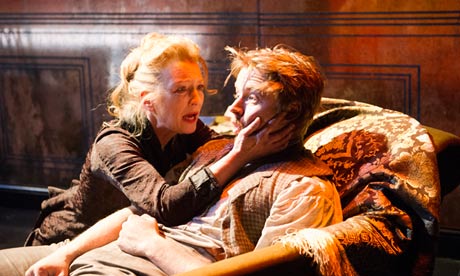
There are no more dreaded words in the English theatre today than “in a version by”. Whether it’s Ibsen’s Ghosts, Euripides’ Medea or Sophocles’ Electra, nothing will do but that the international giants of the stage be taken by an English writer and refashioned for the English audience in their own words.No one should doubt the theatricality of these “versions”. Greek tragedians, as indeed Ibsen, created great parts for female actors and this is what the British directors have seized on with such fervour today. Kristin Scott Thomas as Electra, Helen McCrory as Medea and Lesley Manville as Ibsen’s Mrs Alving have all been successively hailed as the new divas of drama for their anguished performances of tortured, wracked women.

Just as we perform Chekhov as the supreme English ironist, rather than the caustic writer of near farces, which is the way the Russians do, so our directors and dramatists rework the classics as studies in angst and high emotion, women on the edge not just of a nervous breakdown but of infanticidal self-destruction.

Lesley Manville in Richard Eyre's production of Ghosts

Lesley Manville in Richard Eyre’s production of Ghosts

Only that is not what these dramas are actually about, or not as their authors intended. The great classical dramatists didn’t set out to present psychiatric studies of individuals and their torments. They wrote about the human condition through the dilemmas and fates of individuals. The same goes for Henrik Ibsen. A would-be poet himself, he wanted to express what he saw as the societal truth of his times.

Sir Richard Eyre’s reworking of Ghosts, and his earlier Hedda Gabler, at the Almeida, are finely crafted works of domestic drama in which events speed their way to a horrifying conclusion, impelled by revelations which strip their heroines of all illusion. It’s Chekhov on speed, even to the point of climaxing the play with Mrs Alving administering the medicines with which to aid her son’s death.

But Ibsen didn’t write that. He left his heroine gripped by indecision whether to carry out her son’s desire to die or to refuse such an unnatural maternal act. Sir Richard’s version makes for a more melodramatic finish; Ibsen’s for a more troubling one. Which is how he saw his play, a very carefully modulated study through the dialogue of human evasion of how we are all made by our past and convention.

If you want to see the difference between the way that the British domesticate drama and other countries seize on the ideas behind a play, then the Barbican’s current series of international productions of Ibsen should be a revelation. The Berlin Schaubühne ensemble’s An Enemy of the People, the play he wrote in anger at the way Ghosts had been dismissed by the critics, is an interpretation full of the urgency that this angry assault on bourgeois conformity requires. Switching the time to now, it has all of Ibsen’s weight and weariness with the society about him but also his sense of the human part within it. If the production stuttered in London it was in trying, in the middle, to involve the audience in the debate. It apparently worked in performances elsewhere but not here. The English don’t go in for direct confrontation, let alone over ideas.

The Berlin Schaubühne ensemble’s An Enemy of the People

The Berlin Schaubühne ensemble’s An Enemy of the People

It gets worse with Greek tragedy. With a deeply affecting central performance, the National’s Medea wrung every emotion out of the story of an abandoned woman who wreaks revenge by killing her own children and dragging their bodies into exile in an end reminiscent of Bertolt Brecht. Only Euripides is not Brecht and he didn’t write Medea as a story of a wronged woman wrestling with her conflicting emotions. The Medea of Greek legend is a witch woman of terrifying force. The tragedy is one of anger and vengeance which cannot be constrained. At the end you feel not pity but horror and fear.

You don’t have to do Greek tragedy on a bare stage and skimped costumes. The poet Caroline Bird’s version of Euripides’ Trojan Women at the Gate Theatre in 2012 was one of the most intense theatrical experiences I’ve ever had. Moving the scene to a maternity hospital, it worked because it remained true to Euripides’ vision of captured women, turning in on themselves as they await their fate. But you can’t do what Frank McGuinness, whose adaptation of Electra is now playing at the Old Vic, did in the opera of the Theban Plays and mess around with the order at will. At least you can’t do it and still leave Sophocles on the credits.

Yukio Ninagawa, arguably the greatest theatre director of our times, who directed an electrifying Medea in Japanese, will only work with line-by-line translation. Presenting Shakespeare’s Cymbeline recently the Barbican (he’s back there with Hamlet next year), he apologised for changing a word in making a cedar into a pine for visual reasons. If only British directors would pay foreign dramatists the same respect when they turn them into English.

I went in search of the reviews of some of the plays that Hamilton vilifies as domestic. The same paper that carried his article, The Independent, gave the production of Euripides’ Medea he mentions 4 stars, calling it unforgettable and horribly gripping, as did The Telegraph who said it was thrilling and merciless. Richard Eyre’s production of Ibsen’s Ghosts, meanwhile was given 5 stars in The Independent – A spellbinding production – as it was in The Telegraph, with the final line of the review observing that Theatre seldom, if ever, comes greater than thisFinally, the production of Sophocles’ Electra was again given 5 stars by The Independent, calling it an evening of unalloyed magnificenceThe Telegraph said it was Theatre at its best with The Guardian undermining Hamilton’s whole premise in the final paragraph of its 4 star review.

Theatre cannot be preserved in aspic, perhaps more so today than ever. I’m looking forward to reading how other less conservative commentators react to Hamilton’s views

Dancing Revolution

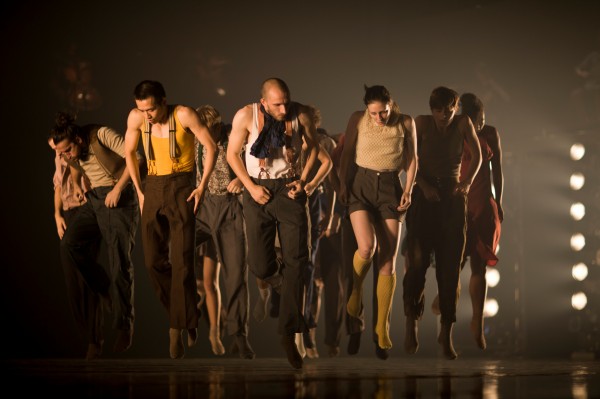
gz-political-mother-blurd-dancers-circle_1000Sometimes a trip to the theatre can be truly exhilarating, confronting and prescient. Last night I went with my friend Sara to see Political Mother by British based Israeli choreographer, Hofesh Shechter, and it was indeed all of those things – and a lot more besides. In essence, it is a piece that explores the relationship between society and state, duty and service and brutalisation by a repressive power. The staging is epic – and very loud (being issued with ear plugs by the theatre was a first for us, although they remained unused). Political Mother has had a few incarnations and we witnessed another one, with it being re-worked a little for the festival it was part of and the addition of young, local musicians, largely drummers, to an already significant cast of dancers and musicians.

.

It has toured significantly around the world and I am delighted to have had the opportunity to see something I had been reading about with envy – the reviews have been almost uniformly outstanding. You can see for yourself here and here.

Hofesh-Shechter-Political-Mother-600x399However, it wasn’t simply the piece that was so enthralling, it was also the context in which it was being performed. The monolith of a building in which it was staged, the Hong Kong Cultural Centre, was commissioned and built under British colonial rule and is currently celebrating its 25th anniversary. Ten minutes walk away is the commercial district of Mong Kok, where protests for universal suffrage continue. Across Victoria Harbour from the theatre is the other site of protest, with roads closed and a growing tent city springing up. It was palpable that the irony of a governmental sponsored festival hosting Political Mother was not lost on the majority of the audience. We were left wondering what the performers thought about the timeliness of their work in Hong Kong.

Dance and politics have never been far apart. One of the founders of contemporary dance, Martha Graham was no stranger to this fact, as this short documentary shows:

.